

How Organised Dads Document Special Education Needs
How to Handle Special Education Like a Pro This Back to School Season
Feeling like a juggler with flaming torches? I get it. Organizing my kids’ special education documents transformed chaos into order. Labeled folders for IEPs and therapy notes, plus a trusty backpack for school. I track everything on spreadsheets—who knew I’d become Excel’s biggest fan?
I share these insights on Modern Dads because navigating these challenges is no joke. Remember that time I couldn’t find Timmy’s sensory report until I found it wedged between his lunchbox and an old pair of socks? Yeah, school memories can be stinky!
Last week, my little one discovered that crayons double as a stress ball—let’s just say art class became a mini chaos producer. But it reminded me that dad life is all about those unexpected giggles.
Quick Takeaways
- Use labeled folders or binders to organize IEPs, reports, and notes by date or category for easy reference.
- Digitize key documents and keep digital copies accessible via apps or cloud storage.
- Maintain checklists or digital tools to track appointments, medication schedules, and progress updates.
- Establish regular review routines to ensure records are accurate, complete, and up-to-date.
- Build a centralized, organized system that supports advocacy and simplifies preparation for meetings.
Organizing Your Child’s Special Education Documentation
Have you ever tried to find that one important document—maybe a report card or a doctor’s note—only to realize it’s buried under a mountain of papers? That chaos? Yeah, I’ve been there too.
When you want to show your parent involvement and give emotional support, staying organized isn’t optional—it’s power. I learned early on that creating a simple system works best:
Staying organized boosts your confidence and shows true support for your child’s success.
- Use a labeled folder or binder for each category (IEPs, reports, notes).
- Keep a checklist so nothing’s forgotten.
- Digitize important documents for quick access.
It’s about control. When I stay on top of Liam’s reports, I feel more confident advocating for him. Implementing stress relief strategies at home can also complement the documentation process by helping your child manage anxiety about their education.
Being organized isn’t just sorting papers; it’s about empowering yourself—and your child’s future. Research shows that teenage loneliness in series can impact emotional well-being, making it even more important for parents to maintain strong support systems through clear communication and documentation. Ready to take charge?
Designing a System to Track Progress and Reports
Once you’ve got those papers sorted, it’s time to level up—tracking your child’s progress and reports so no detail slips by. Believe me, this is where true parental advocacy shines.
Use a digital system—think spreadsheets or apps with assistive technology, like speech-to-text or visual trackers—to monitor milestones and setbacks.
Want to track Liam’s reading improvements? Log weekly scores, note moments of frustration, and set goals.
Need to prepare reports for a meeting? Organize data by date, activity, and progress.
Ask yourself—what’s working? What’s not? Keep all this in one place. This makes it easier to push for the support your kid deserves, even if the school drags its feet.
Managing device screen time limits during documentation sessions helps maintain focus and prevents digital fatigue while reviewing your child’s records and progress data.
Recall, an organized system equals power, plain and simple.
Top Tools and Templates for Record-Keeping
When it comes to keeping track of all those papers and notes, finding the right tools can feel overwhelming—like choosing the perfect backpack when there are a hundred options. That’s why I swear by helpful templates and assistive technology.
Ever used a digital spreadsheet to log Liam’s progress or a template to record Emily’s therapy goals? Parent advocacy gets stronger with these tools. You can implement checklists, calendars, or progress trackers—simple to customize and powerful enough to make your voice heard. Just as hands-on learning activities help children engage with their development, organized documentation helps you actively participate in shaping your child’s educational journey.
Examples? Use a printable chart for appointments or an app like Evernote for notes on behavior. Consider pairing your digital organization system with insulated meal prep backpacks to keep all your materials easily transportable to school meetings and appointments. Think of these tools as your secret weapon—you’re not just keeping records, you’re actively shaping your child’s future with precision and confidence.
Strategies to Keep Records Consistent and Up-to-Date

Keeping your records consistent and up-to-date might seem like trying to keep up with a never-ending laundry pile, but trust me, it’s doable—especially if you set up some simple routines.
First, establish a regular schedule—maybe weekly check-ins with your notes and files. Use folders labeled by date or type of record. Keep a dedicated digital or paper binder to prevent chaos.
Parent collaboration is key—share updates with teachers and therapists regularly, so everyone’s on the same page.
Stay aware of legislation changes, as new laws might require different documentation.
A quick daily review or monthly audit ensures nothing slips through the cracks.
Consider using magnetic weekly planners to track appointments, therapy sessions, and documentation deadlines across your family’s busy schedule.
Remember my experience with Liam’s IEP—staying consistent gave us power and clarity.
You’ve got this—just a few routines and some focus!
Father-Child DIY Project
There’s nothing quite like diving into a father-child DIY project to bond and make some awesome memories—trust me, I’ve been there. These projects are perfect for crafting a supportive environment and fostering open communication.
Ever tried building a birdhouse or making a family scrapbook? These hands-on activities create space for honest chat and teamwork. Cardboard projects offer another excellent avenue for creative building techniques that encourage imagination and collaboration. You can also create skill-based competitive games that challenge your child while keeping the experience fun and engaging.
Building a birdhouse or scrapbook encourages honest conversations and teamwork.
Start simple: gather supplies like wood, nails, and paint, and make it fun—maybe a friendly competition, or “let’s see who makes the coolest birdhouse.”
It’s not just about the end product; it’s about connection.
Why not involve Liam and Emily? They loved painting their own birdhouses!
Dad’s tip? Talk as you build. Keep it relaxed, and watch your relationship grow stronger with every nail hammered and story shared.
IEP Meeting Prep
Getting ready for an IEP meeting can feel like gearing up for a big game—pretty nerve-wracking, right? But with prep, you can score a win. I’ve learned that good parent-teacher communication and solid advocacy strategies are your secret weapons. Just as you’d carefully size a daypack for kids before a school trip, taking time to organize your documentation and materials ensures you’re fully prepared for the meeting ahead.
Here’s a quick game plan:
| Action Step | Why It Matters |
|---|---|
| Review your child’s records | Knowing their history gives power in discussions |
| List specific concerns | Clarity helps advocate effectively |
| Prepare questions | No surprises, no missed points |
Think of this like training for a big match. You wouldn’t show up unarmed, so don’t go into it without prep. Confidence comes from knowing your facts—and making your voice heard. Just as you’d choose the right butterfly net for kids to safely catch bugs during outdoor learning activities, selecting the right documentation tools helps you effectively capture and present your child’s needs.
School Supplies Checklist
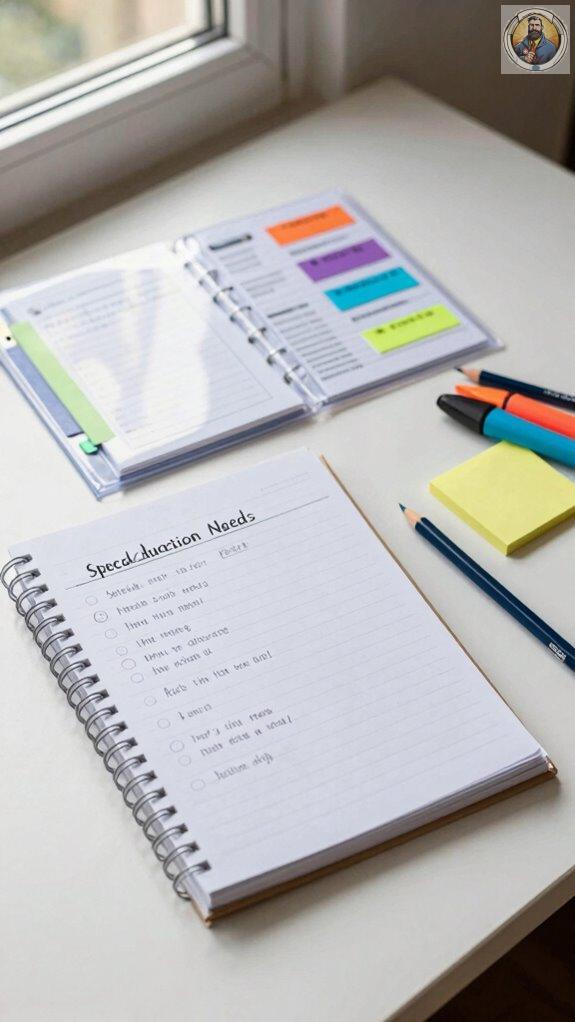
After all that serious talk about IEP meetings and advocating for your kid, it’s time to lighten things up with something a little less intense—like preparing the perfect school supplies checklist. Think of this as your power move to show parent collaboration and advocacy strategies. Ready to take control?
Here’s what you need:
- Durable binders with dividers for organized notes
- A sturdy backpack that can handle heavy loads
- A set of high-quality pens and markers for clarity
- Notebooks designed for easy note-taking and tracking progress
- Baseball caps for sensory relief to help your child manage classroom overstimulation and stay focused throughout the day
- A touchscreen tablet for monitoring academic progress and staying organized with school communications
Being proactive means you’re not just filling backpacks—you’re equipping your child for success.
Trust me, a well-planned supplies list makes communication with teachers smoother and keeps your kids feeling confident. Ready to dominate this task? Let’s do it!
Back to School Essentials
Preparing for school might seem overwhelming, but focusing on back to school essentials makes everything easier—and way less stressful. Think of it as setting a foundation for success, especially when managing special education needs.
Strong parent communication is key—keeping in touch with teachers and therapists gives you perspective and control. Don’t forget emotional support—your kids need to feel secure and confident.
Pack a well-organized backpack with supplies like notebooks, writing tools, and sensory items that help Liam or Emily stay focused. Use checklists or apps to stay on top of appointments and meds. Teaching children about money management through slim wallets can also help instill financial responsibility from an early age. Establishing a consistent kindergarten schedule helps children transition smoothly and builds confidence as they adjust to structured routines.
Recall, a little prep saves hours of chaos later. Whether it’s labeling supplies or prepping a quiet corner, being organized empowers you to support your kids better—and might make you feel like a superhero!
FAQ
How Often Should I Review and Update My Child’s Education Records?
You should review and update your child’s education records quarterly, ensuring digital filing and record categorization are current. Regular updates keep you powerful in advocating for their needs and responses, reflecting each change’s impact swiftly.
What Legal Rights Do Parents Have When Managing Special Education Documentation?
You have assertive legal rights in documentation management, empowering you to access, review, and request modifications to your child’s records. Take control confidently; understanding these rights guarantees you advocate effectively for your child’s educational needs.
How Can I Securely Store Sensitive Special Education Information?
Ever wondered how to keep your child’s special education info safe? I use secure digital storage and maintain confidential record keeping, empowering me to protect sensitive data from breaches while ensuring quick access when needed.
Are There Recommended Best Practices for Involving My Child in Documentation?
I involve my child in documentation by prioritizing clear parent communication and using tailored documentation templates, empowering them to understand and actively participate in their educational journey, ultimately strengthening their confidence and advocating for their needs effectively.
How Can I Balance Organization With My Busy Parenting Schedule?
Studies show that effective time management boosts productivity by 25%, so I prioritize using digital tools to streamline and organize my schedule—empowering me to balance my busy parenting duties and special education needs efficiently.


