

IEP Meeting Survival Guide For Determined Fathers
Navigating IEP Meetings as a Dad: A Back to School Survival Guide
Ever feel like IEP meetings are a game of dodgeball—everyone’s throwing questions and expectations, and you’re left trying to catch what you can? I get it.
I write for Modern Dads because I believe we need to share our journeys.
Knowing your child’s rights under IDEA is crucial. I remember struggling last year during my son Liam’s IEP meeting. I had reports and notes organized in labeled folders. But let me tell you—my folder system was less “office supplies genius” and more “emergency survival kit.”
Keeping my questions simple helped too. I asked, “How will this help Liam thrive?” Breathe, keep calm, and sometimes, noise-canceling earbuds? Best friend during these meetings.
Being a dad nowadays isn’t just about balancing work and play. Just last week, I tried helping my kid with his math homework. We both ended up in a tangled mess of numbers and laughter. I savored our moments just as much as the math—now that’s real parenting!
Quick Takeaways
- Prepare thoroughly by reviewing all documents, understanding your child’s rights, and organizing questions focused on meaningful goals.
- Stay confident and assertive during meetings, using calm communication techniques and stress management tools.
- Keep organized records and evidence to support your advocacy and ensure all concerns are addressed.
- Engage your child with confidence-building activities and emotional support to foster independence and resilience.
- Prioritize self-care and stay aware of deadlines to maintain energy, focus, and a proactive approach throughout the process.
Know Your Child’s Rights and Goals for the IEP
Knowing your child’s rights and setting clear goals for the IEP might sound like stuff only lawyers and teachers worry about, but trust me, it’s the foundation for ensuring your child gets the support they deserve.
Understanding your child’s rights and setting clear IEP goals is the key to getting the support they deserve.
IEP advocacy starts with *rights awareness*. Do you know what your child is legally entitled to? For example, my friend Sarah fought for Liam’s speech therapy by understanding federal laws like IDEA. Teaching your child about digital respect and boundaries will also prepare them for safe online interactions as they navigate school resources and communicate with teachers.
Coordinating with your co-parent or ex-partner on school transition schedules can prevent gaps in communication about your child’s IEP progress and ensure consistency in implementing goals across both homes.
Here’s what you should do:
- Learn the essentials of IEP rights—no one’s going to do it for you.
- Set bold, specific goals—don’t settle for “improving behavior” when you can say “reach a 3rd-grade reading level.”
- Actively participate—your voice has power.
Gathering Documents and Evidence to Support Your Child’s IEP
Gathering all the right documents and evidence might sound about as exciting as watching paint dry, but trust me, it’s where the real magic happens. Power comes from being prepared, and that starts with document organization.
Think of evidence collection as building a case—your kid’s success depends on it. Pin down reports from teachers, recent progress notes, and assessment results. Keep everything in one folder—digital or paper—and label it clearly: “IEP Support Material.”
Don’t forget therapy summaries, report cards, or even a calendar tracking challenges and wins. Recall when I Liam was struggling with reading? Having those reading assessments ready made a huge difference. Documentation of sensory learning challenges can be particularly valuable when your child requires classroom accommodations beyond standard academic support. Consider using mesh sports ball bags or similar organizational systems to keep physical materials sorted and portable for your meetings.
Being organized means you’re ready to back up your child’s needs and advocate confidently. Ready to dominate the IEP meeting? Let’s get to work!
How to Prepare Questions and a Strategy for Your IEP Meeting
When it’s time for your IEP meeting, it’s easy to feel overwhelmed or like you’re walking into a room full of strangers with a pile of confusing papers. But as a parent advocate, you know this is your moment to take control.
Prepare questions that focus on student involvement and confirm every concern is addressed. Think about questions like, “How will this help Liam succeed?” or “How will this plan change as he grows?” Write them down beforehand. Just as nutritious after-school snacks help fuel your child’s body for success, a well-prepared strategy fuels your advocacy efforts.
Use bullet points to organize your thoughts. It’s about being strategic—know what you want, ask direct questions, and don’t settle for vague answers. Consider using active noise cancelling wireless earbuds if you’re taking the meeting remotely, as they help you focus on the conversation without distractions. Recall, this is your opportunity to be a powerful voice for your child’s future.
Tips for Staying Confident and Focused During the IEP Meeting

Stepping into an IEP meeting can feel like walking into a battle, but you’re more prepared than you think—if you keep your confidence. Emotional resilience is your secret weapon; remind yourself of your role as a dad who fights for Liam’s success.
Stress management helps you stay calm amid chaos—take deep breaths, pause when needed, or visualize a win. Recall past wins; maybe you once kept your cool when Liam had a meltdown at the grocery store—that’s power. Just as time management strategies help busy parents juggle multiple responsibilities, structured breathing techniques and mental preparation can help you navigate the IEP meeting with clarity. Much like how proper tent pole repair kits keep camping equipment functional during outdoor adventures, having the right tools and strategies keeps your advocacy strong during challenging meetings.
To stay focused, try a quick mental checklist: 1) Know your goals, 2) Listen actively, 3) Don’t let emotions sideline your message. Ask, “What’s the worst that could happen?” Then, own that you’re here to advocate like a boss.
Building Lego Together
After a tough IEP meeting, it’s tempting to collapse on the couch and forget about all things school-related—trust me, I’ve been there. But building connections with your kid by assembling Lego sets can shift that mindset. Why? Because Lego isn’t just about bricks; it’s about encouraging independence and teamwork. Research shows that redefining parenting roles allows fathers to engage more meaningfully in their children’s developmental activities and academic support.
Grab a bin of Lego, and ask, “What are we creating today?” Then, encourage your child to take charge, suggest ideas, and solve problems. I recall Liam loved designing skyscrapers, which boosted his confidence and independence.
Use simple steps:
- Collect pieces together
- Assign roles (leader, builder, designer)
- Celebrate small wins
Building Lego together strengthens your bond and shows your kid you’re in their corner—teachers, tests, and all. Ready to turn those bricks into power moves?
IEP Meeting Prep
Ever feel like walking into an IEP meeting without a plan is a bit like showing up to a game without your playbook? That’s why prep is everything—especially for parent advocacy and emotional preparedness.
Envision this: I once walked in thinking I could wing it, and I regretted it instantly. To be ready, I always bring a list of strengths, concerns, and goals for Liam. Review all paperwork, notes from previous meetings, and talk to teachers beforehand. Consider using smart home Wi-Fi routers to monitor your child’s screen time before the meeting so you have concrete data to discuss.
Practice calming techniques—deep breaths are underrated. Did I mention keeping a cool head? Just as kids safety vests provide protection during physical activities, emotional preparation protects you during challenging conversations.
Your voice matters—be assertive, not aggressive. Power comes from knowledge and confidence.
Ask questions, challenge assumptions, and don’t hesitate to stand firm. You’re your child’s best advocate—prepare like it!
Lunchbox Notes Communication
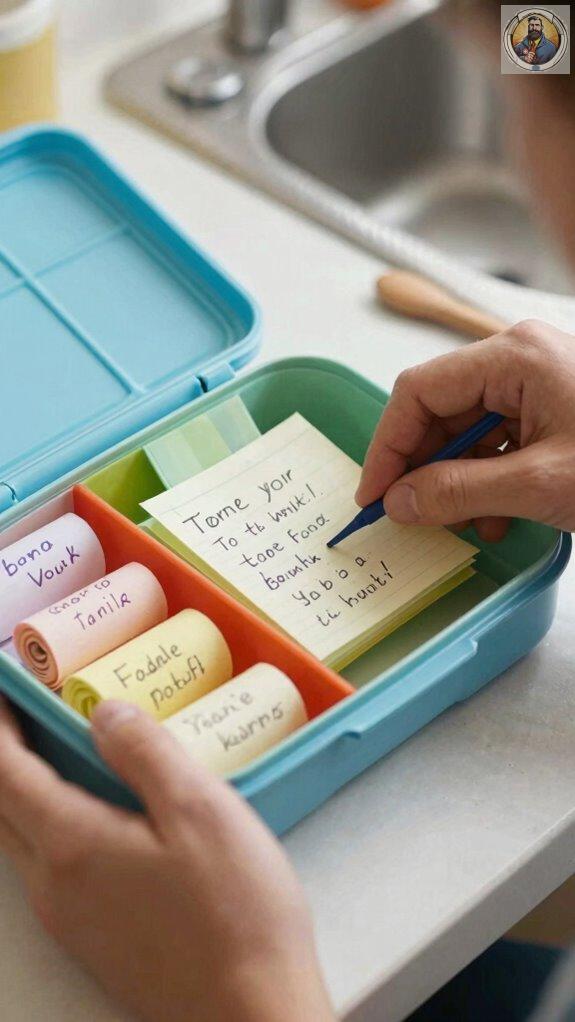
You might think lunchbox notes are just small, sweet scribbles, but they can actually be powerful tools for communication and connection—you just need to get a little creative. Use creative strategies like doodling, funny jokes, or inspiring quotes; they become emotional support in disguise.
Lunchbox notes are small gestures that pack big emotional support—get creative and make your child feel loved.
Last year, I slipped Liam a note that said, “You’re stronger than you think,” and his face lit up. Here’s the trick: make each note intentional. Practicing mindfulness and presence while writing these notes can deepen their impact and help you connect more authentically with your child.
Try these ideas:
- Keep a stash for busy mornings.
- Write messages that boost confidence or empathy.
- Add stickers or drawings to make it special.
Just as martial arts games build physical confidence and resilience in children, thoughtful lunchbox notes reinforce emotional strength and self-belief throughout their day.
Think of it as a secret weapon—small, but mighty in making your kid feel loved and understood. Because, honestly, who wouldn’t want that boost before tackling the school day?
Back to School Essentials
Getting ready for school can sometimes feel like trying to break into a secret fortress—there’s just so much to recall!
That’s why my back-to-school essentials are my secret weapons. Here’s what keeps me empowered:
- Planner & Calendar: I jot down IEP meetings, holiday traditions, and important deadlines, keeping my family’s schedule smooth and stress-free.
- Organized Supplies: Pens, notebooks, and folders — because chaos is no place for a determined dad. Liam loves organizing his gear, and it keeps him confident. Teaching him about smart spending habits helps him make thoughtful choices with any school supplies or lunch money he manages.
- Self-Care Gear: A quick stretch or walk, essential for maintaining my patience and energy. Incorporating martial arts workouts at home helps me stay centered and energized throughout the demanding school season. Remember, parent self-care isn’t selfish; it’s smart.
FAQ
How Can I Advocate Effectively if I Don’T Agree With the Proposed IEP?
If I disagree with the proposed IEP, I focus on parent-school collaboration and assertive communication, clearly expressing my concerns and requesting revisions. This empowers me to advocate effectively and guarantees my child’s needs are prioritized.
What Should I Do if the School Denies My Requested Accommodations?
When schools deny accommodations, I don’t back down—parent communication becomes my power tool. I explore legal options, assert my child’s rights fiercely, and turn resistance into a step toward securing the support my child truly deserves.
How Do I Handle Emotional Responses During the IEP Meeting?
During the IEP meeting, I stay focused by practicing emotional regulation and stress management techniques. I remind myself of my authority and purpose, maintaining composure to guarantee my child’s needs are prioritized and my voice remains strong.
What Are My Rights if I Suspect IEP Team Missteps or Errors?
If I suspect IEP team errors, I know my rights and legal obligations safeguard me; I can request an independent evaluation or dispute procedures, empowering me to challenge decisions and ensure my child’s needs are prioritized and correctly addressed.
How Can I Involve My Child in the IEP Process Comfortably?
Engaging my child in the IEP process is like planting a seed—nurturing confidence and fostering open communication. I involve my child gradually, ensuring they feel empowered, which boosts both their engagement and my confidence as a parent advocating fiercely.


