

How to Choose Independence Planners For Kids
Back to School: Choosing the Right Independence Planner for Kids
How do I pick the best independence planner for my kids? I dig deep into their interests!
At Modern Dads, I share what works for us. This isn’t just about planners—it’s a quest for sanity during back-to-school chaos. My son thrives on stickers, while my daughter prefers digital reminders. Simple, right?
Fun elements matter. Think colorful design and easy-to-follow routines. Who said planning can’t be entertaining?
Last week, I found a pizza slice sticker pack. Suddenly, planning became irresistible! My kids looked forward to checking off tasks just to earn those cheesy rewards.
It’s all about shared laughter and stress relief—we tackle routines together. Being a dad means creating small wins, one sticker at a time!
Quick Takeaways
- Assess the child’s planning style and preferences, such as visual cues or verbal reminders, to select the most engaging planner.
- Choose between digital or paper planners based on the child’s need for customization, durability, and ease of use.
- Ensure the planner includes sections for to-do lists, reminders, and goal-setting to support independence milestones.
- Incorporate creative and sensory elements like stickers, doodles, or textured materials to make planning fun and motivating.
- Opt for age-appropriate, simple designs that foster routine, responsibility, and confidence without overwhelming the child.
What Are Kid-Friendly Independence Planners : And Why Do They Matter?
If you’ve ever watched a kid struggle to pack their backpack or remember chores, you know how tricky independence can be at that age. Kid-friendly independence planners are like personal coaches for kids, helping them master independence milestones. These planners encourage parents to give age-appropriate tasks, boosting confidence and responsibility.
They include sections for daily to-do lists, reminders, and goal-setting—think of them as a map for independence. For example, a planner might ask, “Did Liam pack his lunch today?”; it’s a gentle nudge that builds habits. These tools make independence feel achievable instead of overwhelming.
Essential Features to Look for in an Independence Planner for Kids
Choosing the right independence planner for your kid isn’t just about picking a colorful notebook or a cute design (although those are fun!). Instead, focus on features that really support growth—like encouraging parent-child communication.
A planner with prompts for conversations or daily check-ins helps build trust and independence.
Look for creative design elements—stickers, fun fonts, or space for doodles—that make planning exciting rather than a chore.
Consider if it offers simple step-by-step guides, so your child feels confident tackling tasks alone.
Recall, a good planner isn’t just a tool, it’s a bridge to independence.
Want Liam to start feeling accomplished? Look for these features and make planning a shared adventure, not a battle!
How to Assess Your Child’s Planning Style and Needs?
Getting a clear picture of your child’s planning style is like trying to understand their unique flavor of ice cream—each kid is different, and that’s what makes it interesting (and sometimes challenging).
To do this, I use a behavior assessment—observe how they manage tasks, handle deadlines, or even procrastinate. Ask yourself: Do they thrive with visual cues, or do they need verbal reminders?
You can also try motivational techniques—like rewards or making it fun—to see what gets them excited about planning. Incorporating martial arts games into their planning routine can boost engagement and make organization feel less like a chore. Establishing consistent time management practices early helps children develop lasting organizational habits that will serve them throughout their lives.
Keep in mind, Liam loved stickers, while Emily prefers digital checklists. Take notes of what clicks.
Recognizing their strengths and struggles helps you choose a planner that fits like a glove—no “one size fits all” here!
Should You Choose Digital or Paper Independence Planners for Your Kid?
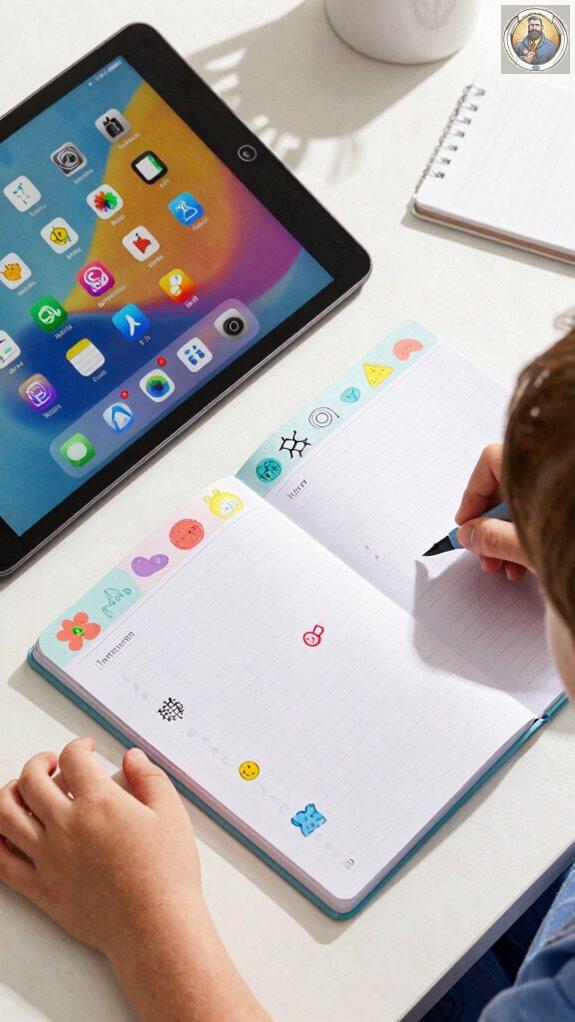
So, now that you’ve seen how different kids think and plan in their own quirky ways, it’s time to decide on the best type of planner—digital or paper.
Have you ever tried digital customization? It’s fantastic if your kid loves changing colors, adding stickers, or setting reminders that beep annoyingly to get their attention.
Digital planners let kids personalize with colors, stickers, and reminders—perfect for tech-loving, creative little organizers.
On the other hand, paper durability matters a lot—my daughter Emily’s planner has survived water spills, crayon scribbles, and a flying shoe.
If you want something that lasts through rough handling, paper’s a win.
But if your kid needs constant updates, instant changes, or loves tech, digital planners are perfect. Digital planners can also facilitate connecting with teachers through shared calendar features and organized communication about assignments.
Using educational flash cards alongside planners can help reinforce organizational skills and prepare children for structured learning environments.
Both options have their pros and cons—just like Liam’s obsession with highlighters or Sarah’s love for sleek apps.
Choose wisely!
Tips to Make Planning Fun, Engaging, and Easy to Stick With
When it comes to making planning fun and easy to stick with, I’ve learned a few tricks from my own kids—trust me, they’re full of surprises (mostly involving missing homework or chaotic mornings).
To keep them engaged, I use these strategies:
- Incorporate creative activities like drawing or color-coding tasks, making planning feel less like a chore.
- Set up reward systems—for example, a small treat or extra screen time after a week of consistent planning.
- Make it interactive—ask your kids to customize their planner with stickers or funny doodles, turning it into their personal project.
Using quality wax crayon packs can make decorating their planner even more enjoyable, adding vibrant colors to their planning process. Many families also find that magnetic weekly car planners help coordinate schedules across multiple activities like school pickups and extracurriculars.
Any of these sound too simple?
Often, the simplest ideas work best, especially when kids see planning as a fun adventure, not a task.
Common Mistakes to Avoid When Choosing a Kid’s Independence Planner
Choosing the perfect independence planner for your kid might sound like a simple “pick and go” task, but trust me, it’s easy to fall into some common traps.
For example, overly involving yourself can sabotage your child’s independence—remember, this is about growing their skills, not micromanaging.
Avoid choosing a planner based solely on flashy designs; practicality wins with time management.
Don’t forget: a planner that doesn’t fit their routine or learning style will sit unused.
Do you want your kid to become responsible or just look responsible?
Also, be cautious about adding too many features—simple checklists often work best, much like how building confidence and strength through structured activities helps children develop resilience in other areas of life.
Consider using paper pocket planners to help coordinate their schedules and commitments in a tangible format they can carry with them.
Think of it like this: Empower them to take charge, and don’t turn their independence into a game of “parent-controlled.”
Dad Helping With Backpack
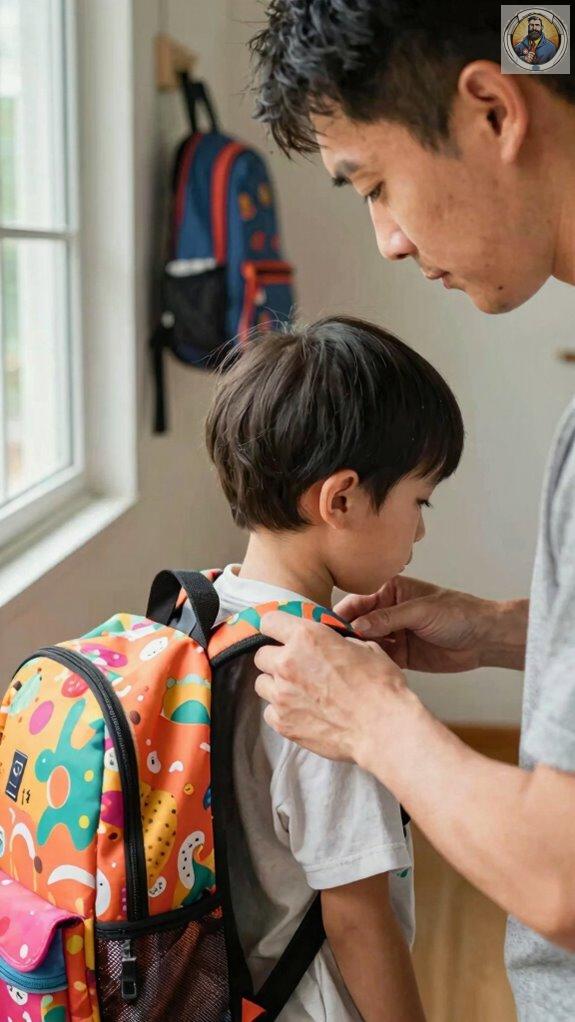
Helping your kid with their backpack might seem like a no-brainer, but trust me, it’s more complicated than it looks. Parent involvement is key to guiding good backpack organization habits. Here’s what I’ve learned:
- Balance weight—Make sure Liam’s backpack isn’t heavier than he is—too much stuff crushes independence.
- Pack strategically—Place heavier books at the bottom, so it’s easier to carry and less back strain.
- Encourage regular checks—Help Emily review her backpack daily, removing trash and expired snacks.
During my own confusing mornings, I’ve realized that kids can learn more from my involvement than they admit. My goal isn’t just to help, but to teach kids lifelong organization skills—saving everyone frustration in the long run. You can even make organizing fun by turning it into a game with household items that keeps kids engaged while learning to manage their belongings. Teaching children good organizational habits early can also help reduce stress and cyberbullying-related anxiety that might stem from social pressures about appearance and possessions at school.
Back to School Essentials
Getting ready for the new school year isn’t just about a cool backpack or shiny new pencils; it’s about gathering the right supplies that foster independence and academic organization.
Have you considered involving your child in the shopping? Letting Liam pick out his favorite notebooks or Emily choose a planner can boost parent involvement and make them excited to stay organized. Incorporating age-appropriate sensory activities, such as allowing children to feel different planner textures and materials, can make the selection process more engaging and supportive of their developmental needs.
Essential back-to-school supplies include labeled folders, a sturdy backpack, pens, pencils, and a planner—because knowing where everything is matters! Keep in mind: consistency is key. Create a checklist together to ensure nothing’s forgotten.
A dedicated homework space with adjustable LED desk lamps can significantly reduce distractions and help your child maintain focus during study sessions.
It’s not just about the right gear but teaching your kid to take responsibility early. After all, a well-prepared student is a confident student—ready to tackle anything ahead!
FAQ
How Early Should I Introduce Planners to My Child?
Introduce planners around age 5 or 6, when my kids Emily and Liam began understanding routines. I found visual aids like stickers or pictures really helped.
Do they know their daily routine yet? Use simple lists and memorable visuals to guide them.
Keep it fun—think of it as a game, not homework. Keep in mind, consistency matters, and integrating planners into daily life makes mastery easier rather than a chore.
Are There Specific Planners for Different Age Groups?
There are planners tailored for different age groups, with *age-appropriate layouts* and *engaging designs*. For younger kids, opt for planners with simple, colorful pages, big spaces, and fun stickers—think Liam’s first planner.
Older kids like Emily benefit from more structured layouts focused on goals and schedules.
Keep in mind, the key is matching the planner’s complexity to your child’s ability, making mastery feel like a fun adventure, not a chore.
How Can I Encourage My Child to Use the Planner Consistently?
To encourage your child to use their planner consistently, try fun motivational strategies like rewarding progress—maybe a sticker chart or extra screen time. Show enthusiasm, and share how my daughter Emily loves crossing off completed tasks.
Make it a daily habit, perhaps during breakfast or before bed.
Asking questions like, “Isn’t it cool to see everything you accomplished today?” also sparks their interest and builds pride in their independence!
What Safety Concerns Are Associated With Digital Planners?
Are digital planners safe? Well, just like guarding your secret sauce recipe, you gotta watch out for cybersecurity threats and digital addiction.
Kids can get hooked, losing hours scrolling or worrying about online safety. To stay secure, always pick trusted apps with strong privacy settings, teach your kids about online dangers, and set healthy boundaries—because we don’t want their tech time to turn into a digital maze!
How Can I Customize a Planner to Suit My Child’s Interests?
Ever wonder how to make a planner truly your child’s? Creative customization and thematic personalization are your best tools. Think stickers of their favorite animals, color schemes matching their room, or sections for hobbies like soccer or art.
I once added Liam’s comic strip doodles, and he loved it! Tailor the design—add motivational quotes, fun fonts, or even space for doodles. Want mastery? Let your kid’s passions shine through!
Summary
Choosing the right independence planner isn’t just about cute designs or fancy features — it’s about finding what truly works for your kid’s style. Keep in mind, a planner should spark their curiosity, boost confidence, and make organizing feel less like a chore. Think about their habits, whether they like paper or digital, and involve them in the process. After all, guiding them now helps them become confident, independent adults someday (yep, even Liam!)—and that’s pretty awesome, right?


