

Essential Kindergarten Prep Routines For Proactive Dads
Mastering Mornings: Back to School Made Easy
Ever wonder how to make back-to-school mornings less chaotic? A simple routine can turn mayhem into magic.
I share my experiences on Modern Dads to help fellow fathers navigate the wild world of parenting.
Visual schedules and packing the night before are my secret weapons. Involving my kids in picking their outfits has saved me from fashion disasters—my son once wanted to wear his dinosaur costume!
A bit of dad humor, like “Did you hear about the math book that was sad? It had too many problems!” can lighten the mood, too.
One morning, I accidentally made pancakes in the shape of my kid’s favorite superhero. The giggles that followed made it a win, proof that simple moments create lasting memories.
Quick Takeaways
- Establish calm morning routines with visual schedules and deep breathing to set a positive, focused tone for the day.
- Involve your child in choosing clothes and packing supplies to promote independence and responsibility.
- Use role-play and social stories to prepare your child for new social environments and interactions.
- Create organized systems with labeled bins and checklists to ensure all essentials are ready and prevent last-minute chaos.
- Foster emotional readiness by practicing positive affirmations, mindfulness activities, and open communication about feelings and concerns.
Establish a Calm Morning Routine to Reduce Kindergarten Anxiety
If you’re anything like me, mornings with young kids can feel like trying to herd cats—chaotic, unpredictable, and a bit overwhelming.
To make it smoother, I started practicing mindful breathing first thing. Before we rush out the door, I pause, take a few deep breaths, and remind myself: “Today’s going to be great.” It helps me stay calm and focused. Consider incorporating a white noise machine into your morning routine to create a calming auditory environment that supports emotional regulation.
Starting my day with mindful breathing keeps me calm, focused, and ready to face the chaos with positivity.
I also use positive affirmations like, “We’re prepared,” or “Kids thrive when we stay calm.” Sometimes, I even tell Liam and Emily, “Let’s take a deep breath together,” turning it into a fun ritual. Research shows that engaging children in auditory processing activities during these calm moments can further enhance their focus and emotional regulation.
This little practice, combined with some laughter and patience, keeps everyone’s anxiety down and sets a positive tone for the day. It’s a game changer.
Involve Your Child in Packing Supplies and Choosing Clothes
Getting your child involved in packing supplies and choosing clothes might sound like just a way to keep them busy, but it’s actually a fantastic strategy to build independence and reduce morning chaos. When Liam picks out his outfit the night before, he feels more in control, making mornings smoother. Selecting an ergonomic school backpack designed with proper weight distribution helps prevent strain as your child learns to organize and carry their own supplies. Here are some organizational tips:
| Step | Action | Benefit |
|---|---|---|
| Involve in shopping | Let your child pick supplies at store | Builds parent-child bonding |
| Morning decision making | Choose between two outfits | Cultivates decision skills |
| Organize together | Use labeled bins for supplies | Keeps things tidy |
| Make it a routine | Pack the night before | Avoids last-minute scramble |
| Celebrate choices | Praise independence | Boosts confidence |
Are your mornings already feeling chaotic? Trust me, these simple steps make a big difference.
Read Kindergarten Transition Books to Build Excitement
Select books that match your child’s interests—whether that’s animal stories, adventure tales, or funny characters—then read together.
Use storytelling techniques like expressive voice, pauses, and gestures to make the story come alive. These methods boost emotional preparedness, helping kids feel confident about kindergarten by turning fears into excitement.
I recall reading “Biscuit Finds a New Home” with Liam; the tone and expressions eased his nerves about starting school.
Ask questions like, “What do you think happens next?” to keep them engaged. Think of it like a mini-performance!
Incorporate relatable scenarios from your own experiences or family stories. This way, your child will associate reading with fun and comfort, making kindergarten’s changeover smoother—and you’ll more easily spot signs of anxiety or joy.
You can also use creative tent building projects as interactive story extensions where your child acts out scenes from their favorite kindergarten transition books.
Practice Essential Self-Care Skills for the First Day
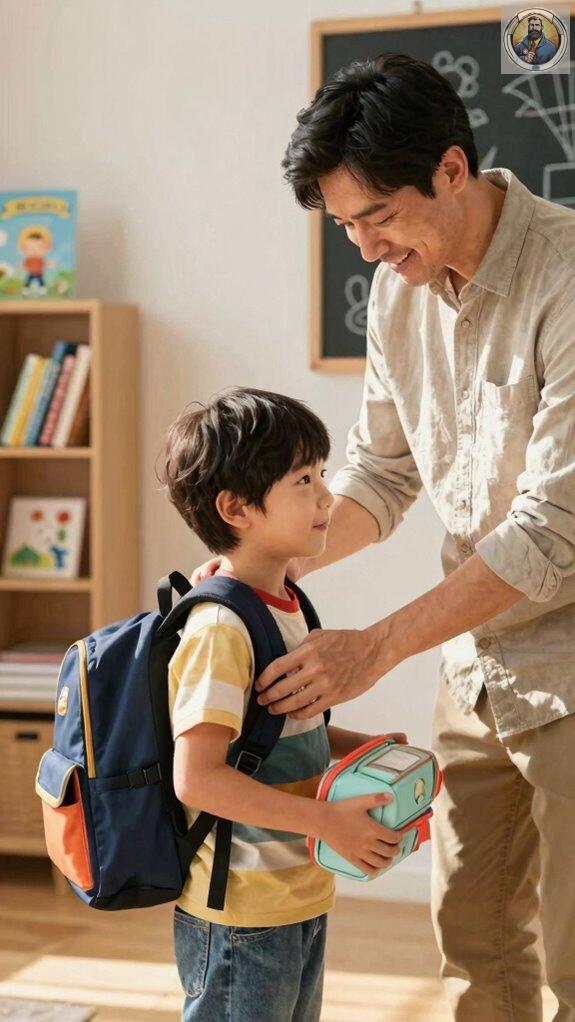
Starting the day of kindergarten on the right foot means mastering some essential self-care skills—yes, even before you’ve downed your morning coffee.
Morning mindfulness isn’t just for zen masters; it’s for dads who want calm and clarity. Before that mad rush, take a minute to breathe deeply—maybe while brushing teeth or making breakfast.
Keep in mind, your energy sets the tone. Engage in simple parent-child bonding: share a quick joke or a compliment while getting dressed, making it feel special.
Think back to mornings with Emily or Liam—how small routines created big bonds.
Keep things organized with a checklist so nothing’s forgotten, and do a quick mental pep talk.
Self-care isn’t selfish—it’s essential so you can be present and proactive for that first big day!
Create a Visual Schedule to Prepare Your Child for Kindergarten
When it comes to prepping your little one for their first big school day, having a visual schedule can be a total game-changer. Think of it as an interactive calendar that guides them step-by-step. Envision this:
| Time | Activity | Description |
|---|---|---|
| 8:00 AM | Wake Up | Stretch, yawn, smile! |
| 8:30 AM | Breakfast | Cereal or toast? |
| 9:00 AM | Dress Rehearsal | Pretend to pack bag! |
| 9:30 AM | Meet the Teacher | Practice handshakes! |
A dress rehearsal isn’t just for theater; it helps your kid grasp the routine. Use visuals and practice daily—trust me, Liam responded better when he knew what to expect. Consider using sunrise simulation wake-up lights to help establish a consistent morning wake time before kindergarten starts. For children who struggle with fidgeting during routines, consider using silent silicone fidget rings to help them stay focused and calm throughout the day.
Morning Breakfast Cuddle
There’s something almost magical about starting the day with a warm, snuggly breakfast cuddle—it’s like hitting the reset button before the busy day begins. This sensory breakfast moment isn’t just about food; it’s about building emotional cuddles that anchor us.
I recall mornings with Emily when we’d sit at the breakfast table, talking softly and savoring her favorite cinnamon oatmeal.
To make it special:
- Use breakfast foods that engage the senses—think crispy toast or juicy berries.
- Hold your child close during this time, offering gentle, affectionate cuddles.
- Make eye contact and chat softly—reinforce loving bonds.
This routine helps your child feel safe and loved before tackling the day’s challenges. It’s the perfect way to connect emotionally while soothing sensory needs. Creating a focused, calm environment with minimal distractions during breakfast can further enhance this bonding experience. Similar to bonding through physical activity, these morning moments create lasting connections that support your child’s emotional development and readiness for the day ahead.
Kindergarten Readiness
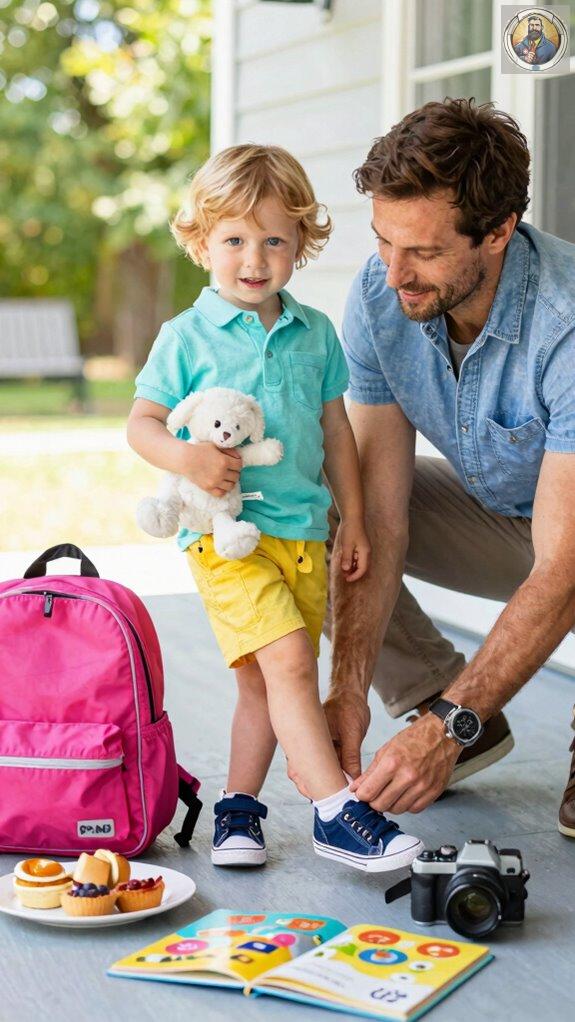
Have you ever wondered if your little one is truly ready for kindergarten, or if you’re just winging it? I get it—I’ve been there with Emily last year. Kindergarten readiness isn’t just about counting to 20 or knowing colors.
It’s also about teaching your kid to stay safe at the playground—sharp edges, slide safety, and watching out for strangers. Plus, good teacher communication is essential; ask early about classroom routines and behavior expectations.
Teaching your child to pack their own lunch builds independence and responsibility while establishing a sustainable daily routine. Here are some quick tips:
- Practice playground safety rules at home or the park.
- Role-play saying “hello” to teachers.
- Build independence with small chores.
- Have honest chats about feelings and fears.
New Backpack Checklist
Getting your child ready for school isn’t just about picking the coolest backpack; it’s about making sure it’s practical, organized, and ready for whatever the day throws at you. A well-thought-out packing checklist helps keep everything in order, so nothing gets forgotten—and trust me, forgetting Liam’s lunch or Emily’s homework can lead to a minor meltdown.
Here’s a simple backpack organization tip: use small compartments or pouches, labeled for essentials like snacks, pencils, or homework. Consider including conversational icebreaker cards to help your child ease into social situations and build confidence with new classmates. A durable rubberized flashlight is also a practical addition for after-school activities and building emergency preparedness skills.
| Item | Purpose | Placement |
|---|---|---|
| Lunch & Snacks | Fuel for the day | Front pocket |
| Homework & Notes | Communication | Inner compartment |
| Water Bottle | Stay hydrated | Side pocket |
Master this, and your mornings will run smoother—and no more frantic searches.
Back to School Essentials
When it comes to sending your little one back to school, missing the essential supplies is like showing up to a soccer game without your cleats—nothing good’s gonna happen. So, I’ve learned that staying organized with back-to-school essentials makes all the difference.
Think beyond just pencils and lunchboxes—include playdate strategies to help Liam or Emily build friendships, and keep parent communication open with teachers to stay in the loop. I recommend creating a checklist, like, “Did I pack extra snacks, spare clothes, and a favorite toy?”
Recall, a well-packed backpack and clear lines of communication help dodge last-minute chaos. My wife Sarah and I swear by early prep and simple lists—trust me, it saves everyone’s sanity come Monday! Are you ready for a stress-free start?
FAQ
How Can Dads Effectively Communicate With Teachers About Their Child’s Needs?
I prioritize open parent-teacher collaboration by using clear communication strategies, actively listening during meetings, and regularly checking in via emails or calls. This approach helps make certain my child’s needs are understood and addressed effectively.
What Are Simple Activities to Build Your Child’s Confidence Before School Begins?
I build my child’s confidence by encouraging independence through simple tasks like dressing and organizing toys, then using positive reinforcement to celebrate small wins, helping them develop a resilient, self-assured mindset before starting school.
How Can Dads Support Their Child’s Social Skills Development at Home?
Did you know 85% of social skills develop through daily interactions? I support my child’s social skills by planning engaging playdates and practicing emotional coaching, helping them navigate feelings and build strong, confident friendships at home.
What Signs Indicate a Child Is Ready Emotionally for Kindergarten?
I see signs of emotional resilience in a child who can easily manage shifts and express feelings clearly. Readiness indicators also include independence and positive interactions, showing they’re emotionally prepared for kindergarten’s social and academic demands.
How Can Dads Manage Their Own Stress During the Kindergarten Transition?
I manage my stress through effective time management and regular stress relief activities like exercise and meditation, which help me stay calm and focused during my child’s kindergarten shift, ensuring I provide steady support and reassurance.
Summary
Did you know that kids who start school feeling prepared are 60% more likely to love learning? As a dad who’s been through it, I can tell you that these routines make a difference. From calming mornings to packing smart, you’re laying the foundation for confidence. So, are you ready to turn those butterflies into high-fives? Trust me, with these simple steps, you’ll be the hero in your kid’s first big adventure.


