

5 Safe Fire Starting Tips for Modern Dads
Dad’s Guide to Safe Fire Starting
Setting things ablaze? Yeah, I’ve done it. I once almost turned *Goodnight Moon* into a bonfire. Lesson learned: always use child-sized tools. Keep fires 10+ feet from tents and snack zones, and have water on standby. Teach kids to use the P.A.S.S. method with a real extinguisher. That smoke? No joke.
I write for Modern Dads because parenting is a wild ride, and I want to share my misadventures. Remember that time I introduced my kids to the joy of roasting marshmallows?
Let’s say it ended with a playful fireball and Sarah grounded me for a week. Classic dad moment, right?
Finding humor in these events helps us bond and learn together. Being a dad is about navigating the flames—literally and figuratively.
Quick Takeaways
- Choose a clear, designated fire zone away from tents, trees, and flammable items to prevent accidents.
- Use child-sized, durable tools and reliable fire starters like Duraflame logs for safer, controlled ignition.
- Always keep a bucket of water, shovel, and fire extinguisher nearby during fire activities.
- Supervise children closely and assign safe, age-appropriate roles in fire starting and management.
- Educate kids early on fire safety myths, rules, and emergency drills like stop, drop, and roll.
Teach Kids Fire Rules With Real-Life Stories
When my six-year-old Liam tried to “help” me start a campfire using his Spider-Man lighter fluid—yes, the one shaped like a lava monster—I knew it was time to get serious about fire safety… without totally killing the fun.
Turns out, “just throw more fluid on it” isn’t a fire-stoking technique—it’s a 911 dialer. We chatted about fire safety myths (like “small flames are safe”) while roasting slightly burnt marshmallows. Spoiler: They’re not.
Now we practice emergency contact protocols monthly. Liam even pretends to call 911 with Sarah’s old flip phone. Adorable? Yes. Life-saving? Potentially. Just like choosing the right kids daypack size helps ensure children stay comfortable and safe during outdoor adventures.
Ask your kids: “What’s the fastest way out if the tent’s on fire?” Then actually time an escape drill. Not dramatic. Just smart.
Teach with stories, not sermons. My “uncle Dave set his beard on fire at a BBQ” tale? Gold. They remember it. Mostly the beard part. But hey—safety sticks when it’s real. And slightly ridiculous.
Use Child-Sized Tools for Safe Fire Practice
Let’s talk tools—because handing a six-year-old a full-size hatchet and saying “be careful” is like giving a toddler a forklift and hoping for the best. Trust me, I learned this when Liam nearly took out our camp chair with a camping axe meant for, well, actual adults. Nope. We switched to *child proof tools*—think tiny folding saws, plastic-handled fire steels, and wooden-handled hatchets under 10 inches. Just like how to fit headlamps for young kids, getting the right gear size matters for comfort and control.
Now? Emily can split kindling like a tiny lumberjack. *Age appropriate equipment* isn’t just safer—it boosts confidence. Look for brands like Gerber’s kid-sized kits or Eureka’s junior sets. When selecting tools, consider durable options with rubberized grips that can withstand regular use and the inevitable drops that come with young learners.
Seriously, would you use a spoon to cut steak? Then don’t expect a kid to handle adult gear. Start small, supervise closely, and let them *earn* bigger tools. And hey—praise effort, not just results. Who knew safety could feel this empowering? (Spoiler: I did. After the first near-miss.)
Only Light Fires in Designated Safety Zones
Always pick a designated safety zone—five feet clear of tents, trees, and *your kid’s marshmallow stash*. I learned that after singeing Emily’s favorite pink roasting stick. Not cool.
Pack fire safety equipment like a shovel, bucket, and water—because “hose access” sounds fancy but rarely exists in the woods. When using a shovel for fire management, remember that Leave No Trace principles should guide how you minimize impact on the surrounding soil and vegetation. Consider having mosquito head nets for kids available to protect your family from insects while you’re managing the fire area.
Oh, and save your emergency contact in your phone *before* things go up in flames—literally.
Would you light a bonfire in your living room? Didn’t think so. Treat the outdoors the same.
Stay safe. Stay sane. And for Sarah’s sake, don’t burn down the forest.
Stay Close: Supervise Without Taking Over
| Alert Level | Kid’s Job | Dad’s Job |
|---|---|---|
| Calm | Manage the match | Chew chocolate quietly |
| Smoky | Call “Hey, look!” | Stand up, bucket ready |
| Flame On | Back up slowly | Act, don’t yell |
| Panic Mode | Stop-Drop-Roll prep | Deploy water, call for help |
Stay close. Stay chill. Let them grow.
Drill Stop-Drop-Roll Until It’s Automatic
If my kids didn’t laugh every time I launched into our living-room fire drill, I’d think they weren’t paying attention—instead, they know Sarah calls it “Dad’s flaming zombie routine,” but hey, it works. Stop, drop, and roll isn’t just for show; it’s muscle memory night.
- Practice stop-drop-roll monthly—yes, even if Liam laughs like I’m breakdancing
- Review fire extinguisher basics: P.A.S.S. (Pull, Aim, Squeeze, Sweep)—not for dad jokes
- Lock in emergency contact protocols: 911 first, then call Sarah’s phone, not Emily’s Minecraft server
When the smoke alarm screeches, no one wants to improvise. We drilled during laundry day—blankets on fire? Nah, just socks. But real skills stick. Would you fumble in a crisis? Probably. That’s why we train. Staying grounded during emergencies means practicing mental resilience so you can lead your family with confidence rather than panic. Turning these drills into martial arts games keeps everyone engaged while building the muscle memory that saves lives.
Now my kids tackle rolls like pros. And hey, if I look ridiculous? Good. They’ll recollect.
Teaching Fire Safety Together
While you’re probably not planning family game night around fire safety, it might be the most important one you host—especially if your kids think smoke detectors are just loud ceiling toys. Let’s squash fire safety myths like “fire only happens in cartoons” or “I can outrun flames in my pajamas.” Spoiler: You can’t.
Do a real family safety planning drill. Not just “run out the door,” but map two exits per room. My son Liam once “escaped” through a closet—perfect chance to clarify. Practice like it’s the Oscars: screaming toddler noises optional. When hiking with young children, ensure your family is prepared with proper gear like lightweight hiking backpacks designed for toddlers. Keep a molle seat back organizer in your vehicle stocked with emergency supplies and first aid essentials for quick access during family outings.
Include pets—Sarah reminds me our dog, Chewy, won’t text us from safety. Test detectors monthly (yes, even when Emily groans). Teach kids how to call 911—no, “Hey Siri, call Grandma” doesn’t count.
Make it fun: reward fastest safe exit with ice cream. Mostly? Stay calm, stay consistent, and recollect—heroes don’t panic. They plan. You’ve got this.
Purchase Reliable Fire Starters
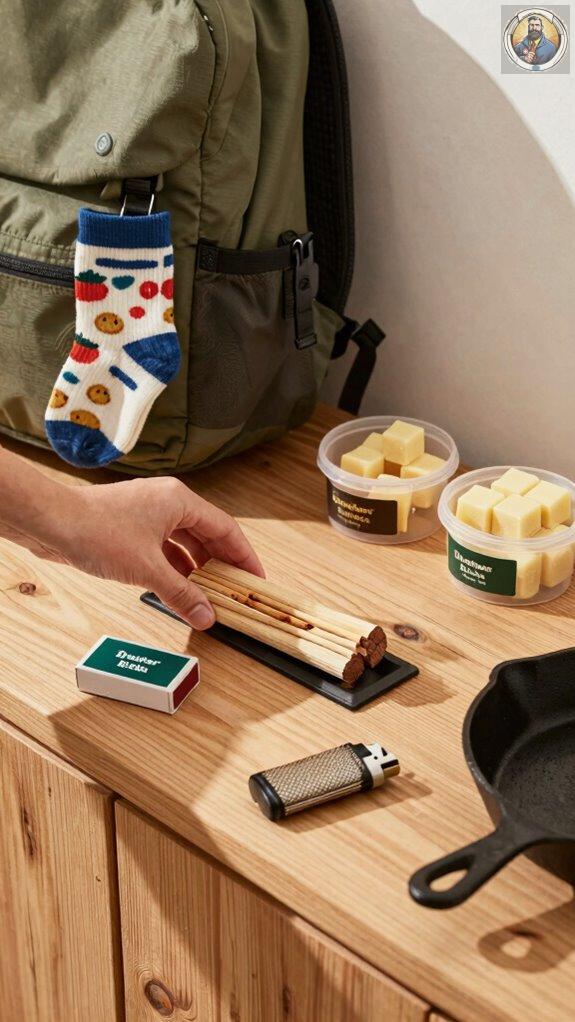
Three words: don’t wing it.
Last time I tried lighting a fire with potato chips and hope? Epic fail. (Spoiler: chips burn like wet paper towels.) Now I know—reliable fire starters are non-negotiable. Understanding fire chemistry isn’t rocket science, but it helps.
You need tinder, heat, and oxygen—not your buddy’s dubious “fire cube” from Amazon. Just like setting up interactive game stations requires proper planning and materials, fire starting demands the right tools.
- Duraflame Ranger Rick Logs: Burn clean, last long, and won’t summon the fire department.
- Choosing eco friendly options like cotton-wood sticks or recycled wax cubes keeps Mother Nature from side-eyeing you.
Avoid gasoline. Seriously. Unless you want your kids filming your next stunt for TikTok. Quality kids’ hiking socks keep young adventurers comfortable during outdoor expeditions, just as quality fire starters keep your camping trips safe.
I keep a sealed bin in the garage with starters labeled “Do Not Eat – Not Trail Mix.” (Liam learned that the hard way.)
Fire safety starts long before the spark. Be the dad who’s prepared, not just dramatic.
FAQ
Can I Use Gasoline to Start a Campfire Safely?
No way, José—I’d sooner juggle flaming torches than use gasoline! *Flammable liquids* like gas are a one-way ticket to disaster.
Fire safety 101: gas = boom, not “cozy campfire vibes.” I learned this the hard way when Liam dared me to “light it faster.” Spoiler: it *whooshed* like a superhero cape on fire.
Stick to matches, lighters, or fire starters. Trust me, your kids—and Sarah—will sleep easier.
What Should I Do if My Fire Spreads Unexpectedly?
I grab the shovel and dirt—fast—because nobody wants a yard-sized bonfire. Fire containment isn’t just smart; it’s survival mode.
I yell, “Emily, get the bucket!” and poor Liam just stands there like a confused raccoon.
Keep a 3-foot dirt ring—learned that after singeing Sarah’s prize hydrangeas.
Emergency preparedness? For real.
Have water, shovel, and phone ready.
Stop small flames before they photobomb next door’s security cam.
Are Fire Starters Safe to Use Around Pets?
Yeah, fire starters can be safe around pets—if you treat them like that one sock that disappears in the dryer: mysterious and kinda dangerous. I keep mine in a locked drawer, far from curious paws.
Once, Liam’s hamster nearly turned a fire gel into a spa day. Not cute. For *pet safety*, pick non-toxic brands like Fatwood—no chemicals.
And hey, store them like you hide veggies from picky kids: out of sight, out of reach.
*Fire starter safety* isn’t rocket science. Just common sense with extra flames.
How Do I Extinguish a Fire Completely Before Leaving?
I douse flames like a pro—every time.
Starve the fire: smother it completely.
Use my trusty fire extinguisher techniques—*sweep low, aim at the base*.
Once out, I stir ashes with a stick. No glow? Good.
Residual heat removal is key—like that time Liam swore the coals were “fine” (spoiler: they weren’t).
Water. Stir. Repeat.
Feeling lazy? Sarah still gives me side-eye for “that one camping trip.”
Better safe than sorry, right?
Is It Safe to Roast Food Over a Starter Fire?
Yeah, I roast marshmallows and hot dogs over starter fires—*all the time*. But here’s the kicker: fire safety *and* food safety? Non-negotiable. Once, Liam nearly incinerated a weenie—looked like charcoal briquette #27.
Use long tongs. Keep flames low. Never, *ever* use gasoline.
Sarah still jokes that my “grill skills” peaked with toast. Stick to proper fire starters. And for Pete’s sake, rotate your food. Nobody wants a flaming s’more.🔥


