

5 Backpack Sizing Tips for Modern Hiking Dads
Pack It Right: A Dad’s Guide to Kid-Friendly Hiking Gear
Ever tried hiking with a six-year-old who thinks he’s a spinning top? I learned the hard way with a pack riding up like a stubborn mule.
I write for Modern Dads to share these hilarious, yet eye-opening experiences. Liam’s hip belt wasn’t snug, and we ended up in a pre-teen twirl.
Get an adjustable pack—10–15L is perfect for ages 4–6. Load it up with 20 pounds of water and snacks. Make sure the chest straps are snug, and don’t skip the yard test.
We’re not in a “backpack fashion show”! Trust me, your sanity (and your kid’s comfort) depends on this. And yes, choose a hydration pack that even fits in that stuffed frog.
Last summer, on our hiking trip, I thought I lost my mind when we had to stop every 15 minutes for nature calls and snack breaks. But those giggles and endless “look at that rock!” moments are what being a dad is all about.
Quick Takeaways
- Measure torso length from C7 to iliac crest to ensure proper backpack fit and optimal weight distribution.
- Choose a hiking pack with adjustable shoulder, chest, and hip straps for a secure, customizable fit.
- Select pack capacity based on child’s age and hike duration—10–15L for ages 4–6, 15–20L for ages 7–10.
- Position chest and hip belts correctly to enhance stability, prevent slippage, and transfer weight efficiently.
- Test the loaded pack with up to 20 lbs to evaluate comfort, fit, and movement before heading outdoors.
Measure Your Kid’s Torso for Proper Backpack Fit
Okay, let’s talk torso length—because surprise, it’s not just about how tall your kid is.
Seriously, measuring from C7 (that bump when they hunch) to iliac crest (top of their hip bones)? Game-changer.
Why? Safety precautions, dummy! A wobbly pack = chafing, falls, and dramatic “Daaaad” screams.
Trust me—I learned after Liam’s meltdown on the Pine Trail. His pack rode up like a confused kangaroo.
Now? I measure first, buy later.
Packing essentials stay secure when the fit’s right—no lost snacks or rogue water bottles.
Consider pairing a well-fitted pack with molle seat back organizers to keep gear accessible and organized on longer hikes.
Use a flexible tape. Have them stand straight. Not 30 seconds, but worth every second.
Emily’s 46 cm torso rocks a Osprey Porter 22—fits like a hug.
You skipping this? Really?
Choose a Kids’ Hiking Pack With Adjustable Straps
While your kid’s torso length gets the gold star for fit, adjustable straps are the unsung heroes that keep everything from sliding into snack-stealing oblivion. I learned this when Liam’s pack slipped so low, I swear squirrels were eyeing his granola bar.
You want snug, not straitjacket—dial in shoulder, chest, and hip straps for real child comfort. Pro tip: Osprey’s Little Kid packs? Magic.
And hey, pack durability matters—because no one needs a meltdown because the strap broke *five steps* from the car. Adjust weekly. Kids grow like weeds after ice cream. Sarah says mine are “scary tall.”
Pair your hiking pack with breathable rain jackets to keep your toddler dry and comfortable on the trail. Check me—did we skip a growth spurt? Tackle straps now, hike happier.
Pick the Right Pack Size by Age and Hike Length
Ages 4–6** → 10–15L capacity
Because yes, your tiny human needs to “pack” their *own* snacks (translation: one granola bar and a crying incident).
Hikes? Think under two miles—Liam once cried over a squirrel, so we turned back.
Packing snacks is 70% of their job; the rest is me lugging their abandoned backpack.
Ages 7–10 → 15–20L
Now they *believe* they’re Bear Grylls. Great! But still, double-check if they remembered water or just five dinosaur toys.
Selecting footwear matters more than you think—blistered kid = instant revolt. Trust me.
Secure the Chest and Hip Belts for Better Control
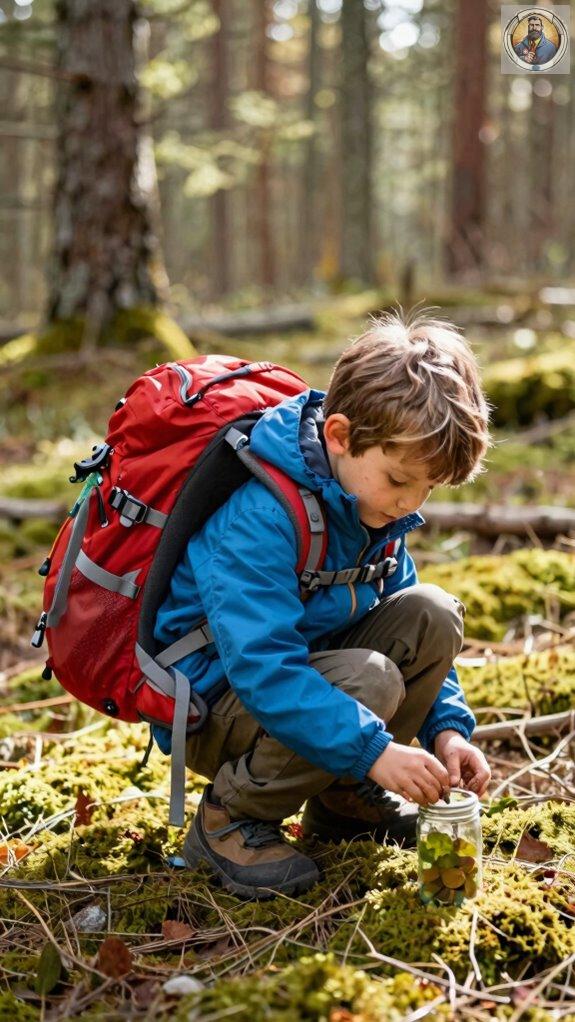
When your kid’s backpack rides up like it’s trying to escape their shoulders, you know you’re in for a long trail day—believe me, I learned after Liam’s pack slipped so bad during a climb at Horsetooth Mountain, he spun around like a confused owl and dropped his precious dinosaur figurine into a ravine (RIP, Rex).
So, what’s the fix? Chest stabilization and hip support—your secret weapons.
Snug that chest strap *above* the armpits; it stops shoulder-shake.
Then, lock the hip belt *over* the iliac crest (not the stomach—no one’s a backpack whale).
Guess what? That Deuter Junior pack? Genius. It transfers weight to hips—exactly where it belongs.
You want control. You want fewer meltdowns. Consider adding specimen collection jars to your kid’s pack for nature exploration, but remember to tighten both straps for proper weight distribution. Tighten both straps. Trust me.
Test the Loaded Pack Before Hitting the Trail
– Does the pack bounce like it’s tap dancing on their spine? → Strap tighter.
I packed my Osprey for last weekend’s disaster—forgot the water filter, again and Liam yelled, “Dad, the bear saw you first!”
Now? I load it *real*: 20 lbs mimics our packing essentials (think snacks, extra socks, Sarah’s “just in case” poncho). Walk stairs. Jump. Hike the driveway.
If it wiggles, tweak those straps. Safety isn’t luck—it’s trail safety prep. Consider incorporating martial arts games into your family’s fitness routine to build the core strength and balance needed for stable pack carrying. Test early. Avoid becoming *that* guy doing the trail dance. You’re welcome.
Hiking With Son in Tow
Since I started letting Liam tag along—back when he could barely carry a granola bar wrapper—he’s taught me more about patience than any parenting book ever did.
Hiking with kids? It’s chaos, but hilarious. Gear storage isn’t just for socks and snacks—it’s where you hide the emergency gummy bears *he* packed. Weather preparedness means packing rain jackets *and* emotional support dinosaur plushies. Incorporating backyard sports activities into your hiking trips can turn downtime at camp into engaging outdoor fun that keeps kids entertained and active.
- Always pack extra shoes (kids will step in mud—on purpose)
- Label everything(lost hat = full meltdown; trust me)
- Use compartmentalized packs for quick snack access (hunger = tiny tyrant mode)
- Teach weather checks early (“Look, Liam, clouds do mean something!”)
Spoiler: You’ll need bigger packs. And more patience. And maybe wine.
Shop Hydration-Ready Daypacks
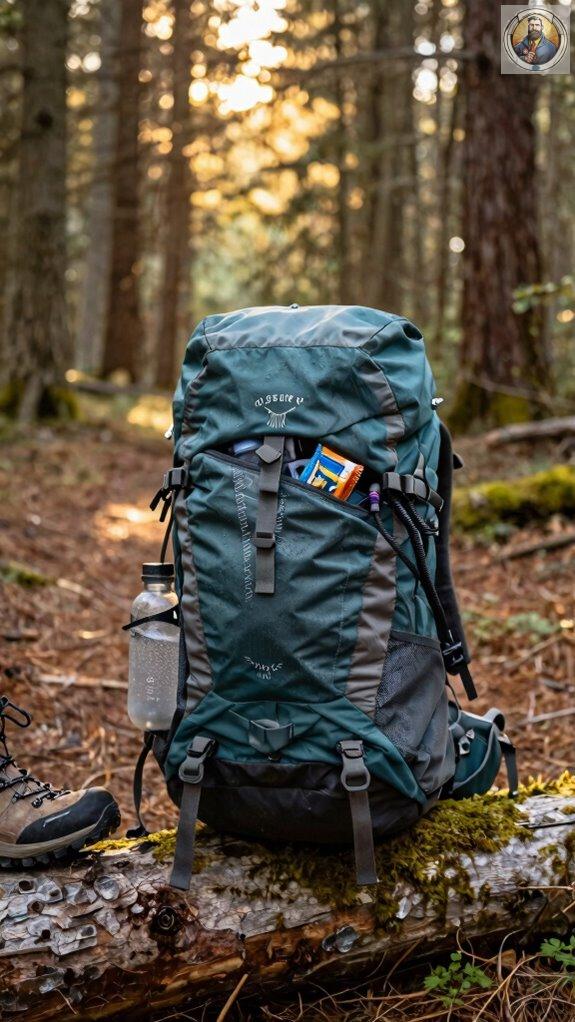
I learned the hard way—Liam cried, Sarah judged, and I chugged from an empty tube like a sad camel.
Look for packs with legit water bottle compartments *and* a wide hydration sleeve. The Osprey Talon 22? Gold. So does Deuter Speed Lite. Don’t skimp here—dry dads are grumpy dads. Similar to how battery storage organizers keep supplies neatly accessible, a well-designed hydration system keeps your water readily available throughout your hike.
Seriously, how hard is it to stay hydrated when your pack’s basically a camel’s canteen?
Pro tip: freeze the bladder overnight. Wake up refreshed. Or at least less dehydrated.
FAQ
Can I Use a Child Carrier for Toddlers Older Than 3 Years?
Nope, I can’t use a child carrier for toddlers older than 3? Well, technically I *can*—but should I?
Spoiler: probably not.
Most carriers max out at 48–50 lbs. My 4-year-old Liam? He’s pushing 55. Yikes.
Once you’re past that *maximum weight*, it’s game over—straps strain, my back screams, and *child comfort*? Zero.
I tried it once. Spoiler: I looked like a wobbly pack mule.
Save your spine.
Upgrade wisely.
Are Hiking Backpacks for Kids Waterproof or Water-Resistant?
Yeah, most kids’ hiking backpacks aren’t fully waterproof—just water-resistant. Last time it drizzled, Liam’s snacks turned into soggy mush. Now I always pack a rain cover. Waterproof coverage? Only with extras.
Material durability on brands like Osprey or Deuter? Solid. But still, water sneaks in. Pro tip: Line it with a trash bag. Trust me.
Would you rather hike with a mini swamp or stay dry? I choose dry. Every. Single. Time.
How Do I Clean a Kids’ Hiking Backpack After Muddy Trails?
I hose down my kids’ muddy backpack—Liam’s REI Flash 45 gets filthy! Empty all pockets, scrub with mild soap and a sponge. Don’t forget hidden crumbs… recall that trail mix explosion?
Rinse, then air-dry upside down. Never machine-wash!
Waterproof? Pfft—mine survived monsoon-like spills.
After cleaning, I restock snacks: Backpacking nutrition matters, right? And hey, clean zippers mean fewer Trail safety tips fails. Win!
Can a Kids’ Hiking Pack Accommodate Extra Layers in Cold Weather?
Packing essentials? Think: down vest (the one Liam stole from me), compact puffy, Sarah’s “just in case” wool socks (thanks, over-packer).
Parenting safety = avoiding tiny hypothermic drama queens.
Pro tip: Use a teeny Osprey Porter 18—stuffed bear-style, it still zips. Barely.
You *are* the pack mule. Own it.
Is It Safe to Attach Gear Externally to a Child’s Backpack?
Yeah, I’ve totally strapped a kid’s sleeping pad to the outside of my son’s backpack—epic idea… until he face-planted on the trail. External gear attachment? Sure, *but* only if it’s light and balanced. Think carabiner snacks, not mini fridges.
Backpack customization gone wrong taught me: never tie a bear bell crooked—it tangles. Keep it low, centered, and *snug*.
Pro tip: my daughter Emily now uses a tiny dry sack *inside* instead. Safer. Less flair.


