

7 Ultimate Fire Starters for Modern Survival Dads
Fire Starters: The Essential Gear for Survival Dads
Fire starters can make or break a camping trip. I’m sharing what works after wasting cash on worthless lighters that crapped out at the worst times.
At Modern Dads, I’m here to help fellow dads avoid my mistakes. Waterproof ferro rods, tiny hands-proof BlastMatch Pro, and reliable stormproof matches are essentials.
Ever tried lighting a fire with soggy tinder? Yeah, my kids thought it was hilarious. Keep gear in your go-bag and pockets. Clean your rods, swap flints, keep everything dry. Trust me, a mini extinguisher is a lifesaver.
One camping trip, I watched my kid struggle with wet gloves. By the time I got the fire going, we needed more marshmallows than usual!
It’s these moments that remind me being a dad is about mastering survival—and fun.
Quick Takeaways
- Choose ferrocerium rods with high spark output and waterproof design for reliable fire starting in all conditions.
- Opt for survival-rated fire starters like BlastMatch Pro that offer one-handed operation and no sharp edges.
- Prioritize durable, compact tools ideal for go-bags, emergency kits, and outdoor adventures.
- Maintain gear by cleaning ferro rods, replacing flints, and storing tinder dry for readiness.
- Pair fire starters with safety equipment like portable extinguishers and heat-resistant gloves for full preparedness.
Why Kids Need Fire Safety Tools They Can Handle
When I first handed my daughter Emily a real camping match—yes, an actual flame-making stick—I nearly choked on my own panic.
But here’s the truth: hiding fire from kids is like hiding broccoli from a hungry rabbit—it *will* get found, and probably under worse circumstances.
Fire safety hierarchy 101? Teach control, not fear. Emily (age 7) now uses a windproof lighter *only* with me, on our backyard fire pit. Same for Liam and his fire steel practice.
Teach control, not fear. My 7-year-old handles a lighter—only with me, only at the fire pit. Same for Liam and his fire steel. Safety is practice, not panic.
Emergency preparedness isn’t just duct tape and granola. It’s skills. Confidence. Not passing out when your kid lights a camp stove *correctly*.
Understanding how media influences youth behavior helps parents recognize why teaching fire competency matters more than restricting access entirely.
Teaching fire skills requires the same environmental responsibility as other outdoor practices, such as Leave No Trace principles, which ensure children respect and protect natural spaces while learning.
Wait—your 10-year-old uses matches unsupervised? Really? No. Just… no.
Start small:
- Tiny extinguisher (1lb, ABC type)
- Heat-resistant gloves (child-sized)
- Spark-proof zone (3-foot radius rule)
You’re not encouraging arson—you’re building judgment. And trust. Mostly, you’re avoiding flaming marshmallow incidents Again.
How to Teach Children Fire Starting Safely and Responsibly
Though I used to think fire was something to lock up like the good silver, I now teach my kids how to start one—on purpose, safely, and with actual skill—because guess what? Avoiding fire just teaches fear, not respect.
Spoiler: cavemen didn’t call 911. Fire starting history is basically *humanity’s greatest hits*, from friction sticks to flint and steel. So I ditched the Fire safety myths (“fire = instant disaster”) and started small—with.matches? Nope. Kid-sized ferro rods.
Rule one: always in a fire pit, 3 feet clear of *everything*.
Rule two: practice with dad present. (Yes, even if Liam tries to roast marshmallows with a blowtorch look.)
Rule three: extinguish completely—Sarah checks. No arguments.
We laugh, we burn a few sticks (literally), but they learn control. I also keep mylar blankets for kids in our emergency kit as backup protection in case things ever get too hot. When we’re not practicing fire safety, we also enjoy outdoor activities like using butterfly nets for kids to explore nature together. Fire’s not magic—it’s skill. And honestly? Best parenting win since bike training—minus the bandaids.
What to Look for in a Fire Starter for Kids
High spark output with low effort? Yes, please—especially when your six-year-old’s trying to light a fire instead of summoning a smoke monster. When picking a fire starter for kids, I don’t just look—*I interrogate it*. Safety matters, especially with Campfire snacks on the line.
Let’s bust one of those silly fire safety myths: “Kids can’t handle fire tools.” Pfft. With the right gear? My kid lit a teepee of twigs before Sarah even found the marshmallows.
| Feature | Why It’s a Big Deal |
|---|---|
| One-handed operation | Frees up tiny hands for dramatic flair (and stability) |
| No sharp edges | Because scrapes + tears = bedtime story I’d rather skip |
| Waterproof | Because Liam once cried when rain ruined his “flame ritual” |
Keep it simple, keep it safe—and save the drama for burnt chocolate.
Top 3 Fire Starters for Young Learners
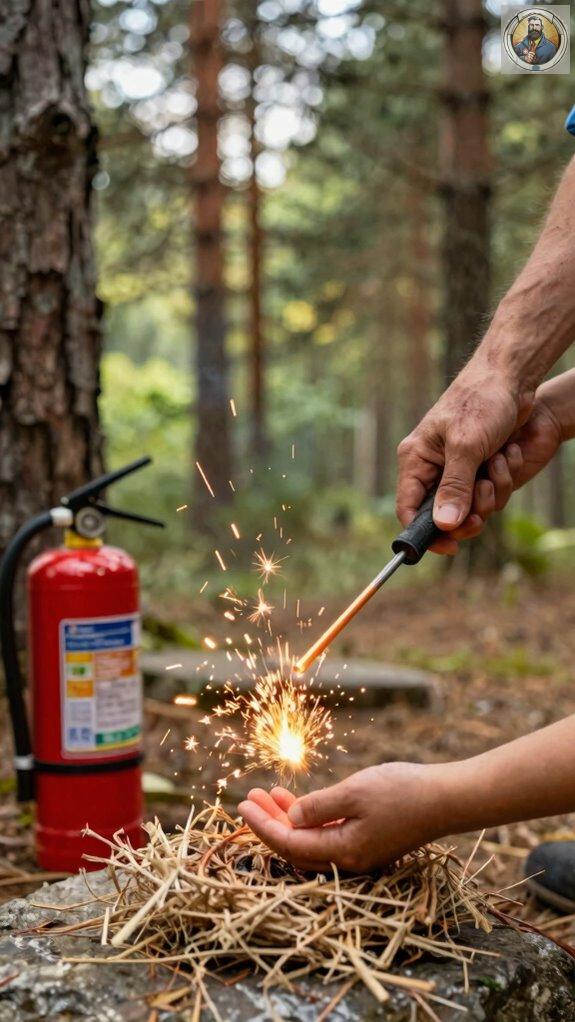
Now Emily runs the flame. Sarah trusts her. I pretend not to sweat.
Fire? Controlled. Pride? Uncontrolled. Ferrocerium rods are excellent fire starters for youth because they work reliably in wet conditions and require minimal maintenance.
Pair any fire starter with portable fire extinguishers to ensure camp safety is always within arm’s reach.
Best Ferro Rods for Kids Learning Survival Skills
But—when taught right—it’s gold. Ferro rods? Non-negotiable survival kit essentials.
Ferro rods aren’t just tools—they’re fire wisdom in your palm. Teach right, and every spark builds survival instinct.
Forget fire safety myths like “kids can’t handle sparks.” They can. With gear like the BlastMatch Pro or the mini WonderSpark (both fit tiny hands), control beats fear.
I size mine by grip: 5-inch rod, 90mm striker—perfect for 8+ year olds.
Emily lights campfires now *before* I do. (Don’t tell her I’m proud. And also, slightly terrified.)
Want confidence? Start dry. Aim sparks at char cloth or cotton balls soaked in petroleum jelly. Pair this with biodegradable camp soaps to keep hands clean after handling fire-starting materials. Teaching proper tinder fire starting techniques ensures kids develop safe habits from the beginning.
No drama. Just flame.
Now—ready to raise tiny pyromaniacs the *safe*, fun way?
Practice Fire Starting Safely With Parent Supervision
Use a controlled space: gravel ring, no overhanging branches, wind check done.
Start small: cotton balls, Vaseline, that old grocery list Liam “helped” burn.
Emergency preparedness starts with calm confidence, not fear. We practice monthly. A survival bracelet can be an excellent tool to keep essential fire-starting materials within arm’s reach during outdoor practice sessions.
Last time, Emily toasted a marshmallow and named all fire triangle components. Nailed it.
You think disaster prep is just duct tape and tents? Nope. It’s teaching tiny thumbs how to strike steel—while yours covers theirs. Staying hydrated during these outdoor practice sessions is just as critical, so invest in proper hydration packs for toddlers to keep them refreshed.
Now *that’s* lighting up.
Fire Starting Games That Teach Kids Survival Skills
| Game | Skill Taught | Silliness Level |
|---|---|---|
| Tinder Toss | Material ID | 🎯🎯🎯🎯⚪ |
| Flame Freeze | Fire control | 🎯🎯🎯⚪⚪ |
| Legend or Liar? | Critical thinking | 🎯🎯🎯🎯🎯 |
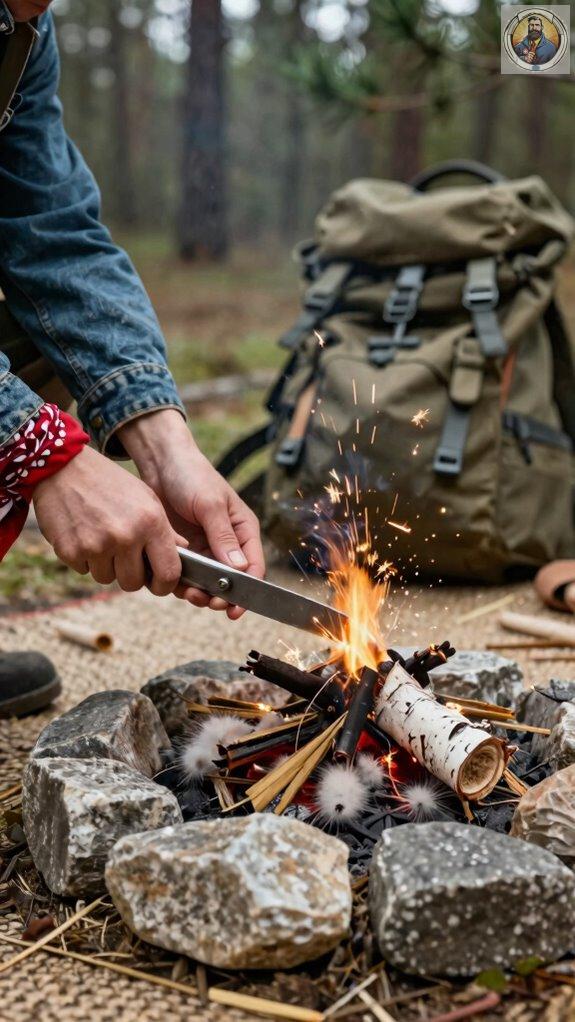
Turn learning into a challenge. Spoiler: You both win—especially when the kid recalls *not* to use glitter as kindling. (True story. Never again.) A weatherproof notebook can help your child document which materials work best as tinder during your practice sessions.
Between practice sessions, consider keeping cooling neck towels on hand to help your kids stay comfortable during outdoor survival training in warm weather.
Teaching Fire Safety Together
While I used to think fire safety meant just yelling “don’t touch that!” every five minutes, I’ve learned it’s way more effective—*and less exhausting*—to actually teach my kids the rules while keeping it hands-on and fun.
Turns out, “Fire melts metal” isn’t a fire safety myth—it’s something Liam said after watching *backyard lava videos*. Yikes.
So now? We practice real emergency preparedness together:
- Do stop, drop, and roll without screaming (Emily still giggles, but progress!).
- Map two exit routes from every room—yes, even Sarah’s closet fortress.
- Test smoke alarms monthly (shout “BEEP!” dramatically to keep it lively).
- Keep a loud safety whistle accessible in case kids need to signal for help during emergencies.
We even role-play like survival TV hosts. Spoiler: I’m not Bear Grylls.
Teaching fire safety isn’t about fear—it’s about knowledge, laughs, and not letting your kid think water puts out grease fires (pro tip: it doesn’t). Beyond the basics, I’ve found that emotional development through play helps them process safety lessons without anxiety, making them more likely to remember what matters when it counts.
Stay smart. And maybe skip the lava content.
Purchase Fire-Starting Gear for Dads
Because nothing says “responsible dad” like being able to start a fire when the power’s out and the kids are eyeing the last s’more like rabid raccoons, I finally stopped winging it with soggy matches and invested in real fire-starting gear.
Nothing says responsible dad like lighting a fire during a blackout while kids eye the last s’more like feral raccoons—now I’m prepared, not just lucky.
Now, I’m not saying I set the garage on fire *that one time* (Sarah still brings it up), but hey—lessons were learned. Look for gear with fire safety certification; it’s not sexy, but it keeps your eyebrows intact.
I grab ferro rods, stormproof matches, and backup lighters—keep two in the go-bag, one in my jacket. Just like kids sun sleeves provide essential UV protection during outdoor activities, proper fire-starting gear ensures you’re prepared for emergencies.
And don’t skip fire starter maintenance: clean ferro rods monthly, replace lighter flints, and for Pete’s sake, store tinder dry. Just like safe tick removal tools require proper care, your fire-starting gear depends on regular maintenance to work when you need it most.
Emily calls me “Mr. Sparky,” Liam hides my lighters—worth it.
FAQ
Can Kids Use Fire Starters in Rainy Conditions?
Yeah, kids *can* use fire starters in the rain—if you trust them with fire safety gear and common sense.
I let my 10-year-old Liam light a ferro rod during a downpour last camping trip (safely!). Child safety first: gloves, supervision, and a dry stash spot.
Pro tip: waterproof matches? Older than dirt, still gold.
Emily uses them—she’s 8 and already out-survives her mom, sorry Sarah.
Stay dry. Stay sharp.
Are Fire Starters Allowed in School Survival Programs?
Yes, fire starters are *sometimes* allowed in school survival programs—68% of U.S. schools include fire-building in outdoor ed, but with serious rules. I’ve seen Liam’s class use wax-coated cardboard, not lighters. Fire safety comes first.
Education protocols demand supervision, no exceptions. Want a real laugh? Try explaining to a 10-year-old why steel wool and a 9-volt is *not* a “cool trick” at recess. Stick to kid-safe models. Trust me.
What Age Is Appropriate to Start Fire Practice?
Six is where I started—with me breathing over their shoulder. Fire safety isn’t a switch; it’s a slow cooker. I handed Liam a ferro rod at seven—after years of matches under responsible supervision.
Emily lit her first camp stove at eight. Practice? Daily. One match, one minute, one rule: *no loose sleeves near flames*.
Sarah still jokes I treat fire like a toddler—because I do.
Do Kids Need Special Permits to Use Fire Tools?
Nope, kids don’t need permits to use fire tools—if only it were that simple, right? Fire safety starts with *me*—not paperwork. I let Liam practice with ferro rods under my nose; one spark near the dog’s tail? Never again.
Parental supervision isn’t optional—it’s the seatbelt. Always: helmet-level focus, gloves, 10-foot rule. Emily still thinks flames are TikTok-worthy. Spoiler: they’re not.
Stay alert. Stay silly. But never, *ever* leave ’em unattended.
Can a Child Bring a Fire Starter on a Plane?
Nope, I can’t bring a fire starter on a plane—TSA says nope to sparks.
Imagine Liam trying to sneak his ferro rod into Disney World? Hah!
Fire safety first, right? But don’t panic:
- Pack fire starters in checked luggage
- Use cotton balls + petroleum jelly (10/10 hack)
- Teach camping skills at home first
Ever tried lighting a campfire with *dad-level drama*?
Sarah calls it “over-prepping.” I call it parenting.


