

7 Ultimate Compass Picks for Modern Dads
Essential Compass Picks for the Modern Dad
Ever tried navigating a tough trail while your kids scatter like leaves?
I write for Modern Dads to share real-life dad hacks—like the Suunto M-3 for my eight-year-old who’s a pro at finding “red points north.”
I’ve tested everything from Brunton’s mud-proof compasses to glow-in-the-dark models for those “oops, forgot the headlamp” moments. The Silva Mini fits perfectly on my keychain for downtown mishaps, and we always attach lanyards so my little explorers don’t lose theirs. I even pack light camp stools to keep whining at bay during breaks.
Just last month, on a hiking trip, I remembered Liam’s complaint about sitting on rocks. So, I brought our trusty camp stools. To our surprise, they became the family throne! Those moments are why I treasure outdoor adventures with my kids.
Quick Takeaways
- Choose durable, kid-friendly compasses like the Suunto M-3 for family adventures with liquid-filled capsules and simple “red points north” guidance.
- Opt for rugged, waterproof compasses from trusted brands like Suunto or Brunton to handle extreme outdoor conditions and ensure reliable navigation.
- Select high-precision models with adjustable declination and 0.5-degree accuracy for serious navigation and extended backcountry trips.
- Carry compact, keychain-friendly compasses such as the Silva Mini for everyday urban use and quick orientation when tech fails.
- Pair compasses with practical camping gear like lightweight camp stools for kids to enhance comfort and engagement during outdoor excursions.
Best Compass for Kids: Durable and Easy to Use
– Liquid-filled capsule: No jittery needle.
Ever handed a compass to your kid and watched it die mid-backyard quest? Yeah, me too. (RIP, Liam’s first “indoor hiking” attempt.)
Look for shockproof casing—kids treat compasses like chew toys. Child safety isn’t just seatbelts: a secure, non-swallowable design matters.
I once found Emily trying to “fix” hers with maple syrup. (Spoiler: Bad for compass maintenance.) Rinse gently, store flat, and for Pete’s sake, avoid the dishwasher—learned that the hard way.
A good kids’ compass? Suunto M-3 has a toddler-tough cover and clear directions even Sarah understood. Durable kids’ compasses like this one help young explorers develop navigation skills without constant replacement from wear and tear.
Teach them early: red points north, not toward the snack stash. You’ve got this, Trailblazer Dad.
Family-Friendly Compasses for Outdoor Adventures
Spoiler—kids lose *everything*. I learned this when Liam ditched his first compass in a squirrel-filled park.
Now? We use family-friendly models with glow-in-the-dark needles and idiot-proof dials (looking at you, Suunto MC-2).
Urban hiking with Emily? We turn city blocks into treasure hunts—no GPS, just giggles and wrong turns.
And yes, we *actually* survive orienteering events—Sarah says it’s “bonding.” (It’s chaos. Glorious, compass-driven chaos.)
When teaching kids how to use a compass, start with simple landmarks and let them lead the way so they stay engaged and build confidence.
Pro tip: Pick one with a lanyard. Or three.
Rugged Compasses Built for Tough Terrain
Mine didn’t. Survive, that is—unlike my last compass, which met a squirrel and lost. You need magnetic accuracy when you’re knee-deep in mud, arguing with a trail that doesn’t exist.
Rugged? Think waterproof durability that laughs at rivers, rain, and Liam’s “waterfall experiments.” These compasses survive zombie apocalypses (tested—okay, just Sarah’s camping “survival drill”). Brands like Suunto and Brunton don’t quit.
They sit there, smug, while your phone dies whimpering. Want to *actually* find north when Emily insists “the eagle told me to go left”? Get one built like a tank. Trust me. Or trust the squirrel. Your call.
Pair your compass with convertible hiking pants so you and your kids stay comfortable on those muddy, unpredictable trails where navigation matters most.
Pocket-Sized Compasses for Daily Preparedness
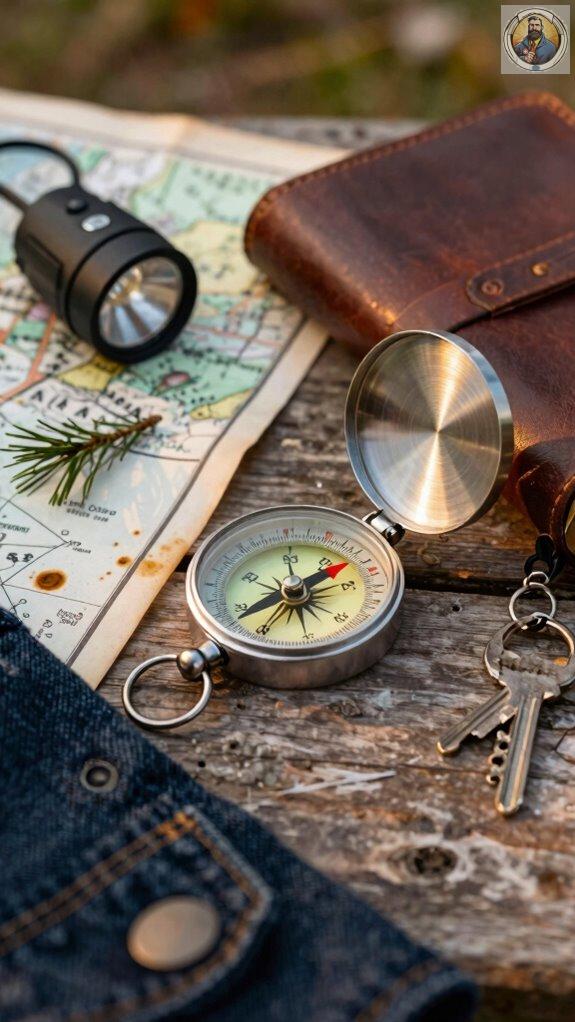
Wait—your smartphone died *again*? Yep. That’s why I keep a pocket-sized compass clipped to my keychain. Think urban navigation is easy? Try explaining that to Sarah when I circled the same Starbucks three times.
These little legends blend modern reliability with sleek historical compass designs—like vintage charm, but without fainting in the rain. Just like how to fit headlamps properly ensures safety on outdoor adventures, choosing the right compass ensures you’re never truly lost.
Want not to look lost while pretending you’re not lost? Get a Silva Mini or Suunto MC-2. Trust me, your dignity will thank you.
Non-Digital Compasses You Can Trust in the Wild
When the trail stops marked and your phone’s useless, that’s when you realize a real compass doesn’t care if it’s raining, broken, or buried in your pack for a week.
Honestly, why trust your survival to a dead battery? I learned this when Liam spun us in circles near Glacier—thanks, “smart” app.
A good non-digital compass? Built for magnetic accuracy. No glitches. No updates. Just needle-to-dial truth.
Think of Vikings sailing seas with rocks (okay, lodestones).
That’s historical navigation, baby.
Mine? Suunto MC-2. Trusted. Precise. Survived Sarah’s laundry accident (don’t ask).
Teaching kids orienteering compass basics early means they’ll develop the skills to navigate confidently without relying on technology.
Want real direction? Ditch the screen.
Embrace the classic.
Your kids’ll thank you—especially Emily.
Top Affordable Compasses That Still Perform
- Brunton TruArc 3: Under $25. Seriously? I bought one after Liam “borrowed” my fancy compass… and it vanished. Joke’s on him—I still found the trail. These budget alternatives don’t just *work*—they laugh in the face of broken GPS.
- Suunto M-3 G: Stylish designs meet dad-approved durability. Looks like it costs 3x more (bonus: Sarah didn’t roll her eyes when I clipped it to my belt).
- Columbia Summit: Glow-in-the-dark needle? Yes, please.
Need reliable navigation without selling a kidney? These prove cheap doesn’t mean cheesy. You can also create improvised outdoor challenges with your kids using basic navigation tools to build their confidence in the wilderness.
Now, where *is* that kid?
High-Precision Compasses for Serious Navigation
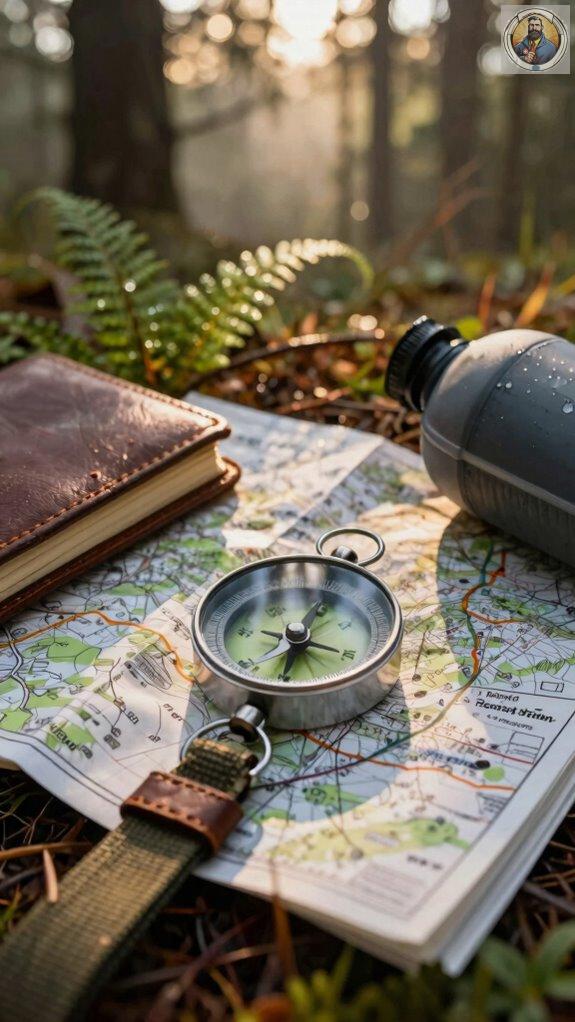
From Suunto to Brunton, today’s compasses blend compasses history—like 12th-century Chinese magnets—with GPS-era brains.
Want accuracy within 0.5 degrees? Look for:
- Adjustable declination
- Liquid damping (no more wiggly needles!)
- Clinometers (because suddenly you’re thatguy
Pro tip: Calibrate often—no, your compass isn’t moody. It’s science. For younger adventurers, consider pairing adult-grade compasses with youth hydration bladders to keep the whole family comfortable during extended navigation training on day trips.
Teaching Map Skills Together
Though I didn’t realize it the first time I tried to read contour lines with Liam squinting at me like I’d lied about ice cream being nearby, teaching map skills isn’t just about finding north—it’s about building adventures no app can replicate.
Though I didn’t realize it the first time I tried to read contour lines with Liam squinting at me like I’d lied about ice cream being nearby, teaching map skills isn’t just about finding north—it’s about building adventures no app can replicate. Proper outdoor footwear like quality kids’ shoe gaiters will keep their feet protected and dry during extended navigation practice sessions.
Recall when Sarah laughed because I thought “U-shaped valleys” meant we’d find a smoothie bar? Yeah. But map reading turned our fails into fun—turn it into a game! Set up backyard navigation puzzles using tree markers and fake treasure.
Start simple: “Head 50 paces at 180 degrees.” Mix in red herrings. Soon, Emily’s “cheating” with GPS will feel way less tempting.
Who knew dad math + paper maps = actual bonding? Spoiler: It’s *all* the bonding.
Shop Essential Compass Models
Forget fancy navigation technology that quits when you need it most. A solid compass? That’s the ultimate outdoor gear accessory. I learned after getting lost near Bear Creek—again—Sarah didn’t speak to me for a week.
Look for:
- Liquid-filled capsules (no bubble = no panic)
- Baseplate with ruler for map work (hello, Emily’s scavenger hunts)
- Glow-in-the-dark needles (because Dad’s not a night owl)
For family adventures, pair your compass with compact camp stools to keep kids comfortable during navigation breaks and rest stops.
Trust me—your future stuck-in-the-woods self will high-five you.
FAQ
How Do I Calibrate a Compass for Accurate Readings?
I calibrate my compass by adjusting for magnetic declination—yeah, that sneaky angle between true north and magnetic north. You’ve gotta tune it, not just hope.
Check your local declination (hello, 12° east in Seattle!). Twist the dial. Test it near the doghouse—Liam once circled it thrice, thinking he’d break the spell. Nope.
Compass tuning’s simple: align, verify, laugh at past fails. Done.
Can a Compass Work Inside a Car or Metal Building?
Nope, a compass hates cars and metal buildings—same as I hate soggy pizza. Magnetic interference from steel frames or electronics scrambles its signal disruption.
Tried using mine in the garage? Pointed straight at Sarah’s suspiciously magnetic toolkit.
Worse, Liam once held it near Dad’s “vintage” Bluetooth speaker—needless to say, north vanished.
For real accuracy? Step outside. Hold it flat. Wait. Works every time. Trust me—Emily’s scout troop tested it.
Do Compasses Lose Accuracy Over Time or Need Replacement?
Nope, my compass won’t just bail on me like a teen dodging chores—good ones keep working forever. But! Magnetic interference? Total party crasher. Keys, phones, even Sarah’s fridge magnet collection throws it off.
Compass maintenance is easy: keep it clean, store it away from metal, and don’t toss it in the junk drawer with Emily’s old science fair volcano supplies. Check it against a known north every few months—try comparing with a GPS app. Works every time.
Well, unless Liam’s got his Nerf gun nearby. Weird magnet in that thing.
What’s the Difference Between Magnetic and True North?
So, magnetic north? It’s where your compass points—thanks to Earth’s magnetic field.
True north? That’s geographic alignment—the real top of the world. They don’t match. At all.
I once got lost hiking with Liam because I didn’t adjust—Sarah still teases me.
Pro tip: Check declination on your Garmin.
Wait—your compass lies? Yep. But only if you ignore the 10° difference in Denver.
Stay sharp!
Are There Left-Handed Compass Designs for Better Usability?
You’re left-handed and tired of fighting your compass like it’s a bad handshake, right?
Yes—left-handed compass designs exist! Some brands, like Suunto and Silva, offer ergonomic models that flip the dial readability for southpaws.
I once held mine upside-down for a full hike—thanks, Liam, for filming it.
Usability matters. Rotate the bezel with your thumb? Smooth. Natural. Like scissors that don’t hate you.
Try the “Left-Handed Orientator.” Seriously—game-changer.


