

Smooth Classroom Transition Routines For Sensitive Dads
Smooth School Mornings: Tips for Dads
Back to school chaos? Oh, I know it too well. A solid morning routine is key—shoes, coat, backpack. All in that order, just like my famous pancake flipping on a Sunday!
I’m sharing this on Modern Dads because fellow dads need all the help we can get, especially when juggling breakfast and shoe laces.
Communicating with teachers? Essential. Sharing routines helps everyone stay on track. I’m not saying a cross-country relay race is needed, but a little camaraderie goes a long way.
This year, while preparing for the school drop-off, I had a mini meltdown over lost shoes. We had a “shoe hunt” instead of a family breakfast, and I realized laughing off the chaos is just part of being a dad.
Through these moments, I cherish the bond with my kids. Those crazy mornings bring us together, and somehow, we always make it on time—most of the time, anyway!
Quick Takeaways
- Establish consistent calming routines, like deep breaths or gentle cues, to help children transition smoothly between activities and minimize stress.
- Communicate openly with teachers about your child’s sensory needs and preferred calming techniques for a tailored support plan.
- Use familiar rituals, such as a special handshake or visual schedule, to provide predictability and security during transitions.
- Create sensory-friendly spaces and tools in the classroom to help sensitive children self-regulate during stressful moments.
- Practice positive reinforcement and humor to build your child’s confidence and ease anxiety during change.
How Can Sensitive Dads Support Their Child’s Transition to School?
Starting school can feel like stepping into uncharted territory—for both kids and parents—and if you’re a sensitive dad, you might worry about how your child will handle all the new sights, sounds, and routines. But here’s the secret: your parent emotional support and building parent-child trust are your superpowers.
Sensitive dads’ emotional support and trust-building are powerful tools for a smooth school-start transition.
When you show confidence, your child feels safer and more ready to face the day. Try sharing your own stories of new experiences—like your first day at work—and watch how that calms their nerves. Research shows that parental vulnerability and openness help children develop resilience when facing their own challenges.
Be consistent with small gestures, like morning hugs or a quick chat before class. Ask questions, listen actively, and stay positive. Just as tick removal tools help protect children from outdoor hazards, your emotional presence protects them from the anxiety of new transitions.
Power isn’t about being perfect; it’s about being present and trustworthy—your child’s anchor in this new adventure.
Create Gentle Routines to Reduce Transition Stress
Ever wonder how a gentle routine can turn a hectic morning into a smooth sailing experience? I’m telling you, creating consistent, calming steps makes a difference. I’ve found that incorporating mindful breathing — simple, slow inhales and exhales — anchors my kids and me during busy moments.
Calming techniques like these help everyone stay centered instead of getting caught up in chaos. For example, before leaving the house, we do a quick “airplane breath,” pretending to hold our breath like an airplane cabin pressurizing, then exhaling slowly. Teaching children healthy emotional regulation early helps counteract negative online influences they may encounter as they grow older, such as misogyny in online communities.
Here’s a quick cheat sheet:
- Pause and take three mindful breaths
- Use a calming phrase, like “We’ve got this”
- Create a predictable routine: shoes, coat, backpack
These small acts reduce transition stress and make mornings feel powerful, not frantic.
Communicate Clearly With Teachers About Your Child’s Needs

Have you ever tried explaining your child’s needs to a teacher and felt like you were speaking a different language? It’s frustrating, right? Here’s the truth: clear communication isn’t just about sharing info—it’s about giving parental reassurance and emotional validation. You want teachers to understand the real you, not just the paperwork.
Start with a quick chat, maybe over coffee, where you confidently highlight your child’s triggers and strengths. Use simple, direct language like, “Liam needs a quiet break if he gets overwhelmed,” rather than vague statements. Consider sharing activities like martial arts games that help your child build confidence and manage their emotions outside the classroom.
Recall, it’s a partnership. Ask questions, clarify expectations, and don’t hesitate to reinforce how important your child’s emotional well-being is. Coming prepared with specific examples and documentation helps strengthen your position when discussing accommodations. After all, a little reassurance goes a long way toward making every classroom a safe, supportive space. When advocating for your child, having clear notes about behavioral patterns and triggers ensures teachers have concrete information to work with.
Simple Strategies to Make a Sensory-Friendly Space at Home
Creating a sensory-friendly space at home might sound complicated—like trying to build a spaceship in your living room—but honestly, it’s just about making a cozy corner where your child (or you, if you need one!) can reset and relax.
Ready to feel like a superhero? Here’s what you need:
- Soft cushions or a bean bag for comfy sitting
- Sensory tools like fidget spinners or textured toys
- Calming techniques—think gentle lighting or a weighted blanket
- Noise-canceling headphones to block out chaos
- A visual timer or calming picture to help your kid understand time
You might also consider adding shoe gaiters for kids to your outdoor gear if sensory sensitivities extend to uncomfortable footwear during outdoor adventures. These simple steps put the power in your hands. Create a destination for calm and watch your child thrive!
Father Helping With Backpack
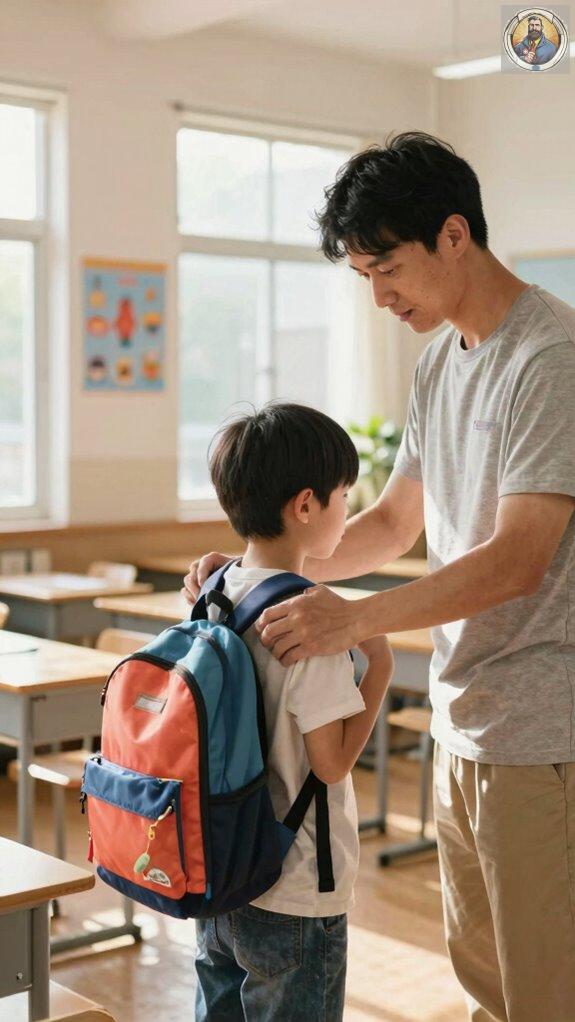
Helping your child with their backpack might seem like just another chore, but it’s a perfect moment to connect and teach independence—all while making mornings a lot less chaotic. Recall those mornings when Emily’s backpack was like a black hole of snacks and books? That’s exactly why I jump in! This is parent-child bonding at its best.
Grab their backpack, ask, “What’s the most important thing today?” and guide them through packing. Show Liam how to zip the bag tight, so he learns control. It’s not about doing it for them but empowering them.
Want a smoother morning routine? Use this as a chance to boost confidence and reduce fussiness. Trust me, these little routines make a big difference—and yes, they’re worth the power move!
Classroom Cozy Corner Setup
Setting up a cozy corner in the classroom might sound like a small task, but believe me, it’s a game-changer for kids—and no, I’m not just talking about a Pinterest-worthy nook.
This space is all about empowering children to feel safe and in control during changes. Key elements include:
- Comfort items like soft blankets and plush pillows
- Visual schedules to clearly show what’s next
- Calming lights or fairy lamps to set the mood
- Sensory toys like stress balls or textured fidget items
- A small bookshelf with favorite books or quiet activities
I’ve seen kids, especially my own Liam, instantly settle when they’ve these options. You can also incorporate conversational icebreaker cards to encourage shy or anxious children to engage with peers during transition periods.
Consider adding a breakaway lanyard with an emergency whistle to your cozy corner setup, as it can help children feel empowered to signal for help or attention during transitions. It’s about giving them control and confidence, making every changeover smoother and more powerful. Want to see your kiddos thrive? Build this space with intention!
Back to School Essentials
Getting ready for the new school year means more than just sharpened pencils and fresh notebooks. It’s about arming yourself with parenting techniques that boost your child’s emotional resilience – essential in today’s unpredictable world. Think of it as your secret weapon.
Need some ideas? Pack a “feelings toolkit” with calming strategies, like deep breathing or a favorite calming toy. Keep in mind, setting a routine with clear expectations creates security for Liam or Emily, especially if changes are tough. Understanding your child’s sensory needs helps you anticipate triggers and provide appropriate support during transitions.
I’ve learned that talking openly about feelings and sticking to familiar rituals builds confidence. After school, help your child unwind by implementing a simple drying routine for any sweaty sports gear, which signals the transition from activity to calm time. Toss in a little humor when things go sideways—because, let’s face it, no one’s perfect!
Are you ready to be the dad who not only survives but thrives during this back-to-school race? Let’s do this!
FAQ
How Can Dads Recognize Early Signs of a Child’s Transition Anxiety?
Ever noticed your kid clinging tighter or acting moody? Recognizing emotions early is key. Look for signs like withdrawal, fidgeting, or sudden tears—these signal shift anxiety.
To manage shifts, ask, “Are you feeling nervous?” and offer a hug or calming words. My experience with Liam shows that being attentive to these clues helps him feel safe, making shifts smoother and less stressful for everyone involved.
What Are Some Gender-Neutral Ways to Support Child Transitions?
They say, “Actions speak louder than words,” right? So, support child changes with clear, gender-neutral language, parental communication, and emotional validation.
For example, use phrases like “We’re ready when you are” or “Take your time,” making kids feel safe. Keep in mind, validating their feelings shows respect.
Think of it like this: empowering independence while acknowledging emotions gives your child confidence and you—seriously—a sense of power in guiding them through change.
How to Involve Children in Creating Their Own Transition Routines?
Want children to own their changes? Get creative! Invite your kids – maybe Emily or Liam – to brainstorm routines.
For example, let them pick a signal like a special clap or song. Encourage their input on how to get ready – maybe a fun checklist or a dance.
Kids love feeling empowered. Ever noticed how they become more cooperative when they help design routines? It’s all about involving them!
Are There Specific Toys or Tools That Ease Sensory Overload?
Ever seen someone turn into a superhero just by holding a fidget toy? It’s real! I swear by sensory tools like textured squishy balls, chew necklaces, or sensory brushes—these are game-changers.
They help Liam stay calm amid chaos, or Emily focus during a hectic shift. My advice? Keep a small arsenal of these toys handy. They’re simple, powerful, and truly magic for easing sensory overload when you least expect it.
How Can Dads Collaborate With Teachers for Ongoing Support?
You should actively collaborate with teachers using clear communication strategies and by building father-child bonding outside of school.
Suggest regular check-ins—say, weekly emails or quick calls—to stay updated.
Share perspectives from my experience, like when Liam found a special sensory toy that improved his focus.
Engage in joint efforts, like creating visual schedules or sensory breaks, so you’re both working toward the same goal.
Why not take charge? It makes all the difference!


