

Best Back To School Sports Checklist For Dads
Essential Back to School Sports Gear Checklist for Dads
Ever wondered how to survive the sports gear madness? I’ve braved the chaos with Emily and Liam, and I can confirm: a solid checklist is key.
I write to share my experiences at Modern Dads. I remember one time I couldn’t find a single cleat at 7 AM—who knew they could hide so well?
My checklist includes the must-haves: water bottles, shoes, team uniforms, and of course, safety gear like helmets. Always pack the night before; mornings aren’t meant for searching! Involving the kids helps teach responsibility.
As they grow, adjust the list for new sports. Think about their favorites; maybe even drill down into soccer, baseball, or gymnastics.
Last year, we ended up at soccer practice with mismatched cleats—there’s nothing like a 9-year-old in pink sparkles and old sneakers trying to be a fierce striker. Lesson learned: Double-check the gear!
Being a dad nowadays is a blend of chaos and laughter. One evening, while searching for the missing shin guard, I tripped over a stack of forgotten trophies. We shared a good laugh, turning a frantic moment into a memory.
Quick Takeaways
- Create a comprehensive checklist for sports gear, uniforms, snacks, and hydration to ensure your child is fully prepared.
- Involve your child in selecting and organizing their sports equipment to foster responsibility and independence.
- Regularly inspect and maintain sports gear to ensure safety and longevity throughout the season.
- Plan and coordinate transportation, practice schedules, and community resources to support your child’s athletic activities.
- Encourage your child’s motivation with inspiring environments, goal-setting, and family involvement in their sports journey.
Why Every Dad Needs a Back-to-School Sports Checklist
Think back to your own school days—remember how chaotic mornings could be? That’s why every dad needs a back-to-school sports checklist.
It’s not just about the new school uniforms or academic supplies; it’s about showing your kids you care. When I help Emily and Liam get ready, I make sure their sports gear is packed—think water bottles, cleats, and jerseys. Just like silicone egg bite molds help with batch cooking breakfasts for busy mornings, a sports checklist helps you prepare everything in advance.
Having a plan keeps mornings smooth and reduces stress. Plus, it’s a chance to teach responsibility—like checking the list twice. Are you ready to be the hero who makes school mornings easier and more organized? Let’s do this together!
How to Assess Your Child’s Favorite Sports and Activities
Getting a handle on your kid’s favorite sports and activities mightn’t sound like rocket science, but it’s actually the secret sauce to a stress-free back-to-school season.
I’ve learned that noticing Liam’s multisport versatility—balancing basketball, soccer, and swimming—helps me support his growth.
Parent coach tips? Watch for enthusiasm and effort over skill, and involve your child in choosing activities. Ask questions like, “What part do you like most?” or “Would you like to try something new?”
It’s all about serving their interests—whether that’s team bonding or solo adventures—and helping them flourish in what excites them most. A dedicated home workstation setup can help your child balance schoolwork with their athletic commitments by providing an organized space for homework and training schedules.
Understanding the Sports Gear Your Kid Needs
Now that you’ve got a good feel for your child’s favorite sports and activities, it’s time to focus on the gear that makes those experiences possible—and hopefully less chaotic. Knowing what to buy can feel overwhelming, but recall: with proper parent participation and some nutrition tips, it’s easier than you think.
- Sport-specific shoes (do they fit well and provide support?)
- Comfortable, breathable clothing suitable for the weather
- Water bottles for hydration—stay away from sugary drinks!
- Protective gear (helmets, pads—think safety!)
- Storage solutions—like a good gym bag.
Consider adding a compact youth basketball hoop to your backyard to help your child burn energy before school and stay active throughout the week. Keeping these in check shows you truly care. You’re not just shopping; you’re serving your kid’s growth and happiness!
Choosing the Safest and Most Effective Sports Equipment
When it comes to choosing sports equipment, safety isn’t just a checkbox—it’s your top priority. Think about injury prevention—pads, helmets, and properly fitted gear save kids from sleepless nights and dad’s stress.
Keep in mind, sports nutrition matters too; well-fueled players perform better and recover faster. I’ve learned this firsthand with Liam’s football gear—trust me, cheap helmets are never worth the risk. For contact sports like football, investing in universal protective athletic cups ensures comprehensive protection for young athletes.
Focus on quality over price, check for certifications, and verify everything fits correctly. Ask yourself: am I doing the best I can to protect and serve my child’s growth?
Sometimes, a little extra effort makes all the difference.
Picking the Right Gear for Your Child’s Sports
Picking the right gear for your child’s sports can feel like steering through a jungle of options, but trust me, it’s worth the effort. Having been there with Emily and Liam, I know how vital proper gear is—not just for injury prevention but also for keeping them energized. Consider using AI homework tools to help your child understand the science behind sports performance and nutrition. Focus on:
- Sports nutrition to keep their stamina high
- Proper shoes for support and injury prevention
- Breathable, lightweight clothing
- Quality helmets or pads if needed
- Water bottles to stay hydrated
Organizing Your Child’s Sports Gear for the Week
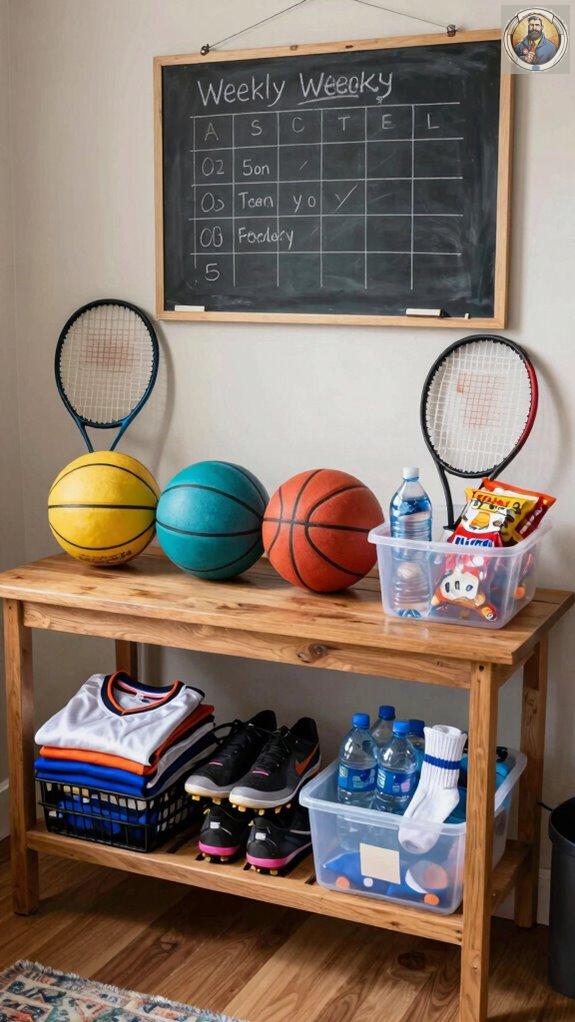
Getting your child’s sports gear organized for the week mightn’t sound as exciting as scoring the winning goal, but trust me, it makes mornings way smoother—something Sarah and I learned the hard way. With the busy sports season, athletic training, and school, chaos often ensued.
To serve others, I recommend a simple system:
- Use a labeled bin or backpack for each kid.
- Keep gear like cleats, water bottles, and jerseys together.
- Do a quick weekly check for items that need replacing.
Consider using co-parenting communication apps to coordinate with your child’s coaches and teachers about upcoming sports schedules and gear requirements. It might seem small, but well-organized gear turns chaos into calm, helping your child focus on the game and not a last-minute shoe search.
Packing Your Kid’s Sports Bag Efficiently
Packing your kid’s sports bag efficiently mightn’t sound as exciting as watching them score a winning goal, but trust me, it’s the secret to stress-free mornings. Focus on giving your child what they need—mention sports nutrition with energy bars or water bottles, and keep team communication open by including a quick note or schedule. Consider bringing a digital voice recorder pen to document important team announcements and coach instructions during pre-game briefings.
Here’s how I do it:
- Pack well-fitting athletic shoes
- Add water and snacks for energy
- Include a team jersey or uniform
- Recall sports nutrition like energy gels
- Keep a small megaphone or earbuds for team talk
Simple, right? It saves time and keeps everyone energized—all with a little extra effort from us!
Essential Items to Include in Your Kid’s Sports Bag
While it might seem obvious what to toss into a sports bag, missing just one essential item can turn a smooth practice or game into chaos—trust me, I’ve been there. You want to focus on helping your kid thrive, not stressing over forgotten snacks or gear.
Pack items like water bottles, sports nutrition (energy bars or gummies), extra socks, and a first-aid kit.
Don’t forget team bonding gear—like a Frisbee or a small ball to build camaraderie after the game. It’s all about supporting their success and ensuring they’ve the right stuff to be their best, on and off the field. Consider adding inspirational wall art or motivational items to your child’s sports bag to reinforce positive self-talk and confidence during competitions.
Tips for Organizing Sports Shoes and Cleats
Everyone who’s ever watched a game knows that sports shoes and cleats love hiding—under benches, in bags, or worse, lost forever. To avoid chaos, I recommend a simple system:
- Use a shoe rack or bin for quick footwear storage.
- Incorporate sneaker cleaning routines after practice—it keeps them fresh and extends their life.
- Always check for dirt and mud; kids love running around, but not in muddy shoes!
- Label each pair with a name or color code—less fighting and searching.
- Make footwear a part of your routine; a dedicated spot saves time and headaches—and less shoe chaos helps serve your kids better.
- Invest in quality athletic shoes specifically designed for your child’s sport to prevent injuries and improve performance.
Best Storage Solutions for Sports Clothes and Accessories
If you’ve ever opened your kid’s closet expecting neat jerseys, only to find a tornado of shorts, socks, and sports accessories, then you know clutter can take over fast.
To keep sports apparel organized, use a designated drawer or hanging organizer, with separate sections for jerseys, shorts, and socks. Accessory storage is just as important—use bins or small containers for items like water bottles, goggles, or gloves.
Think about clear labels or color-coding for easy grab-and-go mornings. Don’t forget to include a travel soap case in your gym locker essentials to maintain proper hygiene standards.
Trust me, a little upfront organization saves time and headache, making your mornings smoother and your kid happier—and that’s what really counts.
Developing a Routine for Cleaning and Maintaining Sports Gear
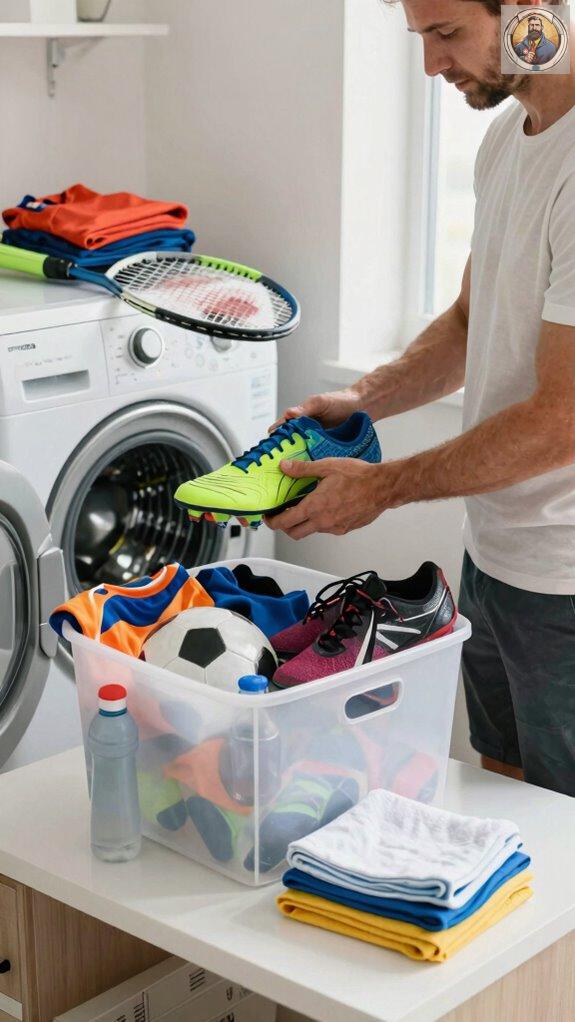
Ever wonder why sports gear gathers dust faster than you can say “game on”? I learned that developing a routine keeps gear fresh, safe, and ready. Here’s my simple plan:
- Wash gear with mild detergent after each use to support sports nutrition and injury prevention.
- Air-dry everything thoroughly—goodbye, mold!
- Check for wear and tear, like loose stitches or worn-out soles.
- Store items in a breathable bag or bin—no dampness allowed!
- Schedule a quick inspection and clean every weekend with Liam or Emily—team effort! Creating consistency helps my kids stay safe and healthy, all while serving their sporting needs.
Maintaining proper gear condition also supports sensory needs for elementary students by ensuring comfortable, well-fitting equipment that doesn’t cause distractions or discomfort during physical activity.
How to Spot Wear and Tear on Sports Equipment
Taking a good look at your kids’ sports gear mightn’t be as exciting as scoring a winning goal, but trust me, it’s just as important—if not more.
During sports equipment inspection, I look for gear damage detection signs like cracks, frayed seams, worn-out padding, or loose parts. For example, Liam’s baseball glove had tiny tears that could turn into big holes.
Check helmets for dents or cracks, shoes for uneven wear, and pads for flattened areas.
It’s about catching minor issues before they become safety hazards. Keep in mind, a little effort now keeps your kids safe, happy, and ready to play their best! Shopping smart with budget-friendly gear options means you can replace damaged equipment without breaking the bank while keeping your young athletes protected.
When to Replace Old or Damaged Sports Gear
Have you ever pulled out your kid’s old soccer cleats or helmet and wondered, “Is this still safe?” I’ve asked myself that dozens of times—kids grow fast, and so does gear’s wear and tear.
When in doubt, replace gear to prevent athletic injuries caused by compromised durability. Here are signs to watch for:
- Cracks or tears in the helmet’s padding or shell
- Worn-out spikes on cleats that won’t grip
- Frayed straps or buckles that won’t secure
- Faded or torn jerseys and pads
- Extreme softness or brittleness in foam or padding
Always prioritize safety—old gear might seem okay, but it could hide hidden dangers! You can also use touchscreen tablets for monitoring your child’s sports equipment purchases and replacements through dedicated apps that track spending.
Budgeting for Sports Equipment Throughout the Season
Once you’ve swapped out those worn-out helmets and cleats for new ones (because, let’s face it, safety comes first), you realize keeping an eye on the wallet is just as important as keeping an eye on the gear.
That’s where budget planning and an equipment budget come in. I’ve learned to list essential gear—think shoes, jerseys, water bottles—and prioritize spending wisely.
For example, splurging on a good pair of cleats for Liam pays off all season, but cheap gloves might cause complaints.
Keep receipts, compare prices online, and set aside extra for surprises. Using car storage solutions helps you organize and protect your equipment investments while traveling to games and practices.
After all, helping your kid succeed is priceless, but a little planning saves plenty of stress!
Customizing and Personalizing Your Kid’s Sports Gear
Personalizing your kid’s sports gear is one of the funnest parts of supporting their athletic adventures — and honestly, it’s almost like giving their equipment a little bit of personality. Want Liam’s personalized jersey that makes him stand out? Or some custom water bottles with their names or team logos?
Here are some ideas to make their gear special:
- Add name patches or embroidered initials to jerseys
- Use fabric paint to create unique designs on gear
- Get waterproof stickers for water bottles or equipment
- Personalize labels for easy identification
- Incorporate team colors to keep things fun and uniform
Trust me, their gear will feel more like their own—and might even motivate them more! Consider pairing personalized sports equipment with plastic desk organizers at home to keep their gear neatly stored and ready for game day.
Safety Gear Every Sport Requires
When it comes to sports safety, diving into the right gear can feel like steering through a maze—trust me, I’ve been there with Liam trying to find the perfect helmet or knee pads!
Every sport needs specific safety gear to protect your kid from injuries, so knowing what’s essential is key. Think helmets for biking, mouthguards for football, or pads for skating.
Plus, safe gear isn’t just about falling; it ties into hydration science, boosting athletic performance. Reducing excessive screen time before games helps keep kids physically active and mentally prepared for competition.
Keep in mind, well-fitted gear prevents injuries and keeps your kid confident on the field.
Invest wisely, and you’ll serve their safety and success every single game!
Teaching Your Child Proper Gear Usage and Maintenance
How to wear each piece properly—tight enough but not too tight—can be a game-changer. I’ve seen gear slip during games or cause discomfort, which is a no-go.
Here are safety tips for gear usage:
- Check fit regularly to avoid chafing or slipping
- Teach kids to adjust straps and buckles properly
- Store gear in a designated, dry spot—away from sunlight
- Clean gear after use to prevent bacteria build-up
- Inspect helmets and pads for damage before each game
Beyond physical preparation, having inspirational wall art in your child’s room can reinforce confidence and motivation as they gear up for the season.
Coordinating Transportation for Practices and Games
Getting everyone to practice and game locations on time can sometimes feel like herding cats—especially when schedules are tighter than a peanut butter sandwich at lunchtime. That’s where carpool coordination and route planning come in.
I’ve learned to set clear schedules and share a master calendar with other parents. We take turns driving, with simple carpools—like Liam’s on Mondays, Emily’s on Wednesdays—to reduce chaos.
I use navigation apps to plan the fastest routes and avoid traffic jams. Keep in mind, serving others through organized transportation keeps stress low and teamwork high.
Think of it as showing up early, not just on time—and making it easier for everyone!
Managing Practice and Game Schedules With Your Kid
Juggling your kid’s practice and game schedules might feel like trying to keep a bunch of dominoes from falling, but with a little organization, it can actually become manageable—and even fun!
To stay on top, these tips helped me when Liam was into soccer and Emily into cheerleading:
- Use a shared online calendar for practices, games, and school events
- Plan ahead with meal planning to avoid last-minute dinners
- Sync academic scheduling with sports commitments
- Set reminders for upcoming events
- Communicate regularly with coaches and teachers
- Consider using under desk walking treadmills during downtime at home to stay active while managing schedules.
Keeping everything aligned isn’t just about logistics; it’s about serving your kids better.
You’ve got this!
Packing Healthy Snacks and Hydration Supplies
Packing healthy snacks and hydration supplies might seem like a small task, but trust me, it makes a big difference in keeping your young athletes energized and happy during busy practice days.
I’ve learned from experience that a well-packed bag with treats like sliced fruit, nuts, or granola bars, plus a good water bottle, keeps kids like Emily and Liam going strong.
Avoid sugary drinks—stick to water or electrolyte drinks if needed.
When packing, think of it as serving them: consider their preferences, prep snacks the night before, and include enough hydration supplies.
Just as advocating effectively for your child’s needs requires preparation and communication, planning your sports supplies ahead of time demonstrates the same commitment to their success.
It’s simple, yet shows you care, and it really boosts their game!
Organizing Sports Uniforms for the Whole Season
Next, create a clear schedule for athletic training sessions and practices, syncing it with your family’s calendar.
Finally, maintain proper sports nutrition tips to keep your kids energized and healthy. Investing in durable school gear built to withstand the wear and tear of an active season will reduce the need for constant replacements. Here’s how:
- Roll uniforms to save space
- Use clear bins labeled for each kid
- Regularly check for missing gear
- Prep uniforms the night before
- Talk about the importance of teamwork—and being organized—so everyone’s ready to go!
Labeling Sports Gear to Prevent Losses
Ever notice how sports gear seems to mysteriously disappear right before the big game? To prevent that, I swear by personalized labels and colorful tags. Just slap a bright tag on Liam’s cleats or a label on Emily’s water bottle — instant identification! It saves me the frantic search and helps others see which gear belongs to whom.
Think of it like this: if your gear stood out, would it walk away? Use waterproof markers on sturdy labels, stick them to shoes, jerseys, or water bottles, and even add fun stickers for extra flair. Keeping your kids comfortable during long study sessions and sports practice is just as important, so consider investing in blue light blocking glasses to protect their eyes during homework time before heading to the field.
It’s simple, effective, and shows you care about your kid’s game day!
Keeping Your Child Motivated and Prepared for Sports
Have you ever wondered how some kids stay fired up about sports season after season while others seem ready to give up after just a few practices? Keeping your child motivated and prepared is key.
Foster team camaraderie by encouraging them to support teammates and celebrate everyone’s effort. Remind them injury prevention is essential—proper warm-ups, good nutrition, and the right gear matter. Consider investing in quality accessories like baseball caps for sensory relief to help your child feel comfortable and focused during practice and games.
Share stories of my son Liam’s first game—how he stayed positive even after missing a shot.
To help your kid stay motivated, try:
- Setting achievable goals
- Praising effort, not just wins
- Encouraging teamwork and leadership
- Teaching proper warm-up routines
- Making sure they’ve the right equipment
Storing Seasonal Sports Gear Off-Season
Storing your child’s seasonal sports gear properly during the off-season mightn’t sound thrilling, but trust me, it’s a game-changer. It keeps everything in top shape and ready for next year, saving you money and headaches. Think about those soccer cleats, baseball bats, or hockey pads—leave them out, and they get ruined or moldy.
My tip? Clean everything thoroughly, dry it completely, then store in labeled bins or garment bags. Use climate-controlled spaces if possible, or sealed plastic containers for extra protection. You can also maximize your storage efficiency by organizing items with trunk storage solutions designed specifically for sports equipment.
Besides protecting the gear, it shows your family you care, keeping everyone ready to jump back into action when spring hits!
Creating a First-Aid and Emergency Supplies Checklist
When I first put together a first-aid kit for my kids’ sports seasons, I quickly learned it’s not just about tossing in some band-aids. You’ve got to think beyond that! Consider choking hazards, like small snacks or objects, and make sure everyone knows basic first aid training—it’s a lifesaver. An insulated meal prep backpack can also help keep perishable items at safe temperatures during games and practices.
Here’s what I include:
- Adhesive bandages for quickly covering scrapes
- Antiseptic wipes to clean cuts
- Thermometer for fevers or heat exhaustion
- Gloves for hygiene and safety
- Emergency contact and medical info sheet
Trust me, being prepared shows you care—because serving others means being ready for anything.
Teaching Sports Responsibility Through Gear Organization
Getting your kids to take responsibility for their sports gear might sound like pulling teeth, but it’s a game-changer. Teaching sports responsibility through gear organization helps them understand accountability and keeps the chaos manageable.
Keep in mind that times Liam’s cleats went missing before practice? Setting up a designated sports bin in the mudroom solved that.
Encourage your kids to pack their gear the night before, check for essentials, and keep everything in a labeled box or hanging bag. Make it a fun ritual—who can pack most efficiently? Starting with a consistent morning routine using sunrise simulation wake-up lights can help establish the discipline needed for pre-practice preparation.
Trust me, a little effort now saves a thousand lost water bottles later. Ready to turn chaos into organization?
Using Technology to Track Equipment and Schedules
If you’re tired of playing hide-and-seek with your kid’s sports equipment or trying to recall if Liam’s baseball glove is still at the field, using technology to organize can be a total game-changer.
Tools like fitness tracking apps help monitor training progress, while virtual coaching offers tips and encouragement right from your phone. You can set reminders for scheduled games or practices, log gear needs, and even track equipment like bats or cleats.
Plus, apps like Google Calendar keep schedules in check. Consider using a dry erase family wall calendar alongside digital tools to give your family a visual reference point for all upcoming games and practices. It’s satisfying to serve your child’s growth, all while avoiding the chaos of lost gear and forgotten practices!
Finding Affordable Sports Gear via Community Resources
Securing affordable sports gear doesn’t have to feel like searching for a needle in a haystack—especially when community resources are just waiting to be tapped into.
Think local sports clubs offering gear exchanges or discounts—your kid’s team might have hand-me-downs or group buys. Check if parks and recreation departments have gear programs or sale events.
I’ve scored shoes and jerseys at community garage sales, ensuring Liam gets quality without breaking the bank. These deals aren’t just savings—they’re opportunities to serve others by sharing gear and keeping costs low. When kids use community transportation like the bus to get to games and practices, teaching them about commute supervision ensures they stay safe while staying active.
Why pay full price when community discounts and local clubs can help your family and others stay active and budget-friendly?
Involving Your Child in Gear Selection and Maintenance
Once you’ve figured out where to snag some deals and the gear is sitting ready, it’s time to involve your kid in the fun of choosing and caring for their sports equipment. Parent involvement is key—kids love feeling part of the process, like customizing their own water bottles or adding decals to their helmets. A comfortable workspace with ergonomic desk chairs can also help your child manage sports schedules and homework alongside their athletic commitments.
- Let them pick the colors or designs for their gear.
- Teach them how to properly clean and store equipment.
- Discuss safety measures during maintenance.
- Make it a team effort for repairs or adjustments.
- Encourage them to take ownership—you’ll be surprised how responsible they become!
Serving your child through involvement helps build confidence and pride in their sport.
Adjusting Your Sports Checklist as Your Child Grows
As kids grow, so do their sports needs—kind of like how your jeans start fitting funky after a few months. I recall when Liam hit middle school; his team got faster, and so did his appetite!
Now, I focus more on sports nutrition, making sure he refuels with healthy snacks. Plus, team communication becomes trickier—what worked when he was younger doesn’t cut it anymore.
To stay ahead, I check his gear, ask about team updates, and encourage him to voice his needs. I also use heavy duty three-ring binders to organize and track his progress reports and team documents. Adjusting my checklist means less stress, more support, and helping him thrive—because serving his best is what matters most.
Early Morning Park Kickball
Getting up early for a park kickball game might seem like an extra chore on a Saturday, but honestly, it’s become one of my favorite weekend mornings. Nothing beats starting the day with morning exercise and park activities that bring everyone together.
- Set out the kickball and bases the night before
- Bring along water bottles to stay hydrated
- Invite neighbors or friends to join in
- Use a timer to keep games short and fun
- Cheer the kids on, even if they’re losing (for their sake, of course)
- Consider bringing a portable UV sanitizer box to keep shared equipment and personal items germ-free during outdoor activities
It’s a simple way to serve my family and neighbors, making mornings meaningful and active. Plus, who doesn’t love a good game before breakfast?
Back to School Essentials
Heading back to school means it’s time to gear up with all the essentials—because let’s face it, forget one thing, and your morning could turn into chaos faster than Liam losing his lunchbox.
When prepping for sports, consider well-balanced snacks with sports nutrition to keep energy high. Pack plenty of water, a first aid kit, and info on team communication—know who to call if Liam forgets his cleats or Emily needs a ride.
Use a checklist from previous wins (or lessons learned the hard way). Think simple: include a water bottle, snacks, and a quick injury kit. Keep sweaty gear fresh between washes with portable ozone deodorizers to eliminate odors and speed up drying time.
Serving others means making mornings easier for everyone—no more frantic searches!
FAQ
How Can I Ensure My Child’s Sports Gear Is Eco-Friendly?
I make sure my child’s sports gear is eco-friendly by choosing items made from eco-friendly materials and supporting sustainable brands. It’s about serving future generations and reducing environmental impact, ensuring we protect the planet together.
What Are Some Safety Tips for Young Children Starting Sports?
Protective gear truly minimizes injuries, so I always double-check fit and comfort, stay vigilant for signs of fatigue, and teach my kids injury prevention tips. Safety in sports benefits everyone, fostering confidence and long-term enjoyment.
How Do I Handle Sports Gear Donations and Recycling?
When handling sports gear donations and recycling, I focus on gear organization, sorting gently used items for donation, and recycling what’s no longer safe. I recommend donation tips like cleaning gear and choosing local charities to serve others effectively.
What Are Cost-Effective Ways to Buy High-Quality Sports Equipment?
Think of budget shopping as a treasure hunt—comparing brands like maps guiding you to quality without overspending. I seek out sales and reviews, sharing savings with others, so every child plays confidently, knowing I’ve done my best.
How Can I Teach My Child Responsibility for Their Sports Gear?
I teach responsibility by emphasizing sports gear organization, showing my child how to care for and store equipment properly. I encourage them to take ownership, fostering independence and respect, so they learn accountability while serving their team and self.


