

Essential Bus Safety Rules For Protective Fathers
Essential Bus Safety for Back to School
How do you keep kids safe during their bus rides? It’s all about making bus safety a daily routine.
I write to our blog, Modern Dads, because I want to help other fathers navigate these journeys with humor and support.
With school starting soon, I remind my kids to stay seated and hold the handrails. We practice at the bus stop—no running or pushing! Nothing says “dad” like playing traffic cop in a tropical shirt.
One morning, my little one forgot her backpack at the bus stop. A mad dash ensued, but luckily, she made it just in time, clutching a piece of toast in one hand and her lunch bag in the other. Classic dad moment!
Quick Takeaways
- Teach children to stay seated, hold handrails, and use safety equipment during bus rides.
- Supervise children closely before, during, and after trips to ensure safety and adherence to rules.
- Conduct regular safety checks on bus equipment and routes to identify and address hazards promptly.
- Prepare children with emergency drills and teach them calm, correct responses during evacuations.
- Reinforce safety routines through practice, discussions, and use of safety tools like whistles and visual cues.
How to Teach Kids Safe Bus Behavior
Teaching kids safe bus behavior is one of those parenting moments where your job is to turn what can seem like boring rules into memorable lessons.
Turning boring bus rules into memorable lessons keeps kids safe and engaged.
I recall Liam gleefully plopping himself down next to the emergency exit—until I explained that seat’s special role and that driver communication is key. Clear instructions matter, like:
- Always choose a seat that keeps you safe and comfortable.
- Wait for the driver’s cue before choosing your seat or crossing in front.
- Make eye contact with the driver if you need help or have questions.
From my experience, these simple tips turn into habits. Consider equipping your child with a survival whistle to carry on their keychain or lanyard for additional emergency preparedness while riding the bus. Incorporating educational robot kits into your safety discussions can help reinforce lessons through interactive learning alongside your child.
Ever notice how your kids listen better when you give real examples?
Supervise Your Child Before and After the Bus Ride
Getting your child safely on and off the bus doesn’t end once the vehicle pulls away – supervision matters just as much before the doors close and after they reopen.
Think about it—what if Liam forgets to wear his bus safety gear properly or Sarah gets distracted and forgets seat belt importance?
Before the bus arrives, walk your child to the bus stop, review safety rules out loud, and make sure they’re dressed appropriately.
Once they’re on, remind them to stay seated, hold onto handrails, and use recommended bus safety gear.
After the ride, supervise as they disembark—no running or pushing.
Keep in mind, a quick chat about these routines can prevent a lot of accidents.
Establishing a consistent morning routine with twin bell analog alarm clocks can help ensure your child wakes up on time and is mentally prepared for their bus ride.
Staying engaged during these moments keeps safety top priority, and that’s what protective fathers do.
How to Spot and Avoid Bus Safety Hazards
Since bus safety hazards are everywhere if you’re not careful, it’s vital to sharpen your bus hazard awareness. Keep in mind, hazards can be hidden—like loose handrails or blurry step markings.
Always check if the bus looks well-maintained before your kids hop on. Are the safety gear like seat belts and emergency handles in good shape? These details matter. I’ve seen situations where a small crack or worn-out safety gear led to big accidents—believe me, a quick visual inspection can prevent chaos.
Teach your kids to stay alert: avoid rushing to the bus, hold the handrail, and stay behind the safety line. Trust me, a little vigilance goes a long way in preventing a misstep that could ruin the day. Practicing bodyweight exercise challenges together as a family can also improve your children’s balance and coordination, making them steadier on their feet during bus boarding. Beyond bus safety, keeping your children engaged in martial arts games at home can build their physical awareness and coordination, which translates to better body control during their commute.
What Emergency Procedures Kids Need to Know on the Bus
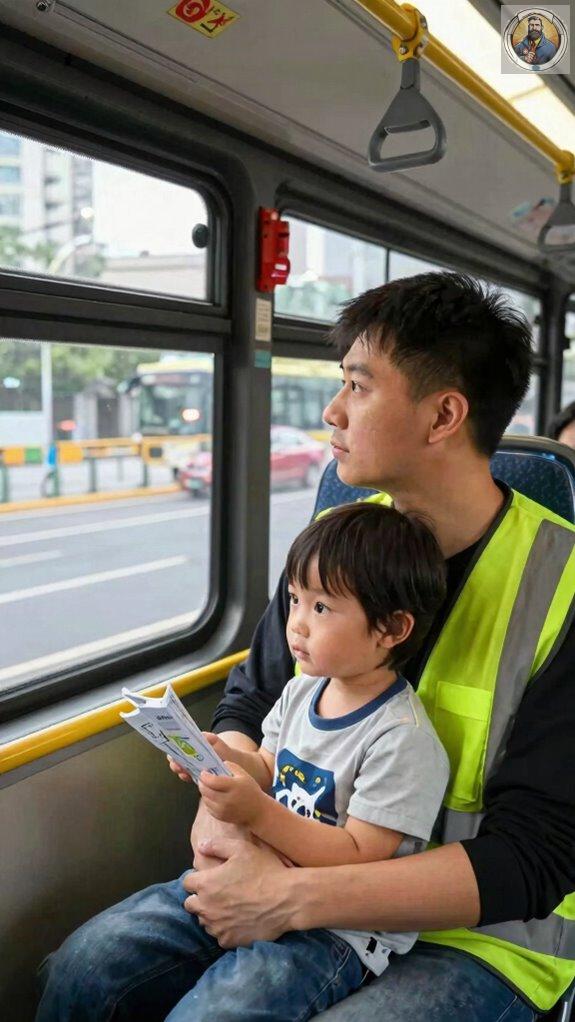
Also, have them participate in evacuation drills, so they know the safest way out if needed—like knowing whether to exit through the front or back door. Remind them: stay calm, listen, and follow instructions. Just as convertible hiking pants provide practical adaptability for outdoor activities, emergency procedures should be practiced repeatedly so children can adapt quickly to unexpected situations. In an emergency, having a space blanket readily available can help maintain body warmth while waiting for help to arrive.
Share a story where I forgot to teach Liam properly, and he froze during a drill. It was a wake-up call! Make emergency procedures routine, so they’re second nature—saving precious seconds if something unexpected happens.
Simple Ways Parents Can Reinforce Bus Safety at Home
Even though it might sound obvious, reinforcing bus safety at home can make a big difference—trust me, I’ve learned this the hard way.
I’ve found that creative bus routes—like practicing where to wait or how to cross safely—really stick in kids’ minds.
Parent-child communication is key; ask questions like, “What would you do if…?” to boost their confidence.
Share simple routines, such as always waiting for the bus to stop completely before approaching, or using hand signals. Keeping a pocket paracord dispenser in your child’s backpack can also provide a practical safety tool for emergencies.
My kids Emily and Liam love role-playing, pretending to be bus drivers or pedestrians. It’s fun, but it’s also serious training.
If you need to document safety concerns or discuss them with school officials, consider using digital voice recorder pens during important conversations.
Keep it engaging, practical, and consistent, and you’ll see their safety awareness grow—because mastery starts at home.
Goldfish Snack Shared at Stop
Taking out a snack like Goldfish at the bus stop might seem harmless, but it’s actually a little tricky when it comes to safety habits. Goldfish snacks are fun, but sharing manners matter—especially with new friends or classmates.
Think about the last time Liam shared his Goldfish—you’d be surprised how offering a piece builds trust. Always ask first, “Would you like some?” instead of just pouring snacks onto the bus bench.
Keep in mind, safety isn’t just about watching vehicles; it’s about respectful manners too. Keeping snacks in a sealed bag prevents messes and choking hazards. Building positive social interactions through rainy day activities can help children develop the communication skills needed to handle peer situations like sharing snacks respectfully. Teaching kids about seed planting and nurturing living things can also foster responsibility and patience in their daily interactions.
Commute Supervision
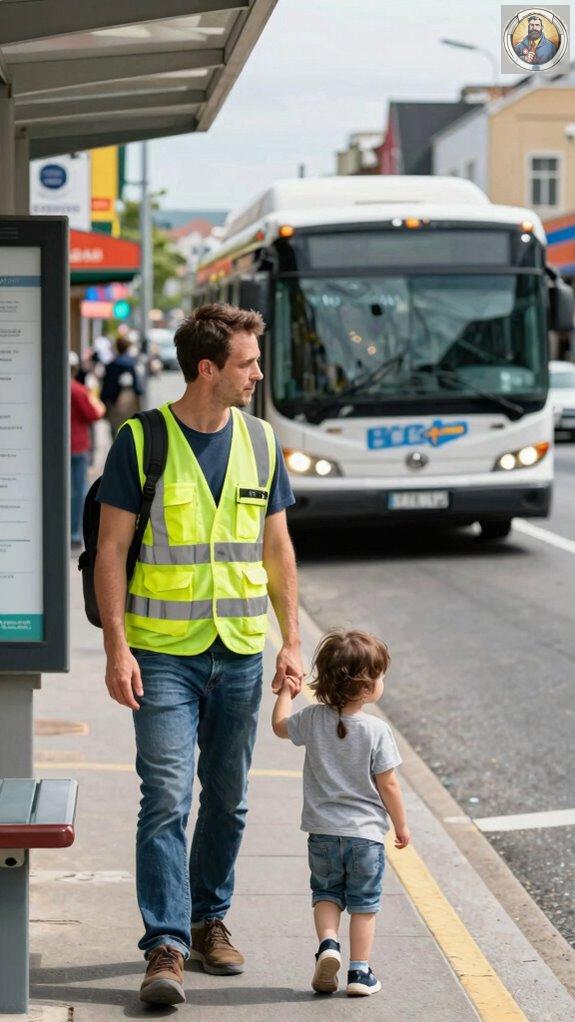
When it comes to busy mornings and crowded bus stops, actively supervising your child’s commute isn’t just a good idea—it’s a must.
Think about bus seat selection: remind your kid to pick a spot near the driver’s view or close to an exit, just in case. I recall Liam’s first ride—he sat next to the driver, giving us peace of mind.
Encourage your child to sit near the driver or an exit for safety and peace of mind.
It’s also essential to maintain driver communication. Say hello, make eye contact, or even briefly chat if possible—this creates a layer of safety and familiarity.
Do you know what’s happening on the bus at all times? That’s the goal. Never leave your child to figure it out alone—staying engaged keeps them safe, confident, and ready to handle the commute like a pro. Using visual countdown timers during waits at the bus stop can help children with attention difficulties stay focused and aware of departure times. Consider keeping waterproof trail maps accessible during longer commutes to help your child navigate and stay oriented during transfers or unfamiliar routes.
Parent Ensuring Children Stay Seated
Keeping your child seated on the bus might seem like just a simple task, but it’s actually one of the trickiest parts of bus safety. I’ve learned that consistent reinforcement and proper gear make all the difference.
Think about using child harnessing—those sturdy straps that keep Liam from bouncing out of his seat. Also, always insist on bus seat belts whenever available; they’re designed for secure riding. Consider pairing these with lightweight camping gear to make long trips more comfortable for your child. Engaging your child in debate and discussion about safety can help them understand and internalize these important rules.
Here are some tips:
- Explain why staying seated keeps them safe (avoid injuries or annoying disapproving looks from bus drivers).
- Use engaging reminders or jokes—”stay in your seat or the bus might turn into a roller coaster!”
- Make sure the harness is comfortable but snug.
- Teach them to keep their hands to themselves and avoid fidgeting.
- Never compromise on safety gear!
Back to School Essentials
Have you ever stood in front of a cluttered desk or backpack and wondered whether you’re missing something essential for school? Well, preparing for your child’s bus ride is just as important. Mastering bus route planning guarantees your kid isn’t stuck wandering or riding to the wrong stop—trust me, I’ve been there! And don’t forget driver safety inspections; a quick daily check assures the bus is in top shape. Managing your own stress through preventing father burnout helps you stay patient and attentive to these important safety details throughout the school year. Consider using an ergonomic footrest at your desk to reduce physical strain while you manage school schedules and safety planning. Here’s a quick cheat sheet:
| Checklist Item | Why It Matters | When to Do |
|---|---|---|
| Map the bus route | Avoid confusion, save time | Before the first day |
| Check bus safety features | Passenger safety, peace of mind | Night before, weekly check |
| Confirm driver safety | Prevent breakdowns, injuries | Before each trip |
Be proactive—your kids’ safety depends on it!
FAQ
What Are the Legal Responsibilities of Parents Regarding Bus Safety?
I understand my legal responsibilities involve ensuring my child’s adherence to bus safety regulations and providing adequate parental supervision. I actively teach safety rules, reinforce proper behavior, and stay informed to protect my child’s well-being during bus travel.
How Can Parents Communicate Effectively With Bus Drivers?
I prioritize clear driver communication by establishing open, respectful dialogue and understanding emergency protocols thoroughly. This mastery guarantees quick, effective responses, fostering a safer bus environment and peace of mind for my child’s safety.
Are There Specific Safety Rules for Children With Special Needs?
Visualize guiding a delicate butterfly; specialized safety plans for special needs transportation protect your child’s unique flight. I craft individualized safety plans, ensuring every step safeguards their journey, fostering confidence and mastery in their bus experience.
How Do Weather Conditions Impact Bus Safety Guidelines?
Weather hazards require seasonal adjustments in bus safety guidelines, as I guarantee protective measures during storms, icy conditions, or extreme heat. I stay vigilant, adapting precautions to maintain safety, especially for children vulnerable to changing weather impacts.
What Should Parents Do if They Witness Bus Safety Violations?
When witnessing bus safety violations, I act swiftly—reporting protocols guide my steps—by documenting incidents and alerting authorities. Emergency procedures guarantee everyone’s safety, turning my vigilance into a shield that guards my child’s well-being on every journey.
Summary
So, are you ready to turn those bus rides into smooth, safe journeys? Recall, a little prep goes a long way—teach them the rules, keep an eye out, and practice emergency drills. Your involvement makes all the difference, like how my wife Sarah once turned a chaotic bus stop into a mini safety workshop. With these tips, you’ll help your kids travel smarter, happier, and maybe even share a snack or two without any fuss. Now, let’s keep those bus adventures safe and fun!


