

How to Choose Interactive Games For Sons
How to Choose Interactive Games for Back to School Fun
What’s the secret to picking interactive games that actually excite kids? It’s all about his age, interests, and keeping it safe.
I’m sharing this on Modern Dads because navigating the gaming world can feel like a minefield—especially when you’re dodging the “really cool” trap.
For Liam, I stick to hits like Minecraft and Toca Boca. Keeps him busy without constant “Dad, can I have the controller?”
I ask him about his favorites, jot them down, and even let him choose some gear. Makes it a win-win—fun and practical!
Last week, I found Liam trying to negotiate a game swap with his friends—a full-on negotiation. I was half-expecting him to pull out a contract!
Choosing games for back to school can be both exciting and confusing. Just keep it simple, focus on what sparks their interest, and have a little fun along the way.
Quick Takeaways
- Select age-appropriate games that match your son’s developmental level for optimal engagement and learning.
- Consider his personal interests and preferences to choose games he will genuinely enjoy.
- Prioritize games with educational value or skills development to support growth beyond entertainment.
- Ensure game safety by checking controls, content ratings, and online safety features.
- Balance screen time with offline activities and encourage social play for well-rounded development.
Pick Age-Appropriate Interactive Games That Teach and Entertain
Whenever I look for interactive games for my sons, I always check if they’re the right fit for their age—because let’s face it, no one wants a toddler accidentally playing Fortnite, and no teenager needs to be stuck playing Sesame Street puzzles (unless they secretly love them).
Picking age-appropriate games is a must, balancing fun and learning while ensuring game safety. Parenting tips emphasize understanding content complexity and screen time limits.
Choosing age-appropriate games balances fun, learning, and safety through content awareness and healthy screen time limits.
For younger kids, I recommend educational apps like “Osmo” or “Toca Boca,” which teach problem-solving and creativity.
For older kids, strategy games like “Minecraft” or “Roblox” boost imagination without sacrificing safety if you set controls.
Beyond screen-based options, consider incorporating martial arts games at home to build physical fitness alongside digital play. You might also explore outdoor safety tools like loud survival whistles to combine outdoor adventures with emergency preparedness skills.
Always read reviews, set boundaries, and keep the focus on productive play, not just passive screen time.
Find Out What Your Son Likes to Make Better Choices
Figuring out what your son truly enjoys can feel a bit like decoding a mystery—after all, kids are full of surprises. Think back to when Liam first hit gaming milestones; he enthusiastically showed me his high scores, revealing preferences I initially overlooked.
Parental involvement is key here. Spend time watching your son play, asking questions like, “What do you love about this game?” or “Which part gets you most excited?” Notice if he prefers strategy-based games or fast-paced action. Using question prompt cards can help facilitate deeper conversations about his gaming interests and school experiences.
Keep a simple list:
- Favorite genres (sports, puzzles, adventures)
- Games he’s requested often
- Skills he’s developing (teamwork, problem-solving)
This understanding helps you make smarter choices, ensuring games align with his passions, not just what’s popular.
Set Your Budget and Space Limits for Interactive Games
Having a clear budget and space limits for interactive games can save you from turning your living room into a jungle gym or a tech store overnight. Budget planning helps you avoid impulse buys—trust me, I’ve been there—and guarantees you pick quality options within your means.
Space optimization is just as vital; do you really want Liam crashing into the TV while jumping for joy? Decide on a comfortable area—say, a 10×10-foot space—to keep play safe and manageable. Implementing time management strategies ensures you balance play sessions with other daily activities without letting games consume your entire schedule.
Create a list of must-haves versus nice-to-have extras, like foam mats or swivel chairs. Think about your room’s layout—furniture placement matters. Consider pairing interactive games with electronics kits that encourage hands-on learning and bonding during family time.
With a little planning, you’ll master both your finances and your space while choosing interactive games your son will love!
Choose Cooperative Games That Promote Conversation and Collaboration

| Cooperative Play Ideas | Benefits |
|---|---|
| Puzzle Challenges | Foster problem-solving |
| Team Sports | Promote communication |
| Escape Rooms | Develop collaboration |
| Story-building Games | Enhance creativity |
Why settle for solo victories? Encouraging your son to collaborate turns fun into learning—plus, the epic bragging rights! Through sensory integration exercises, children develop greater awareness of their emotional responses during interactive play, which deepens their ability to connect with peers and express themselves authentically. Age-appropriate cooperative games ensure that children are matched with activities suited to their developmental stage, maximizing sensory and cognitive benefits.
Watch and Adjust: See How Your Son Connects With Different Games
Now that you’ve got some great cooperative games lined up, it’s time to become a bit of a game detective—watch and learn how your son responds to each one. Think of yourself as a game designer, observing *player engagement* and reactions.
Does Liam seem excited, frustrated, or bored? Maybe a game like “Minecraft” sparks creativity, but “Fortnite” might just turn him into a rage monster. Pay attention to how long he stays interested, if he collaborates, or if he zones out.
Adjust accordingly—swap out games that don’t hit the mark or tweak rules to boost engagement. Recall, every kid connects differently; what worked with Emily mightn’t with Liam. Learning their preferences helps you craft the perfect game environment—kind of like being a master game designer.
Sneaking Snacks During Play
Whenever my kids are deep into a game, I’ve learned that sneaking a snack can be a tricky but necessary move—especially if you want to avoid snack distractions.
Playtime treats are tempting, but they can break focus if not timed right.
Playtime treats tempt, but poorly timed snacks can distract and disrupt focus.
Here’s my go-to strategy:
- Choose quiet, non-messy snacks like granola bars or pretzels—no crumbs roaming everywhere.
- Time your sneak during a natural pause in the game—like a loading screen or the moment of a big win.
- Keep snacks handy in a small container so you can grab treats quickly without drawing attention.
For outdoor gaming adventures, lightweight gear like camping trowels can help kids stay comfortable during extended play sessions in nature. Consider pairing playtime with sensory desk bands to help maintain focus during longer gaming sessions indoors.
Mastering this means Liam stays fully engaged without snack distractions pulling him away. It’s all about timing and smart snack choices!
Back to School Essentials
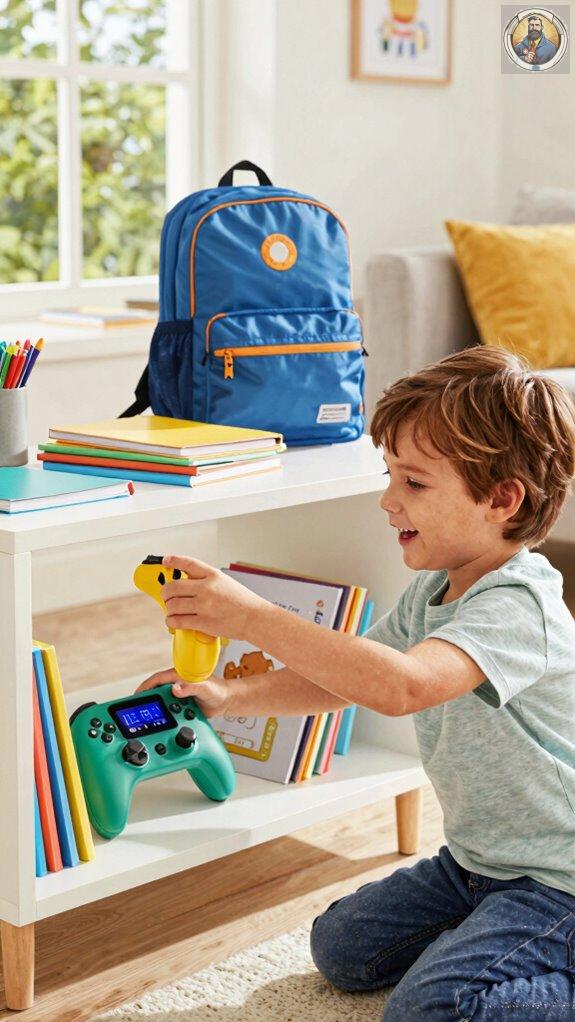
Getting ready for the new school year can feel overwhelming, right? Here’s my secret: think beyond just backpacks and notebooks. I’ve found that incorporating virtual reality gear and organizing game tournaments keeps my kids excited and motivated. For outdoor activities and emergencies, drop-proof flashlights are essential tools that help kids stay safe during field trips and evening events. Consider adding iron-on clothing labels to all school items for easy identification and peace of mind.
| Item | Why it’s essential |
|---|---|
| Virtual Reality Headset | Boosts learning with immersive educational apps |
| Durable Backpack | Holds tech gadgets & school supplies comfortably |
| Game Tournament Kit | Fosters friendly competition and social skills |
To master back-to-school prep, involve your son in choosing these essentials, turning it into a fun project! Recall, good gear doesn’t just mean looks — it means durability and functionality. Trust me, Liam loved customizing his VR setup last year; it made school feel a bit less intimidating.
FAQ
How Can I Tell if My Son Is Genuinely Interested in a Game?
You can tell your son’s truly interested if he keeps coming back to the game, even after losing or hitting tough levels. Watch for signs like him talking about it, sharing tips, or trying to improve skills.
My son Liam, for example, loved a puzzle game for weeks because he enjoyed skill development. Ask yourself: Does he start challenging himself, or just casually play without passion? That’s a clue!
Are There Any Safety Concerns With Specific Types of Interactive Games?
Yes, there are safety concerns with certain interactive games, especially if you don’t check their game ratings or use parental controls.
Some games have violence or adult themes, which aren’t suitable for younger kids.
Always review the game rating (like ESRB ratings), enable parental controls to restrict access, and monitor gameplay.
Think of it like a nervous parent’s worst nightmare, but with some simple steps, you can keep your kids safe and still have fun!
How Often Should I Update or Change the Games My Son Plays?
You should update or change your son’s games every few months, especially if they start feeling stale or if he’s outgrown certain themes. Think of game customization—adding new levels or challenges—like fresh ingredients in a favorite recipe.
Use parental controls to set limits and switch up games smoothly, keeping him engaged without losing control. I’ve learned the hard way—don’t let boredom sneak in, or you’ll end up battling more than just screen time!
What Are Some Signs My Son Has Outgrown a Particular Game?
You’ll notice your son outgrows a game when he no longer immerses himself, shows disinterest in customization options, or starts socializing outside it.
For example, Liam loved building worlds in Minecraft but now prefers multiplayer games with friends. Signs include decreased enthusiasm, seeking new challenges, or the game losing its social impact for him.
When that happens, it’s time to explore fresh options that match his developing interests!
How Do I Encourage Balanced Screen Time With Interactive Games?
To encourage balanced screen time, set clear boundaries like designated gaming hours and stick to them — no exceptions!
Promote outdoor activities by planning family bike rides or sports with Liam or Emily — trust me, nothing beats fresh air.
Encourage variety: mix interactive gaming with reading, puzzles, or arts and crafts.
Keep in mind, the goal is balance, not bans, so involve your kids in creating the rules and enjoy the fun together!
Summary
Sure! Here’s the modified text with a contextually relevant alternative word replacing “remember”:
So, ready to pick the perfect game for your kiddo? Did you know that kids who play cooperative games tend to have better social skills? It’s true! Keep in mind, choosing games your son loves, setting limits, and observing how he interacts makes all the difference. Trust me, I’ve been there—once spent an hour negotiating with Liam over a puzzle game—so patience pays off. Happy gaming, and don’t forget to sneak in those snacks!


