

Best Back To School Sensory Checklist For Dads
The Ultimate Sensory Checklist for Back to School
What if a sensory checklist could save our mornings from chaos? It totally can!
I’m sharing this on Modern Dads because as a dad, I’ve tackled epic battles against the morning rush. Besides, my son thinks breakfast is a sport, so I need all the help I can get!
Know your child’s quirks. Is too much noise a no-go? Pack noise-canceling headphones. Does he need to squeeze something? Fidget toys are a must! Don’t forget calming snacks; I’ve learned that gummy bears work wonders.
I keep visual schedules around the house. They really ease the transition from home to school. Little tricks go a long way, trust me!
Just last week, my youngest blew a fuse over the school bell ringing. I grabbed a fidget spinner, and it became his superhero. Those sensory struggles are real, but so are our solutions!
Quick Takeaways
- Prepare sensory tools like fidget toys, noise-canceling headphones, and textured materials for easy access during the school day.
- Establish a calming space or quiet corner in the classroom for sensory breaks.
- Communicate your child’s sensory needs and preferences with teachers and school staff.
- Pack a sensory kit with calming snacks, sensory aids, and organizational tools for transitions and busy times.
- Plan sensory routines and familiar activities to help your child adapt smoothly to school environment changes.
Understanding Your Child’s Sensory Needs
Understanding your child’s sensory needs might sound like decoding some secret language, but trust me, it’s more straightforward than you think—once you know what to look for. Sensory storytelling helps reveal what stimulates or overwhelms them, especially through tactile experiences.
Ask yourself: Do they love crawling on carpets or hate scratchy clothes? Notice if Liam prefers soft blankets or if Emily seeks out textured toys. You can use simple cues: pulling away, clinging, or fussing.
Try offering different textured objects, observe reactions, and create games to explore these textures — it’s fun and perceptive! Consider organizing sensory items in heavy-duty travel duffels to keep different textures and materials easily accessible and portable between locations. Servicing children means paying close attention; sensory needs are clues, not puzzles.
Why Dads Play a Key Role in Sensory Support
Have you ever noticed how dads naturally tend to immerse themselves in playtime with fearless enthusiasm that moms sometimes need to summon? That energy is what makes dads essential in sensory support.
Think about it: while planning a family trip to a bustling city or quiet beach, dads help create calming, stimulating environments—similar to using cooking tips to satisfy different tastes. They set examples: whether building an obstacle course or helping Liam organize sensory-friendly tools, dads show how active engagement benefits kids’ development. Just as AI homework tools can guide children through learning challenges, dads can leverage various resources to support their kids’ sensory needs effectively.
Their enthusiasm encourages confidence, curiosity, and connection—making sensory moments fun and meaningful. Who else could turn grocery shopping into a sensory adventure quite like dad?
How to Identify Your Child’s Unique Sensory Profile
Figuring out your child’s unique sensory profile can feel a bit like solving a mystery—exciting but sometimes confusing. Think of it as finding clues, like noticing Emily’s love for squeezing stress balls or Liam’s need for dim lights to focus.
Use humor to keep it fun—think… “Is my kid on sensory overload or just ignoring me?”
Observe how they react to different classroom environments: loud recess or quiet reading. Ask questions like, “Does my child crave movement or avoid it?” Understanding their need for active physical gear can help you better support their sensory preferences throughout the school day.
Keep detailed notes and look for patterns. Keep in mind, every kid is different—your mission is to uncover what makes them comfortable, even if it’s a quirky puzzle!
Recognizing Signs of Sensory Overload in Your Child
When your kid starts acting like they just walked into the world’s loudest, most chaotic party—without an invitation—that’s a major red flag for sensory overload. I’ve been there! You notice sudden fussiness, covering their ears, or retreating into a corner. Maybe they’re clingy or irritable despite your efforts for parental relaxation.
Be aware of these signs early by paying attention to their behaviors. Offer nutritious snacks to stabilize their mood.
If Liam suddenly shuts down or Emily becomes overwhelmed, it’s time to step in gently. Remember, serving others means noticing these signs before it’s too late and calmly helping them find calm again. Consider displaying inspirational wall art prints in their space to provide visual reassurance and positive messaging that can help ground them during overwhelming moments.
Creating a Sensory-Friendly Backpack for School
Getting ahead of sensory overload starts with an organized, thoughtfully packed backpack tailored to your child’s needs. Think of it as your secret weapon—filled with creative crafts to soothe and healthy snacks for a quick pick-me-up.
Keep in mind Liam’s obsession with fidget toys? Pack a few to keep his hands busy during class. Include familiar snacks like trail mix or apple slices to prevent hunger fussiness.
Make it visually appealing—use clear compartments or color-coded sections. My wife Sarah always says, “A well-packed backpack isn’t just about stuff; it’s about caring enough to serve your kid’s sensory needs!” Consider pairing these sensory tools with positive affirmation cards to help build your child’s confidence alongside managing their sensory needs.
It’s simple, impactful, and worth the effort.
Essential Fidget Tools for Sensory Regulation
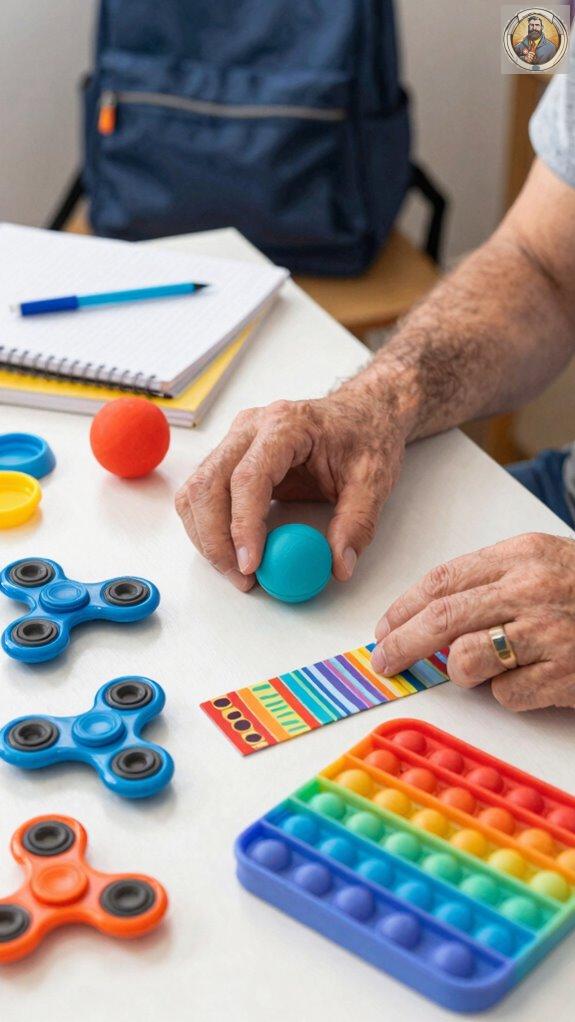
Since every kid is different, choosing the right fidget tools can feel like steering through a maze—not to mention, overspending on cool-looking stuff. I’ve found tactile toys and sensory art can be game changers. Try squeeze balls for calming pressure, textured fidget spinners for focus, or sensory putty for hands-on fun. Discreet sensory desk bands are particularly effective for helping fidgety boys maintain focus during classroom time without drawing attention.
Here’s what works best for us:
- Fidget cubes with different textures
- Tactile shimmering ribbons
- Small containers of sensory art like kinetic sand
- Chewy necklaces or bracelets
These help kids like Liam stay centered and serve others by creating a calm, supportive environment. It’s all about giving them tools to thrive.
Choosing Comfortable Clothing for Sensory Comfort
Choosing the right clothes for sensory comfort might just be one of the easiest ways to help your kid (and probably yourself) survive the day feeling less like you’re battling a constant itch attack.
Think soft, tagless fabrics for creative arts days—that way, Emily won’t be pulling at her shirt all morning.
For outdoor activities, opt for breathable, stretchy clothes that move with Liam during sports or quick climbs. Avoid synthetic materials; they can cause irritation.
I’ve learned from experience—simple switches like choosing loose, smooth clothes make a huge difference in keeping kiddos calm and focused.
When kids feel physically comfortable, they’re better equipped to handle social challenges like bullying prevention tactics that may arise during the school day.
Want happy kids? Comfort first!
Setting Up Quiet Spaces and Break Areas at School
Making sure your kid feels safe and comfortable at school isn’t just about what they wear—it’s also about creating spaces where they can recharge when things get overwhelming.
Think of a quiet corner with soft cushions, calming artwork, or sensory-friendly tools.
For outdoor play, a shaded area with nature elements can help reduce anxiety.
Art therapy supplies like watercolor sets or clay give kids a creative outlet.
You might add noise-canceling headphones or calming lights to make the space more inviting.
Research shows that reducing sensory overload significantly improves focus and emotional regulation throughout the school day.
These areas serve as a refuge, helping kids like Liam or Emily reset, so they’re ready to face the busy school day with a smile.
Sensory Diet Activities to Start Before School
Getting your kid ready for a smooth school day often starts long before they step out the door, and that includes a little planning around their sensory needs. Based on your parenting styles, you might choose calming activities like swinging or squeezing a stress ball, or more active ones like jumping on a trampoline.
Nutritional planning is essential, too—let’s be honest, a sugary breakfast isn’t helping anyone stay focused!
I suggest creating a mini sensory diet: fast-paced tasks before breakfast, calming puzzles after, and small movement breaks throughout. Consider adding chewable sensory jewelry to your toolkit, as these pendants can help transitioning kids stay grounded throughout the school day. Think of it as fueling sensory resilience—because, honestly, isn’t helping them thrive worth the effort?
Strategies to Calm Overstimulation Quickly
When your kid hits overload mode, it feels like a sensory storm—trust me, I’ve been there with Emily and Liam.
To calm things fast, try these sensory gadgets:
- Noise-canceling headphones to block chaos—parents, they’re worth their weight in gold!
- Fidget toys keep restless hands busy.
- Calming weighted blankets help relax tense muscles.
- Aromatherapy diffusers with gentle scents like lavender reset the mood.
- Sensory seating cushions provide active sitting solutions that help hyperactive children maintain focus and reduce fidgeting during demanding moments.
Quick tips? Use humor to lighten the mood, breathe deeply, and recollect everyone gets overwhelmed.
Sometimes, just a pinch of patience and the right gadgets turn meltdown mode into manageable moments—because serving others begins with a little self-care.
Best Sensory Tools for Lunchtime and Recess
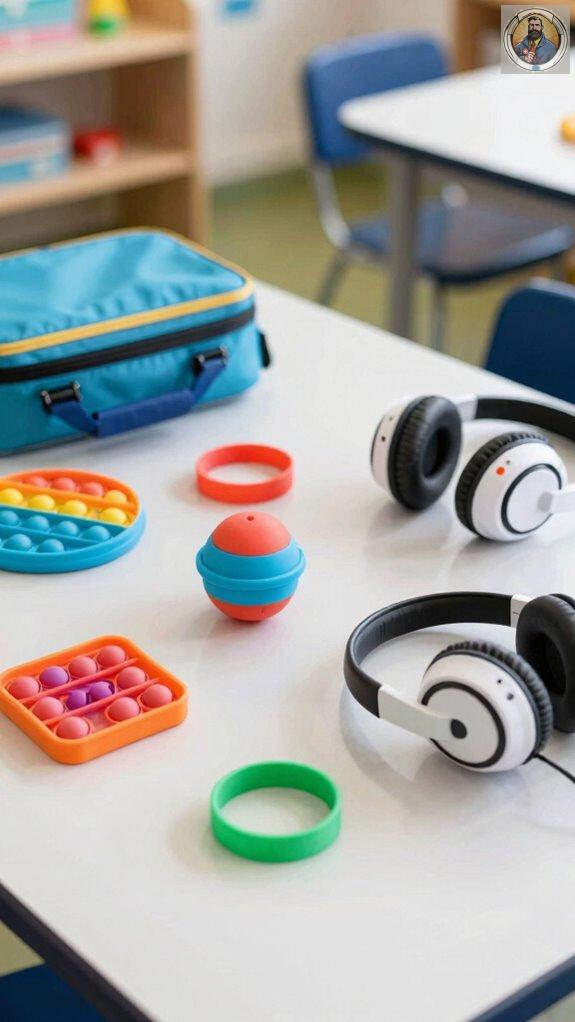
Lunchtime and recess should be moments of fun and freedom, but for kids with sensory sensitivities, they can quickly turn into sensory overload chaos—trust me, I’ve seen it firsthand.
To help, try incorporating music therapy during breaks—simple tunes or rhythmic clapping can ground an overwhelmed child. Art integration works wonders, too—try portable sketchbooks or tactile activities that keep nervous energy in check.
My son Liam loved doodling, and my wife Sarah uses soft melodies to calm him.
Easy-to-carry tools like fidget toys, noise-canceling headphones, or textured fabrics can make the environment more comfortable. Consider multi-hook gear hangers for organizing and air-drying sensory equipment like weighted blankets or tactile items between uses.
Want peaceful recess? These sensory tools are game changers!
How to Communicate Your Child’s Sensory Needs to Teachers
Talking to teachers about your child’s sensory needs might feel intimidating—like decoding a secret language. But honestly, it’s about helping them understand Liam’s love for outdoor activities or how certain Nutrition tips make a difference.
Start with a simple conversation, sharing what works at home, like sensory-friendly clothing or preferred calming routines. Learning about easy hair styling techniques can also help teachers understand how grooming and personal care routines contribute to your child’s overall sensory comfort throughout the school day.
- Provide a sensory needs overview that’s clear and specific
- Share examples from past experiences, like how Liam calms with textured toys
- Suggest adding sensory breaks during outdoor activities
- Offer resource materials or quick tips to keep communication ongoing
Making a Sensory Break Box for Home and School
Creating a sensory break box might sound like something only teachers do, but it’s just as useful at home—especially if you’re trying to keep Liam calm after a busy outdoor adventure.
I’ve learned that organizing it with creative snack ideas—like chewy fruit snacks or mini granola bars—helps kiddos refocus.
Pack the box with simple tools for backpack organization: stress balls, textured fabrics, or calming scents.
It’s easy to grab and go, whether at school or home.
Ever been surprised how a quick fidget toy or a handful of trail mix can reset a meltdown?
Yes, sensory breaks really work, and they’re a lifesaver for busy parents.
Consider using heavy duty three-ring binders to track your child’s sensory progress and document which tools work best for their individual needs.
Using Visual Supports to Help Your Child Stay Calm
When your busy little explorer—like my son Liam—starts to get overwhelmed, visual supports can be your secret weapon. They help kids understand what’s coming and stay calm through sensory activities like kitchen sensory play or simple sensory art projects.
Try using picture schedules for daily routines, calming images on the wall, or visual timers to manage expectations. I’ve found that these tools are so effective because they give kids a sense of control and clarity.
For example, a visual chart showing “now,” “next,” and “done” keeps Liam focused and less anxious. Visual routine flip charts are particularly effective for kindergarten transitions, helping children anticipate their day and reduce anxiety about new routines. Visual supports truly make a difference when calming even the busiest little minds!
Incorporating Movement Breaks During the School Day
In the whirlwind of a school day, it’s easy for kids—and parents alike—to get stuck in a rut of sitting at desks for long stretches without a break. That’s where movement breaks come in, boosting sensory integration and keeping everyone alert. Think quick stretches, jumping jacks, or a walk around the block—anything to get the blood flowing. Having pre-sharpened colored pencils readily available can also reduce frustration during transitions between activities, keeping momentum steady. I recall my daughter Emily’s energy fade during her homework—adding 2-minute movement breaks made a huge difference. So, ask yourself: Could a simple dance party or a quick run help your child stay engaged? It’s about serving their needs, one active step at a time!
Tips for Managing Sensory Sensitivities During Transitions
Managing sensory sensitivities during shifts can feel like walking a tightrope—one moment everything’s fine, then a meltdown hits. I’ve been there, especially when changing from school to outdoor playground or making lunch with rainbow foods.
To help, I try simple tricks:
- Use a calming phrase to prepare my kid.
- Offer a favorite snack like rainbow fruit.
- Limit loud noises by choosing quiet time or headphones.
- Engage in deep pressure before switching activities.
Playing interactive board games together can also provide a structured, sensory-friendly way to bond during transitions and help children feel more grounded during school changes.
Fun Sensory Activities for After-School Relaxation
After a busy day juggling school, homework, and errands, it’s great to have some fun sensory activities lined up to help your kid unwind. Mom bonding over activities like squishy stress balls, textured playdough, or even a sensory bin filled with rice or beans can do wonders.
Try simple snack ideas like yogurt with toppings or homemade trail mix to add a calming element. These activities, paired with a shared snack break, make relaxation special.
Want to make it more fun? Incorporate a quick game or a funny story, and recall—these little moments build lasting memories and calm anxious senses. Creating a consistent after-school routine helps establish predictability and reduces stress for both you and your children during the transition from school to home.
Using Sound Soothers and Noise-Canceling Headphones
Ever notice how some kids get overwhelmed by loud noises or crowded places? Using sound soothers and noise-canceling headphones can really help. They block out distracting visual stimuli and tactile textures that cause sensory overload.
For example, my son Liam loves ear defenders at school—they turn down the noise without making him feel isolated. Keep in mind, fit matters—test different sizes! Similar to how misting spray bottles are designed with gentle application in mind, selecting the right sensory tools requires careful attention to comfort and effectiveness.
- Use calming nature sounds with sound soothers
- Choose headphones comfortable enough for all-day wear
- Set volume limits to protect delicate ears
- Incorporate quiet times between noisy activities
Helping your kid navigate sensory overload with these tools shows you care. It’s about creating calm in chaos!
Creating a Homework Space That Supports Sensory Needs
Have you ever tried setting up a homework space for a kid who gets overwhelmed by clutter or bright lights? Trust me, I’ve been there! To create a sensory-friendly zone, include adjustable lighting, a cozy chair, and a small table.
Incorporate group activities or sensory crafts—like textured papers or fidget tools—that make learning fun and calming. Keep everything organized with labeled bins and low-stimulation decor. Research shows that effective focus techniques can significantly improve concentration for children who struggle with fidgeting in structured environments.
Liam loved a mini sand tray for tactile input, and Emily enjoyed quiet space for focused work. The goal? Make the space inviting, supportive, and flexible—so homework doesn’t turn into a sensory nightmare.
Who’s ready to customize?
Collaborating With School Staff on Sensory Strategies
Talking to school staff about sensory strategies might sound intimidating, but it’s one of the best ways to support your kid’s comfort and learning. Building relationships helps you share ideas on sensory integration and calming techniques. Working together with teachers to strengthen your child’s emotional growth can help them navigate the social and academic pressures of the school day.
You could suggest:
- Using sensory breaks during lessons
- Creating a quiet corner for extra calming
- Incorporating textured or weighted materials
- Adjusting noise levels or lighting
My wife Sarah did this, and Liam’s classroom now has a cozy corner with soft pillows, which made a huge difference. It’s like teamwork, but with the goal of giving your child an environment where they can thrive.
Preparing Your Child for School Transitions
Getting your child ready for school changes can feel overwhelming—like juggling too many balls.
Recall how Emily loved her textured toys to help settle nerves? Or how the sensory room at school became her safe space?
To prepare Liam, I set up a mini sensory room at home with squeezable balls and soft blankets. Use familiar textures to ease shifts, and talk about the new school environment beforehand. Consider investing in budget-friendly sensory gear that won’t strain your finances while still providing comfort.
Visit the school together, and show him where the sensory room is. Anything to help ease anxiety—it’s like giving your child a comforting hug in advance.
You’ve got this—step by step.
Common Mistakes Dads Make When Supporting Sensory Needs
When it comes to supporting your child’s sensory needs, it’s easy to fall into some classic pitfalls that can actually make things worse instead of better.
- Ignoring sensory cues or dismissing them as “just behavior.” Instead, pay attention and practice sensory mindfulness.
- Overloading your child with too many interventions at once, confusing them and hindering parent-child bonding.
- Using a one-size-fits-all approach, ignoring your child’s unique sensory preferences.
- Forgetting to stay calm yourself—kids pick up on your stress. Be patient, supportive, and consistent. Small steps build trust and meaningful connections, not frustration.
- Neglecting the physical environment where your child studies or completes homework, as an ergonomic desk chair can significantly reduce sensory distractions and support better focus during learning activities.
Integrating Sensory Strategies Into Daily Routines
Supporting your child’s sensory needs isn’t just about one big moment—it’s about weaving helpful strategies into daily life.
Think outdoor play—getting Liam into the yard or park boosts coordination and calming energy. Art therapy, whether drawing or molding clay, feeds creativity and sensory input. Incorporate simple routines like morning stretch sessions or guided nature walks.
Ask yourself: How can I turn chores into sensory adventures? Maybe helping Emily water plants or collect leaves. These small, intentional activities create a steady rhythm that meets sensory needs without overwhelming.
Serving others starts with tiny choices—making sensory-friendly routines part of everyday life.
How to Adjust Sensory Tools as Your Child Grows
As your child grows, their sensory needs evolve—kind of like updating wardrobe sizes—so it’s essential to adjust their sensory tools.
For example, Liam’s favorite calming aromatherapy needs better scents as he matures or his sensory friendly diets change with age.
Here are some tips:
- Swap sensory brushes or fidget toys for more age-appropriate options
- Refine calming aromatherapy blends based on preferences
- Increase or decrease sensory input intensity
- Incorporate new sensory activities like mindful breathing or gentle yoga
- Consider adding visual countdown timers to help maintain focus during transitions and tasks as their attention span develops
Keeping these adjustments in mind helps support their development and keeps routines engaging—and maybe saves you a few trips to the store!
Understanding Sensory Processing Disorder vs. Normal Variability
Understanding Sensory Processing Disorder (SPD) might sound like code for something super complex, but really, it’s just a fancy way of describing how some kids process the world differently. Think of sensory humor—like, when a child’s sensory system is overwhelmed and they react with exaggerated eye rolls or funny noises.
It’s not just “being picky”; it’s a real difference from normal variability. Sensory art, like calming textures or colorful distractions, can help children self-regulate. Managing healthy screen time habits during the school day can also reduce sensory overload from digital stimulation.
Keep in mind, differences aren’t “bad”—they’re part of unique brain wiring. Recognize the signs, embrace the quirks, and use those sensory tools—because every child deserves understanding, not judgment.
Resources and Support for Sensory Needs at School
When it comes to helping kids with sensory differences thrive at school, knowing what resources are available can feel like steering through a maze—confusing and overwhelming.
I’ve learned that parent-teacher collaboration is key, especially when sharing sensory-friendly snacks or tools that help my kids stay calm.
Look for support groups, sensory-friendly classrooms, occupational therapist contacts, and school-based sensory tools.
These resources turn chaos into clarity—like my experience with Liam’s calming sensory socks or Emily’s sensory break corner.
Managing screen time limits alongside sensory strategies helps ensure kids aren’t overstimulated by devices during the school day.
Do you have strategies or resources in your toolkit? Because, trust me, working together makes all the difference.
Advocating for Sensory Accommodations Effectively
Getting your voice heard when advocating for sensory accommodations can feel like yelling in a crowded room—impossible, right? But think about it: emotional resilience helps you stay calm and clear, even when peer interactions get tricky.
When talking to teachers or administrators, be specific. Use examples from past experiences—like Liam’s noise sensitivities or Emily’s need for a quiet space.
Create a quick list of key points:
- Focus on your child’s strengths
- Clearly explain sensory needs
- Offer solutions, not just problems
Stay patient, confident, and positive. Keep in mind, your voice can create safer spaces where your child thrives! Consider establishing a mobile office space at school where your child can retreat during overwhelming moments to regain focus and composure.
Success Stories: Dads Supporting Sensory Needs
Supporting your child’s sensory needs isn’t just about understanding what they need—it’s about taking action that makes a real difference.
I’ve seen how simple activities like gardening projects or cooking challenges help my kids—Emily loves planting her own veggies, and Liam’s hilarious kitchen experiments keep us laughing. These hands-on activities boost their sensory input while building confidence. Establishing a smart morning routine helps anchor these sensory activities into your daily schedule so they become sustainable habits rather than occasional occurrences.
- Use textured seeds or soil for tactile input
- Let your kid pick ingredients to encourage decision-making
- Include sensory-rich tools, like textured brushes or tactile mats
- Celebrate their efforts, no matter how messy or chaotic—because that’s how growth happens.
Want to see real progress? Plunge right in!
Tracking Your Child’s Sensory Progress Over Time
Keeping track of your child’s sensory progress might sound as exciting as watching paint dry, but trust me, it’s a game-changer—especially when using dance therapy and aroma scents.
Recall how Liam loved moving to music but hated loud noises? Note those behaviors. Maybe Emily responds well to lavender or peppermint scents during homework—track that!
Create a simple chart with dates, activities, and reactions. Over time, you’ll notice patterns. For example, Liam might relax during dance therapy sessions or aroma scent routines before bed.
Magnetic visual meal planners can also help track sensory responses during meal times and lunch packing routines your child participates in.
This isn’t just data; it’s your secret weapon for understanding what truly helps your child thrive.
Preparing for Unpredictable Sensory Challenges at School
When it comes to school, you never know when a surprise sensory challenge might pop up—like a blaring fire alarm, a crowded cafeteria, or a sudden shift from quiet reading to group projects. Preparing means thinking ahead about how to support your kid through these moments.
- Practice calm breathing techniques during hectic playground routines to help them stay grounded.
- Role-play lunchroom etiquette so they’re confident handling noise and crowds.
- Develop a signal to check if they need a sensory break.
- Teach strategies for managing unexpected loud sounds or busy hallways. It’s about being proactive, so your child feels safe and ready for anything.
- Consider using a smart wallet to help your teen organize school supplies and manage any money they need for sensory-friendly breaks or supplies.
The Benefits of Daddy Involvement in Sensory Support
Getting involved as a dad can really make a difference when it comes to helping your kid navigate sensory challenges—think of it like being their personal superhero (minus the cape, unless that’s your thing).
You can boost sibling bonding by playing sensory-friendly games together, like bubble wrap stomp or textured treasure hunts. Keep in mind dietary considerations? Preparing snack options that suit sensory needs shows you’re all in. Teaching proper locker room hygiene habits also supports your child’s comfort and confidence in shared spaces.
With more engagement, you build trust and understanding, which benefits everyone. Ever noticed how Liam lights up when I help him with this?
Your active dad role isn’t just helpful—it can transform the whole sensory journey for your child and your family.
Final Tips for Supporting Your Child’s Sensory Journey
Supporting your child’s sensory journey doesn’t have to feel overwhelming or like tackling a mountain—trust me, I’ve been there. (: The key is to stay consistent, patient, and recall small actions count. Keep open Parent-Teacher communication to share strategies and observations.
Incorporate sensory relaxation techniques, like deep pressure or calming visuals, into daily routines. When managing blended house schedules, ensure both households implement consistent sensory strategies to support your child’s stability and progress.
Here are some final tips:
- Celebrate progress, no matter how tiny
- Stay flexible—what works one week might change the next
- Share ideas with teachers and therapists
- Focus on your child’s unique sensory needs, and keep the love flowing!
First School Trip Adventure
Planning a first school trip can feel like preparing for an expedition to Mars, but honestly, it’s mostly about being smart, organized, and keeping a good attitude—trust me, I’ve had my fair share of “what did I overlook?” moments. Serving others means thinking ahead: pack snacks, water, and a familiar comfort item for your child.
Use simple cooking tips for easy meals—think sandwiches and trail mix! When choosing travel destinations, pick family-friendly spots like parks or museums.
Back to School Essentials
When it’s time to head back to school, there’s no need to stress—well, unless your kid insists on bringing every single Pokémon card they own. But let’s focus on those back-to-school essentials that boost parent-child communication and support sensory integration.
You’ll want:
- Noise-canceling headphones for focus
- Fidget tools to stay calm
- Visual schedules for clear routines
- Comfort items like a small blanket or plush
These tools help kids feel safe and understood, making the shift easier. Keep in mind, serving their needs today sets the stage for confident, happy learners tomorrow. Teaching your child about managing lunch money encourages financial responsibility and independence during the school day.
Trust me—these little things make a big difference!
FAQ
How Can Dads Incorporate Sensory Activities Into Daily Routine?
I incorporate sensory activities into our routine by paying attention to sensory integration and avoiding sensory overloading, like short, calming exercises or tactile play, to help children feel balanced and supported throughout their busy school days.
What Are Quick At-Home Sensory Calming Strategies for Dads?
Envision soothing waves crashing gently—that’s how quick calming techniques work. I use deep pressure, gentle rocking, or sensory integration activities at home to help kids feel grounded and cared for, calming their nerves swiftly.
How Can Dads Support Sensory Needs During School Mornings?
I support sensory needs during school mornings by encouraging sensory integration activities and creating calm routines, which help with emotional regulation. I listen actively, offering reassurance and understanding, and adapt plans to guarantee a smooth, positive start for your child.
What Sensory Tools Are Best for Travel and School Commutes?
Ironically, I’d say the best sensory tools for travel routines are simple—noise-canceling headphones, fidget toys, and sensory backpacks. These help kids stay calm and comfortable during commutes, making the journey smoother and more enjoyable for everyone.
How Can Dads Advocate for Sensory Accommodations in School Meetings?
I advocate effectively by sharing sensory-friendly language, emphasizing my child’s needs, listening to teachers, and offering practical solutions. My advocacy tips aim to foster understanding, ensuring my child’s sensory accommodations are respected and prioritized during school meetings.


