

Best Back To School Checklist For WFH Dads
Back to School Survival Tips for Dads
Ever wondered how to turn wild back-to-school chaos into smooth sailing? It’s all about preparation!
I write for Modern Dads to share what I’ve learned navigating this hectic season, from my son’s meltdown over misplaced pencils to my daughter’s quest for the perfect lunchbox snacks.
Creating a checklist helps me remember that stacking the kids’ outfits and prepping lunches the night before keeps mornings less frantic. Plus, I learned to set work hours and establish boundaries—trust me, it’s a lifesaver.
Last year, I forgot to pick up the kids after school, thinking they’d take the bus. Turns out, the bus was delayed! The look on their faces when I finally arrived was priceless—and my new nickname? “The Late Show.”
This year, I’m determined to avoid the drama!
Quick Takeaways
- Ensure dedicated, organized study and workspaces for both child learning and your WFH tasks.
- Set clear daily routines and boundaries to balance work, school responsibilities, and family time.
- Prepare supplies, tech devices, and emergency kits in advance to avoid last-minute disruptions.
- Establish effective communication with teachers and family to adapt routines and manage expectations.
- Schedule regular review and flexibility adjustments to accommodate changing schedules and unexpected events.
How to Create a Work-From-Home Schedule That Fits School Days
Starting a new school year while juggling work from home can feel like trying to solve a Rubik’s Cube blindfolded—challenging but totally doable once you have a plan.
I learned the hard way that balancing chores and managing tech is essential. You can create a schedule that works for everyone by setting specific work hours, blocking tech time for school apps, and carving out chores during breaks.
Use a simple calendar—digital or paper—to visualize your day, including how you’ll help Emily or Liam with their homework. Keep in mind, flexibility is key, and a little sarcasm keeps the mood light when tech glitches happen! When managing multiple households, coordinating drop-off schedules ensures you can maintain productivity while meeting everyone’s needs.
Setting Boundaries Between Work and Family Time
Ever wonder how I keep work from bleeding into family time—without turning into a grumpy janitor of my own life? It all boils down to clear work boundaries and family boundaries. I set specific work hours, like 9 am to 4 pm, and stick to them—no “quick emails” sneaking in during dinner.
I also create physical cues: a closed laptop, a designated work corner. When I mom and dad, I leave work behind, giving Emily or Liam my full focus. Just as active boys need proper gear to succeed at school, working parents need the right tools and systems to manage both professional and family responsibilities effectively.
Want harmony? Communicate your boundaries clearly, honor them consistently, and keep in mind: your family deserves your presence—as much as your work needs boundaries.
Create a Dedicated Homework Station for Your Kids
After setting those work boundaries, it’s time to turn our attention to the kiddos and their homework chaos.
Creating a dedicated homework station isn’t just about organization; it’s about serving your kids’ learning needs. Think of it as organizing play areas and creating art to make the space inviting. Use a sturdy table, comfy chair, and good lighting—no more excuses for lost supplies.
Add drawers or shelves for books and supplies, so everything has a home. My kids Emily and Liam loved decorating theirs with colorful posters. Investing in durable school gear ensures your homework station withstands the wear and tear of daily use. Keep in mind, a happy, organized space helps kids focus, and who doesn’t want that?
Develop a Daily Back-to-School Routine That Works
Crafting a daily back-to-school routine mightn’t sound as exciting as a new video game or weekend ice cream, but trust me, it’s the secret sauce to smoother mornings and less homework chaos.
Want to boost parent-child bonding? Incorporate a quick chat over breakfast or a fun prep activity. Planning extracurriculars? Include those in your daily schedule to prevent last-minute scrambling.
Here’s what works for me: set a consistent wake-up time, have a checklist for essentials, and carve out time for quick family updates. It’s about making mornings predictable—and even enjoyable—so your kids feel supported and ready to conquer the day. If your children have curly hair, remember that implementing organic leave-in conditioners as part of their morning routine can help keep their hair tangle-free and manageable throughout the school day.
Organize Your Laptop and Devices for Easy Access
Let’s face it, finding that important document or charging cable in a cluttered digital mess can feel like searching for a needle in a haystack—except the haystack is your files, apps, and folders.
To boost your laptop organization and device accessibility, try these tips:
- Create clearly labeled folders for school and work files
- Use a docking station or cable organizer for chargers and peripherals
- Keep frequently used apps on your desktop or quick-access toolbar
- Delete old files, so your device runs smoothly and stresses less
Consider using AI homework tools to help organize educational materials and keep school-related documents systematically filed. Trust me, these small steps save big time waiting or frustration—perfect for busy dads like me!
Stock Up on School Supplies and Essentials
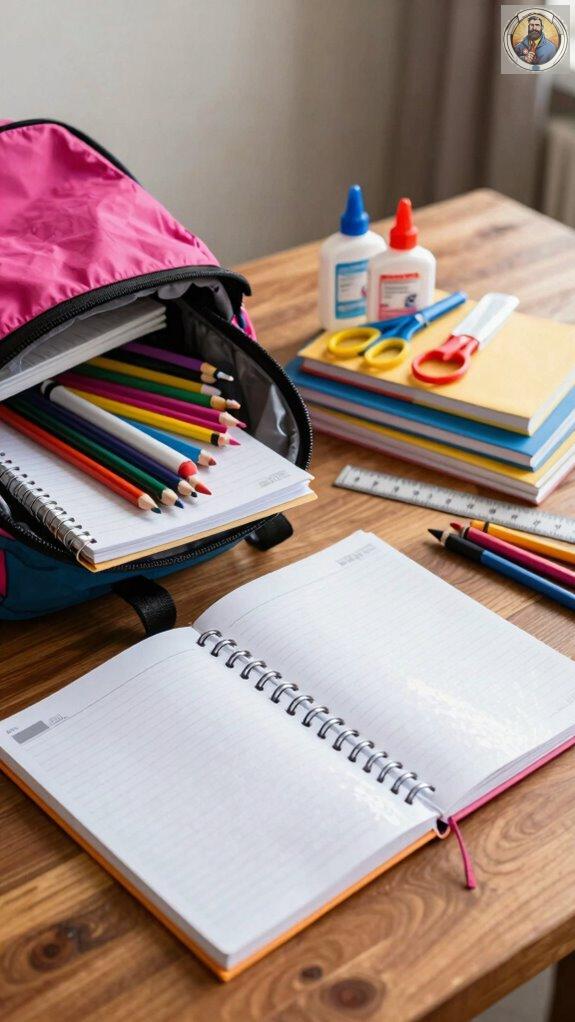
Getting everything your kid needs for school can feel overwhelming, especially when you’re juggling a million things. I recall stressing over last-minute supply runs; it’s like trying to find a needle in a haystack.
To help, I stock up on essentials like notebooks, pens, and highlighters—and don’t forget basics like hand sanitizer and masks. Creating study routines is key, so having plenty of supplies ready saves time. Investing in plastic desk organizers helps keep all these materials neatly arranged and easily accessible.
Managing technology means checking that devices are charged, software is updated, and backups are in place. A well-stocked backpack and clean workspace make all the difference.
Trust me, a little prep now keeps chaos at bay later.
Coordinate Parenting Responsibilities With Your Partner
When you’re juggling work calls, helping with homework, and trying to keep your sanity, the last thing you want is confusion over who’s responsible for what when it comes to parenting. Clear coordination on parenting time and emotional support keeps everyone sane and connected. Implementing smart morning routine hacks can streamline these daily transitions and reduce stress for the entire family.
- Set a schedule that shows who’s responsible for morning routines, extracurriculars, and bedtime.
- Communicate openly about each other’s strengths and preferences, like Liam’s love for math and Emily’s need for cuddles.
- Support each other emotionally—a quick check-in during the day can make all the difference.
- Share responsibilities evenly, so neither of you feel overwhelmed or resentful.
Plan Meals and Snacks for Busy School Mornings
Mornings can feel like a whirlwind, especially on busy school days, so planning meals and snacks in advance isn’t just helpful—it’s a sanity saver.
I’ve learned that simple meal prep and snack planning make mornings smoother and happier. Think overnight oats, pre-cut fruit, or bagging trail mix for the kids. Save time by prepping breakfast ingredients the night before, so I’m not scrambling at dawn. When co-parenting across multiple households, coordinating meal planning between homes ensures your kids eat consistently nutritious breakfasts regardless of which parent’s house they’re at.
Bullet point ideas:
- Healthy snack packs
- Easy grab-and-go breakfasts
- Involving kids in prep for a fun start
It’s all about serving others by easing their mornings (and mine too!).
Starting Mornings Right: Simple Rituals for a Smooth Day
If you want your mornings to run smoother than a well-oiled machine, establishing simple rituals can make all the difference. Morning mindfulness helps set a calm tone—pause, breathe, and prioritize kindness.
Breakfast rituals create consistency, whether it’s making smoothies the night before or sharing a quick thank-you toast.
- Practice a mindful stretch before the chaos begins
- Prepare outfits or school bags the night earlier
- Share a positive intention for the day
- Start with a healthy, easy breakfast to fuel everyone
Visual countdown timers can help maintain focus during morning routines, especially for children who benefit from structured time awareness. These small acts turn hectic mornings into moments of purpose. Ready to own the day?
Block Focus Time Around School Drop-offs and Pickups
Juggling work and family often feels like trying to keep a dozen plates spinning—especially during those school drop-off and pickup rushes. That’s why I swear by focus sessions and time blocking.
Block out chunks of your day—say, 20-minute focus sessions—when you won’t check emails or answer calls. During those times, focus solely on work, knowing your family is in good hands.
Set clear boundaries, like no work during Liam’s soccer practice or Emily’s piano lessons. It’s all about respecting your time and theirs—serving others by being fully present.
Consider using heavy duty multi-ring binders to organize your work schedule and family commitments in one place, making it easier to track important deadlines and school events alongside your focus blocks.
Want less chaos? Protect those focus blocks like it’s sacred.
Communicate Your Work Availability With Colleagues and Kids
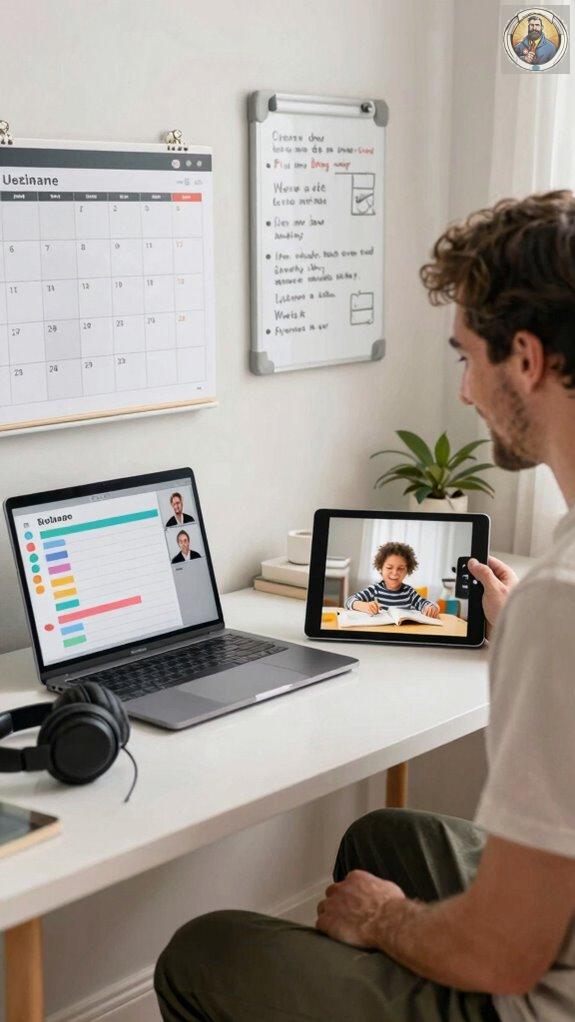
Getting everyone on the same page about when you’re working and when you’re not can feel like trying to juggle flaming torches—without dropping a single one (fingers crossed). Clear communication about your work availability is key, especially for supporting your kids’ virtual classroom and parental involvement.
- Set specific work hours and share them with colleagues and family.
- Use a visible calendar to mark “parents on duty” and “work time.”
- Let your kids know when you’re “offline,” so they respect focused work periods.
Keep open dialogue about changes—flexibility helps everyone stay connected and supportive. When communicating with teachers about your availability, adopt the same transparency you use with your family to ensure shared school communication remains consistent and effective.
Recall, your clarity enables your family to adapt and thrive together.
Prepare a Backup Plan for Unexpected School Closures
When it comes to the wild world of school closures that pop up out of nowhere, having a backup plan is your secret weapon—trust me, I’ve learned this the hard way. Unexpected school closures can throw a wrench in your day, so emergency preparation is key.
I keep a “Plan B” folder with activities, lesson plans, and quick resource links ready. Think printable worksheets, educational games, or even short videos from trusted sites.
Always have snacks and supplies on hand too. For items your kids need to transport between houses during schedule changes, consider using waterproof luggage tags to keep track of their school gear. It’s about serving others—kids and your boss (aka your employer)—by staying prepared.
Keep calm, stay flexible, and recall: your quick thinking can turn chaos into a smooth day.
Quick and Healthy Breakfast Ideas for Mornings
Mornings can be chaos—trust me, I’ve been there—so having quick and healthy breakfast ideas up your sleeve is a total game-changer. When I serve my family, I want healthy choices that fuel their day and give me some morning motivation.
Here are my go-to ideas:
- Overnight oats with berries and honey (prep the night before, easy!)
- Whole-grain toast topped with avocado and a boiled egg
- Yogurt parfait with granola and fresh fruit
- Smoothies packed with spinach, banana, and Greek yogurt
These quick breakfasts keep everyone happy and energized, plus they’re simple enough for busy mornings without sacrificing quality. Pair these nutritious meals with a distraction-free homework space so your kids can start their day fueled and ready to focus on their studies.
Organize After-School Activities and Transportation
Once breakfast is knocked out and everyone’s energized, it’s time to tackle the wild world of after-school activities and transportation logistics. I’ve learned that good extracurricular planning means lining up activities—sports, music lessons, or tutoring—ahead of time, so no one ends up in a chaos of overlapping schedules.
Transportation coordination? That’s making sure Liam’s soccer practice and Emily’s ballet fit into the day without turning into a game of Tetris. Create a master plan on a whiteboard or calendar, list pickups and drop-offs, and communicate clearly with coaches or teachers.
This nifty system saves me from becoming the family’s chauffeur/zombie.
Use Digital Calendars to Track Important School Events
Using digital calendars to keep track of important school events might just be the smartest move you make all week—trust me, I’ve been there.
Digital reminders and calendar integration make it easy to stay in sync with Emily’s science fair, Liam’s soccer games, or parent-teacher conferences. Consider pairing your calendar system with weighted lap blankets to help your boys stay calm and focused before reviewing the day’s schedule.
- Sync all devices so you’re never caught off guard
- Set reminders a day before or an hour before events
- Color-code different activities for quick identification
- Share the calendar with your spouse to coordinate and serve better
This way, you’re not just showing up; you’re there for others, making a real difference.
Prepare a School Emergency Kit for Quick Access
Getting everything organized for the day is a win, but chaos can hit fast—think sore throats or scraped knees. That’s why emergency preparedness with a quick-access school emergency kit is key.
I recall Liam tripping during recess—luckily, I’d a kit ready. Keep it simple: include bandages, antiseptic wipes, a snack, a small flashlight, and a copy of emergency contacts. Store it in a sturdy, accessible container near the door or backpack. For rainy days, ensure your child has waterproof rain gear available to stay dry and safe during outdoor activities.
This way, when surprises happen, you’re ready to serve your kids swiftly. It’s all about ensuring safety and peace of mind—because chaos shouldn’t catch us off guard, right?
Adjust Your Routines Based on Your Child’s Age and Needs
Adjusting your routines based on your child’s age and needs might sound like a no-brainer, but it’s actually more like fine-tuning a musical instrument—you need to know what works best for each stage.
When kids are younger, routines should focus on simple, predictable steps that foster child motivation and independence.
As they grow, routines need flexibility—think longer study times or tech breaks. Teaching children to manage their screen time and monitor app spending habits can help establish healthy digital boundaries during the school day.
- For preschoolers, quick shifts are key.
- For older kids, involve them in planning.
- Adjust your work schedule to match their focus levels.
Find Short Breaks During Work Hours to Recharge
Finding moments to take short breaks during your work hours might sound like a luxury you can’t afford, but trust me, it’s a game-changer—especially when you’re juggling work and home life.
These quick Tech breaks do wonders for your mental health. Step away from the screen for five minutes—stretch, breathe, or grab a glass of water. Think of it as recharging your mental batteries.
This simple act improves focus, keeps stress at bay, and helps you serve your family better. Consider using iron-on clothing labels to reduce morning stress and help your kids feel more secure during transitions like their first day back. Try setting a timer—every hour, just a brief pause. Believe me, your brain—and your loved ones—will thank you!
Set Up Your Home Office for Better Productivity
Ever notice how a cluttered or uncomfortable workspace can turn work from a breeze into a drag? I’ve been there, rushing to find things or slouching in uncomfortable chairs.
To boost productivity, prioritize work from home ergonomics and digital organization.
- Use an adjustable chair that keeps your back happy, like my favorite supportive one.
- Organize your files digitally with clear folders, so everything’s just a click away—no more treasure hunts!
- Keep your workspace tidy—less clutter means less stress.
- Position your monitor at eye level, reducing neck strain.
- Consider adding compression vests to help manage stress and sensory overload while working from home with kids around.
Trust me, a good setup helps you serve others better—you’re at your best when you’re comfortable and focused!
Use Noise-Canceling Headphones to Focus During Work
Have you ever been miles away in your own head, only to realize chaos—kids’ toys clattering, dishes clanging—just tore you from focus? That’s where noise canceling headphones come in. They block out household noise and boost your focus enhancement.
Envision working while Emily and Liam are arguing over the remote—those headphones drown out distractions. Here’s how:
- Choose comfy, adjustable models with good sound quality
- Use noise-canceling features during critical tasks
- Wear them when you need to concentrate but can’t escape the chaos
They’re lifesavers! Plus, you’ll serve your work and family better when you’re tuned in and distraction-free. Consider pairing your noise-canceling routine with teaching your kids about personal organization through portable shower caddies and other organizational tools for their own spaces.
Create an End-of-Day Routine to Wrap Up Your Work
After wrapping up my work with noise-canceling headphones blocking out the chaos, I’ve learned that having a clear end-of-day routine helps keep everything running smoothly—both at work and at home. It signals the shift from work mode and helps me stay present.
I spend a few minutes doing gratitude journaling, thanking my kids Emily and Liam for small moments. Then, I tidy my workspace, turn off my computer, and plan tomorrow’s tasks. Teaching my children about gym locker hygiene instills good habits that extend beyond the locker room into their daily routines.
To keep serving others, I remind myself to disconnect fully.
- Write down three things I’m grateful for today
- Tidy my workspace for a fresh start tomorrow
- Review tomorrow’s priorities
- Say a quick thank you to my wife, Sarah
Manage School Paperwork and Notices Efficiently
Managing school paperwork and notices can feel like trying to herd cats—chaotic, unpredictable, and just a little exhausting. But hey, serving your kids means staying on top of that communication.
To make paper filing easier, set up a dedicated folder or bin labeled “School Notices.” Every time I get homework sheets from Liam or permission slips from Emily’s class, I toss them in there immediately. Review notices once a week—don’t let them pile up!
For extra clarity, create a cheat sheet with upcoming deadlines or events. Just like organizing universal protective gear for youth sports, keeping school information centralized helps you stay prepared and reduces last-minute scrambling. It’s simple steps that save headaches later—trust me, I’ve learned the hard way!
Stay Informed About School Events and Meetings
Staying in the loop about school events and meetings isn’t optional—it’s part of being a good, involved parent (whether you like it or not). Keeping up with parent-teacher communication and school event updates helps me support Emily’s needs and avoid surprises—like missing a fundraiser or a parent night.
To stay on top:
- Regularly check the school portal or app for updates
- Subscribe to email notifications from teachers
- Attend PTO meetings when possible
- Reach out to teachers with questions
- Pack nutritious lunches using insulated meal prep backpacks to show your involvement in their daily wellness.
It’s all about serving my kids better—and yes, even sneaking in some “parent intel” on their world.
Prepare for Virtual Parent-Teacher Conferences and Events
Getting ready for virtual parent-teacher conferences feels a little like preparing for a big exam—without the cramming! Think about parent-teacher communication: it’s all about being prepared and respectful.
Use virtual meeting tips like testing your tech ahead of time—no one wants a frozen screen during the big reveal. Make a list of questions, stay focused on your child’s progress, and keep a positive attitude.
Keep in mind, it’s about supporting Emily or Liam’s growth, not just catching mistakes. Be on time, dress neatly, and close all distracting tabs. Don’t forget to discuss your child’s hair care routine and other daily habits that contribute to their overall well-being and confidence at school.
A little preparation goes a long way to making these meetings helpful, friendly, and productive.
Incorporate Fun Break Activities for Kids During Study Time
When your kid is stuck on a math problem or reading chapter, it’s tempting to just let them keep plugging away, but taking brief fun breaks can make a huge difference. Kid breaks with fun activities refresh their minds and boost focus—plus, it’s a gift to serve others by making their learning enjoyable.
Try these:
- Do a quick dance party to their favorite song
- Play a short round of “Simon Says”
- Stretch like a superhero or animal
- Have a silly joke session or riddles
These simple fun activities turn study time into a positive experience and help your kid stay motivated and engaged. If your child experiences sensory overload during study sessions, consider using noise reduction ear plugs to help them concentrate better. Trust me, everyone benefits!
Track Your Kids’ Educational Progress and Needs
Keeping the fun up during study breaks is great, but now it’s time to get serious about tracking your kid’s progress. Using educational technology tools makes this easier.
Think of learning assessment apps that chat with your kids and note their strengths and struggles—like a personal coach. Arrange weekly check-ins or quizzes to see if Emily’s mastering math or if Liam needs more help.
Keep a simple progress chart, noting milestones and areas for growth. Keep in mind, the goal is to serve their learning needs, not judge.
Organizing school supplies efficiently, including hair accessory organizers, helps create a distraction-free study environment where kids can focus on their academics.
Trust me, a little tracking now saves big frustration later—and keeps everyone motivated.
Keep Emergency Contacts and Medical Info Accessible
Having quick access to emergency contacts and medical info isn’t just a good idea—it’s a crucial when juggling work and parenting. Think about emergency plans during school hours or medical records for unexpected trips to the doctor.
To stay prepared:
- Keep a printed list of emergency contacts by your phone or refrigerator
- Scan medical records and save them in a cloud folder accessible anywhere
- Share emergency plans with babysitters or family members
- Have a quick-reference card for allergies, medications, and essential info
Consider using conversational icebreaker cards to help your child feel more comfortable and confident when discussing health concerns or emergencies with school staff or medical professionals. Trust me, when seconds matter, being organized can save the day—and maybe even Liam’s scraped knee!
Be Flexible When Unexpected Disruptions Happen
Sometimes, just when you think you’ve got everything under control—bam!—life throws a curveball. Unexpected disruptions happen during school mornings more often than you’d like—forgotten homework, tech glitches, or a suddenly sick child.
That’s when flexibility strategies become your best friends. Instead of stressing, take a deep breath and adapt. Maybe Liam’s science project gets delayed, so switch tasks with your wife Sarah or help Emily with math while fixing the Wi-Fi. Consider using calming techniques to help your children stay composed during these chaotic moments.
Keep in mind, the key is to stay calm and pivot quickly. Being flexible isn’t just about dodging chaos; it’s about serving your family better when things don’t go as planned!
Use Technology to Support Remote Learning
When it comes to supporting remote learning, technology can be your secret weapon—if you know how to wield it. Educational apps and virtual tools make schoolwork easier and more engaging.
Have you tried exploring platforms like Google Classroom or Zoom? They’re perfect for connecting with teachers and classmates.
Here are some ways to maximize tech support:
- Download apps that match your child’s grade level and interests
- Set up a dedicated, distraction-free study space
- Use virtual tools for interactive lessons and virtual field trips
- Encourage responsibility by teaching Liam or Emily how to troubleshoot simple tech issues
Ensuring your teen has access to reliable technology also means maintaining car safety features that protect them during their commute to school or study sessions. Stay ahead, and you’ll be the hero kiddos need!
Talk Openly With Your Kids About Their School Day
Talking openly with your kids about their school day might sound simple, but it’s a powerful way to stay connected and show you genuinely care—plus, it helps catch sneaky issues early.
Parent-child conversations build emotional support, making them feel safe sharing anything, from tough math tests to friendship dramas. Ask specific questions: “What was the best part of your day?” or “Did anything make you feel upset?”
Keep in mind, listening is key. I’ve seen how these chats prevent bigger problems later. Engage with curiosity, avoid rushing, and show genuine interest—your kids will thank you for it, and you’ll stay better connected. These conversations also create opportunities to discuss important topics like laptop damage prevention so your children understand how to properly care for their school equipment.
Hold Weekly Check-Ins to Adjust Your Routine
After a hectic week of juggling work, school schedules, and a few too many snack crumbs on the couch, I’ve learned that holding a weekly check-in with my kids is a game-changer. It boosts parental communication and helps me spot when routines need adjusting. Regular check-ins are particularly important for coordinating blended house schedules where multiple households are involved.
Want to keep your routine flexible? Try these:
- Ask how they’re feeling about their schedule or workload.
- Identify what’s working and what’s not—no shame in switching things up!
- Discuss any upcoming challenges or deadlines.
- Make small adjustments together, so everyone feels heard and supported.
It’s simple, but these quick talks save chaos and keep us all on track!
Prioritize Self-Care and Stress Relief Strategies
Ever feel like your stress levels hit new heights faster than your kids can finish their snack? Trust me, I’ve been there. To keep calm and serve others, I rely on simple stress management tips like mindful routines—pause, breathe, and focus for a minute or two.
I’ve found that starting my day with a quick meditation helps me stay centered, especially when Liam needs help with homework. You can also try:
- Deep-breathing exercises during breaks
- Short walks outside
- Journaling about what’s bothering you
Small steps like these boost resilience, letting you serve your family better—and maybe keep your sanity intact. Setting up your workspace with ergonomic student desk chairs can also reduce physical tension and improve your ability to focus during these stressful moments.
Visualize Your Ideal Work-Life Balance During School Year
Visualizing your ideal work-life balance might sound like a fancy TED Talk idea, but trust me, it’s the secret sauce to making your busy school year less chaotic.
When I picture work life harmony, I see moments of calm during school hours—like blocking out focus time—and quality time with Emily, Liam, and Sarah after work.
- Envision setting clear boundaries for work and family
- Visualize stress management techniques like deep breaths or quick walks
- Envision celebrating small wins, like finishing a project
- Imagine helping others and serving your family with energy and patience
Consider incorporating affirmation card decks into your daily routine to reinforce positive thinking and model healthy confidence for your kids during the school year. Wouldn’t you want those peaceful, meaningful moments? Let’s make them real!
Celebrate Small Wins in Your Back-to-School Routine
Even in the madness of back-to-school season, it’s easy to recall that celebrating small wins can be the secret ingredient to staying sane.
Recognizing efforts, like Liam finally organizing his backpack or Emily reading her first chapter solo, keeps us motivated. Milestones matter, no matter how tiny—they remind us progress exists.
So, take a moment: did your kid remember gym shoes? Did you resist that urge to micromanage? Celebrate those wins! A quick high-five or a simple “Way to go!” fuels everyone’s spirit. When shopping for athletic gear, consider exploring budget-friendly sports options to ease the financial burden of back-to-school season while still supporting your child’s extracurricular interests.
Trust me, these little moments create a ripple effect of positivity—plus, they might just make mornings a bit smoother.
Share Your Tips for WFH and School Routines With Other Dads
Sharing your tips for juggling WFH and school routines with other dads might just be the secret weapon to making mornings less chaotic—and trust me, I know how wild it can get.
- Use tech gadgets like smart speakers to set reminders or play morning tunes.
- Parent hacks, like prepping breakfast the night before, save precious minutes.
- Share routines that work, like alternating mornings with your spouse to split the workload.
- Join online dad groups to swap tips, ideas, and even funny stories—laughter is the best stress reliever.
What’s your favorite hack that turned chaos into calm? Let’s grow stronger together!
Review and Update Your Back-to-School Checklist Monthly
Starting a new month is the perfect time to revisit your back-to-school checklist and give it a fresh look — trust me, it’s not something you want to omit. A monthly review helps keep routines smooth and guarantees nothing slips through the cracks, especially as schedules shift.
Ask yourself: Have I adjusted for Liam’s new after-school activity? Did I replace Emily’s missing backpack?
Routine adjustments might be small—like updating a contact list—but they make a big difference in serving my kids more effectively. Consider posting a dry erase family wall calendar in a common area to visualize everyone’s schedule and catch any coordination gaps before they become problems. Keep a quick checklist handy, stay flexible, and don’t hesitate to tweak things.
After all, parents who adapt better serve their families, right?
Prepare for Major School Events in Advance
Preparing for major school events isn’t something you want to leave till the last minute—trust me, I’ve been there. Proper school event planning means avoiding chaos and missed opportunities to connect.
- Reach out early via parent-teacher communication to clarify what’s needed (think supplies, costumes, or volunteer roles).
- Mark key dates on your calendar and set reminders—nothing worse than forgetting a big event! Consider using a dry erase family wall calendar to keep everyone’s schedules visible and coordinated.
- Coordinate with your spouse or family, so everyone’s on the same page.
- Offer help beforehand; maybe organize snacks or set up decorations.
Reflect Regularly: What’s Working and What Needs Improvement
Reflecting regularly on how things are going might sound a bit boring, but trust me, it’s a game-changer. I’ve found that quick check-ins—like trying meditation techniques—help me spot what’s working and what’s not, even during busy school weeks.
For example, I ask myself, “Are my healthy snack ideas fueling Liam and Emily’s focus?” Or, “Did I handle those morning chaos moments better today?” Jotting down perspectives or adjusting routines keeps me serving my family better.
When it comes to school supplies, consider keeping pre-sharpened colored pencils on hand so you’re not scrambling last-minute during back-to-school prep. Want to make it easy? Use a simple note or a note app. Small tweaks make a huge difference! Who knew reflection could be so powerful?
Stay Positive and Focused on a Successful School Year
Keeping a positive attitude can sometimes feel like trying to hold onto a slippery soap—hard but totally worth it. Staying mindful of motivation and maintaining a positive mindset helps me serve my family better. When I remind myself that I’m shaping a great year for Emily, Liam, and my wife Sarah, I stay focused on their needs. Just as focus techniques help fidgety boys concentrate in the classroom, maintaining our own focus as parents requires intentional strategies and patience.
- Celebrate small wins daily
- Visualize a successful school year
- Practice gratitude every morning
- Share encouraging words often
It’s not about perfection but progress. Being positive energizes everyone, helping us face challenges with confidence.
Honestly, would you want the year to be anything less? Let’s keep our spirits high!
Basketball Game After School
After a busy school day, heading to the basketball game is often the highlight for my kids—and honestly, it’s a great way for everyone to unwind and have some fun.
We practice simple basketball drills like dribbling and shooting, which boost confidence and keep skills sharp.
When game strategy comes into play, I remind my kids to communicate, stay positive, and work as a team—values I hope carry beyond the court.
Watching Liam and Emily apply what they’ve learned, surfing the adrenaline, makes me realize that sports teach lessons like patience and perseverance.
Getting the right equipment, like quality catch baseball gloves, can also boost their enthusiasm for outdoor activities and team sports.
Ready to cheer them on and maybe throw in a few tips? Let’s go!
Back to School Essentials
Getting the right back-to-school essentials can feel like a formidable task, but trust me, it’s all about being prepared and organized—kind of like gearing up for a big game. Think about how you’d plan a team effort with parent collaboration and creative learning.
Some essentials include:
- Durable backpacks with compartments for easy organization
- Creative supplies like markers, notebooks, and sticky notes to encourage hands-on learning
- A schedule chart to keep Liam or Emily on track
- Tech gear, like tablets or laptops, for remote learning and collaboration
Prioritize what helps your kids thrive, and you’re already winning! Establishing a system for tracking independent chores teaches your children responsibility while freeing up your time to focus on work-from-home priorities.
FAQ
How Can I Manage My Stress During Busy School Days?
I manage stress during busy school days by practicing mindfulness techniques and relaxation exercises, which help me stay centered. Sharing these methods with my kids allows us to support each other and create a calmer, more connected family environment.
What Are Practical Ways to Support My Child’s Online Learning?
Like a steady lighthouse, I support my child’s online learning by setting boundaries and creating routines. I actively listen, offer encouragement, and stay involved to nurture their growth and confidence in this digital journey.
How Do I Handle Unexpected Work Commitments During School Hours?
When unexpected work hits, I prioritize flexible scheduling and communicate openly. Emergency preparedness helps me adapt quickly, ensuring I support my child’s learning while meeting work demands, showing my dedication to serving both my family and employer.
What Tools Can Help Monitor My Child’s Academic Progress?
Did you know 89% of parents find educational apps helpful? I recommend progress tracking tools to monitor your child’s learning, so you can support them effectively and guarantee they stay on track academically.
How Can I Involve My Kids in Organizing Their School Supplies?
Get your kids involved in organizing their school supplies by making it a family activity, encouraging their participation, and teaching them about family organization. This fosters responsibility, teamwork, and a sense of ownership in preparing for the school year.


