

How to Choose Budgeting Wallets For Teenagers
Back to School Budgeting Wallets for Teens: A Dad’s Guide
What makes the ideal budgeting wallet for a teen? It’s all about the right mix of style and functionality. Trust me, I’ve seen them all—those with nifty compartments for cash, cards, and even secret snack stashes.
I’m sharing this on our blog, Modern Dads, because I’ve navigated the chaotic world of teen shopping. And yes, I’ve learned the hard way that flimsy wallets are like cheap gym shorts: they don’t last and they embarrass you.
Think neon colors for the bold ones or sleek designs for the sophisticated. Don’t get me started on zippers that break when you need them most—total dad fail! Aim for wallets with features like savings goal trackers; my teenager thinks they’re cool, and it teaches responsibility.
As school supplies start stacking up, I recommend setting a fun family money challenge. Maybe a wallet that doubles as a coin bank? My kid used to think saving was for “grandpas” until I showed how it pays for pizza on Fridays!
I still laugh when one of my kids insisted on using a fanny pack as a wallet on the first day of school. We spent half the morning convincing them that it wasn’t “wearing their cash proudly.” They learned the hard way that balance requires more than just coolness—lesson learned!
Quick Takeaways
- Select wallets with multiple compartments for cash, coins, and cards to promote organized spending habits.
- Prioritize durability and material quality to ensure the wallet withstands daily use and offers safety.
- Choose trendy designs, colors, and personalization options to match teens’ personalities and encourage responsible use.
- Ensure the wallet includes security features like PINs, encryption, or parental controls for safe transactions.
- Incorporate budgeting tools or tracking features to help teens manage allowances and savings effectively.
How to Identify Teenagers’ Budgeting Needs and Goals
Understanding your teenager’s budgeting needs and goals might seem like decoding a secret language at first—trust me, I’ve been there. To master this, focus on building their financial literacy and teaching allowance management skills.
Decoding teen budgeting may seem tough, but teaching financial literacy now prepares them for a successful future.
Ask yourself: Does your teen need to budget for school supplies? Or are they dreaming of saving for a new gadget? I recall Liam wanting a gaming console, so we started tracking his allowance and setting savings goals—big eye-opener!
Key steps:
- Talk openly about money goals.
- Set realistic allowances that teach budgeting.
- Use apps or wallets to track spending.
- Encourage saving for special purchases.
Creating a supportive environment where your teen feels comfortable discussing financial decisions helps them develop healthy money habits and constructive financial behaviors without shame or pressure. Just like choosing affordable sports gear requires comparing prices and quality, helping your teen evaluate their purchases teaches them to make smart financial decisions. In the end, helping your teen understand how to handle money today sets them up for financial success tomorrow—and maybe spares you from their endless “I want” requests!
What Features Make a Wallet Ideal for Teens?
When it comes to choosing the perfect wallet for your teen, it’s about more than just how it looks—though, let’s be honest, that doesn’t hurt! Teen fashion trends are constantly changing, so pick a wallet that’s stylish yet practical.
Think slim designs with cool colors or patterns, maybe even something that matches the latest sneaker craze. Make sure it has enough compartments for cash, coins, and cards—no one wants a wallet that’s bursting open at the slightest tug. If your teen is sensitive to sensory experiences in busy environments like school, consider pairing their wallet choice with noise-reducing ear plugs to help manage sensory overload while managing their finances.
Bonus points if it appeals to parental approval—meaning, it’s not too flashy or too childish. Keep in mind, this isn’t just about trendiness; it’s about mastering the art of smart budgeting. Just as selecting compact binoculars for youth requires balancing functionality with personal preference, choosing a wallet means finding the right fit between practicality and style.
Think of it like choosing the right backpack—function meets fashion!
Checking Durability and Safety in Teen Wallets
Since a wallet is something your teen is probably going to carry around every day, checking its durability and safety is a must—nobody wants a wallet that falls apart after a week or causes a safety scare.
I always recommend looking into *material testing*, like how sturdy the fabric or leather is and whether it can handle daily wear and tear. Also, consider the *brand reputation*—does the company stand behind its products?
If Liam’s favorite wallet from Brand X lasted six months without peeling, that’s a good sign. Watch out for weak zippers or flimsy stitching—those are ticking time bombs. Just as portable UV sanitizing boxes eliminate germs in shared spaces, a durable wallet protects your teen’s belongings from daily environmental wear. Building strong social connections, much like maintaining a reliable wallet, requires consistent effort and attention to quality.
A safe, durable wallet gives both you and your teen peace of mind—and saves you from constant replacements or worse, safety hazards.
Styles and Sizes That Keep Teenagers Interested
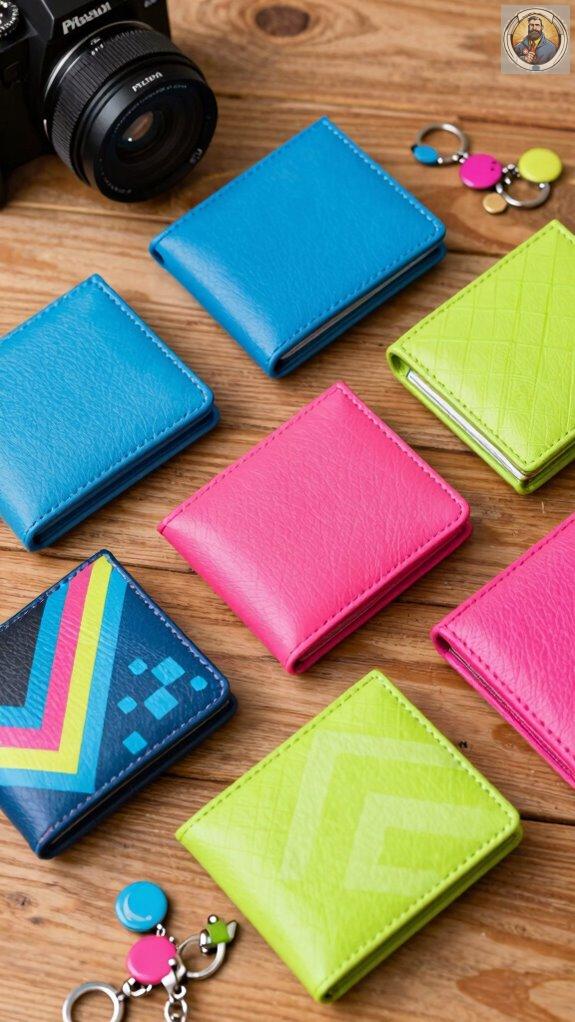
Even if your teen isn’t exactly a fashionista, they still want a wallet that reflects their style and personality—think bold colors, cool patterns, or sleek minimalism. Have you ever seen Liam’s collection, all of different sizes and shapes? It’s like a mini boutique!
When choosing styles, consider what appeals to their vibe—are they into current fashion trends or prefer timeless looks? Color options matter too; bright hues like neon green or hot pink grab attention, while classic black or gray keep it simple.
Small, slim wallets fit easily in pockets, but a larger design might hold more essentials. Parents can also help teens manage their finances by setting up smart home device monitoring to create structured routines that support healthy spending habits. Encourage your teen to pick something that makes them feel confident—after all, a wallet isn’t just functional, it’s an extension of who they are. Selecting a wallet that resonates with their personal style can be a meaningful bonding experience between parent and child.
Setting a Realistic Budget for Teen Wallets
Setting a realistic budget for teen wallets isn’t just about splurging on the coolest designs; it’s about making smart choices so your teen gets something they’ll love without breaking the bank.
When thinking about teen finance, I’ve learned that a good budget helps them learn wallet organization and money management.
For example, set a cap of $10-$20 for a basic wallet—more for special occasions.
Encourage your teen to prioritize needs over wants: does it have multiple compartments? Will it last?
Ask yourself, “Would I buy this for myself?”
Just as visual signals are essential for emergency preparedness, a well-chosen wallet with proper organization features signals financial responsibility during the teenage years. Creating consistent routines around wallet management, similar to how white noise machines help establish sleep schedules, reinforces good financial habits in teens.
Use bullet points to guide your teen:
- Set a clear price limit
- Decide on necessary features
- Include a buffer for sales or discounts
Must-Have Payment and Security Features for Teens
When it comes to choosing a wallet for your teen, payment and security features aren’t just nice-to-haves—they’re essentials. Think of it like your teen’s digital security guard—they need protection!
Here’s what to look for:
- Strong Digital Security: Confirm the wallet has encryption and fraud protection. You wouldn’t leave your bank account open, right? Same with their digital wallet.
- Parental Controls: Features that let you set spending limits or approve transactions. Recall when Liam went on that shopping spree? You want oversight without invading privacy.
- Secure Payment Options: Look for PINs or biometric logins. Too easy to hack? Not on your watch.
Just as meal prep helps families stay organized and on budget, teaching teens to monitor their wallet transactions builds similar financial discipline. Many families find that touchscreen tablets can help teens track their spending across multiple payment apps in one convenient place.
Choosing wisely keeps your teen safe and teaches responsible money habits from the start.
Choosing a Wallet That Builds Good Money Habits
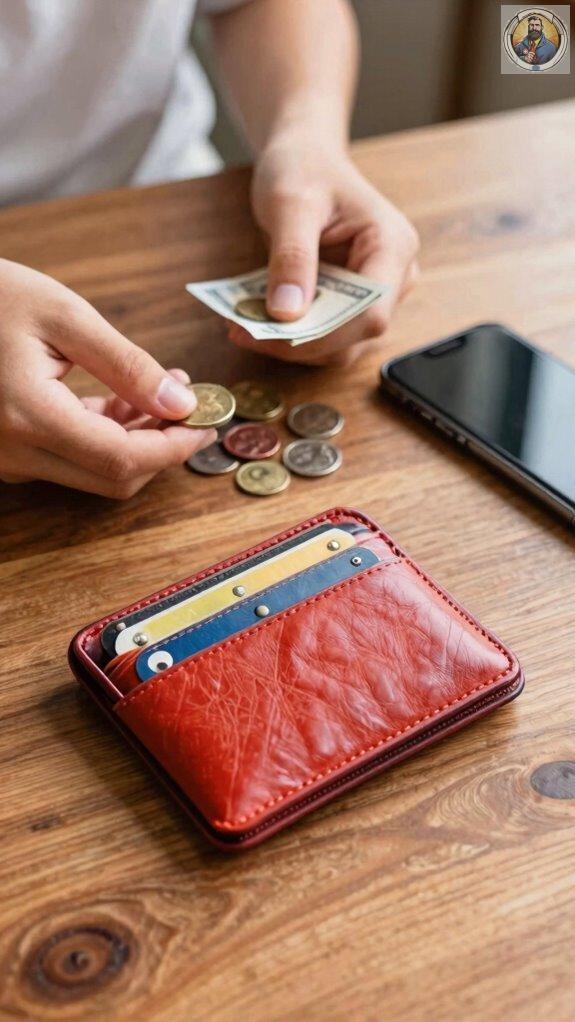
Building good money habits starts with choosing the right wallet—that’s no joke! If you want your teen to develop financial literacy, pick a wallet that emphasizes budgeting tools.
Recall when my daughter Emily got her first wallet? She learned to divide her money into spending, savings, and future goals. Use clear sections or envelopes—physical or digital—that encourage mindful spending. Just as mesh organizer bags help athletes keep their gear sorted and accessible, a well-structured wallet helps teens compartmentalize their finances for better money management.
Ask yourself: does this wallet help my teen track their expenses easily? Can it set savings targets? A wallet with simple features and real accountability trains them to make smart decisions and stay organized.
It should be a tool, not just a place to stash cash. If you want lifelong habits, start with something practical and engaging—because old-school piggy banks just don’t cut it anymore.
Common Mistakes to Avoid When Buying Teen Budgeting Wallets
Choosing the right wallet is just the beginning; avoiding common mistakes can really make or break your teen’s money habits. Here are some pitfalls to dodge:
Choosing a durable, practical wallet sets teens up for better money habits and daily convenience.
- Ignoring brand reputation — don’t buy “cheap” wallets that look good online but fall apart after a week. A trusted brand means durability and reliability.
- Overlooking material quality — plastic wallets might sound convenient, but a sturdy leather or high-quality fabric lasts longer and feels more meaningful.
- Forgetting to weigh size and design — a wallet that’s too small or bulky can discourage your teen from using it. Pick one that’s practical, stylish, and easy to carry.
Just as fun coding workshops help kids develop problem-solving skills that extend to real-world decisions, teaching teens to evaluate wallet quality builds critical thinking around financial responsibility and consumer choices. Incorporating martial arts games into their routine can also teach discipline and decision-making that translates to how they manage their finances and personal belongings.
Dad and Son’s First Ledger
Starting your first ledger might feel like stepping into unknown territory, especially if you’ve never kept track of money before. It’s a big deal, but don’t worry—you’re not alone.
When my kids, Liam and Emily, first started exploring teen fashion, they also wanted cool wallet accessories, which got us talking about money management. Teaching a teen to record every dollar spent—whether on snacks, clothes, or that trendy hoodie—builds confidence and mastery over spending.
Here’s what I recommend:
- Use a simple notebook or app to log each expense
- Include categories (e.g., fashion, food, savings)
- Review weekly to spot spending patterns
It’s about turning everyday transactions into lessons. Think of it as the foundation for financial independence—plus, it’s kinda fun to watch the balance grow!
Back to School Essentials
Getting ready for the new school year can feel like trying to pack for a week-long trip with only a backpack—overwhelming but totally doable if you have a plan. When it comes to back-to-school essentials, don’t forget about teen fashion and personalized accessories—these are game-changers.
Here are my top picks:
- Stylish backpacks with compartments for gadgets and notebooks—because organization is key!
- Trendy, personalized keychains or pins that show off their interests—perfect for making their backpack uniquely theirs.
- Wallets with fun designs that fit their personality and budget—great for teaching money habits while keeping it fashionable.
Mastering these essentials means your teen will step into school confident, stylish, and ready to conquer. Trust me, I’ve seen it happen!
FAQ
How Much Should Teenagers Typically Spend on a Budgeting Wallet?
Teenagers should typically spend no more than 10-15% of their weekly allowance on a budgeting wallet, depending on their spending habits and savings goals.
I recall when Emily first started budgeting—she set a limit of $5 per week, which helped her learn to plan ahead.
For example, if she splurged on snacks, she’d cut back elsewhere.
The key? encourage responsible spending without killing their enthusiasm!
Are Digital Wallets Better Than Traditional Wallets for Teens?
Digital wallets can be great for teens if you prioritize wallet security and digital payment convenience. They’re faster, often come with budget tracking features, and are widely accepted—think Apple Pay or Google Wallet.
But, beware—if your teen isn’t tech-savvy or neglects security, it’s risky.
Traditional wallets teach cash management skills better, but digital options could be more fun and modern.
Would you rather manage money physically or digitally?
What Materials Are Safest for Teen Wallets?
Think of teen wallets as adventure gear—so durability counts! Safe materials like genuine leather, sturdy canvas, or silicone resist wear and tear, making them tough enough for daily adventures. Avoid cheap plastic or flimsy fabric that falls apart faster than Liam’s last basketball game.
My wife Sarah’s been using a leather wallet for years—still looks sharp. Keep in mind: choose materials that stand the test of time and keep your kid’s cash safe!
How Can Parents Teach Teens to Use Wallets Responsibly?
To teach teens financial responsibility and build trust, I suggest starting with clear rules and open talks.
For example, give Liam a set amount weekly, then let him budget for snacks or apps.
Share your experiences—how I once learned the hard way about overspending.
Use tools like envelopes for different expenses, or apps that track spending.
Ask, “Can you manage this amount?”
It’s about patience, practice, and guiding them—not policing every move.
When Is the Best Time to Buy a Teenager’s First Wallet?
The best time to buy a teen’s first wallet is when they show responsibility with money—think saving for something special or managing allowance well.
Gift ideas like wallets with multiple compartments or cool wallet styles make perfect presents.
Keep in mind, a wallet isn’t just a gift; it’s a teaching tool.
I’ve seen Liam get his first one at 13 — a small step towards independence that sparks lifelong habits.
Summary
So, whether you’re eyeing that sleek wallet for Liam or trying to avoid your teenage niece’s eye-rolling, keep in mind: choosing a budgeting wallet isn’t just about style — it’s about teaching valuable money lessons. Don’t fall for the shiny gimmicks or overstuff with coins. Think durability, safety, and habits that last. After all, if my kids Emily and Liam can learn to budget, so can your teen — with the right wallet in hand, of course!


