

7 Ultimate Camping Tarps for Modern Outdoor Dads
The Ultimate Tarp for Dad Adventures
Nothing beats that moment when rain clouds appear, and your kids are panicking over a soggy backpack.
I write for Modern Dads because we need to tackle these things head-on—like when I deployed a 12×9 ft ripstop nylon tarp.
Grommets every 2 feet. Rigged between two pines, no knots necessary!
Lightweight silnylon under 2 lbs? Sure, it flutters, but a few stakes keep it grounded.
It doubles as our dance floor, shade cover, and even a dry sock station!
I’ve got the ultimate list of camping essentials, tested through sticky s’more fingers and eye-rolls over tarps.
Last summer, my kiddo discovered the tarp’s versatility.
We turned it into an epic fort.
Who knew we could fend off both rain and boredom with just a piece of fabric?
Days like that remind me of the joyful chaos of fatherhood.
Quick Takeaways
- Choose lightweight, durable tarps like ripstop nylon with waterproof coatings for reliable all-weather protection.
- Prioritize reinforced grommets and easy setup designs to save time and ensure storm-ready shelters.
- Opt for a 12×9 ft rectangular tarp to balance coverage, stability, and puddle avoidance.
- Involve kids in tarp setup to teach knot skills and build outdoor confidence through hands-on play.
- Pack compact, featherlight tarps that roll easily and store in mesh sacks to prevent mold.
Why Every Outdoor Dad Needs a Camping Tarp
Look, I’ve set up camp in the rain more times than I care to admit—once with Liam giggling while water pooled right next to his sleeping bag.
Why carry a tarp? Let’s be real:
- Rain sneaks up like surprise math homework. A tarp? Your instant roof.
- Want scenic photography without getting soaked framing the perfect sunset shot? Yep, tarps help.
- Campfire safety? Keep sparks off gear by draping a tarp behind the fire (not over it—boom avoided, hero status kept).
- I once rigged one between two pines and called it “Dad’s Dry Bar.” Sarah laughed. Emily claimed it first. For kids who need to dig cat holes or manage camp duties, lightweight camping trowels make setup and cleanup easier during extended camping trips.
- If your kids are prone to blisters from hiking in damp conditions, blister prevention tape can keep their feet comfortable during long camping days.
Need I say more?
A $30 tarp beats soggy socks and sad s’mores.
Use paracord, carabiners, and basic knots—no engineering degree needed.
Bottom line: If you’ve ever eaten cold beans in the drizzle, you’re one tarp away from camping glory.
Top Camping Tarps: Durability and Weather Resistance
When you’re out there with the tent pitched and thunder rolls in faster than Liam yelling “DAD!”, you’ll thank me for this: your tarp better hold up. I learned the hard way—$40 tarp, zero waterproof coatings worth a darn, and ripstop fabric that ripped. Not cool.
Here’s what keeps you dry and sane:
- Reinforced anchor points – Grommets every 2 feet? Yes. Flimsy ones that tear like napkins? Hard pass.
- True waterproof coatings – Look for polyurethane or silicone. If water beads up like it’s dodging your kid’s mud pies, you’re winning.
- Ripstop nylon or polyester – Because “oops” shouldn’t mean “we’re sleeping in the car.”
Keeping your family active and engaged during camping trips, whether through martial arts games or outdoor adventures, makes the experience even better when you’re properly protected from the elements.
Sarah still brings that sad tarp up when she’s mad. Don’t be me. Spend a little more. Your kids (and pride) will stay dry.
Best Tarp Sizes and Shapes for Family Camping
Ran into this last summer—brought a 10×10 ft square tarp for the four of us. Looked cool, right? Until the wind turned it into a giant kite—with Sarah, Emily, and Liam underneath.
Now I swear by rectangles—12×9 ft gives shade *and* rain runoff.
Hex or octa tarps? Cute. Useless when you’re dodging puddles inside your own shelter.
Pro tip: A tarp too small means constant repositioning. Too big? More work, more flapping, more tarp maintenance headaches.
When heading out with kids, proper hydration pack organization keeps water accessible and prevents unnecessary stops during your adventure.
And don’t forget seasonal storage—clean it, dry it, fold it like you *won’t* regret divorce later.
Your kids will thank you. Probably.
Lightweight Camping Tarps for Easy Packing
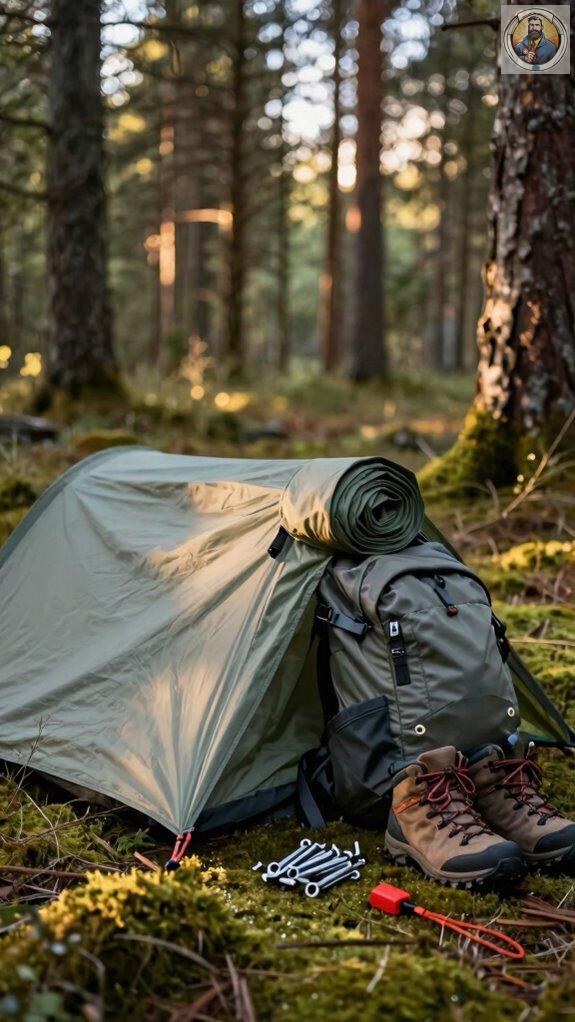
I once packed a tarp so heavy, Liam asked if we were hauling a dragon’s blanket. Lightweight camping tarps save your back and your dignity. Now my camping gear never exceeds 5 lbs, thanks to featherlight silnylon options.
And with tarp customization, I ditch the bulk—why carry stakes I won’t use? Teaching kids to bring emergency whistles ensures everyone can signal for help if separated during outdoor adventures. Family camping trips become safer when children know how to use basic outdoor safety gear like whistles and first aid kits.
Here’s my go-to trio for easy packing:
- Go sub-2-lb: I snag a 1.8-lb ripstop tarp—fits in my wife’s purse (true story, Sarah was *not* amused).
- Customize it: Snip extra corners, add guylines—I turn one-size-fits-all into *my-size-fits-all*.
- Roll, don’t fold: Roll it like a burrito (hold the beans), and strap it under my pack.
Less gear, more freedom. Who knew?
Fast-Setup Tarp Designs That Save Energy
– Tarp tents hybrids: Like the Kodiak Flex-Bow—no fuss, just pop-and-go.
Dad, recall wrestling with poles at 1 a.m. while Liam giggled? Yeah, those days are *over*. Quick setup techniques in energy efficient designs mean I’m sipping coffee while others are still untangling guy lines. Building tarp shelters with your kids teaches them foundational shelter construction skills while creating lasting memories together.
When setting up your tarp, remember to practice Leave No Trace principles by minimizing ground disturbance and restoring the campsite after use.
Here’s how smart tarps beat old-school struggle:
| Old-School Tarps | Modern Energy Savers |
|---|---|
| 20-minute setup | 3 minutes, tops |
| Needs mallet, stakes, luck | Bungee-pull frame |
| Dad curses softly | Kids nap peacefully |
Some call it engineering—I call it parenting with cheat codes. You’ve got energy—don’t waste it on knots. Use it for s’mores, stories, or surviving Sarah’s “surprise” trail mix.
How Versatile Tarps Maximize Camping Utility
Think about it: your tarp isn’t just shade—it’s your Swiss Army knife of shade, rain defense, and dance floor. I once used mine as a makeshift greenhouse for my sad little herbs—Sarah laughed, but look who’d get fresh basil!
Turns out, versatility means never overpacking. With tarps made from sturdy eco friendly materials, you’re saving the planet and your pack weight. Pairing your tarp with shoe gaiters for kids keeps everyone’s feet dry during wet weather camping adventures.
Plus, clipping on solar powered accessories? Genius. I charge my phone while Liam watches cartoons on a tablet powered by the sun—feels like magic, right?
Just like choosing the right camping mess kits for your scouts, selecting a quality tarp ensures your camping setup is both practical and enjoyable for the whole family.
Here’s how I roll:
- Use grommets to hang a mini clothesline—drying socks > damp socks.
- Rig it low for windbreaks during chili night (pro tip: stake corners tighter than your belt after).
- String lights to impress Sarah—we’ve got ambiance *and* function.
Now that’s utility.
Field-Tested: Best Camping Tarps That Perform
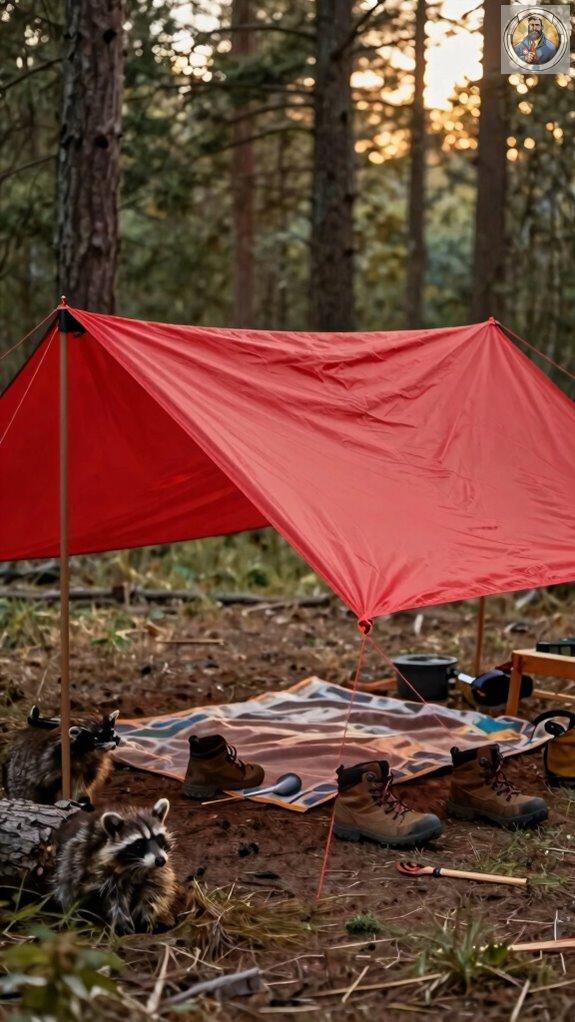
When I set out to find the best camping tarps that actually hold up in the wild, I wasn’t just reading labels—I was knee-deep in downpours, testing every one like my dinner depended on it (spoiler: it usually did).
Let’s be real—nobody wants a saggy tarp dumping rainwater on their chili. The winners? Those built with tough synthetic fabrics like 70D nylon or polyethylene.
They laugh in the face of wind and don’t dissolve after one storm.
And color options? Oh yes. Bright yellows or camo greens—not just for looks.
A red tarp helps you spot your camp fast (or makes Liam stop yelling, “Where’s Dad?!”).
Pro tip: 10×10 ft is your sweet spot. Big enough for Sarah, the kids, and that suspicious raccoon who thinks we’re roommates. A quality tarp also pairs well with other camping gear like camping sporks for kids to create a complete outdoor dining setup.
Just like choosing hydration packs for toddlers, selecting the right tarp means considering durability and practicality for your family’s specific outdoor needs.
Want reliability? Skip the dollar-store poncho tarp. Your family deserves better than a soggy hug.
Teaching Shelter-Building Skills
While most dads just throw up a tarp like they’re auditioning for *Survivor: Backyard Edition*, I’ve learned—after way too many collapsed shelters and one very wet Emily—that teaching your kids how to build a real shelter? That’s the real win.
Forget just tossing a tarp over a log—real shelter assembly turns camping into a skill fest. Here’s what actually works:
- Start simple: Use two trees, a tarp, and a sturdy ridge line—Liam mastered this by age 8 (and only rolled his eyes twice).
- Teach knot techniques: Bowline for loops, taut-line hitch for tension—no PhD required, just patience and a promise of s’mores. Having a personal trauma kit on hand during outdoor activities also ensures you’re prepared for minor injuries while learning these essential skills.
- Let them lead: My “perfect” A-frame failed in the wind… Emily’s lopsided version? Still standing. Humbling.
Turn shelter-building into play, not a project—similar to how creative outdoor activities keep kids engaged and learning in nature. Your kids learn, you laugh, and nobody sleeps in a puddle. Mostly.
Grab Ultralight 9×12 Ft Tarp
Setting it up? Five minutes with trekking poles. Rain? Bounced right off. Wind tried to pull a sneaky, but guylines held.
Tarp maintenance? Easy. Shake off dirt—done. Stain? Sponge, not Scrub Daddy. Never fold damp—mold’s revenge is real.
Storage solutions: stuff, don’t fold. I use a mesh sack—fits in a backpack side pocket. Sarah says it “magically disappears,” which is code for “you lost it last trip.” (I didn’t. Emily did.) A spork multi-tool is also handy to have packed away for quick camp meals.
For camp safety, keep portable fire extinguishers accessible near your cooking area in case of emergencies.
Lightweight, tough, packable—why wouldn’t you? Your future self, hauling uphill, will high-five you. Probably.
FAQ
Can I Use a Camping Tarp as a Groundsheet?
Yeah, I’ve used my camping tarp as a groundsheet—works in a pinch, but don’t expect magic.
Tarp material? Most are poly or nylon—tough above, but thin underneath. Punctures happen. I learned when Liam spilled berry juice on ours *and* Sarah said, “This isn’t a drop cloth, hon.”
For real protection, go XL and customize the edges—Tarp customization saves knees and sanity. Just double it up—dirty side down!
Are Camping Tarps Waterproof or Just Water-Resistant?
Yeah, most camping tarps are water-resistant, not fully waterproof—big difference.
Think of it like wearing a light jacket in a downpour: you’ll survive, but eventually, you’re soaked.
For real rain protection, I size up to 10×10 mil, like the Kootenay 8×10 I used last winter.
Emily laughed when mine leaked, but hey, Sarah stayed dry!
Always check material durability—ripstop nylon > plastic sheets. Duh.
How Do I Clean and Store My Camping Tarp?
I toss my tarp in the bathtub—yes, really—and scrub it with a sponge and mild soap. Cleaning techniques matter: never use bleach! Tarp material hates that.
I once used laundry detergent… let’s just say Sarah *loved* the glittery mess.
Rinse well, air-dry completely (no radiators, trust me), then loosely fold it.
Store it in a breathable bag, not stuffed in the trunk like last year’s marshmallows.
Do I Need Extra Stakes for My Tarp Setup?
Yeah, I always grab extra stakes—trust me, your future self’ll thank you.
Saw this during our last trip when half my tarp’s anchor points flapped loose in the wind like Emily’s sock puppet show. Tarp material matters, but stakes? Non-negotiable.
- 6–8 stakes minimum
- Upgrade to Y-beam or screw-style if camping on hard ground
Skip extras, and you’ll be “re-pitching” at 2 a.m. Fun? Said no one ever.
Can Kids Help Set up a Camping Tarp Safely?
Yes, kids *can* help set up a tarp—safely! I let Liam (age 8) hold stakes while Emily (10) guides the rope. Kids’ safety? Always. Gloves + supervision = no ouchies.
Developmental benefits? Teamwork, fine motor skills, and pride. “You mean I’m not just cheap labor?” Liam asked. Nope—you’re lead anchor inspector today! Use 6-inch steel stakes, color-coded guylines.
Even Sarah admits: kids + tarps = fewer eye rolls. Win!


