

Fun Motor Skill Games to Boost Toddler Development
Boosting Toddler Motor Skills with Fun Games****
I’m always on the lookout for ways to boost my toddler’s motor skills. That’s why I write for Modern Dads. Sharing helpful tips is like sharing dad jokes—everyone needs a good laugh and a helping hand.
Relay races have become a staple in our backyard. Who knew running in circles could spark so much joy? I get to show off my speed (or lack thereof), while my little one learns teamwork. Obstacle courses? Oh man, the laughs we share while navigating couches and pillows! And let’s not forget balloon keep-up games. Picture frantic swats and giggles galore!
One Saturday, we turned our living room into a makeshift obstacle course. With cushions piled high, we dared to conquer “Mount Sofa.” As I crawled in pursuit of my little one’s giggles, I realized how much fun this was—for both of us! I felt like a kid again, and we were building those important skills quietly and hilariously.
Every moment counts when it comes to bonding. Keep it fun, keep it playful, and watch your toddler thrive!
Quick Takeaways
- Engage toddlers in relay races to promote running skills and teamwork while having fun.
- Create obstacle courses to encourage climbing, crawling, and enhanced coordination.
- Play balloon keep-up games to improve hand-eye coordination and keep toddlers active.
- Organize scavenger hunts to stimulate movement and exploration in a playful context.
- Use games like Simon Says to teach following directions and boost motor skills.
Goal-Oriented Play Activities for Toddlers
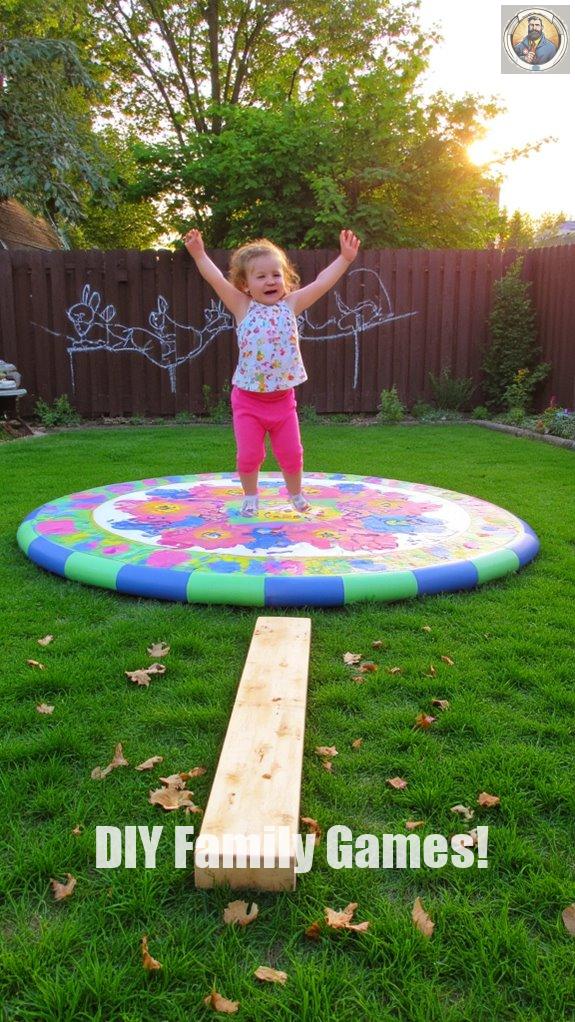
When it comes to toddler play, goal-oriented activities are a game-changer, literally!
I mean, who knew jumping and balancing could turn your little tornado into a ninja? Seriously, structured play boosts motor skills—jumping, hopping, balancing—like a charm. Incorporating family activities into your routine can also help prepare your child for unexpected situations.
Try this:
- Jump and turn
- Hop on one foot
- Walk on a balance beam
Research shows that just three sessions a week for a few weeks can lead to amazing improvements! (Yep, those studies are legit!) Engaging in goal-oriented play activities enhances important motor skills during early childhood.
So, let’s make playtime both fun and productive, shall we?
Trust me, your future soccer star will thank you!
Isn’t that worth a shot?
Engaging Sports Game Interventions
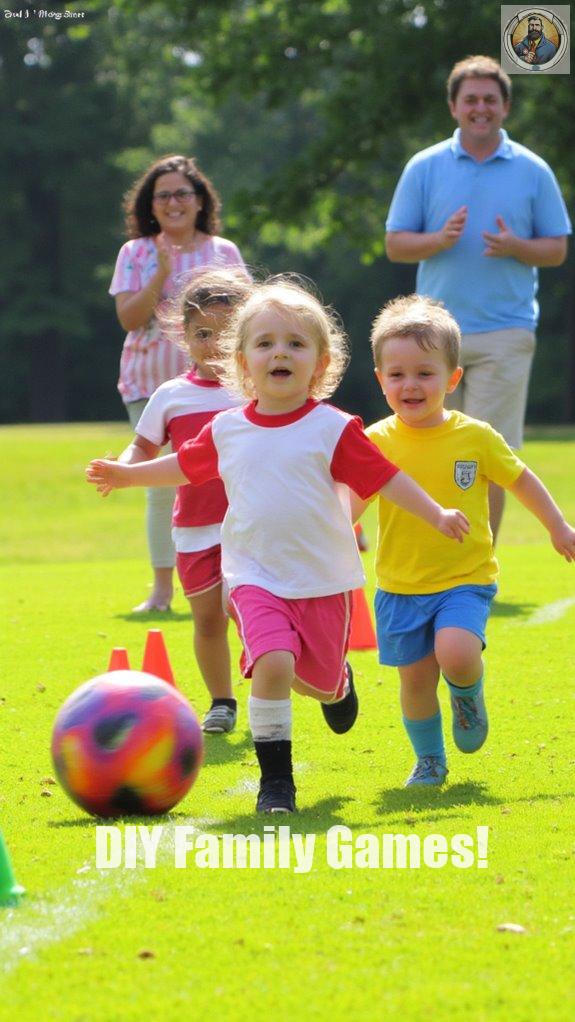
Engaging sports game interventions are an absolute blast, especially when you realize how much they can boost your little one’s motor skills.
I mean, who doesn’t want their toddler to master running, jumping, and throwing like a mini Olympian? Engaging in family ball sports can be a fantastic way to develop these skills together.
With just a short, fun 35-minute session, you’ll see skills like kicking and ball control improve dramatically!
Try games like relay races or a friendly kickball match – trust me, the laughter alone is worth it.
And don’t forget, frequent practice makes a massive difference! Higher levels of motor competence are linked to better physical health, cognitive function, and social-emotional well-being.
So get out there, have some fun, and let those little feet go wild!
Your toddler will thank you (and so will I)!
Active Video Game Ideas for Motor Skills
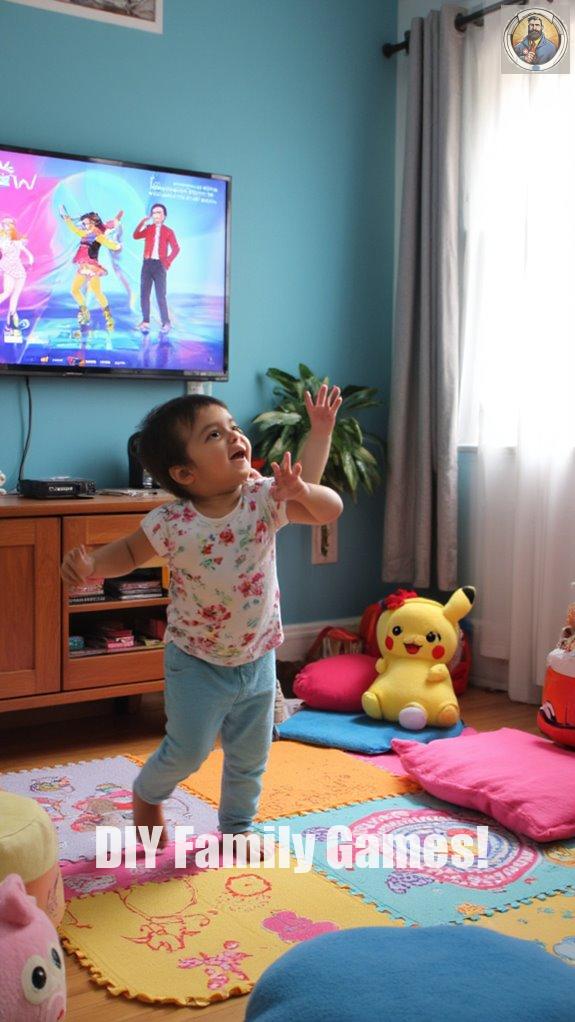
Level up your toddler’s motor skills with active video games! These aren’t just fun; they’re kid-friendly workouts! Who knew staying in would enhance jumping, running, and balance?
Check this out:
| Game | Skill Boost | Platform |
|---|---|---|
| Just Dance Kids | Dancing & Coordination | Xbox Kinect |
| Wii Sports Resort | Balance & Agility | Nintendo Wii |
| Pokémon GO | Walking & Exploration | Mobile |
| Dance Dance Revolution | Rhythm & Movement | Dance Mat |
| Active Smash Bros | Reflexes & Quick Moves | Nintendo Switch |
School-Based Games for Dynamic Movement
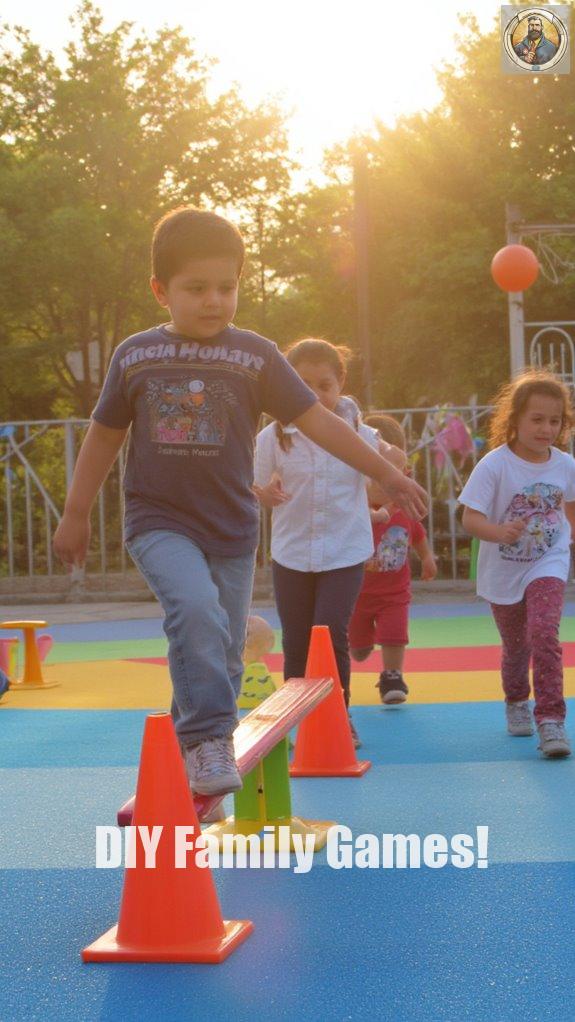
School-based games are an incredible way to get kids moving and grooving—seriously, who doesn’t love a good game of tag or relay?
When we play these games three times a week, my kids, like Emily and Liam, get to run, balance, and throw their way to improved motor skills.
Trust me, nothing beats watching them walk a balance beam like it’s a tightrope!
Here’s the scoop:
- Enhanced gross and fine motor skills
- Better reaction speed and agility
- Loads of fun
Incorporating rhythmic play during these games can lead to toddler brain synchronization, optimizing their development even further.
Traditional Cultural Games for Motor Learning
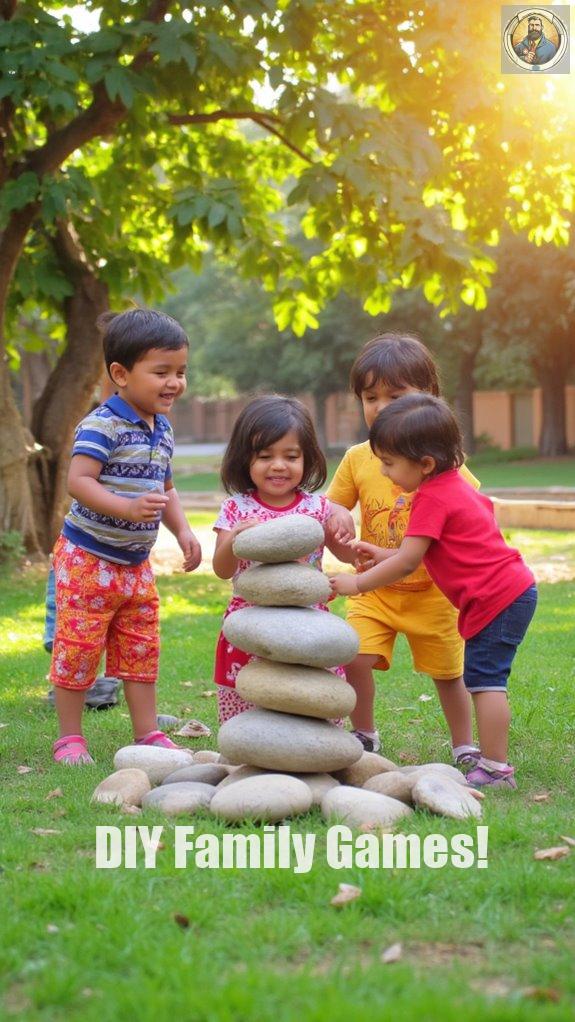
You know what’s even more fun than running around with friends at school?
Playing traditional cultural games!
These gems, like Lato-lato and Angklek, are more than just fun; they’re motor skill ninjas in disguise!
No fancy gear needed—just the awesome legacy passed down through generations.
Try these:
- Pittu-Garam: Teamwork at its best!
- Boy-Boyan: Eye-hand coordination challenge, anyone?
Research shows a boost in kids’ motor skills after just a month of these games! Incorporating effective communication strategies can further enhance the cooperative spirit found in many of these games.
DIY Indoor Games to Enhance Coordination
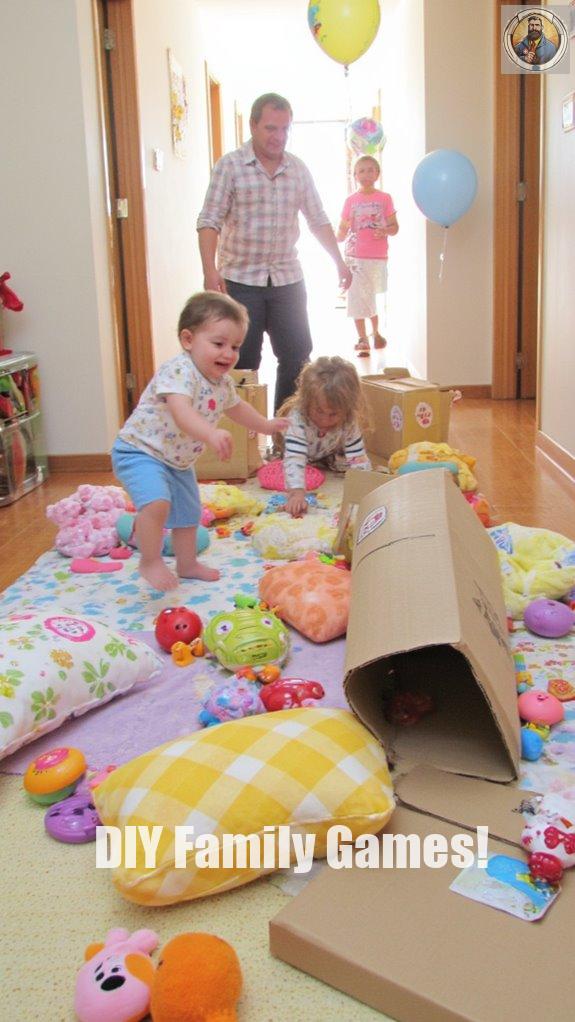
When it comes to keeping little ones engaged indoors, I’ve found DIY games to be pure gold, especially for enhancing coordination!
Here are four fun ideas to get you started:
- Obstacle Course Madness: Use chairs, pillows, and blankets to create a wacky course. They’ll run, jump, and crawl like pros!
- Balloon Volleyball: Who knew a balloon could become a competitive sport?
- Hallway Relay Races: Use household items as hurdles—cue epic running!
- Scarf Dancing: Get those little limbs crossing midline and moving rhythmically!
In addition, these activities are great for developing essential motor skills that promote overall physical development. Trust me, your kids will have a blast while gaining those essential skills!
Outdoor Activities to Boost Agility and Strength
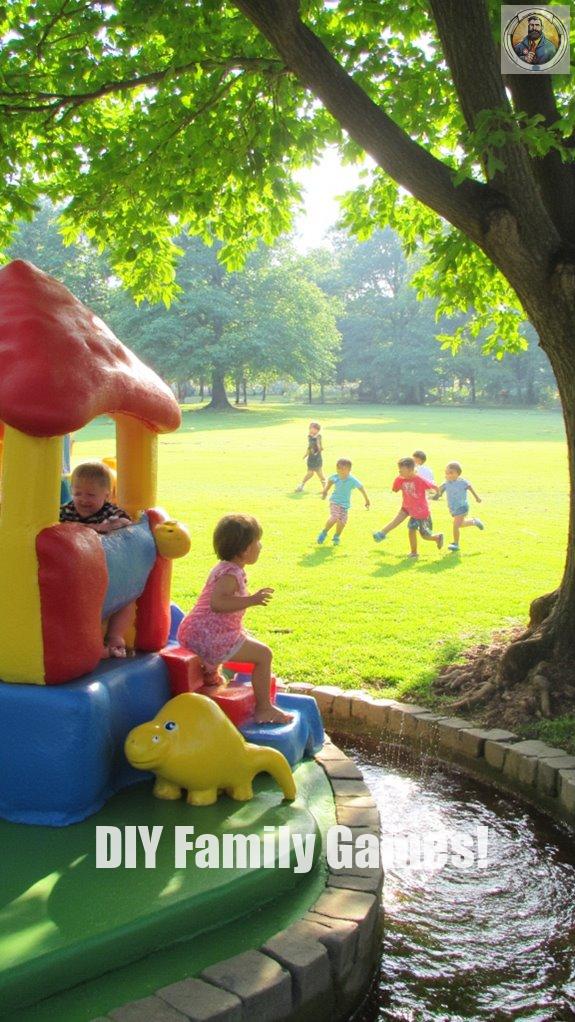
After all that indoor fun, it’s time to take the excitement outside!
Outdoor activities are like a superhero cape for toddlers, boosting agility and strength.
Here’s how you can jump into action:
- Climbing: Let them scale playgrounds. It’s like a mini rock climb for those tiny muscles!
- Jumping: Over streams or little rocks—it’s a leap towards explosive leg strength!
- Running: Find a grassy field to sprint. The thrill of dodging imaginary dinosaurs is perfect for agility.
Outdoor play not only strengthens bodies but also blasts childhood obesity right outta here!
Motor Skill Development Game Ideas
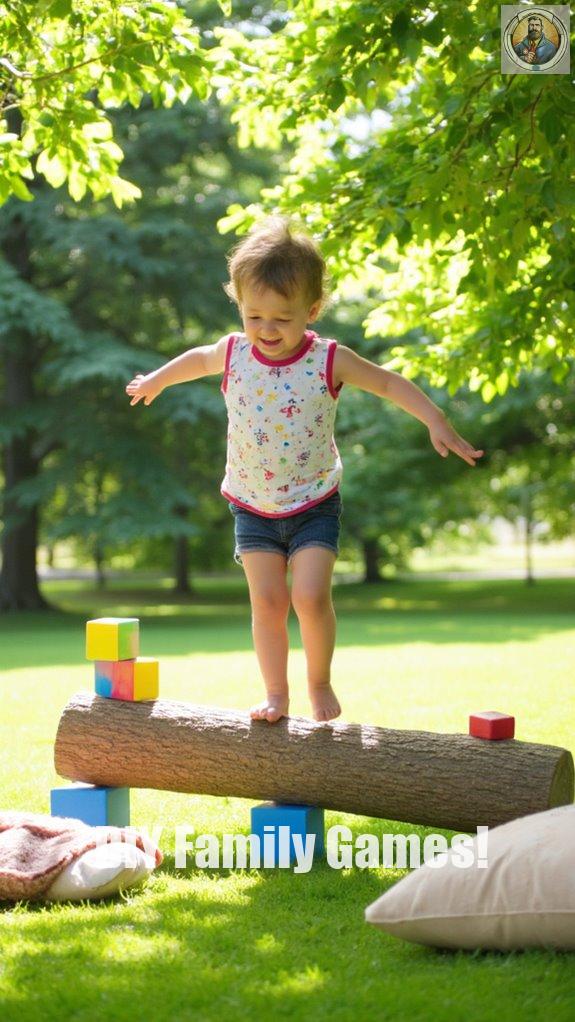
Motor skill development is essential for toddlers, especially since their little bodies are like sponges soaking up everything around them.
Here are some fun game ideas to keep those curious minds and wiggly bodies active:
- Balance Beam Walks: Who needs a circus?
- Crazy Ball Tossing: Add some drama while they miss utterly.
- Block Racing: Watch them assemble and knock down like pros.
- Obstacle Course Fun: Bump into pillows like it’s a soft mini-gym.
Trust me, these activities boost agility and strength while secretly making you the coolest parent ever!
Interactive Obstacle Course Challenge
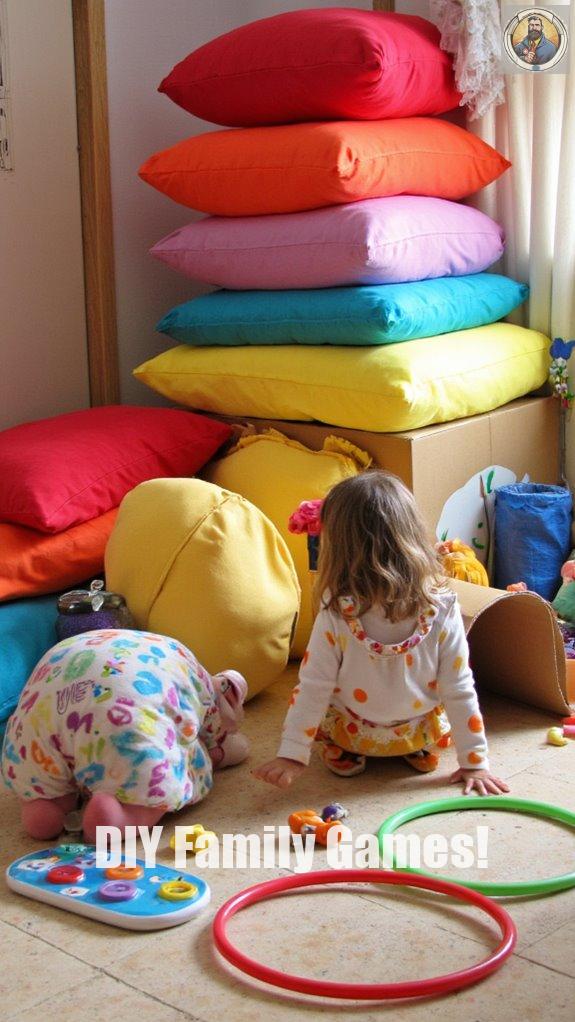
As I immerse myself in the world of interactive obstacle courses, I can’t help but feel like a creative genius planning an epic adventure for my kids.
Picture this: using couch cushions, hula hoops, and even a cardboard box as a tunnel, I craft a crazy course that boosts their gross motor skills while keeping them entertained.
Why let screens steal their joy?
- Climbing?
- Jumping?
- Balancing?
It’s all there!
They’re conquering fears, improving coordination, and giggling like little maniacs.
Plus, I might just join in and release my own inner toddler.
Best Motor Skill Development Games for Toddlers
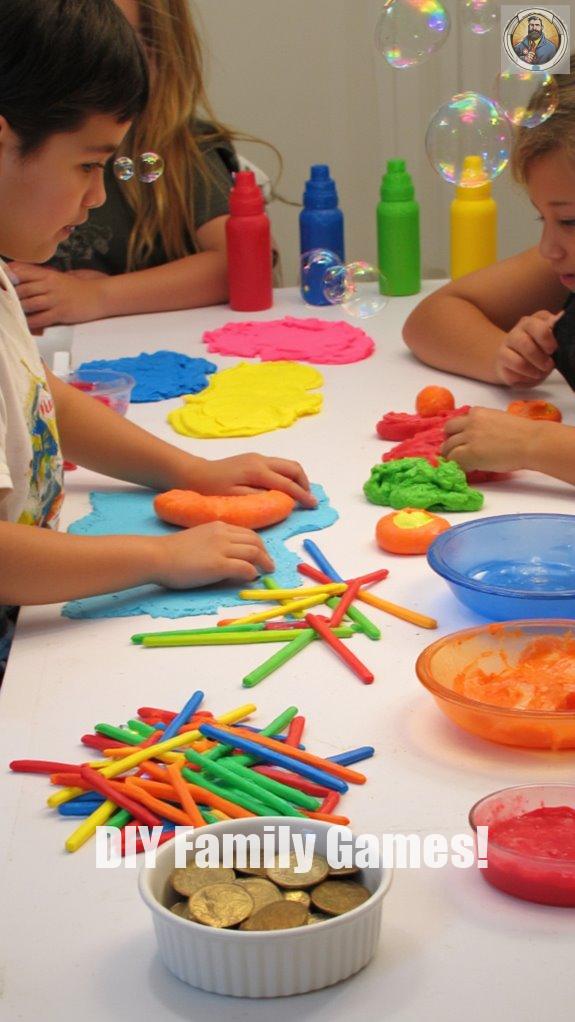
When it comes to toddlers, I’m sure you’ve noticed their unending energy and curiosity.
Here’s a fun lineup of games that’ll zap that energy into motor skills!
- Putty Play: Squeeze, roll, and sculpt—hello, hand strength!
- Pick Up Sticks: Finger coordination and a quirky challenge.
- Coin Sorting: Watch out, fine motor skills are in action!
- Bubble Popping: A bubble-blasting fiesta for little fingers.
These games not only engage them but build skills that’ll impress everyone, even Grandma.
So, grab some supplies and let the fun (and skill-building) begin!
Your toddler will be a mini athlete in no time!
Questions and Answers
How Can I Assess My Toddler’s Motor Skill Development?
I’ve found the easiest way to assess my toddler’s motor skills is to observe their playtime antics. If they’re less of a ninja and more of a wobbly penguin, it’s time for action!
What Age Is Ideal to Start Motor Skill Games?
Isn’t it funny how toddlers can trip over air? I’ve found starting motor skill games around age 1 works wonders! The earlier they play, the faster their skills blossom, and my sanity stays intact!
Are There Safety Concerns With Active Play Games?
Absolutely, there’re safety concerns with active play games. I often joke that kids are like little tumbleweeds—so much energy! Just keep in mind, a bump or bruise builds character, but let’s avoid trips to the ER, shall we?
How Can I Encourage My Toddler to Participate in Motor Skills Activities?
Did you know that engaging toddlers in play can improve motor skills by nearly 30%? I’ve found that turning these activities into silly games makes my little one enthusiastic to join—and the giggles just keep coming!
Can Motor Skill Games Be Adapted for Different Developmental Needs?
I’ve found that adapting motor skill games is like customizing a pizza. You can add extra cheese—visual aids, social cues, or structures—to suit any child’s needs. Who doesn’t love a personalized pie in playtime?
Summary
In the grand tapestry of childhood, motor skill games serve as vibrant threads weaving together fun and development.
So let’s embrace the joy of play!
By engaging in these activities, you’re not just keeping your toddlers entertained but also nurturing their physical abilities and creativity.
Remember, every bounce, jump, and spin is a step towards their growth.
After all, just like Picasso, kids are all about making their masterpieces – with a little messiness along the way!
References
- https://pmc.ncbi.nlm.nih.gov/articles/PMC8625902/
- https://pmc.ncbi.nlm.nih.gov/articles/PMC10888172/
- https://bmcsportsscimedrehabil.biomedcentral.com/articles/10.1186/s13102-022-00532-z
- https://aassjournal.com/article-1-1294-en.pdf
- https://www.frontiersin.org/journals/psychology/articles/10.3389/fpsyg.2022.986403/full
- https://jazindia.com/index.php/jaz/article/view/4808
- https://pubmed.ncbi.nlm.nih.gov/34828707/
- https://www.naeyc.org/resources/pubs/yc/summer2022/power-playful-learning
- https://www.nb-ecec.org/en/articles/post-15658617
- https://www.frontiersin.org/journals/psychology/articles/10.3389/fpsyg.2024.1476297/full
- https://pubmed.ncbi.nlm.nih.gov/38397366/
- https://aassjournal.com/article-1-1294-en.html
- https://pubmed.ncbi.nlm.nih.gov/35270330/
- https://pubmed.ncbi.nlm.nih.gov/28600111/
- http://ve.scielo.org/scielo.php?script=sci_arttext&pid=S0535-51332022000200185
- https://naerjournal.com/article/view/v5n2-7
- https://recyt.fecyt.es/index.php/retos/article/download/101743/75014
- https://sc.edu/study/colleges_schools/public_health/research/research_centers/usc_cparg/documents/pdf/champs/motor_skill_performance.pdf
- https://bmcpublichealth.biomedcentral.com/articles/10.1186/s12889-025-22696-2
- https://journal.rescollacomm.com/index.php/ijeer/article/view/612


