How Independent Kids Wake Up Early Without Dads
How Kids Leap Out of Bed for School
Ever wonder how kids wake up early without a dad’s morning flashlight? It’s all about routines and confidence.
I write for Modern Dads because I’ve seen how prepping the night before—laying out clothes and stacking breakfast items—makes life a breeze. Trust me, choice matters. Let them pick outfits or breakfast.
The right setup will have your kids waking before the alarm (yes, really). Just last week, my little one chose mismatched socks for the first day of school. Adorable? Yes. Coordinated? Not so much.
Kids thrive when we guide them. Let’s make early mornings a fun adventure instead of a wrestling match.
Quick Takeaways
- Establish consistent, visual morning routines to build independence and reduce reliance on external prompts.
- Use rewards and visual cues to motivate early awakening and reinforce positive habits.
- Encourage decision-making with choices in clothing, breakfast, and activities to foster autonomy.
- Prepare the night before to minimize morning stress and enable smooth, independent routines.
- Create a calm, cheerful environment to promote positive associations with waking early.
How to Help Kids Wake Up Independently and Happily
Ever wonder why some kids bounce out of bed ready to conquer the day while others hit snooze six times? I’ve found that dream journaling helps kids process sleep and set positive vibes for morning. When they jot down their dreams, they feel more in control and excited to wake up.
Pair that with outdoor activities like morning walks or playing in the yard—nothing beats fresh air to energize little bodies. I’ve seen Liam suddenly enthusiastic to grab his journal after a quick morning game outside. These morning activities also support language development as kids describe their experiences and dreams aloud. Consider building a tent structure in the backyard where kids can retreat to journal and reflect before the day begins.
To help your kids wake happily:
- Encourage bedtime dreaming and journaling
- Incorporate outdoor play to boost mood and alertness
- Keep mornings bright and positive
It’s about creating a morning routine that’s engaging, not draining—trust me, the difference is huge!
Creating Consistent Morning Routines That Foster Independence
Getting a solid, consistent morning routine isn’t just about waking up early—it’s about setting the stage for independence and confidence right from the start.
When kids know what to expect each morning, they take more control, boosting their self-esteem. Focus on clear parent-child communication—discuss the routine together to give your child a sense of ownership.
Create a sleep environment that’s inviting and distraction-free: comfy beds, dark curtains, and relaxing sounds help them fall asleep faster.
Use visual schedules or simple checklists to guide them through their routine, like brushing teeth or packing their bag. Visual countdown timers can also help children stay on track and maintain focus during each step of their morning routine. Think of it as building a mini road map—once they master it, independence follows naturally.
Consider pairing morning routines with structured activities like karate training to further build discipline and confidence in your child.
After all, who doesn’t want a kid who wakes up ready to conquer the day?
Effective Tools and Rewards to Encourage Early Wake-Ups
Using the right tools and rewards can turn early wake-up time from a battle into a game kids actually want to play.
Think sleep training like a coach guiding your child through healthy habits—no need for frustration.
I suggest using a star chart or small rewards like stickers for mornings they wake up early without fuss. It’s about setting achievable goals and celebrating wins!
For example, Liam loved earning points towards a new book or fun toy.
Simple tools like a gentle alarm clock with visual cues or a cozy morning corner can also help. Durable clothing like reinforced knee school pants ensures kids are comfortable and ready for their day ahead. An ergonomic footrest in your workspace can support your own comfort while managing morning routines with your kids.
Ask yourself—what motivates your child? Then build a reward system around it.
Keep in mind, consistency is key—soon enough, waking up early becomes their new normal, not a dreaded chore.
Supporting Your Child’s Independence: Tips for Parents
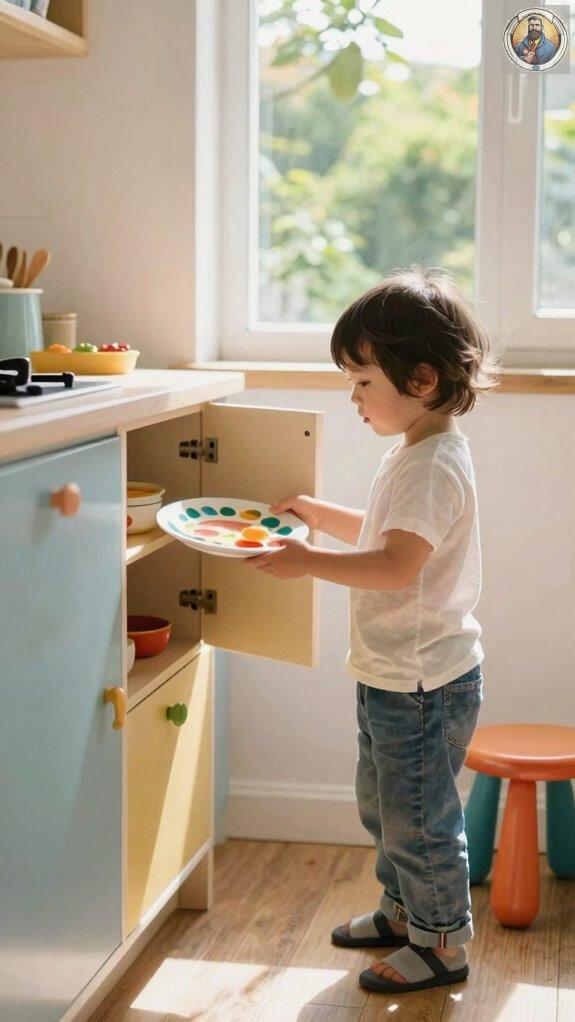
Supporting your child’s independence might sound like a fancy parenting buzzword, but really, it’s about giving them the tools and confidence to make decisions on their own—without turning every morning into a battle.
Supporting independence builds confidence and reduces daily struggles, empowering children to make their own decisions with ease.
When I learned to refine my parenting habits around sleep training, things suddenly got easier. Keep in mind, consistency is key: set clear routines, let them choose their clothes, or pick breakfast options.
For example, I used a visual schedule, which helped Emily understand what comes next. Encourage small wins, like getting dressed without reminders. Ask questions like, “What’s your plan for waking up early?” and watch their confidence grow.
Fostering independence doesn’t mean abandoning guidance — it’s about empowering them to succeed with minimal fuss (and fewer sighs from parents).
Morning Coffee Conversations
Ever notice how the morning chaos can turn into a surprisingly sweet moment if you just pause and have a chat over that first cup of coffee? That’s where real connection happens—sharing a moment before the busy day begins. During my sleep training journey, I realized that understanding wake-up cues is key. Instead of rushing, I ask my kids simple questions—”Did you sleep well?”—which encourages conversation and eases sudden shifts. Here’s a tip: create a cozy zone where they feel safe to talk about their dreams or worries. Just as parents benefit from advocating for their child in important meetings, establishing open morning conversations builds the foundation for your child to feel heard and supported throughout their day.
| Effective Morning Talk | Purpose |
|---|---|
| Use positive language | Build confidence |
| Ask open-ended questions | Promote sharing |
| Share your thoughts | Build trust |
| Keep it calm | Ease wake-up cues |
Bag Routines
Getting your kids to manage their bag routines on their own might sound like a small victory, but trust me, it’s a game changer. It all ties into their morning habits and wake-up strategies—think of it as setting the stage for independence.
Encouraging kids to handle their bag routines fosters independence and simplifies busy mornings.
I’ve seen Emily pack her bag the night before, double-checking her homework and gym shoes. Make it simple: create a checklist with everything they need, from notebooks to lunchboxes, and hang it next to their bag. Consider using a pocket planner to help your kids organize their daily essentials and track what needs to be packed each day.
Encourage them to prepare the night before—no last-minute scrambling or forgetting essentials. Recall, the goal isn’t perfection, but consistency.
Who knew such a tiny routine could free up so much morning brainpower? It’s all about building habits that stick!
Morning Task Checklist
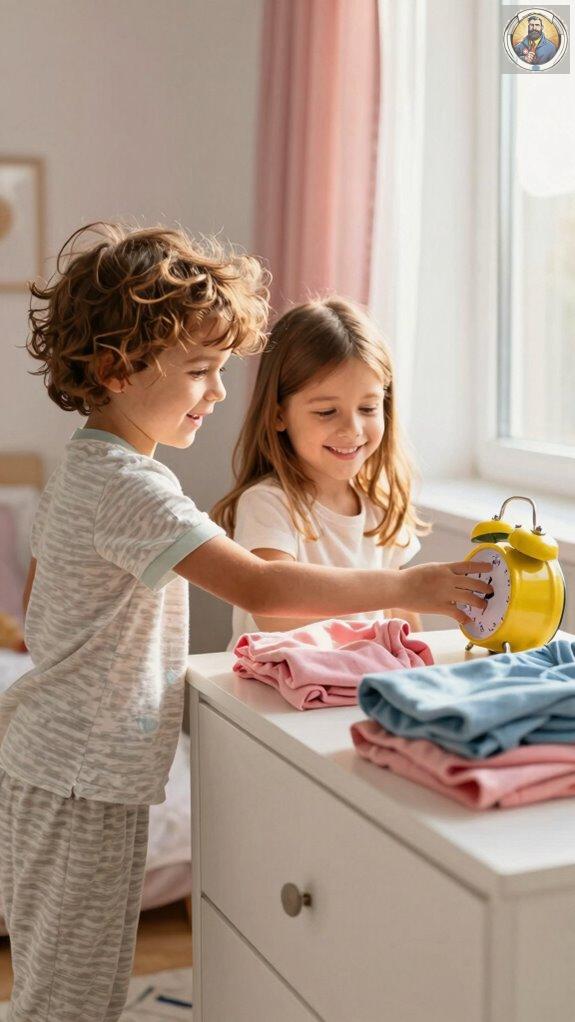
When it comes to mornings, a clear and simple checklist can be your secret weapon—trust me, I’ve seen it work wonders in my own hectic household. My kids, Emily and Liam, thrive with one.
I include easy tasks like brushing teeth, getting dressed, and packing school bags. But here’s the twist: I add a quick reminder about bedtime stories—so they sleep well and wake feeling ready. Packing their lunch the night before using reusable sandwich bags can also streamline morning routines and reduce decision fatigue.
Oh, and I limit screen time the night before; no TV or tablets past 7 p.m., or forget about peaceful mornings! I’ve learned that keeping routines consistent helps kids wake up early without me nagging. For kids who struggle with time awareness, visual countdown timers can transform morning routines by providing a clear, engaging way to track how much time remains for each task.
Try bullet points or visuals — it makes the checklist even more engaging. With a little structure, mornings turn into smooth sailing (or at least, less chaos).
Back to School Essentials
Preparing for back-to-school season can feel overwhelming—trust me, I’ve been there. It’s easy to forget how critical sleep habits are for independence.
When Emily was struggling to wake up, peer influence kicked in—her friends’ early mornings motivated her more than my nagging. Here’s what I’ve learned:
- Pack a fun, organized backpack the night before—no more frantic early-morning searches.
- Guarantee sleep habits are solid: a consistent bedtime, no screens 30 minutes before sleep, and a calming routine.
- Talk about peer influence—kids tend to mimic their friends’ routines, so choosing the right peer group makes waking easier.
- Prepare clothes and breakfast supplies in advance to avoid rushed mornings.
Mastering these essentials made my mornings smoother—and more manageable for everyone!
FAQ
How Can I Reduce My Child’s Morning Anxiety?
You can reduce your child’s morning anxiety by using morning affirmations to boost confidence and calming scents like lavender to create a soothing atmosphere, helping them start the day peacefully and build resilience for independent mornings.
What Signs Indicate My Child Is Ready for Independent Mornings?
When my child’s ready for independent mornings, they show curiosity about routines, wake consistently, and display morning motivation. It’s a sign that bedtime consistency has paid off, empowering them to take charge and start their day confidently.
How Do I Handle Resistance to Wake-Up Routines?
I handle resistance by sharing motivational stories and bedtime legends that inspire independence. I stay consistent, praise their efforts, and gradually introduce gentle routines, helping them feel confident and motivated to embrace their morning independence.
What’s the Best Way to Adapt Routines for Different Age Groups?
To adapt routines for different ages, I emphasize consistent bedtime routines, tailor reward systems to each child’s interests, and maintain flexibility, ensuring each kid feels motivated and secure while gradually fostering independence with age-appropriate expectations.
How Can I Monitor Progress Without Micromanaging?
I monitor progress tracking by setting clear goals and observing your child’s independence fosterage over time, instead of micromanaging. Regular, open conversations give understanding while encouraging autonomy, helping you guide growth effectively without overstepping boundaries.
Summary
So, there you have it—teaching your kids to wake up on their own might just turn out to be the *best* part of your morning routine. Who would’ve guessed that setting clear expectations, offering rewards, and keeping things consistent could make mornings smoother? Now, instead of dragging Liam or Emily out of bed, you might find yourself grooving to your coffee while they confidently tackle their morning tasks—all without a dad’s nudge. Now that’s independence!