

Healthy Morning Habits For Germ Conscious Fathers
Back to School: Germ Warfare Edition
Ever wonder how to keep those back-to-school germs at bay? I’ve learned it’s all about being prepared.
I share my insights on Modern Dads because I want to help fellow fathers tackle the morning chaos.
I pack hand sanitizer and wipes in my kid’s backpack. Trust me, they’re lifesavers! Prepping fun snacks like fruit slices or nuts makes lunchtime exciting. Plus, I remind my little ones that teeth are for chewing, not for fending off germs.
Chaos turned calm? Oh, I’m still working on it!
Last week, my little one tried to open a door with a sneeze-covered hand. You can imagine the look I gave! Lesson learned: hygiene is a dad’s best friend.
Quick Takeaways
- Develop a consistent morning routine including hand hygiene and face washing before engaging with family or leaving home.
- Pack nutritious snacks and hygiene essentials like hand sanitizer and reusable water bottles for quick access during busy mornings.
- Remind children and yourself to avoid touching faces and reinforce proper coughing and sneezing etiquette.
- Prepare and organize supplies in advance to minimize rushing and maintain cleanliness during morning routines.
- Practice and model outdoor responsibility and cleanliness habits to instill lifelong germ-conscious behaviors.
Why Germ Risks Matter in Early Classrooms
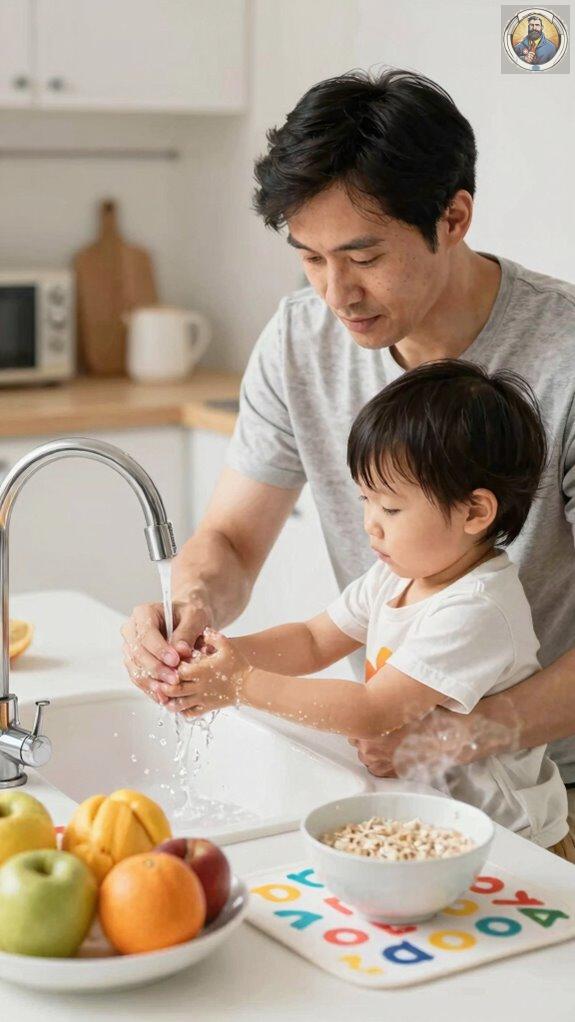
Have you ever walked into a classroom and wondered just how many tiny germs are lurking everywhere, ready to jump onto little hands and faces? Germ transmission happens all the time—kids touch desks, toys, and each other, making it easy for germs to spread. That’s why classroom sanitation is so essential; it acts like a barrier against those invisible enemies.
Small actions, like wiping down desks with disinfectant, encouraging handwashing, and keeping shared items clean, really make a difference. Recall my son Liam’s school project about germs? His superhero motto was “slaying germs daily!” Beyond sanitization, incorporating martial arts games can boost children’s immune systems through physical activity and coordination training.
It’s simple: fighting germs early on helps prevent kids from falling sick more often. Better sanitation means healthier mornings and happier kids! Don’t underestimate the power of small, consistent cleaning routines.
How to Keep Your Classroom Clean and Organized
Keeping your classroom tidy and germ-free might sound like a never-ending chore, but trust me, a little effort can go a long way—especially when it comes to stopping those sneaky germs we talked about earlier. Powerful classroom organization starts with clear zones for supplies, trash, and disinfectant stations.
Collaborate with parents and teachers to set up a cleaning schedule—consistency is key! Engaging students in small tasks like wiping desks or putting away supplies builds responsibility and makes cleanup quicker. I’ve seen how Liam’s class turned into a germ-fighting squad when they held weekly trash patrols. You can also incorporate creative activities like indoor tent building projects during rainy days to reward students for maintaining a clean classroom. Documenting these cleanliness efforts through progress tracking systems helps maintain accountability and demonstrates student growth in responsibility.
Simple Hand Hygiene Tips for Teachers and Students
Since germs seem to love hanging around hands, teaching teachers and students some simple hand hygiene tricks can make a big difference—trust me, I’ve seen it in action.
Germs love hands—teaching simple hygiene tips really makes a difference. Trust me, I’ve seen it work!
Using hand sanitizer at key moments—like before eating or after recess—quickly kills germs and keeps everyone healthier.
I always tell Liam and Emily not to forget about sanitizing routines: pump enough sanitizer (about a coin-sized amount), rub all over your hands, especially between fingers and under nails, until hands feel dry.
I’ve learned that sticking to these routines reduces sick days, making everyone happier.
You can also create engaging game-based learning activities to help reinforce proper hygiene practices in a fun way that keeps children motivated. Keeping hands clean is especially important when engaging in outdoor activities like convertible hiking pants adventures where children encounter dirt and nature.
Want to master this? Set reminders, show proper technique, and lead by example—who better than us to show the way?
After all, a few seconds can save a lot of headaches!
Best Germ-Resistant Supplies and Toys for Preschools
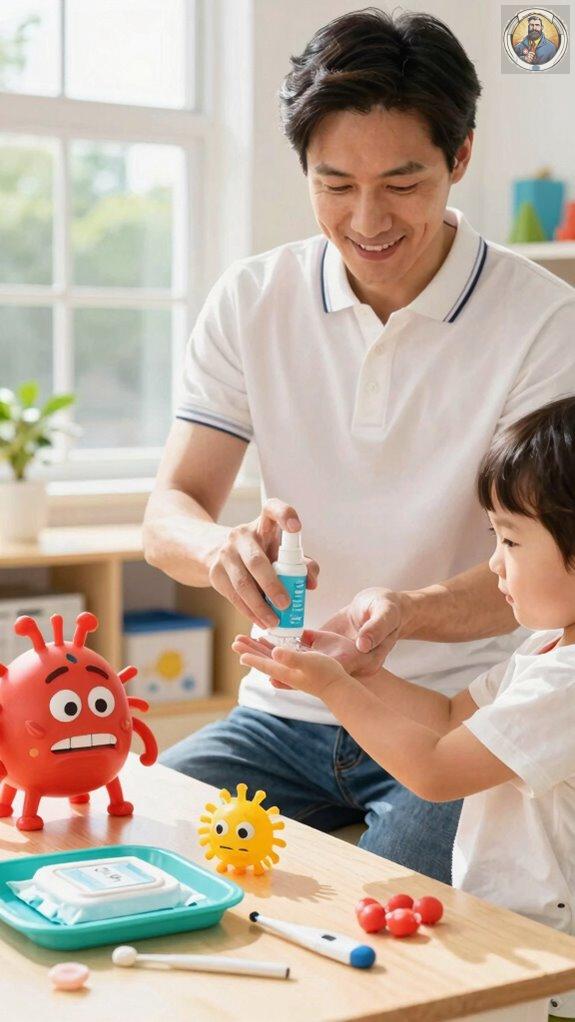
You know those moments when your preschooler snatches a toy right off the floor or grabs a crayon that’s been in every kid’s hands? It’s enough to make any germ-conscious dad cringe. That’s where germ-proof toys and sanitation-resistant supplies come into play. These specially designed toys resist bacteria, making cleanup easier and reducing germs spread. By implementing time management strategies, you can streamline your sanitization routine without sacrificing quality parenting time. In emergency situations, having bright signal mirrors can help communicate with others quickly, similar to how clear communication about hygiene practices keeps everyone safer. I’ve come to rely on:
| Type | Features | Benefits |
|---|---|---|
| Germ proof toys | Made with antimicrobial materials | Prevents bacteria growth |
| Sanitation resistant supplies | Easy to disinfect, quick drying | Saves time, reduces mess |
| Silicone teething toys | Non-porous surface | No germs in tiny crevices |
| Waterproof mats | Wipes clean easily | Always ready for reuse |
| BPA-free bottles | Chemical-free, dishwasher safe | Safe for kids, germ-resistant |
Keep your preschool’s supplies sanitized without hassle—your immune system (and your laundry pile) will thank you!
Encouraging Healthy Eating Habits in the Classroom
When it comes to helping preschoolers develop healthy eating habits, there’s no magic trick—just patience, creativity, and some strategic planning. I’ve learned that offering healthy snacks and nutritious breakfasts at school can make all the difference. Think colorful fruit slices, veggie sticks, or whole-grain crackers—kids love variety! You might even turn snack time into a fun game. Using pocket magnifying glasses can help children explore and appreciate the textures and details of fresh fruits and vegetables, making healthy foods more engaging and exciting.
Keep in mind, consistency is key—if Liam’s snack is always cut-up apples or carrots, he’ll start craving them. Avoid sugary cereals or processed treats—they undermine your efforts. Have a chat with teachers, too; suggest they encourage your kids to choose nutritious options. Be aware that teaching children to recognize fraudulent marketing tactics on food packaging can help them make informed choices about what they consume.
Do I still sneak a cookie? Maybe—but I know that building good habits today sets them up for a healthier tomorrow.
Talking With Kids About Illness Symptoms and Staying Safe
Talking with kids about illness symptoms and staying safe mightn’t seem exciting, but trust me, it’s worth it—fewer trips to the doctor and less frantic panic.
Discussing illness symptoms early helps kids stay safe and keeps family calm.
I recall explaining to Liam that a runny nose and cough meant resting up and boosting his immune system.
Keep it simple: teach them to recognize symptoms like fever, cough, or sore throat. Incorporate these into bedtime routines—rinsing hands, staying warm, and getting enough sleep.
It’s all about immune boosting, which builds resilience. Teaching children to respect others’ health and boundaries during illness creates an environment of digital respect and safety both online and offline.
Use visuals or stories to make it memorable. Ask questions like, “What do you do if you feel a fever coming?”
Make safety a game, not a lecture. Just as Leave No Trace principles teach responsibility through outdoor activities, teaching health habits early creates lifelong awareness.
The more they learn early, the safer—and calmer—you stay.
Master this skill, and health becomes a family habit.
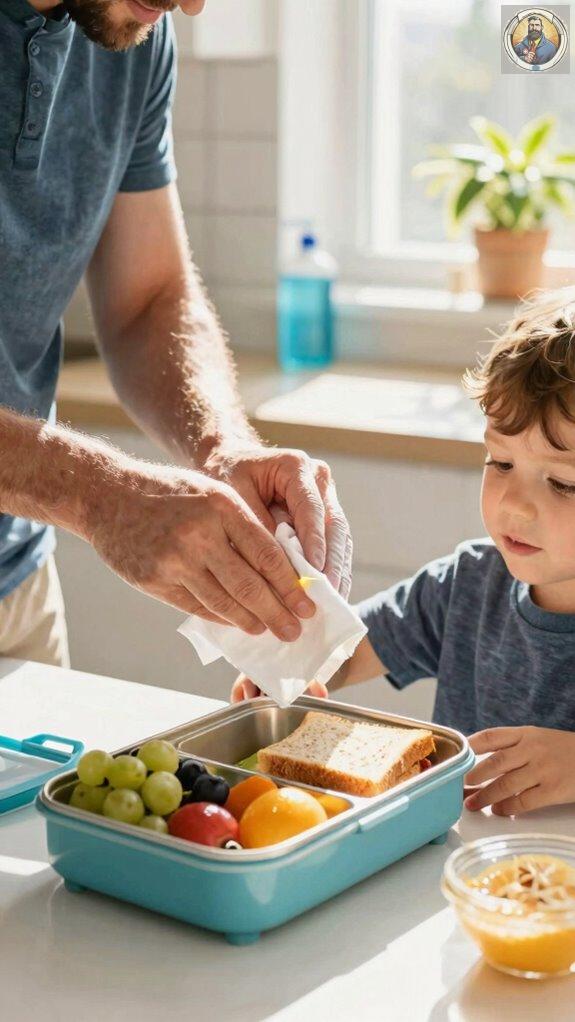
Dad Wiping Son’s Lunchbox
- Teach your child outdoor safety skills like how to build tarp shelters with paracord spools for kids to encourage active play in nature.
- Keep their school supplies organized in plastic stackable pencil boxes to maintain cleanliness and reduce germ transfer from shared classroom materials.
After all, mastery is about small habits that lead to big health benefits!
Classroom Disease Prevention
Keeping germs out of the classroom is like trying to keep a beach ball underwater—an ongoing battle that demands attention and strategy. I’ve learned that germ prevention is key, and simple tools like hand sanitizer make a big difference.
Do you recall the last time Liam’s face was buried in a textbook, fingers dirty from play? Now, I keep a small bottle in my bag, so he can quickly sanitize after recess. Encouraging kids to wash hands thoroughly—singing “Happy Birthday” twice—can be a game-changer. It’s about creating habits:
- Use hand sanitizer when soap and water aren’t available.
- Remind kids to avoid touching their face during the day.
- Teach them that prevention beats a sick day any time.
Pairing these hygiene practices with insulated stainless steel thermoses ensures kids stay hydrated throughout the day, which also supports their immune system during active play.
Because, honestly, who wants their kid missing out on school fun?
School Disinfecting Protocols Begin
Once you realize how quickly germs can spread throughout a school, it’s clear that establishing strong disinfecting protocols isn’t just a good idea—it’s essential. I’ve seen my kids’ classrooms go from tidy to germ hotspots fast. Staying proactive means using eco friendly cleaning supplies that are tough on germs but safe for kids and the environment.
Keeping schools germ-free requires proactive, eco-friendly disinfecting and regular hand hygiene for everyone.
Hand sanitizer options matter too—find ones with at least 60% alcohol, and keep plenty around.
For important discussions about school health policies, consider bringing a digital voice recorder pen to document conversations with school administrators about disinfecting standards and protocols.
Here’s what I keep in mind:
- Regularly sanitize high-touch surfaces like doorknobs and desks
- Use eco friendly cleaning products for daily disinfecting
- Stock up on effective, kid-friendly hand sanitizer options
- Educate kids on proper handwashing techniques
- Set a routine for disinfecting at least twice daily
This keeps germs at bay and creates a safer space for everyone.
Back to School Essentials
Heading back to school can feel like preparing for a big adventure—except instead of treasure, you’re hunting down the must-have supplies to keep your kids safe and sane. Think about morning rituals: a quick but deliberate routine that sets the tone. Did I forget to brush Liam’s teeth or pack Emily’s healthy snacks? Never again.
Stock up on nutritious snacks like nuts, fruit, or granola bars—easy, portable, and immune-friendly. Consider packing those in airtight containers to prevent germs.
Make sure your kids’ backpacks include a hand sanitizer and a reusable water bottle. Simple but essential.
This way, you’re passing on good habits while tackling the chaos with confidence. Who knew a solid morning routine could be your secret weapon?
FAQ
How Can Fathers Set a Healthy Morning Routine for Their Children?
I establish a healthy morning routine by engaging in family bonding activities like morning exercise, setting a positive tone. I guarantee cleanliness, prepare nutritious breakfasts, and promote mindfulness to foster healthy habits and strengthen our family connection.
What Are Quick, Germ-Free Breakfast Ideas for Busy Mornings?
I recommend quick recipes like overnight oats or breakfast smoothies for germ-free mornings. They’re fast to prepare, nutritious, and minimize surface contact, helping you start the day healthy and confident amidst busy schedules.
How Do I Motivate My Kids to Practice Good Hygiene Daily?
Considering guiding my kids like sailors steering through a storm: I use finger washing strategies as their compass and hygiene motivation techniques as their trusty wind; this inspires mastery in daily hygiene, making it second nature and deeply ingrained.
Are There Effective Ways to Reinforce Handwashing at Home?
I reinforce handwashing at home by establishing clear sanitize routines and using hygiene signage as visual cues, creating consistency. Motivating your family with reminders helps embed these habits into daily life, making hygiene second nature for everyone.
How Can Fathers Model Healthy Habits for Their Children?
I demonstrate healthy habits by modeling regular pediatric dental routines and discussing immunity boosting foods. For example, I involve my children in brushing, reinforcing their understanding of hygiene’s importance, which helps them develop lifelong habits aligned with health mastery.
Summary
So, next time you see Liam wiping his hands on his jeans after lunch, recall: little habits add up. By staying vigilant—think handwashing, disinfecting, and packing germ-resistant toys—you’re not just protecting your kids now but setting lifelong health habits. Why leave germs to chance when simple routines can make all the difference? Trust me, I’ve seen firsthand how consistent practices reduce sick days—after all, a healthy kid is a happy, ready-to-learn kid!


