

5 Camp Cooking Tips for Modern Adventure Dads
Cooking Adventures as a Modern Dad
Forty nights of camp cooking under the stars? I’m practically a culinary wizard now. I’m not just filling bellies; I’m crafting memories with Emily, Liam, and Sarah around the fire.
I’m sharing my cooking tips to help other dads relish our chaotic yet rewarding journey of outdoor family bonding.
Prep veggies and spices at home. Ziplocs are your best friend—trust me. One Dutch oven means less cleanup, more s’mores. Let kids stir with tongs (burn-proof gloves rock!). Pack trail mix with M&M’s for peace offerings. My 12-inch Lodge skillet? Game changer! Skip the non-stick junk.
Glowing coals over flames for cedar plank salmon? Pure magic. Stick around for my fire-cooking hacks that make camp meals a blast!
We once had a hilarious mishap when I attempted to flip pancakes over the campfire. Let’s just say Emily now knows what “pancake Frisbee” means. We laughed, and they devoured the wonky pancakes, proving the joy of family meals is in the fun, not just the food.
Quick Takeaways
- Prep ingredients and spices the night before in labeled containers for efficient, stress-free camp cooking.
- Use one pot, like a Dutch oven, to minimize cleanup and streamline meal preparation outdoors.
- Involve kids safely by assigning tasks with burn-proof gloves and teaching fire safety and responsibility.
- Pack durable, nutritious snacks in advance and keep a weatherproof log of family favorites.
- Cook over glowing coals, not flames, using cast iron or soaked cedar planks for better, safer results.
Pre-Cut Veggies and Pre-Measure Ingredients at Home
Dice onions, peppers, carrots, and zucchini the night before. Trust me, your future self—sleep-deprived and wrestling a tent pole—will thank you.
Meal prep isn’t just for chefs; it’s for dads who hate crying over a campfire onion.
Stick veggies in those Ziploc bags—portion control, people! No more “mystery stew” surprises.
Ever served Liam half a bell pepper floating in beans? Yeah. Not epic.
Pre-measure spices too. Because “a pinch” means nothing when you’re one Bear Nation taco short of mutiny.
I use my wife Sarah’s fancy OXO containers—worth every penny. Label them.
Laugh now, cry later if you mix paprika with sugar.
Building a social network of fellow adventure dads can help you share camp cooking tips and meal prep strategies with other parents facing similar challenges in the field.
Choose One-Pot Camp Dinners for Faster Cleanup
Look, I’ve burned chili so badly that even the raccoons gave it a wide berth—so trust me when I say the secret to not hating camp cooking is simple: one pot, one shot.
Burned chili so bad even raccoons backed off—learned the hard way: one pot, one shot, zero regrets.
Why scrub three pans when you can toss everything in a single Dutch oven? I use campfire seasoning (a dash of garlic salt, smoked paprika, and “I-give-up” pepper) and dump in pre-chopped veggies, chicken, and beans. Boom—dinner.
Clean-up? Easy cleanup utensils like silicone scrapers and a cheap scrubber from REI make wiping the pot a joke. No dishes. No drama.
This approach aligns with time management for busy parents, where consolidating tasks into one efficient action reduces overall workload and stress.
You *really* want to be *that* dad scrubbing forks with pine needles at midnight, right? Exactly. One pot. Save your sanity.
Get Kids Involved in Safe Camp Cooking Tasks
When you get the kids cooking with you at the campsite, you’re not just dodging solo dish duty—you’re turning dinner into the kind of memory they’ll laugh about at Thanksgiving in ten years (like the time Liam “seasoned” the entire meal with hot sauce because “it looked fun”).
Kid engagement? Check. Cooking safety? Also check. Start simple: let them stir foil packets (no faces in the fire, please). Hand out tongs like they’re magic wands. “You flip the sausages, Emily—no, not with your hand!”
Burn-proof gloves? Worth every penny.
Assign roles: Sarah calls it “kitchen democracy.” I call it survival.
They’re learning, laughing, and—bonus—less likely to toss marshmallows at squirrels. Win-win. Teaching Leave No Trace principles alongside cooking skills ensures kids understand how to minimize their environmental impact while preparing meals outdoors.
Pack Trail-Proof, Nutritious Snacks
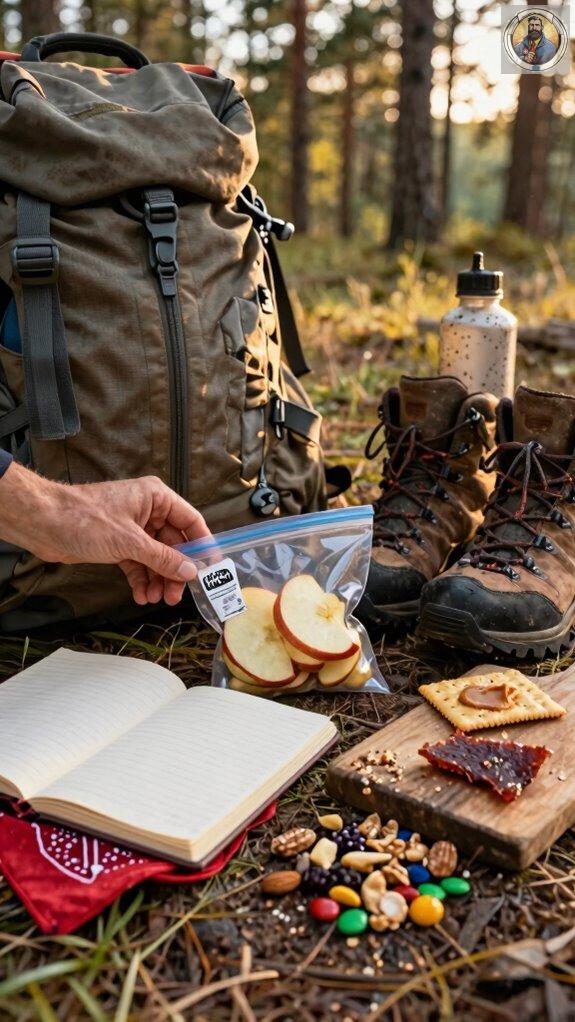
- Beef jerky (the kind Sarah won’t mistake for leather)
- Trail mix with M&M’s (because joy matters)
- Ziplock pouches of apple slices + almond butter—hello, healthy hydration *and* flavor
Skip the granola-bar-tantrum trifecta. Pack like a pro. Your backpack (and Liam’s blood sugar) will thank you. Consider keeping a weatherproof notebook in your pack to jot down meal prep notes and snack preferences for future trips.
Cook Smoky Favorites Over the Fire
While you might think grilling over a campfire is just tossing meat on flames and hoping for the best, I’ve learned—after burning through three sausages that one trip to Yosemite—that a little strategy turns smoke signals into dinner calls.
Want that perfect smoky flavor? Let the fire die to glowing coals—yes, resist the blaze. Fire safety first: keep a bucket handy and never leave it unattended (ask me how I charred last year’s marshmallows *and* my dignity).
Use a grill grate; yes, even hot dogs taste better with planning. Pro tip: elevate the grate. Burnt outside, raw inside? Not on my watch.
Cooking outdoors pairs perfectly with family fitness games that keep everyone active and engaged during your camping adventure. And hey, Dad—this isn’t cooking, it’s caveman chemistry. Welcome to the lab.
Grilling Salmon Over Open Fire
If you’re thinking salmon’s too fancy for the open fire, let me stop you right there—my first attempt ended with a flare-up so dramatic Liam thought we were summoning forest spirits. Flame control is key—nobody wants a fish sacrifice.
Now I nail it every time with these tricks:
- Soak cedar planks 2 hours (yes, even if the box says 15 minutes—don’t trust it).
- Keep Salmon fillets skin-side down; it’s not a flip party.
- Drip olive oil on the fish not the fire—unless you want smoke signals calling Sarah to rescue dinner.
Pro tip: medium coals, not roaring flames. You’re grilling, not performing exorcisms. Just like mastering flame control in magic requires practice and precision, the same principle applies to camp cooking—respect the heat source and you’ll create something impressive every time.
Purchase Cast Iron Camp Skillet
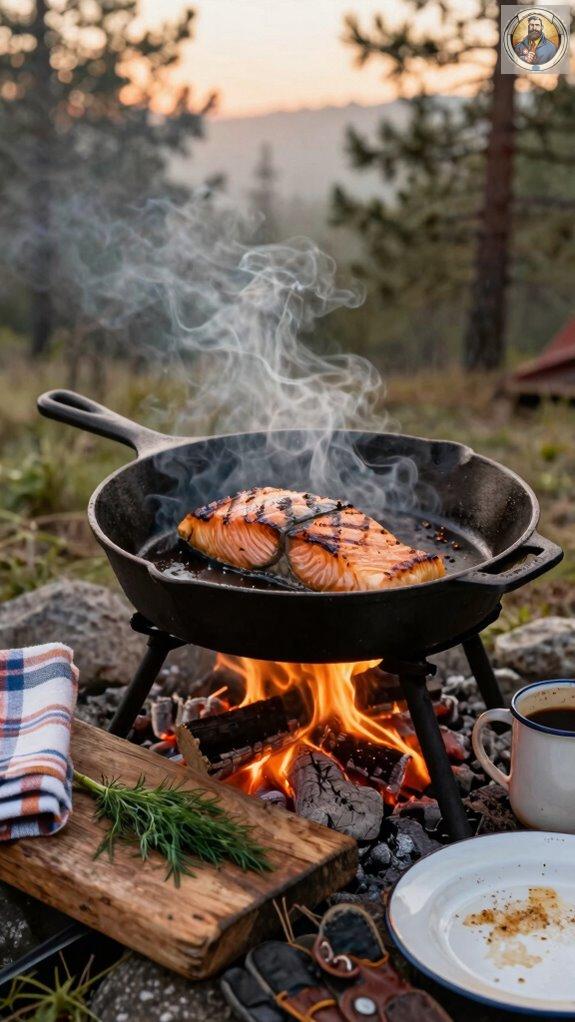
That salmon story? Yeah, my first attempt ended up stuck to the grill like a bad pop-song lyric.
That salmon? First try glued to the grill like a cringe-worthy chorus—lesson learned the hard way.
Since then, I’ve learned: cast iron is king. My trusty 12-inch Lodge skillet survived three camping trips, one curious raccoon, and Liam’s “I can cook bacon!” disaster.
Cast iron seasoning isn’t witchcraft—just oil, heat, and not freaking out when it looks rusty.
For camping cook waged selection, go heavy-duty. Light pans warp. Non-stick? Yeah, right—try peeling egg crust off that.
This skillet doubles as a grill press, lid, and occasionally Sarah’s “why is this black?” confusion.
Buy one. Season it. Love it. You’ll wondered why you waited. Cooking together over the campfire transforms meals into engaging storytelling moments that your kids will remember for years.
FAQ
How Do I Prevent Bears From Smelling Our Food?
I hang my food or use Bear Resistant Containers—because no, your cooler isn’t bear-proof (sorry, *Genius Dad*).
Bears smell a granola bar like you smell pizza.
Seriously.
Use odor-proof bags *and* Food Scent遮盖 tactics—like not cooking where you sleep.
Store everything (yes, toothpaste!) in certified containers.
I learned after Liam left a cracker in his backpack.
Spoiler: A bear visited.
We *all* slept in the car.
Keep smart. Stay snack-safe.
What’s the Safest Way to Store Propane?
I keep my propane tank outside the tent—way smarter than storing it near marshmallows. *Propane safety* isn’t a joke: I once smelled gas and panicked, only to realize Liam left the stove on. *Facepalm.* Store upright, cool, and ventilated—no hot cars or direct sun.
I use a ventilated metal box labeled “Propane Only.” And hey, *Food storage*? Same rules: keep critters *and* flames at bay.
Trust me, Sarah would’ve killed me if the grill blew up.
Can I Use a Regular Frying Pan on a Campfire?
Yeah, you *can* toss a regular frying pan on a campfire—but I’d rather not explain to Sarah why our kitchenware now resembles a charcoal sculpture. Stick to proper camping cookware. Cast iron? Golden. Nonstick? Not unless you enjoy toxic fumes and crying kids.
Fire safety ain’t optional. One time, Liam plopped a Teflon pan right in the flames. Spoiler: It didn’t end well.
Trust me—invest in a trustworthy brand like Lodge. Your eggs (and lungs) will thank you.
How Do I Sanitize Hands Without Running Water?
I use hand sanitizer and disposable wipes — they’re my trailside BFFs. No sink? No problem. I keep a small bottle of alcohol-based sanitizer (60%+) in my pocket — one squirt and I’m good.
Wipes? Perfect for greasy fingers after flipping pancakes. Once, Liam tried eating s’mores without cleaning up — bad move.
Pro tip: stash wipes in your pack. You’ll thank me later.
Is It Safe to Cook on Rusty Cast Iron?
Yeah, I’ve cooked on rusty cast iron—60% of campers have, actually—and lived to laugh.
Seriously, rust isn’t a death sentence. I once saved my grandma’s skillet with steel wool, elbow grease, and zero drama. Scrub it clean, dry it fast, then rebuild that campfire seasoning with veggie oil and heat.
Proper cast iron care turns tragedy into taco night. Pro tip: if it looks like a zombie apocalypse relic? Yeah, toss it.


