

Overcoming Preschool Separation Anxiety Tips For Loving Fathers
Mastering Back-to-School Goodbyes: A Dad’s Take
Ever felt your heart sink at drop-off? I have. On Liam’s first day of preschool, his clinginess was a tough pill to swallow. But hey, a few tricks can turn those tears into smiles.
That’s why I share on Modern Dads.
I learned that quick routines help. A high-five or hug signals it’s goodbye time. Packing a labeled backpack made Liam giggle—he loved his superhero badge. Visual schedules? Game changer!
Inside, I was a mess, but I kept it cool. Want to wave confidently? I got your back!
Last school season, I dropped off my little one, and as I walked away, I turned to see him smiling and waving. I couldn’t help but chuckle at how he was more excited than I was. Who knew preschool could bring such joy?
Quick Takeaways
- Stay calm and confident, modeling emotional stability to reassure your child during goodbyes.
- Use consistent routines and quick, loving farewell rituals to build a sense of security.
- Incorporate sensory or comfort items, like stuffed animals, to help your child feel safe and comforted.
- Practice short separations gradually to boost your child’s resilience and confidence over time.
- Engage in storytelling and bonding activities to strengthen your child’s trust and emotional connection.
How to Recognize Separation Anxiety in Your Preschooler
Ever wondered if your preschooler’s tears or clinginess mean more than just being “mommy’s little helper”? Here’s the thing: these behaviors can signal separation anxiety, and recognizing it’s key to building emotional resilience.
Think back to my kids, Emily and Liam—they’d cling tighter whenever I left for a quick trip. Look for signs like fussiness at drop-off, avoiding playground safety areas for fear of losing you, or suddenly resisting new activities. These clues tell you they’re struggling emotionally.
To identify it? Observe how they handle goodbyes, whether they keep looking back or seem excessively anxious. Recognize these signs, and you’re already starting to empower your child—helping them develop confidence, even in the face of separation. When children engage in playful expression activities, they can process these difficult emotions in a safer, more manageable way. Understanding psychological evaluation techniques can help parents and caregivers more accurately assess whether a child’s separation anxiety requires professional support.
Preparing Your Child for Kindergarten: Step-by-Step Tips
Getting your preschooler ready for kindergarten can feel like gearing up for the biggest adventure yet—think of it as preparing for a new chapter with new friends, classrooms, and yes, more independence. To make this leap smoother, focus on sibling bonding—encourage Emily and Liam to play and share stories about school. This builds confidence and eases fears. Try incorporating creative storytelling activities where you and your child create imaginative tales together, which strengthens your bond and helps them process their feelings about this transition.
Also, teach playground safety: simple rules like watching for broken equipment and waiting for friends prevent accidents. Practice routines like packing backpacks, morning rituals, and saying goodbye confidently—kids pick up on your tone. When your child begins taking the bus, remind them about bus safety rules to ensure they stay secure during their commute.
Keep in mind, a little preparation goes a long way. Did I mention how important it’s to make these moments fun? After all, if they’re excited, you’re winning. Ready to embrace this next chapter?
Effective Strategies to Comfort and Reassure Your Child
When it comes to comforting your child during those tough separation moments, the key is to stay calm and confident—because kids pick up on your energy. Trust me, I’ve learned that a confident parent fosters strong parent-child bonding and emotional reassurance.
Do you recall the time I hesitated before dropping Liam off at preschool? That’s when I realized my calm words made a difference.
Use simple, reassuring phrases like “I’ll be back soon” or “You’re brave.” Hold them close, maintain steady eye contact, and keep your voice steady.
Offer small routines, like a special hug or a secret handshake, to create a sense of security.
The power is in your confidence — your child will follow your lead. And hey, even I sometimes need a pep talk!
Building Confidence and Independence With Daily Routines
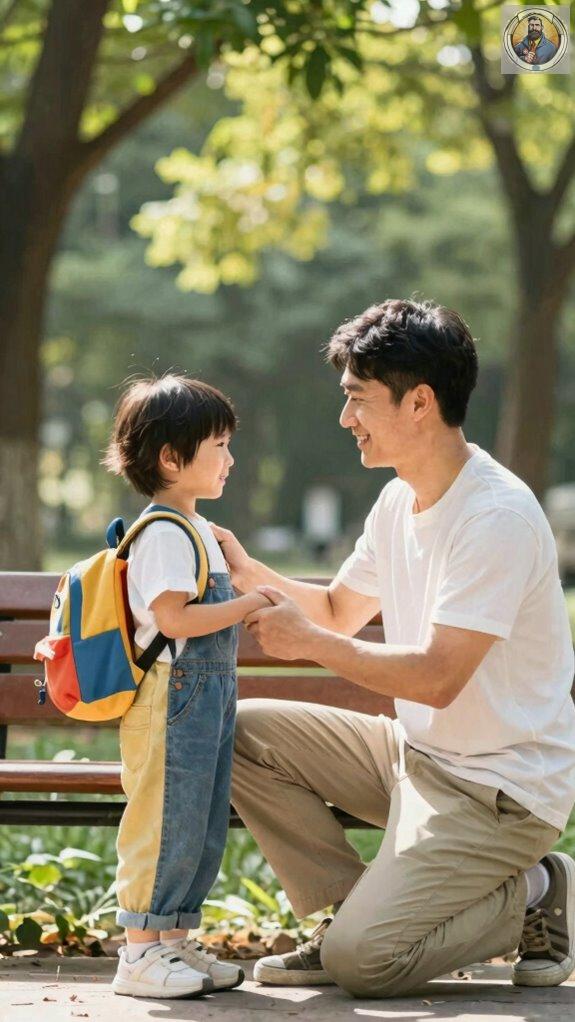
Building confidence and independence in your child doesn’t happen overnight, but daily routines are a fantastic place to start—and trust me, I’ve seen the difference it can make. Supportive routines create emotional resilience, helping your kid feel more in control.
Daily routines foster confidence and resilience, making children feel secure and more in control.
Think: consistent wake-up times, simple chores, and predictable progressions throughout the day. For example, Liam loves “power mornings,” where he knows exactly what’s coming—breakfast, brushing teeth, then backpack duty.
Ask yourself, are you giving your child small wins that boost their independence? You can do this by encouraging choices—”Would you like to put on your shoes first or your coat?”
These routines turn everyday moments into confidence builders. It’s about creating a predictable safety net that makes separation easier, not scarier. You can also incorporate martial arts games into your daily routine to build physical confidence alongside emotional resilience.
Shared Saturday Morning Breakfast
Picture our breakfast table:
| Pancake art | Fresh juice | Smiling faces |
|---|---|---|
| Fruit twists | Laughter | Sharing stories |
| Coffee for me | Quiet moments | Big hugs |
This isn’t just about eating; it’s about claiming the power to build lasting memories. Who knew breakfast could be a catalyst for confidence? Establishing these routines early helps children feel secure, much like how adventure changing mats provide comfort and familiarity during transitions in their day. Building indoor tent structures together during these weekend mornings can transform breakfast time into an imaginative bonding experience that deepens your connection.
Separation Anxiety
Have you ever watched a little kid cling to their favorite stuffed animal tighter than ever right before heading into preschool? That’s separation anxiety showing its true power. It’s a moment when parent-child bonding becomes essential.
When kids feel secure, they learn emotional regulation and gain confidence. Visual countdown timers can help children understand time and transitions better, reducing anxiety about when you’ll return.
To help combat this, I recommend:
- Creating quick, comforting routines that signal you’ll return—think “see you soon” rituals.
- Practicing short separations in safe environments to build their resilience.
- Engaging in meaningful conversations about feelings, reinforcing that it’s okay to miss you.
Just as electric shoe dryers quickly prepare sports equipment for the next use, establishing consistent goodbye routines helps children feel prepared for their time away from you.
Backpack Labeling Helps Ease Fears
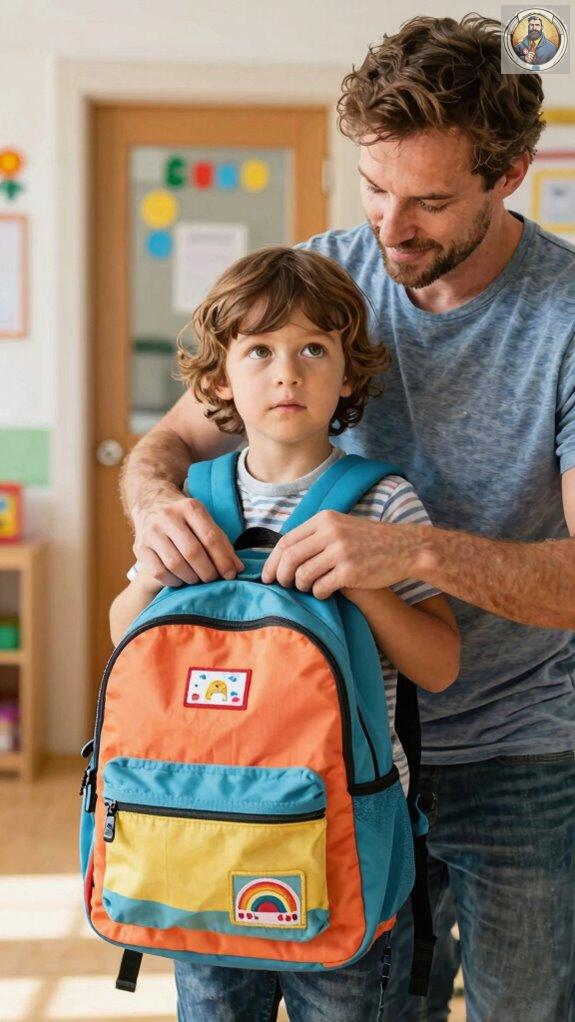
When your kid rushes into preschool clutching their backpack like it’s a lifeline, you might think they’re just attached to their favorite cartoon character or snack. But here’s the power move: backpack labeling can be a game changer.
It’s more than just writing a name; it’s a small act of family bonding and emotional support. When Liam’s backpack had his name and a fun sticker, he felt more secure—and even a little proud. Organized gear storage with mesh equipment bags can also help you manage your own belongings while ensuring your child’s items stay clearly identifiable and accessible.
A simple name and sticker can boost your child’s confidence and sense of security.
Use bold, easy-to-read labels that include your child’s name and maybe a favorite color or symbol. This helps staff and classmates recognize your kid as part of the family, easing fears of lost belongings—or worse, feelings of invisibility. Consider pairing your labeled backpack with recommended kids hydration packs to ensure your child stays hydrated throughout the day while feeling organized and secure.
Think of it as a simple tool that boosts your child’s confidence and emotional resilience, making separation a little less scary.
Back to School Essentials
Getting ready for the new school year mightn’t be as exciting as a first day of summer vacation, but having the right essentials can make it a breeze — or at least less stressful. Think of it as prepping for battle, but instead of armor, you need sensory activities and emotional communication tools to help your kid conquer separation anxiety.
Here’s what you’ll want:
- Comfort items like a favorite stuffed animal or blanket — because sometimes, a bit of familiarity works miracles.
- Sensory activities gear — fidget toys or textured mats to help your kid regulate emotions during shifts.
- Visual schedules — clear, colorful charts to communicate daily routines, easing fears.
- Hair accessory organizers can also reduce morning stress by keeping vanity hair organizers easily accessible, allowing your child to participate in their own grooming routine and build confidence.
- Consider using Bluetooth trackers to keep tabs on school gear that moves between your home and your co-parent’s house, ensuring nothing gets left behind during transitions.
FAQ
How Long Does Preschool Separation Anxiety Typically Last?
Separation anxiety usually lasts a few weeks to a couple of months, but I emphasize child reassurance and routine consistency to help shorten this phase. You can actively support your child’s confidence and ease their switch, making it quicker.
Are There Specific Activities to Reduce Separation Anxiety Over Weekends?
Like a magnet attracting strength, I find that weekend bonding activities and play therapy can powerfully reduce separation anxiety, engaging your child and building confidence. These intentional acts transform weekends into resilience-building opportunities.
Can Separation Anxiety Affect Preschooler’s Long-Term Social Development?
Yes, separation anxiety can impact a preschooler’s long-term social development by influencing child emotionalities. As a parent, I use strategic parenting strategies to support emotional resilience, ensuring my child builds confident, healthy social interactions over time.
How Can I Prevent Separation Anxiety From Reappearing After Initial Relief?
Think of separation anxiety as a stubborn weed; I tackle it by building routines that root confidence and encouraging independence to keep it from sprouting again. Stay vigilant, assert control, and foster a secure environment for lasting peace.
Should I Seek Professional Help if Separation Anxiety Persists?
Yes, I believe seeking professional intervention is essential if separation anxiety persists, because emotional support from experts can empower both you and your child to overcome challenges confidently and assertively, ensuring lasting emotional resilience and growth.


