

How to Choose Confidence Tools For Kids
Navigating Confidence Tools for Back to School
How can I help boost my kids’ confidence this school year? It’s all about finding the right activities.
I write for Modern Dads because navigating parenting can be like herding cats—exciting and a bit chaotic.
Forget fancy gadgets. I focus on crafting, outdoor fun, and teamwork games. Last summer, my son and I tackled a camping trip that sparked his self-esteem like a campfire in the woods.
I found that art projects made my daughter light up, making us all feel like Picasso!
Seeing them thrive is my personal goal, and I keep experimenting to unlock their potential.
One back-to-school morning, my kid faced a major meltdown over finding the right shirt. I grabbed some markers, and we turned it into a quirky design competition. It’s moments like those that remind me: creativity can be a lifeline.
Quick Takeaways
- Select age-appropriate activities that promote genuine self-esteem, resilience, and problem-solving skills tailored to children’s developmental stages.
- Prioritize tools that are engaging, practical, and foster hands-on experiences like outdoor adventures or creative projects.
- Ensure activities encourage positive self-talk, social support, and opportunities for children to practice independence.
- Incorporate resilience techniques and emotional support strategies, especially during transitional or stressful situations.
- Choose tools that promote parent-child bonding and are adaptable to individual needs, monitoring progress and adjusting as necessary.
Recognizing When Your Child Needs Confidence Support
You know that feeling when your kid suddenly clams up at school or hesitates to join a game? That’s a sign they might need confidence support. Recognizing when your child struggles with emotional awareness is key. Maybe they tune out during peer interactions, seem anxious, or avoid eye contact.
Noticing your child’s hesitation or withdrawal? These cues can signal they need support with emotional confidence.
Recall how Emily once snapped at her friends after feeling left out? It was her way of signaling her confidence dip. Children can also experience confidence erosion when exposed to gaming payment scams that exploit their trust and financial decision-making abilities. Proper footwear with shoe gaiters can also help children feel more secure during outdoor activities, which supports their willingness to engage in adventurous play.
You can spot these cues by:
- Watching for trouble in peer interactions
- Noticing shifts in mood after social situations
- Asking open-ended questions about their feelings
If your child seems overwhelmed, it’s time for conversation, not criticism. Helping them understand their emotions builds a strong foundation for confidence—one step at a time.
How to Find the Right Confidence-Building Strategies for Kids
- Focus on activities that build self-esteem, such as praising effort rather than talent.
- Encourage peer support—organize small groups or buddy systems.
- Look for programs emphasizing teamwork and kindness.
- Incorporate sensory integration exercises to help kids develop emotional awareness and express feelings through embodied movement.
- Avoid one-size-fits-all solutions; what works for Emily mightn’t suit Liam.
- Invest in durable school gear that allows kids to participate fully in activities without worrying about equipment failure.
The key? Tailoring strategies to your child’s personality and social environment.
Trust your instincts!
Key Features of Effective Confidence Tools for Children
When it comes to confidence tools for kids, not all are created equal—some light a spark, while others just fizzle out. Effective tools have key features like being genuine self-esteem boosters and resilience techniques.
Think of self-esteem boosters as little victories that make kids feel proud, like praising Liam’s effort, not just his success.
Resilience techniques help kids bounce back from setbacks—like when Emily’s team lost but she kept trying.
Look for tools that are practical, age-appropriate, and engaging, like encouraging positive self-talk or teaching problem-solving skills. Interactive activities such as fun coding workshops can build confidence by allowing kids to experience hands-on learning and celebrate their accomplishments.
Ask yourself: Does this help my child develop inner strength?
Keep in mind, the best confidence tools not only boost self-worth but also teach resilience to face life’s messes with a smile. Those are the real game-changers.
Exploring Different Confidence Activities and Resources
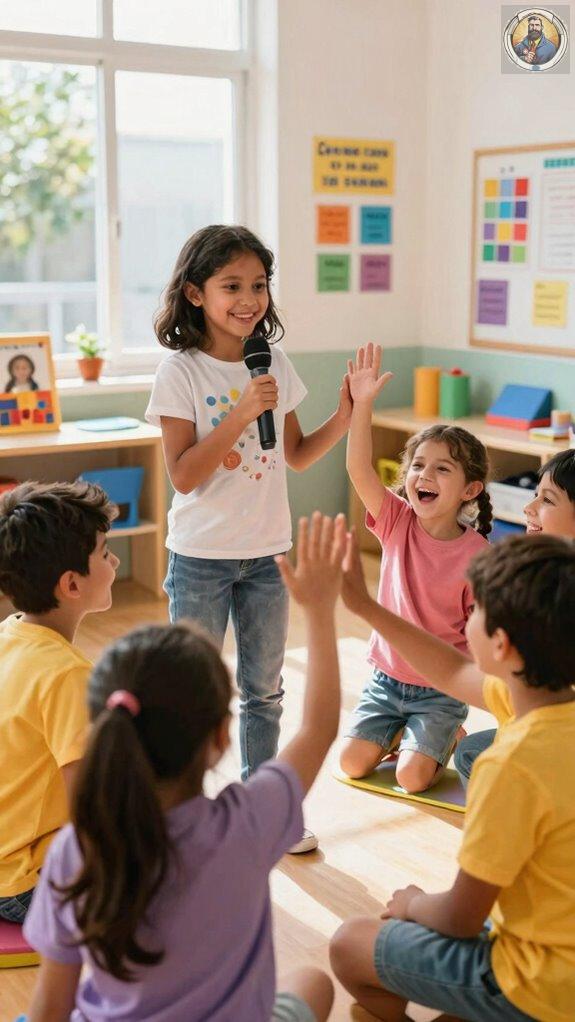
Exploring different confidence activities and resources is like going on a treasure hunt—you never know what might spark a new sense of pride or resilience in your kid.
Think about activities that boost parent-child bonding while building creative confidence—things like art projects, role-playing games, or even cooking together. I recall when Emily and Liam started building a mini garden; their smiles after planting those tiny seeds spoke volumes about their pride.
Give these a try:
- DIY crafts or science experiments to ignite curiosity
- Group sports or dance classes for social confidence
- Creative storytelling or puppet shows to foster self-expression
- Martial arts games that combine physical activity with confidence-building in a fun, engaging format
These activities aren’t just fun—they lay the foundation for lasting confidence. Protecting the tools your child uses, such as their laptop during these activities, ensures they can focus on building skills without worrying about hardware damage. So, immerse yourself and watch how each effort helps your child grow stronger, more resilient, and ready to tackle anything!
Involving Your Child in Choosing Confidence Tools
Taking your child’s opinion seriously when it comes to choosing confidence-building tools might just be the most powerful step you can take—trust me, it’s worth the effort. When you involve your kid in this process, you boost their emotional resilience and strengthen parent-child communication.
Asking questions like, “What makes you feel brave?” or “How would you like to practice confidence?” shows you value their feelings. Keep in mind, kids like Liam and Emily aren’t just mini-adults—they know what works for them. Consider creating a cozy camping setup in your living room where your child can practice being brave in a safe, imaginative environment.
Consider these steps:
- Let them pick activities they enjoy, whether it’s acting out scenarios or journaling.
- Talk openly about what makes them nervous; listen without judgment.
- Offer choices rather than directives.
- Observe their reactions—are they excited or resistant? Adjust accordingly!
Setting Goal-Based Expectations for Confidence Growth
Have you ever set a goal for yourself only to realize you didn’t really know how to get there? That’s common, even for adults! When it comes to self-esteem development in kids, setting clear, goal-based expectations is key. Think of it like a GPS—if you don’t know your destination or how to get there, you’ll wander aimlessly.
Parental encouragement helps set realistic milestones, making confidence grow step by step. For example, telling Liam he’ll feel proud after trying a new skill, not just winning a game, changes everything. Just as mini golf courses provide a structured environment where kids can practice and improve at their own pace, breaking down confidence-building into manageable steps creates the same supportive framework. Engaging with simple drawing techniques allows children to build competence through repeated practice and creative expression.
Break big goals into smaller parts, like practicing one sentence a day or making a new friend each week. It keeps things manageable and reinforces progress. Mastery comes from clear paths—so set those expectations, and watch your child’s confidence soar!
Tracking Progress and Adjusting Confidence Strategies
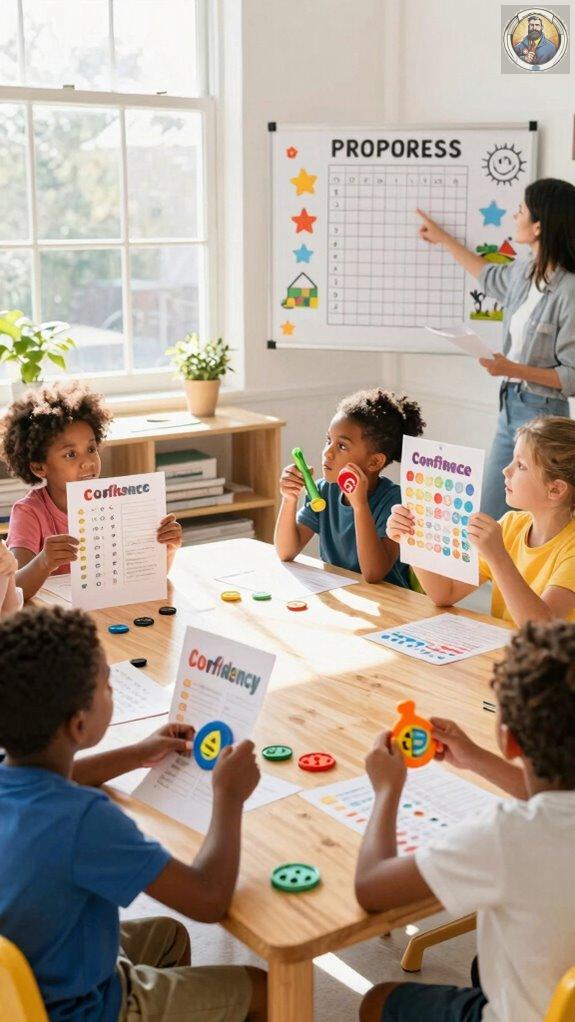
Once you’ve set those initial confidence goals, the real fun (and a little detective work) begins—tracking progress. How do you know if your kid’s emotional intelligence and self-awareness are improving? Here’s how I do it:
- Observe their reactions in different situations—do they stay calm or get overwhelmed?
- Celebrate small wins to boost their confidence and keep motivation high.
- Use gentle conversations to gauge how aware they’re of their feelings.
- Adjust strategies if progress stalls—maybe they need more encouragement or different tools.
If your child is navigating family loss or grief, additional support and patience may be necessary as they process complex emotions during this vulnerable time.
Father and Son Campfire
Nothing beats the magic of a father and son campfire when it comes to building confidence and connection. It’s more than just roasting marshmallows; it’s a real nature adventure that teaches outdoor skills and independence.
Have you ever watched your kid struggle with lighting a fire? That’s confidence in action.
To master this, start with simple tasks—gathering wood, building a small teepee fire, or learning how to safely handle a camping knife.
These moments turn into teachable wins and create lasting memories.
Keep in mind, it’s not about perfection but patience.
Spark a conversation about nature, share stories, and let your kids take charge. Studies show that mystery and investigation themes in adolescent narratives can enhance problem-solving skills and critical thinking during outdoor adventures. Pack energy snacks for toddlers to keep them fueled and focused throughout your camping expedition.
Who knows? Liam might be roasting his own hot dog next time, feeling like a real outdoor pro!
Back to School Essentials
Getting ready for a new school year can feel like a juggling act—there are backpacks to pack, supplies to buy, and last-minute reminders before the first bell rings.
Preparing for a new school year can be hectic, but staying organized and communicating well makes it manageable.
To master this chaos, focus on essentials that boost confidence through parent communication and understanding peer influence. Investing in a quality child carrier backpack ensures your child can comfortably carry their school supplies while developing independence.
Here’s what really helps:
- Clear communication with teachers about your child’s needs
- Choosing supplies that reflect your kid’s personality, fostering pride
- Setting up routines that encourage independence
- Talking openly about peer pressure and social dynamics
Engaging your child with creative problem-solving games can further strengthen their confidence and resilience as they navigate new social environments.
FAQ
How Can I Tell if My Child’s Confidence Issues Need Professional Help?
If your child’s struggles with child self-esteem are persistent, affecting their emotional resilience and daily life, it’s time to seek help.
Signs like constant self-criticism, avoidance of challenges, or severe anxiety suggest professional guidance. For example, Liam avoiding school activities or Emily crying after minor setbacks.
Trust your instincts—if these issues don’t improve despite support, consulting a counselor can make a real difference in boosting confidence and resilience.
Are Online Confidence Tools as Effective as In-Person Activities?
Online confidence tools, like virtual reality adventures promoting peer interaction, can be surprisingly effective—think Liam playing a VR game where he boosts his social skills without the real-world jitters. They offer engaging, accessible ways to build confidence from home, especially when in-person activities aren’t available.
Sometimes, I wonder if my kids learn better through these tech-savvy tools, or if they’re just a fun distraction. What do you think?
What Are Common Signs That a Confidence Tool Isn’T Working for My Child?
If your child’s self-esteem isn’t improving or they’re suddenly influenced heavily by peers, it’s a sign the confidence tool mightn’t be working. Watch for signs like withdrawal, defiance, or excessive self-doubt—could be they’re feeling overwhelmed.
Ask questions like, “How do you feel about yourself?” or “Do friends affect your choices?”
If these signs pop up, it’s time to reassess, switch methods, or get expert advice—sometimes confidence tools need a refresh!
How Much Time Should My Child Spend on Confidence-Building Activities Weekly?
I’d say about 3-4 hours a week on confidence activities is plenty — but here’s the twist: parental involvement matters most! Mix things up with role-playing, art, or team sports.
Been there with Emily—she loved storytelling, but a dash of public speaking boosted her self-esteem. Keep activity variety high, balance with free play, and check in often.
Keep in mind, quality beats quantity, and a little fun goes a long way!
Can Confidence Tools Negatively Impact My Child’s Independence?
Confidence tools can sometimes affect independence if kids rely too much on them for peer influence. But, with the right balance, they boost self-esteem development without stifling independence.
For example, I saw Liam hesitate to try something new, but a confidence tool helped him, and now he’s more adventurous.
Encourage your child to use skills independently & keep in mind, confidence isn’t about dependence — it’s about trust in oneself.
Summary
So, are you ready to help your kiddo shine brighter than a flashlight in a dark room? Keep in mind, choosing the right confidence tools isn’t about instant magic—it’s about steady, supportive steps. Think about what works for Emily jumping into the pool or Liam trying new sports. Keep it fun, set realistic goals, and celebrate small wins. After all, isn’t the goal to see that spark of confidence grow into a roaring fire? Let’s do this together!


