

Ultimate Focus Guide For Dads Supporting ADHD Kids
Back to School: Crafting Focus for ADHD Kids
Can a clutter-free desk really make a difference for my ADHD kid? Absolutely!
I write for Modern Dads because navigating this journey is real, and sharing ideas helps us all.
This back-to-school season, I’m decking out the homework station. Visual checklists? Check. Calming tools? Check. My secret weapon? A mini disco ball for fun movement breaks. Who doesn’t love a surprise dance-off while tackling homework?
Last week, my little one tried to “organize” their backpack by dumping everything in a laundry basket. Now we’re both learning that clutter-free isn’t just a catchphrase—it’s a survival strategy!
I never thought I’d be sorting colored pencils at 10 PM. It’s all part of the dad life!
Quick Takeaways
- Understand ADHD’s impact on focus, impulse control, and emotional regulation to provide tailored support.
- Create organized, calm environments with visual routines, sensory tools, and designated focus areas.
- Implement engaging, movement-based strategies like breaks and sensory activities to improve attention.
- Establish flexible routines and encourage independence through involvement in daily tasks and planning.
- Support emotional well-being with balancing work and home routines, promoting confidence and resilience.
What Is ADHD and How Does It Affect Kids’ Focus?
You might’ve noticed that some kids just seem to have trouble sitting still, paying attention, or sticking to one task—trust me, I’ve been there with my own kids! ADHD, or Attention Deficit Hyperactivity Disorder, is a condition that affects how your child’s brain manages focus and impulse control. It’s not just about being hyper; it’s a real challenge to concentrate on homework or chores.
Peer influence can make things trickier—kids often imitate friends’ diets or habits, right? If they’re influenced by trendy diets or peer pressure, it might mess with their focus even more. For example, skipping breakfast because of diet trends can make their focus worse.
Recognizing these signs helps us better understand what’s really going on—and how to help them thrive.
How to Create a Focus-Friendly Environment at Home and School
Creating a focus-friendly environment at home and school might sound like a tall order, but trust me, small changes can make a huge difference. I’ve seen Liam stay calmer with simple calming techniques—like deep breaths or a quick walk outside. Sensory tools, such as textured fidgets or noise-canceling headphones, help him stay centered during chaos.
Small changes elevate focus—calm techniques and sensory tools make a big difference in staying centered.
Here’s what I do:
- Clear clutter—less chaos, less distraction.
- Use visual schedules for predictability.
- Create a designated quiet space for breaks.
- Introduce calming techniques daily, like mindful breathing.
Have you tried incorporating sensory tools or a calming routine? These little tweaks boost focus and reduce meltdown moments. Infants and young children benefit from visual tracking games that develop sustained attention skills, which can support focus development across all ages. Martial arts games can also channel restless energy into structured physical activity, helping ADHD kids develop both discipline and focus.
Trust me, mastery comes one small step at a time, and these tools are game changers.
Effective ADHD Focus Strategies for Kids
When it comes to helping kids with ADHD stay focused, the trick is to find strategies that actually work—and believe me, it’s a game of trial, error, and a little patience.
I’ve learned that incorporating mindfulness exercises can make a huge difference; simple practices like deep breathing or short meditation sessions help center their chaotic minds.
Sensory activities, like squeezing stress balls or jumping on a mini trampoline, also work wonders by engaging their senses and burning off excess energy.
My kids, Emily and Liam, loved tracking their breathing or timing how long they could sit still while listening to calming sounds.
Stay-at-home dads often make career sacrifices to provide this kind of focused, personalized attention that helps their children thrive.
Ask yourself: what sensory input calms my child? Start with small steps — you’ll be surprised how quickly focus improves when these tools become part of your routine.
Building Routines and Visual Supports to Improve Attention
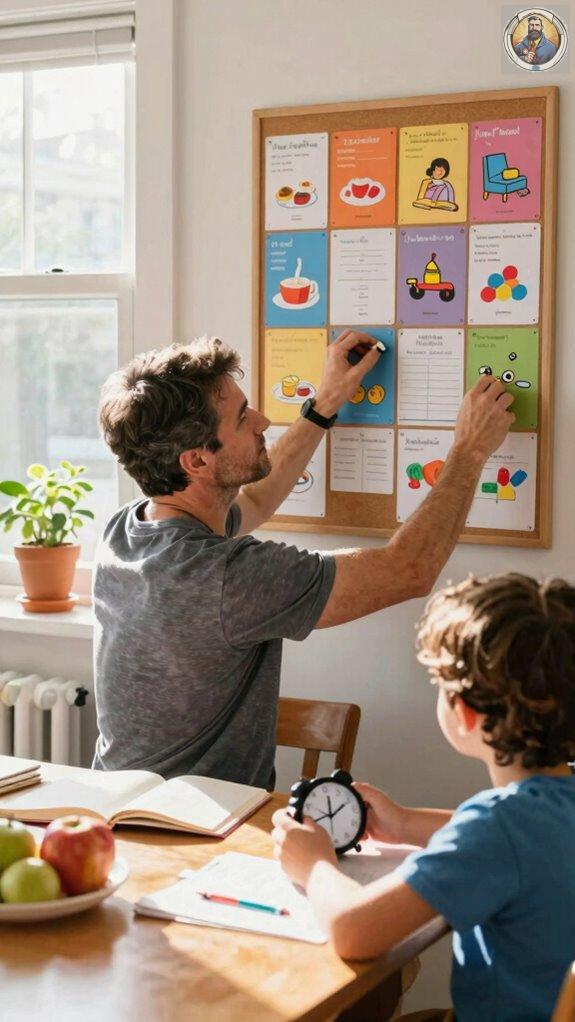
Building routines and visual supports mightn’t sound like rocket science, but trust me, they can be total game changers for helping kids with ADHD stay focused. I’ve seen it firsthand—my son Liam’s mornings went from chaos to calm just by following a simple visual checklist.
Sensory integration plays a role here; incorporating calming sensory tools like squeeze balls or textured mats can help him switch gears easily. Mindfulness exercises, like deep breathing or quick stretches, create mental anchors that boost attention. You can also engage children through seed planting activities, which combine hands-on learning with natural calming effects.
Use visual supports—timelines, picture schedules, or color-coding—to outline daily tasks clearly. Want to master focus? Consistency is key. Make routines predictable, and build in sensory breaks and mindfulness moments. Consider setting up a dedicated workspace with adjustable LED desk lamps to minimize distractions and create an optimal environment for concentration.
It’s about creating a structured, engaging environment where kids thrive—like clockwork, but way more fun.
How to Manage Distractions and Keep Kids Engaged
Managing distractions can sometimes feel like trying to herd cats—frustrating and nearly impossible, especially when your kid with ADHD is easily pulled off track. But here’s the secret: use mindfulness techniques to anchor their focus.
Take a moment for deep breathing or quick body scans—something simple yet powerful. Sensory breaks are lifesavers; they help reset attention—think bouncing on a mini-trampoline or squeezing a stress ball.
Deep breaths and quick body scans help reset focus—simple tools for managing distractions effectively.
I’ve seen Liam suddenly settle after a quick stretch or a fidget toy session. Keep a visual chart of movement breaks handy and encourage your child to choose one when their focus drifts.
Drama activities can also provide an engaging outlet for emotional growth while naturally incorporating movement and mindfulness into your child’s routine. Ask yourself, “Are we making this fun and manageable?” Because, let’s be honest: if you’re bored or overwhelmed, your kid notices. Keep it lively, keep it engaging!
Supporting Your Child’s Emotional Well-Being and Motivation
Supporting your child’s emotional well-being and motivation isn’t just about offering hugs or praise (though those help too)—it’s about understanding what makes your kid tick and finding ways to keep their spirits high.
Emotional resilience is key, especially during setbacks. Research shows that stress relief techniques can significantly improve a child’s ability to manage school anxiety and stay motivated. During the teenage years, developing identity and self-awareness helps adolescents better understand their emotional triggers and build stronger coping mechanisms. Here are four motivation boosters:
- Celebrate small wins — even a half-hour homework session deserves praise.
- Create a safe space — let your kid vent without judgment.
- Set achievable goals — break tasks into tiny, manageable steps.
- Model positivity — show your kid how to bounce back from mistakes with a smile.
Father and Son Frisbee Game

Nothing beats grabbing a frisbee and heading outside for some fun—trust me, it’s a game that can turn a tense afternoon into a memorable bonding moment. Father-son bonding over frisbee isn’t just about tossing a disc; it’s about mastering strategies that keep both of you engaged.
Think about simple techniques like aiming for specific targets or adjusting throws based on wind. Want to spice things up? Try different grips, like the four-finger grip for power or the pinch grip for finesse.
When Liam and I first started, the biggest breakthrough was learning to read each other’s throws—anticipating where the disc would go next. Keep it playful, be patient, and don’t sweat every missed catch. Sometimes, the best moves happen when everyone’s just having fun—no matter how many frisbees bounce off noses! Engaging in active play like this helps you embrace new parenting roles that go beyond traditional expectations, creating space for meaningful connection and shared experiences.
Executive Function Prep
Have you ever felt like your kid’s brain is a busy airport, with ideas, tasks, and emotions all trying to land at once? It sure sounds familiar. To help prep executive function, especially for kids like Emily or Liam, I’ve found a few game-changers:
- Mindfulness activities: Simple breathing exercises or guided meditations—think of it as hitting pause on all that chaos.
- Dietary adjustments: Cutting back on sugar and processed foods can clear mental fog; add omega-3 rich foods like salmon or walnuts.
- Structured routines: Visual charts or checklists keep ideas organized—no more guessing what to do next. Consider using a paper pocket planner to maintain consistency across your family’s daily schedule and drop-off times. Visual countdown timers help reinforce time awareness and transition readiness throughout the day.
- Mini chores: Tasks like watering plants or sorting socks boost planning skills.
Parenting Routines for Focus
Setting up a solid routine might sound dull or even impossible with a busy kid, but trust me, it’s a game-changer. I’ve learned that mastering time management and meal planning makes all the difference.
Think simple: set specific times for homework, screen use, and bedtime—predictability helps kids like Liam stay focused. Establishing consistent daily schedules reduces decision fatigue for both parent and child throughout the day.
For meal planning, prepare breakfast and snacks the night before; it reduces chaos in the morning and keeps energy steady.
Recall, routines shouldn’t be rigid—flexibility is key. Use visual charts or timers to signal progressions.
I once assigned Liam a “focus corner” to calm down—worked wonders!
Research shows that work-life balance principles apply to parenting strategies as well, helping parents manage their own stress while supporting their children’s needs.
Ask yourself, what routines help your child feel safe and supported? Because when routines work, everyone becomes a little less stressed—and a whole lot more focused.
Back to School Essentials
Getting ready for back to school is like prepping for a mini mission—you want everything to run smoothly, especially if your kid’s juggling ADHD. Classroom organization is key: clear folders, labeled supplies, and a designated study spot help reduce chaos.
Preparing for back to school is a mini mission—organized spaces help kids with ADHD start smoothly each day.
Nutritional adjustments also matter: simple, healthy snacks with protein and fiber keep energy steady and focus sharp. Hands-on engineering projects can also strengthen problem-solving skills and build confidence during the school year. Here are four essentials to conquer this mission:
- Organized Supplies: Easy-to-access containers for pencils, erasers, and scissors.
- Visual Schedules: Visuals or charts to help your kid keep track of daily tasks.
- Nutritious Food: Add nuts, yogurt, or fruit—because sugar crashes are the enemy.
- Prep Time: Involve your kids in packing and planning — it builds independence and mastery.
Trust me, improving these areas made Liam’s mornings way less frantic!
FAQ
How Can Dads Effectively Communicate With Teachers About Their Child’s Focus Needs?
I prioritize open, respectful parent-teacher collaboration, discussing my child’s focus needs openly. I advocate for focus plan customization, ensuring tailored strategies work best, and listen actively to the teacher’s perspectives, fostering a strong support system effectively.
What Are Some Signs That Focus Difficulties Are Impacting My Child’s Social Life?
If your child’s social skill development seems strained or peer interactions become noticeably challenging, it’s a sign focus difficulties may be affecting their social life. Watch for withdrawal, misunderstandings, or reduced participation in social settings.
How Do I Balance Supporting Focus Without Causing Stress or Pressure?
I balance supporting my child’s focus within parenting routines by fostering emotional resilience through patience, positive reinforcement, and gentle encouragement, ensuring I avoid stress or pressure while empowering their growth and confidence in managing ADHD challenges.
Are There Specific Activities That Naturally Boost Attention in ADHD Kids?
Discover the secret to boosting attention in ADHD kids: mindfulness exercises and sensory activities. These powerful tools naturally engage their brains, improve focus, and foster calmness—mastering distraction becomes achievable when you incorporate them into daily routines.
How Can Fathers Stay Consistent With Focus Strategies During Busy Schedules?
I stay consistent by prioritizing time management and sticking to routine consistency, even on busy days. I plan ahead, set reminders, and remind myself that steady effort builds the focus skills my ADHD kid needs.
Summary
Just like training for a race—practice, patience, and a few funny stories along the way—help your kid thrive. Think of focus strategies as a toolbox; the more you use, the stronger they get. Keep in mind, every stumble is just a step closer to success. And hey, if Liam can learn to stay on the frisbee and not wander off, you can tackle these challenges too. Keep your spirits high, and stay the steady coach they need!


