

5 Safe Bug Catching Tips for Modern Dads
Bug Catching Adventures: Dad’s Guide
Bug hunting? It’s like a treasure hunt—minus the gold, plus some creepy crawlies. I share my stories on Modern Dads to save others from my “ant hospital incident.”
Equipped with my trusty GeoSafari Jr. magnifier and BPA-free containers, I’m ready. Forget flimsy nets! They rip faster than my kid’s socks.
I’ve learned to skip those neon bugs; they scream “stay away!” I prefer my National Geographic bug vacuum for safe scooping. After our hunt? I wipe down tools and clip them away. Clean means more backyard adventures!
Our latest bug hunt quickly turned chaotic when a mischievous frog joined us. My little one shrieked, and I’ll never forget the look on their face as it hopped away! It was a reminder that nature is full of surprises, especially when I’m on daddy duty.
Quick Takeaways
- Choose durable, BPA-free bug containers with air holes and unbreakable magnifiers for safe, kid-friendly observation.
- Wash hands before handling bugs and pack antiseptic wipes for quick cleaning during outdoor adventures.
- Teach kids to avoid brightly colored, spiky, or smelly bugs that may be poisonous or dangerous.
- Use gentle tools like bug vacuums to catch and release insects unharmed, minimizing stress to creatures.
- Clean and disinfect all bug-catching gear after use, storing it safely with carabiners for next time.
Choose Bug Catching Kits Safe for Kids
If you’re anything like me—standing in the backyard with a plastic net that snapped on its third use—you’ve probably learned the hard way that not all bug catchers are made equal. I once spent ten minutes chasing a beetle while Emily yelled, “Dad, it’s getting away!” Rookie move.
Now I swear by the GeoSafari Jr. Bug Watcher—it’s unbreakable, magnifies 2x, and keeps critters calm so you can study bug habitat without a jailbreak. Liam labeled his bugs like FBI cases for insect identification.
The GeoSafari Jr. Bug Watcher is my go-to—unbreakable, 2x magnification, and keeps bugs calm for serious backyard science.
Pro tip: Skip nets with tiny mesh—they rip. Go for sturdy, BPA-free containers with air holes. Just like choosing carabiner coffee mugs for kids, selecting the right bug catching equipment means prioritizing durability and safety features that will last through countless backyard adventures.
Sarah says I’m obsessed, but hey, science is fun, right?
Teach Kids Hand Safety Before Handling Bugs
– Always wash hands with soap and water before heading out—yes, even if you just did it five minutes ago. *I learned that the hard way when Liam touched a bug, then his sandwich. Let’s just say… not appetizing.* Hand washing is non-negotiable. I always pack Travel Antiseptic Hand Wipes by Purell—Emily calls them “magic wipes.”
Pair that with Protective gloves (tiny ones, like Marvel Hero Grip gloves for kids), and you’re golden. Do bugs *really* need hugs? Nope.
Teach the kids: look, don’t touch—unless you’re suited up. Trust me, hand washing beats hospital trips. Keeps Sarah off my case too. Win-win.
Avoid These Dangerous Bugs for Kids
Ever wonder why I carry a mini magnifying glass and a laminated bug chart like it’s a survival toolkit? Because last summer, Liam nearly hugged a bright red ladybug swarm—cute, right?
Nope. Some look harmless but are poisonous bugs in disguise. Skip the toxic insecticides; they’re overkill and scary-sticky.
Teach kids: if it’s neon, spiky, or smells weird, *don’t touch*. Real talk: we once bagged a hairy caterpillar—Sarah banned it from the house. Fair.
Use the chart to ID nasties like blister beetles or giant slugs (Emily still has nightmares). When in doubt, photograph and google it. Or better—ask a park ranger. When handling any tools or containers for bug observation, remember to practice Leave No Trace principles so you’re not disturbing the natural habitat you’re exploring.
Seriously, they’re like bug Jedi. Stay safe, stay silly, and let curiosity win—without the ER trip.
Catch and Release Bugs the Safe Way
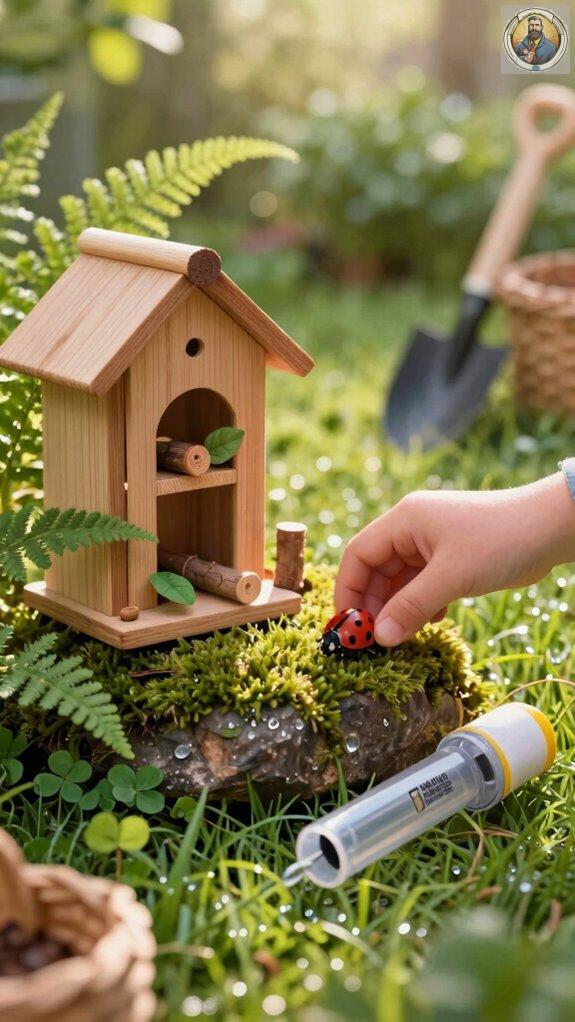
We don’t just smash and dash—we respect the tiny overlords of the backyard. Always check bug habitat preservation: put beetles back near where Liam almost ate one (not again, buddy).
I use a $8 National Geographic bug vacuum—gentle, effective.
Identifying bug species? Essential. That “scary” spider? Probably just a daddy longlegs, the chicken nuggets of the arachnid world.
We once freed a firefly and celebrated like it won an Oscar. Did it blink back? 10/10 emotional support.
Release bugs low to the ground—skydiving isn’t their jam.
Keep in mind: we’re not bug kidnappers. We’re temporary fans. Consider building a bug habitat station in your backyard to create a dedicated space for observing and safely releasing insects before setting them free.
Who’s ready for bug rehab camp?
Clean and Disinfect Kids’ Bug Catching Tools
5. Secure all cleaned tools with compass carabiners to keep gear organized and easily accessible during outdoor adventures.
Exploring Nature Together
Ask: “Would Sarah kick me out if I brought home another terrarium?” Probably. Stay curious. Stay clean. Consider investing in insect viewing containers designed specifically for safe catch and release activities.
Grab a Child-Safe Bug Vacuum
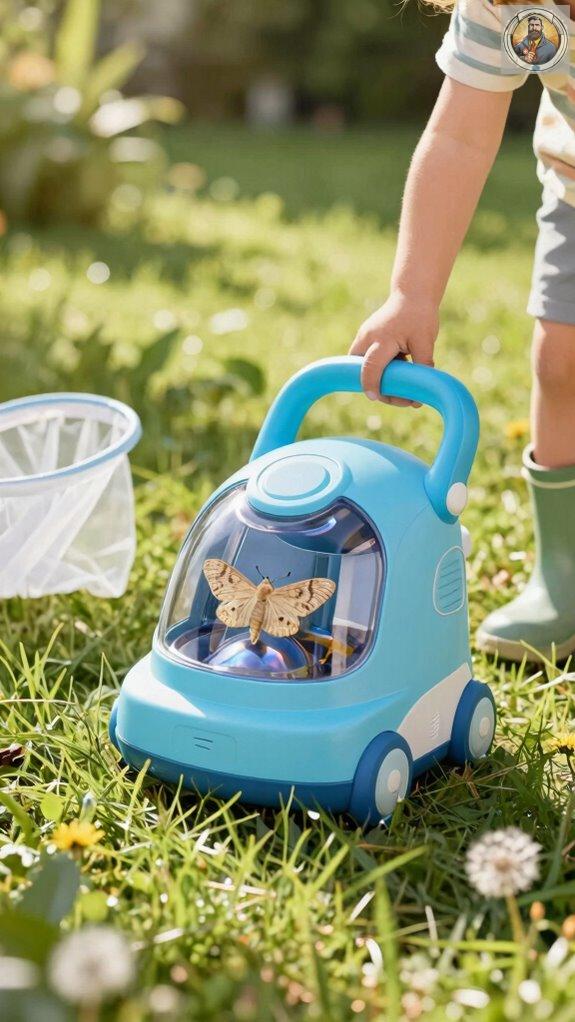
Ever tried chasing a beetle with a jar and a prayer? I did—until Liam nearly swallowed the spider. Now I grab our child-safe bug vacuum: it’s a game-changer.
No more dustpan wrestling or crying over crushed crickets. These suckers are built for tiny hands and big curiosity.
- Look for child friendly design—soft edges, easy-grip handles (like the Kidz Experimentz model).
- Choose Eco conscious choices—rechargeable over disposable batteries.
- Demonstrate first (yes, Dad looked silly buzzing a moth).
- Let the kid drive—Emily won’t stop vacuuming ants. Adorable? Yes. Necessary? Debatable.
If your child prefers a more traditional approach, butterfly nets are also excellent for safely capturing insects without suction force.
FAQ
What Time of Day Are Bugs Safest to Catch?
Bugs are safest to catch at night—no joke, it’s like a midnight buffet for critters. Nighttime exploration turns your backyard into a bug carnival.
I grab my trusty headlamp (Liam calls me “firefly dude”) and a bug jar with air holes—safety first. Always check Equipment safety: no cracked containers! Once, I used Tupperware. Epic fail. Bugs escaped. Sarah found one in her coffee. Not fun.
Go between 8–10 p.m. when bugs party hardest. You in?
Can Bug Catching Help With My Child’s Fear of Insects?
Yeah, bug catching totally helps crush fears—Emily screamed at ladybugs till we started hunting them together.
Start slow: watch a bug habitat, then sketch its Insect identification card.
Use a clear container—$3 at Target.
Liam still whines, “It’s slimy!” (Spoiler: it’s not.)
Pro tip: Name your bugs. “Steve the Spider” won’t bite. Promise. Mostly.
You’ve got this, brave dad.
Are Bug Catching Activities Suitable for Toddlers Under 3?
Yes, bug catching *can* work for toddlers under 3—but think magnifying glass, not capture net. I tried bug habitat exploration with Liam at age 2, and let’s just say… dirt became “bug spa day.” Keep it short. Use plastic critter containers—*bug observation* only.
One minute: great. Ten? Tantrum city. Do insect identification via sticker charts. *Please*, no dung beetles indoors.
Emily still asks why Daddy screamed about “the poop roller.” Trust me.
How Often Should Kids Wash Hands During Bug Hunts?
I wash my kids’ hands *immediately* after bug hunts—no arguments.
Hand hygiene importance? Huge.
You’re poking under rocks, right? Gross stuff sticks.
I learned after Liam ate a granola bar without washing up—*and* found a tick in his hair.
Bug catching techniques mean dirt, slime, maybe spider webs.
Soap and water. Every. Single. Time.
Emily still owes me three juice boxes for skipping handwashing.
Don’t be that kid.
Is It Safe to Catch Bugs Indoors With Pets Around?
Yeah, it’s totally doable to catch bugs indoors with pets around—if you’re smart about it. Pet safety comes first, folks.
Last week, Liam chased a rogue spider while my bearded dragon, Sir Scales, stared judgmentally from his tank. Keep critters contained, avoid sprays (they hate “Bug-Be-Gone” fumes), and always check under couches.
Your indoor environment? A fortress. Lock doors, close windows—or Sarah’ll find ants in her coffee again.


