Small Spaces Big Play: Ingenious Game Course Solutions
Small Spaces, Big Fun: Ingenious Game Solutions for Dads
Ever crammed all your kids’ toys into the living room and realized it looks like a game store explosion?
That’s why I’m writing today for Modern Dads. Let’s talk small space gaming solutions.
First, I like to divide my area into zones—one for board games, the other for some quick darts.
Modular furniture? Absolutely essential. It helps keep things tidy while allowing me to pivot from board games to pool with ease.
Storage? I learned that the hard way after losing half my sanity amid clutter.
It’s all about that smart dad life!
Last Saturday was chaos. I packed away some oversized toys to make room for a family game night.
My kid found our old board game collection, and we had our eyes set on “Chutes and Ladders.”
You’d think it’d be smooth sailing, but instead, we hit a snag.
I accidentally knocked over a stack of snacks while my kid was on a ladder—and yes, it looked like a snack tornado went off.
In the end, we ended up laughing more than playing. It was a classic dad moment, embracing the unpredictable joys of family life.
Quick Takeaways
- Utilize modular furniture to create versatile game zones that adapt to various activities and maximize small spaces effectively.
- Implement vertical storage solutions to keep pathways clear and maintain a tidy gaming environment.
- Design obstacle courses that incorporate creative layouts, enhancing engagement without overwhelming limited areas.
- Integrate real-time feedback systems to keep players informed and motivated, enhancing their experience in confined spaces.
- Use adjustable lighting to create different atmospheres, promoting versatility for various game types in a small area.
Creative Spatial Partitioning Techniques for Home Game Courses
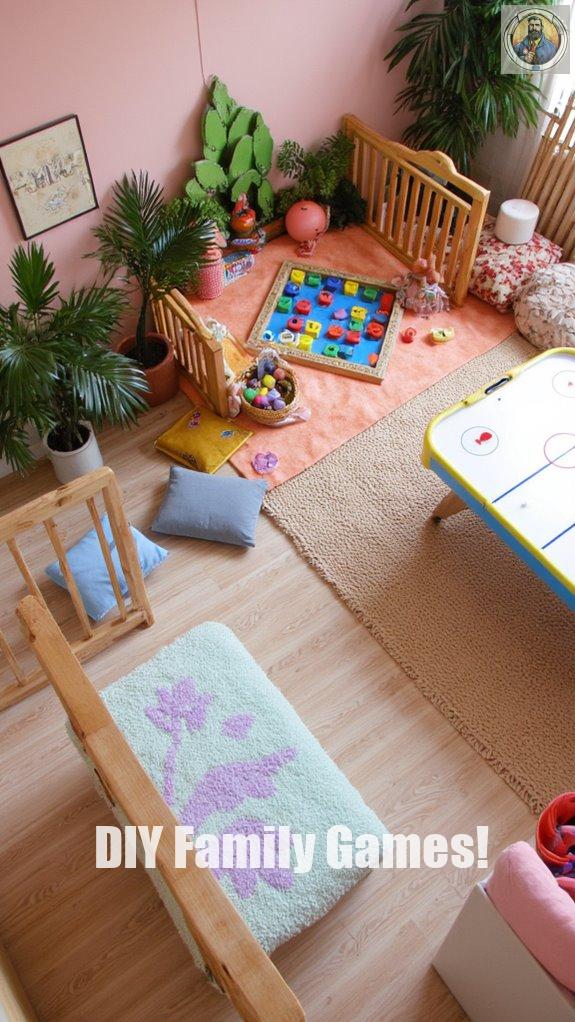
When you think about creating a home game course, it’s not just about throwing a few games in a room and calling it a day—right?
You want zones that speak to your wildest gaming dreams!
Here’s the magic of spatial partitioning:
- Divide your space with style! Think vertical and horizontal cuts.
- Keep pathways clear, saving players from bumping into furniture like clumsy ninjas. Spatial partitioning can help you optimize the layout, ensuring players can easily navigate the areas without unnecessary obstacles. Additionally, consider using zoning strategies to enhance the functionality of each area.
- Let’s face it—nobody wants a crowd around the air hockey table!
With clever layout strategies, you’ll amp up both fun and flow faster than my son explodes a board game into chaos!
Trust me, your family will thank you!
Multi-Functional Game Area Designs
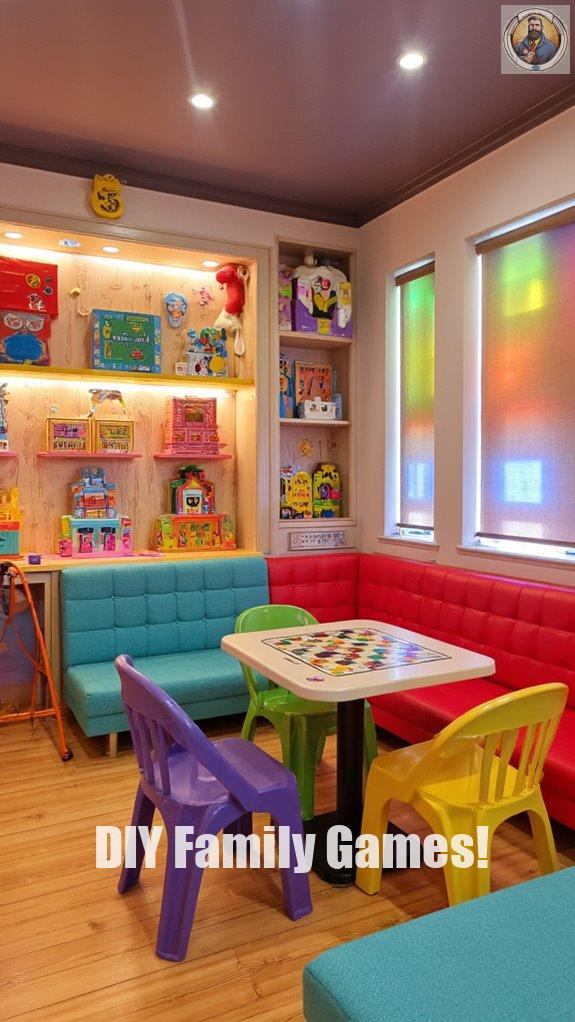
Creating a multi-functional game area in your home is like building a playground where the fun never has to stop!
Imagine zoning your space for board games, pool, and card tables—no fights over who gets to play what! Consider incorporating creative obstacle courses to add a physical challenge for players when the competitive spirit kicks in.
Use modular furniture. It’s like a game of Tetris, but you’re the master!
Oh, and don’t overlook the lighting. Brighten up for intense poker nights or dim it down for cozy puzzle sessions.
Think of hidden storage; it’s like a magician’s trick!
And keep in mind, comfortable seating? Trust me, no one wants a sore backside mid-marathon game night!
To top it off, incorporating an interactive game wall can turn your space into an engaging entertainment hub.
Get ready to play!
Real-Time Feedback and Adaptive Gameplay Elements
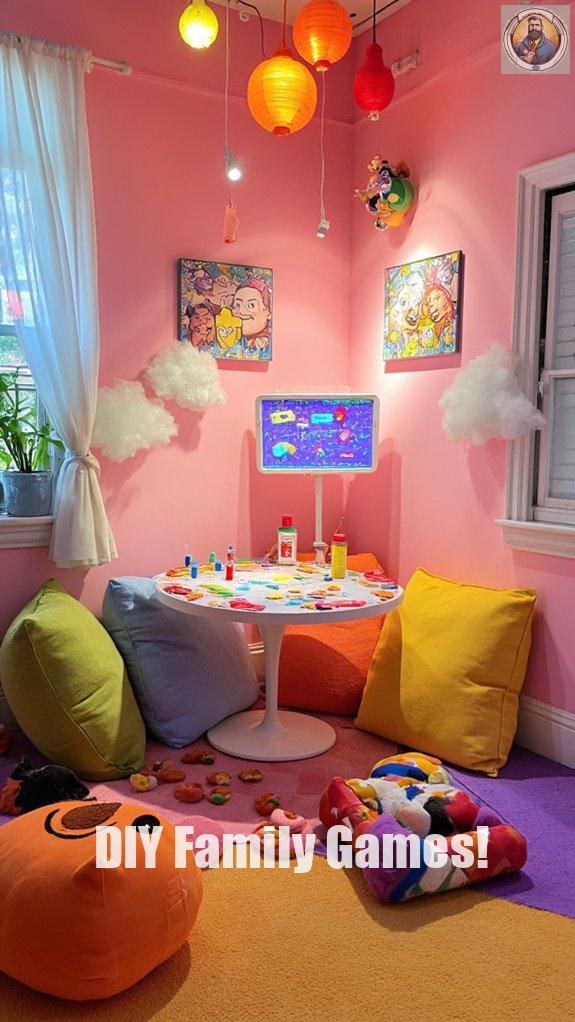
In the world of gaming, feedback is like the frosting on a cake—it makes everything sweeter!
Imagine zipping through a level and suddenly a cheerful “ding!” lets me know I nailed a tricky spatial puzzle.
Those real-time cues? They guide my every move, like a friendly ghost whispering, “Don’t place that there!”
And let’s be honest, who wouldn’t love a virtual high-five every time I optimize space like a pro?
With adaptive scoring and personalized touches, gameplay feels custom-made for me.
It’s like my game is saying, “I see you, buddy, and let’s make this fun!”
Incorporating virtual challenges can also enhance creative indoor athletic challenges, making the experience more dynamic.
Game on!
Strategies for Effective Use of Vertical Space
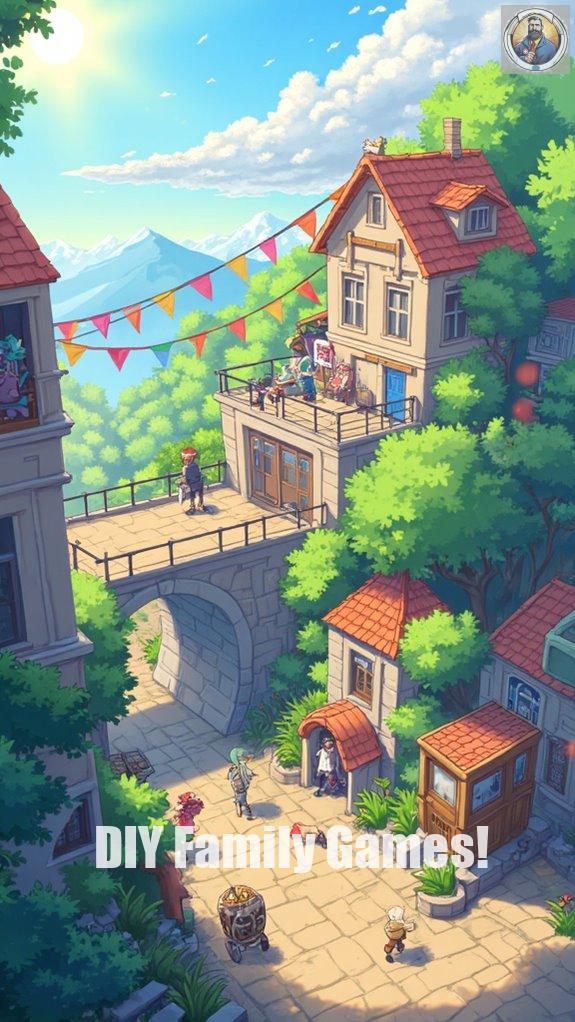
How do you make vertical space not just usable but totally awesome in your games?
First, let’s chunk it like your grandma’s fruit salad! Use three distinct floor planes to prevent player confusion.
Check out this nifty table for inspiration:
| Strategy | Description | Example |
|---|---|---|
| Downward Flow | Gravity helps here! | one-way drops in shooters |
| Molecule Mapping | Connect those nodes! | gantries and tunnels |
| Integrated Gameplay | Make height tactical! | rooftops in combat scenarios |
Incorporating affordable meal planning can also enhance the creativity of your game course design by providing thoughtful strategies for resource management.
Continuous Engagement Through Measurement and Feedback
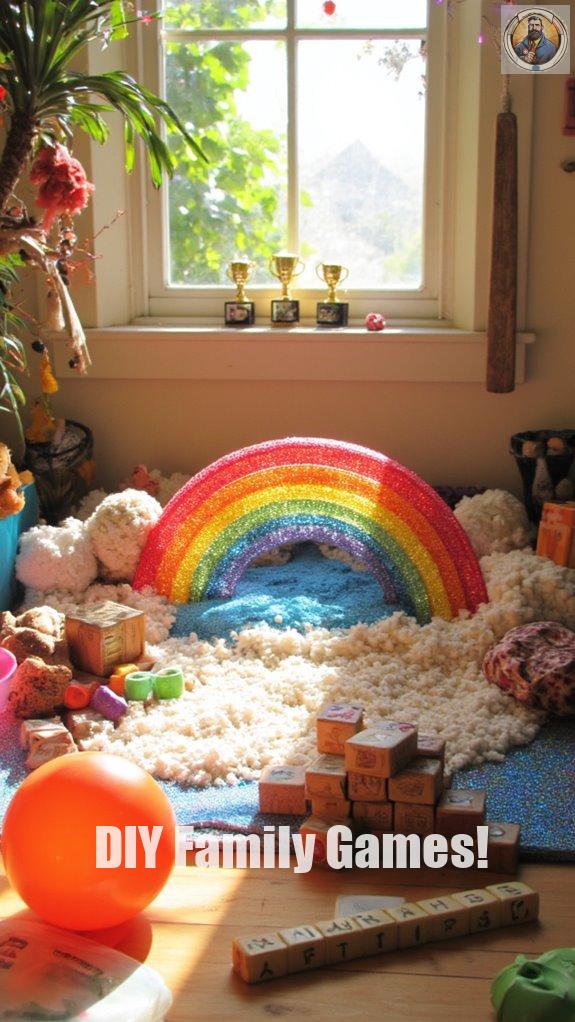
Envision you’re playing your favorite video game, and every time you make a move, the game instantly tells you how well you’re doing.
Pretty cool, right?
Games do this through constant feedback loops, so you always know if that jump is making you a hero or a laughingstock.
Imagine this in learning!
Visual trackers, like progress bars, show just how far you’ve come.
You even earn shiny badges, which are basically trophies for not playing Fortnite for once!
With clear, real-time feedback, learning becomes fun — just like leveling up in a game, minus the embarrassing dance moves at every victory!
Incorporating sensory integration exercises can further enhance engagement and provide additional layers of feedback that foster connection and joy in the learning process.
Space-Efficient Game Course Planning
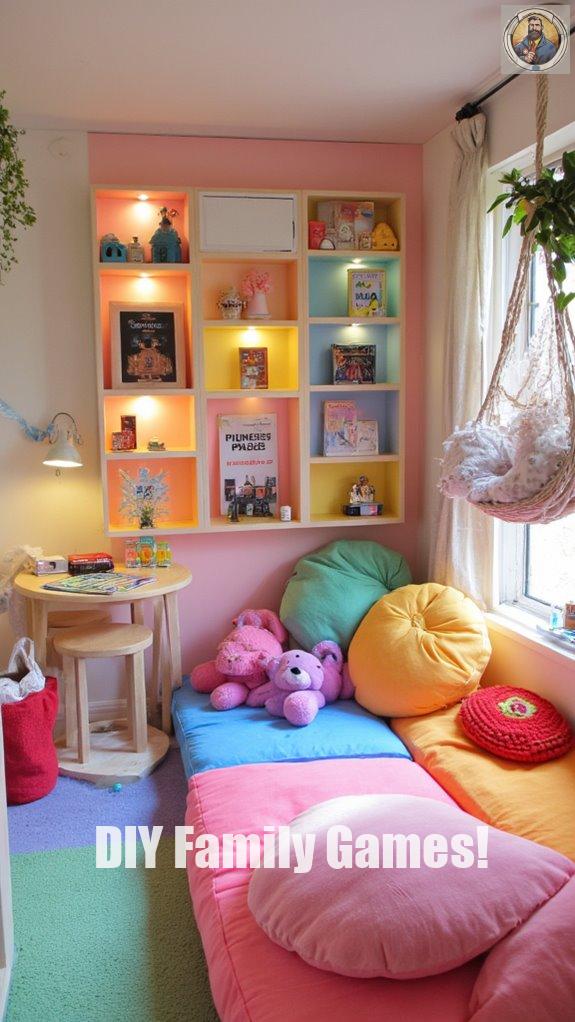
Creating space-efficient game courses isn’t just a necessity; it’s an art form that can make our favorite activities even more thrilling!
Think of small spaces as a canvas for creativity.
Here’s how we can whip up some magic:
- Use multi-purpose zones that switch between game stations and hangout spots like a chameleon!
- Get crafty with vertical storage to avoid turning into a human obstacle course.
- Modular gear? Yes, please! Easy to set up and store away.
And let’s not forget the power of online tools to keep things flowing.
Let’s turn our cramped spaces into epic playgrounds – who’s in?
Father-Son Adventure Challenge
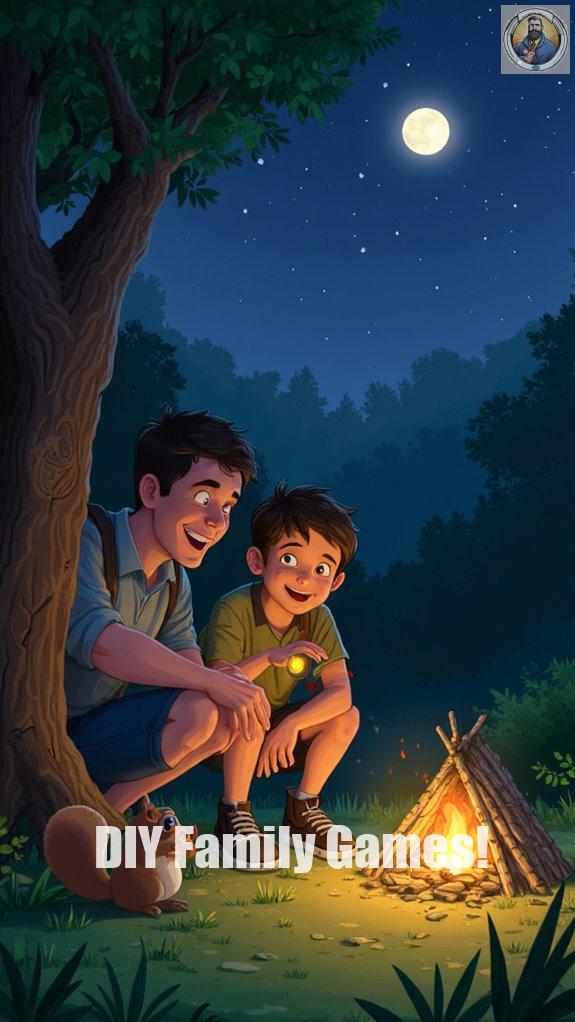
When you think about the ultimate bonding experience between fathers and sons, adventure challenges in nature immediately spring to mind.
Picture this: midnight wildlife spotting—yep, nothing says “father-son bonding” like peeing your pants at the sight of an unexpected squirrel!
Or how about building shelters together? Trust me, if you can survive that without resorting to throwing sticks, you’re golden.
Adventuring boosts teamwork, builds resilience, and maybe even helps your son realize that camping isn’t just about roasting marshmallows—though let’s be honest, that’s the best part.
Maximize Limited Area for Home Game Activities
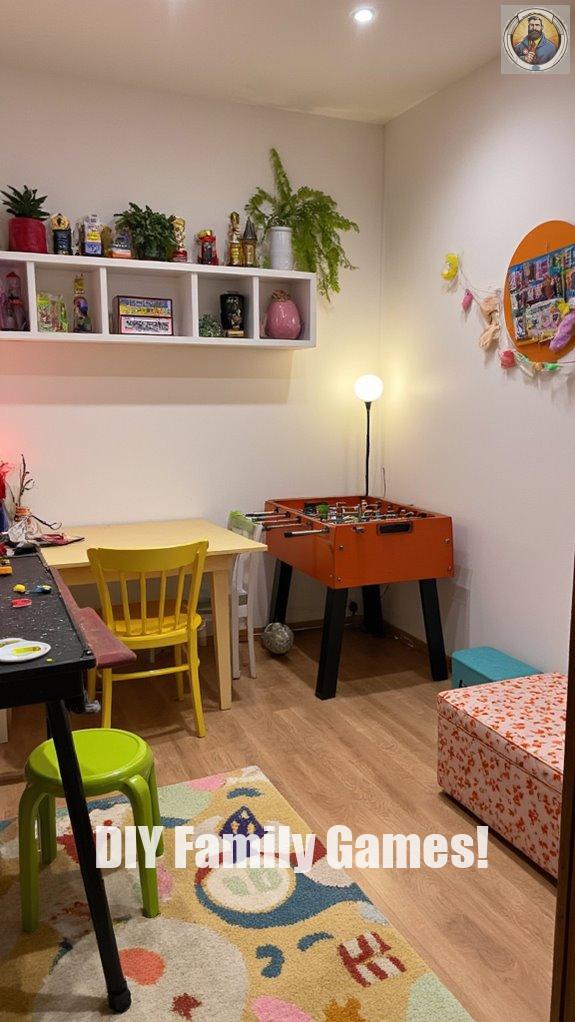
No one wants to feel like they’ve stepped into a game den bigger than a clown car, right?
Let’s cleverly squeeze fun into minimal space!
- Create zones: board games over here, arcade games there—no crowding!
- Use modular furniture. Need a game table? Pull it out, put it away!
- Try sleek storage solutions: ottomans that stash treasures and wall racks to display your trophies.
Add some fun lighting, too!
Why settle for giant pool tables when a compact foosball table fits perfectly?
Remember, a little creativity goes a long way.
Now, go embrace that space and let the games begin!
Questions and Answers
What Types of Games Are Best Suited for Small Spaces?
When I’m stuck in a tiny room, I love playing quick games like “The Floor is Lava” or a seated trivia showdown. Who knew small spaces could spark such big fun? Let the chaos begin!
How Can I Measure Player Engagement in My Game Course?
To measure player engagement in my game course, I track daily active users, session lengths, and retention rates. If they’re not glued to the screen, I’m probably just entertaining them with my dance moves!
Are There Specific Materials Recommended for Creating Game Courses Indoors?
Wondering what materials make indoor game courses thrilling? I’ve found foam mats, cardboard boxes, and even old blankets turn chaos into fun! Trust me, your living room will become a mini adventure zone—just watch out for the cat!
What Age Groups Benefit Most From Space-Efficient Game Designs?
I think space-efficient game designs totally rock for all age groups! Little ones love the simplicity, teens crave the strategizing, and even older adults can enjoy fun without running into furniture. Who needs space, anyway?
How Do I Encourage Family Participation in These Activities?
Want to turn your family into the ultimate game squad? I’ve found that mixing fun formats, silly storytelling, and prizes can inspire everyone to join in. Let laughter and togetherness lead the way to lasting memories!
Summary
When you’re short on space but big on creativity, the possibilities are endless!
Why limit your imagination when you can transform a cozy room into a thrilling game zone?
Embrace the fun, and let the laughter echo off the walls.
With the right ideas, your home can be the ultimate adventure playground for your kids—turning even the smallest space into a grand arena.
So, what’s stopping you from designing your own epic game course? Let’s get started!
References
- https://gameprogrammingpatterns.com/spatial-partition.html
- http://www.nealen.net/papers/exploring-game-space-FDG2015.pdf
- https://gamebalanceconcepts.wordpress.com/2010/08/25/level-8-metrics-and-statistics/
- https://www.nature.com/articles/s41598-023-46060-9
- https://insider.fiu.edu/how-game-elements-can-supercharge-course-design-measurement-and-feedback-in-games-and-learning/
- https://chetanjags.wordpress.com/2012/09/22/spatial-partitioning/
- https://backdrifting.net/post/074_bsp_dungeons
- https://www.soundproofcow.com/how-design-perfect-game-room/
- https://twobithistory.org/2019/11/06/doom-bsp.html
- https://www.lostateminor.com/basement-game-room-ideas/
- https://www.housebeautiful.com/room-decorating/living-family-rooms/g26090946/game-room-ideas/
- https://www.youtube.com/watch?v=OiizPdqPKKs
- https://ahouseinthehills.com/how-to-design-a-multi-functional-game-room-for-family-fun/
- https://www.houzz.com/photos/game-room-ideas-phbr1-bp~t_720~a_34-480
- https://www.youtube.com/watch?v=97vL9O-rXhs
- https://www.youtube.com/watch?v=9xGObKd3Rgg
- https://www.youtube.com/watch?v=tnns_jPV_FM
- https://ladiesgamers.com/small-spaces-early-access-impressions/
- https://www.youtube.com/watch?v=Ggy9XF2PgWY
- https://book.leveldesignbook.com/process/layout/flow/verticality