

7 Essential Bug Repellents for Modern Outdoor Dads
Essential Bug Repellents for Modern Dads
Hiking with kids can feel like a survival game. Trust me, I’ve learned the hard way!
I write this to share what works for us at Modern Dads. Let’s keep our adventures fun, not itchy.
When I head out with my crew, Sawyer Picaridin is a must—light, odorless, and effective. Tough swamp hikes call for 20% DEET, safe for the tiny tots over 2. Sarah swears by Oil of Lemon Eucalyptus, topping it off every 6 hours.
I treat our jackets with Permethrin—no bug stands a chance. Cutter Kids? Perfect for after swimming. I stash a backup in a ziplock in the truck.
And if you’re curious about our gear essentials? You won’t regret it.
One time, as we trekked through a marshy trail, I spotted a giant bug swarming around us. I panicked, thinking of all the itchy encounters we might have had. My kid yelled, “Dad, it’s just a bug! Relax!” Kids really do bring you back to reality, don’t they?
Quick Takeaways
- Choose EPA-approved repellents with picaridin or DEET for safe, long-lasting protection.
- Reapply every 4–6 hours, especially after swimming or sweating.
- Use permethrin-treated clothing to enhance bite prevention alongside skin repellents.
- Opt for kid-safe formulas like Cutter Kids or OFF! FamilyCare for family outings.
- Store repellents and sunscreen in accessible, damage-proof containers for readiness.
Choose the Best Mosquito Repellent for Your Family
When I first tried to pick a mosquito repellent for our backyard barbecue, I ended up spraying my 12-year-old, Liam, with a cheap drugstore brand that smelled like a chemistry set exploded—bad move.
Now I check labels like I’m defusing a bomb. You know mosquitoes love hanging out in damp *insect habitats*—like that swampy flowerpot near the deck? Yeah, fix that.
Check labels like your life depends on it—because no one wants a backyard buzzed by swamp-loving mosquitoes.
Store your repellent properly. *Repellent storage* isn’t “in the glove compartment where it melts into aerosol soup.” Hello, July in Texas!
Skip the mystery chemicals. Stick to EPA-approved stuff—like Sawyer Picaridin or OFF! II.
If you’re planning outdoor activities in hot weather, consider pairing bug repellent with cooling neck towels to keep kids comfortable during extended time outside.
Your kids (and nose) will thank you.
Wait—did you even *read* the bottle before spraying?
Seriously, Sarah would’ve killed me.
Use Picaridin for Lightweight, Odor-Free Protection
Picaridin is my go-to, plain and simple—especially after Liam came home from a camping trip looking like a mosquito piñata because I’d grabbed the cheap citronella spray “to save a few bucks.” Spoiler: I didn’t save anything.
Now I protect us like a dad with actual common sense.
- No weird smell—Sarah won’t side-eye me like I’m wearing expired leather jackets.
- Lightweight enough to skip reapplying every five minutes (unlike those clingy bug traps).
- Doesn’t melt gear or phone screens—huge for trail photos.
- Kids actually let me spray it (Emily still fears the citronella “spray of shame”).
For nighttime camping trips, I pair picaridin with emergency glow sticks to keep the kids visible and safe while they’re exploring after dark.
Just trust me: picaridin’s the quiet hero your outdoor adventures need.
Apply Oil of Lemon Eucalyptus for Long-Lasting Defense
Reapply every 6 hours**, not 2—game changer for all-day hikes.
Reapply every 6 hours**, not 2—secret weapon for crushing all-day hikes without the itch.
Lemon eucalyptus? Yes, it’s a legit natural alternative to chemical goop. I used it during that miserable mosquito attack at Lake Emily (not my kid, just cursed naming). Didn’t get a single bite. Smells like a lemon-scented forest, not a lab experiment.
No, it’s not DEET—but it works.
Pro tip: Try *Mosquito Moth* oil—75% lemon eucalyptus, and Liam actually said, “Dad, you smell kind of nice.” (Shocker.)
Just don’t expect miracles after day 3 of not showering.
While outdoor time is important for healthy development, exposure to harmful online communities like incel culture can negatively shape how young men view relationships and self-worth. Want to smell good *and* survive? Use it.
Pick the Right DEET Level by Age and Duration
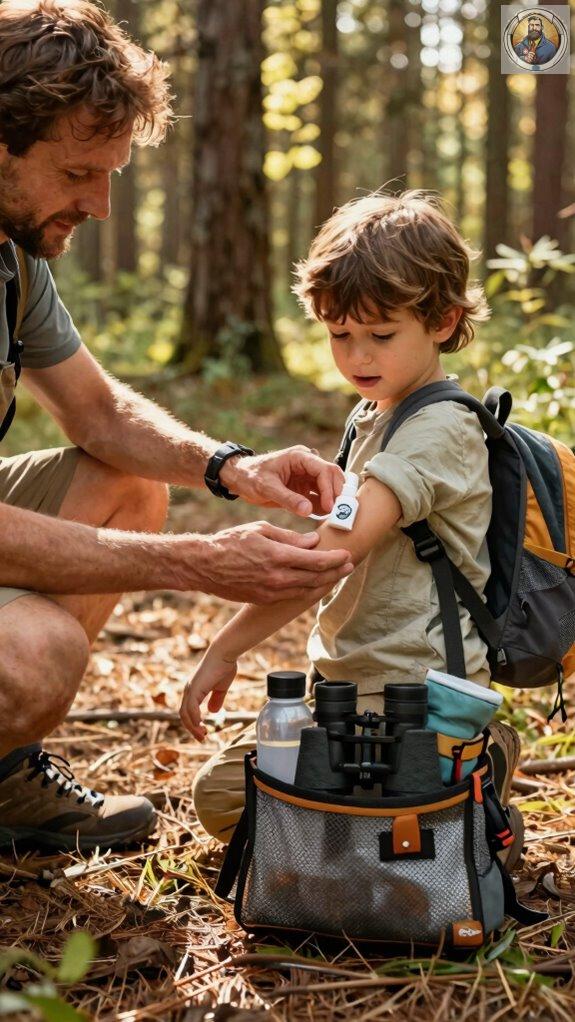
Though I once slathered 100% DEET on Liam before a camping trip and nearly melted his marshmallow fork, I’ve learned—*the hard way*—that not all DEET levels are created equal.
Pick your Deet concentration like you’re picking a Netflix plan:
- Under 2 months? Nope. Not even a spritz. Check those age recommendations, folks.
- Kids 2–12: 10–30% DEET max—enough to ward off mosquitoes, not melt faces.
- Teen + adult? 30% gets 8 hours of coverage. More ≠ better.
- All-day hike? 30% still beats 100%. Trust me.
For extended outdoor adventures, consider layering bug protection with shoe gaiters for kids to keep insects away from exposed skin around the ankles and lower legs. Follow the label, not your gut. Your kiddo’s skin isn’t a science experiment.
Protect Kids With Pediatrician-Approved Formulas
Turns out, child safety isn’t a DIY project. Pediatric recommendations exist for a reason—like using EPA-registered formulas with 10-30% DEET or picaridin.
Child safety isn’t a DIY experiment—trust pediatric advice: EPA-registered DEET or picaridin keeps kids protected, not kitchen concoctions.
Brands like Cutter Kids or OFF! FamilyCare? Game-changers.
Sarah still laughs at my “natural” phase. Save the experiments for backyard science fairs.
When Emily wears her butterfly hat, I want her protected—not itchy.
Just as pediatric sunscreen sticks are formulated specifically for delicate skin, bug repellents designed for kids use safer concentrations and ingredients that dermatologists recommend.
Bottom line? Trust the doc, not Dr. Google. Your kid’s skin isn’t a lab. Skip the kitchen potions. Stick to the pediatric-approved stuff.
Your peace of mind will thank you.
Pair Permethrin Gear With Skin Repellents
When I showed up to our last camping trip thinking my trusty OFF! clip-on and some wristbands would save us from mosquitoes, Liam ended up looking like a walking constellation by bedtime—red dots *everywhere*.
Turns out, repellents chemistry isn’t just magic dust—it’s science. Pair permethrin-treated gear (yes, spray your tents and clothes!) with skin repellents like picaridin for max defense. Mosquitoes hate it. Just as youth trekking poles are essential gear for young explorers, proper bug defense layers are non-negotiable for any outdoor adventure with kids.
Why care? Because of:
- Liam’s itchy revenge plot against me
- Insect behavior that *loves* dad-shaped targets
- Sarah’s glare when our kid cries at 2 a.m.
- The sad truth: wristbands are basically bug confetti
Stay bitten? That’s *your* constellation.
Reapply Based on Activity and Repellent Type

So what’s the move? Sweat like a dad chasing Liam after ice cream? Reapply.
Swimming with Emily? Reapply.
That DEET? Lasts 5 hours. Picaridin? 8. Permethrin-treated gear? Two weeks—*if* you skip the washing machine.
Gear maintenance isn’t sexy, but neither is getting eaten alive.
Insect biology 101: mosquitoes don’t care that you’re “mostly protected.” One gap? They’re in. Like that time I skipped reapplying before grilling—Sarah still calls me “bug bait.”
Spray every 4 hours during chaos, every 6 when lounging. Think of it like sunscreen—if sunscreen attracted mosquitoes. Fun, right?
Keep your collection of specimen collection jars handy so the kids can observe bugs up close instead of just swatting at them blindly.
Don’t be “that guy” at the park. Reapply like your dignity depends on it.
Fishing at Dawn Together
Nothing beats morning freshness with Liam by my side, poles in hand, hoping he actually bites the worm this time. Quiet moments? Priceless. Between sneaky sips of cold coffee and pretending I know what I’m doing:
- The first fish caught (even if I “helped” reel it in).
- His tiny “Ew, Dad!” when the worm wiggled.
- Sarah laughing at us from the porch.
- That one cast where *he* said, “We’re not telling Mom.”
Bonus points if the bugs don’t win. They rarely do—with proper spray. A lightweight hiking backpack keeps Liam comfortable during our early morning treks to the fishing spot, making the journey as enjoyable as the destination itself.
Sunscreen and Bug Spray Stash
Sun protection isn’t optional—it’s survival. My go-to? Banana Boat for kids (Emily still calls it “monkey lotion”) and Sawyer Picaridin spray—Liam won’t touch anything that smells like DEET.
Travel essentials? Ziplock bags—because crushed sunscreen is a beach tragedy waiting to happen. Keep a stash in the trunk, backpack, *and* garage. Trust me, “I thought you packed it” isn’t a phrase you want to hear mid-hike.
Between outdoor adventures and family fitness activities, keeping your family protected from the elements makes all the difference.
Be ready. Your skin—and sanity—will thank you.
FAQ
Can Bug Repellents Damage Fishing Gear or Tackle?
- Chemical effectiveness = great on bugs, *terrible* on plastics and coatings
- Environmental impact? Don’t wipe hands on tackle boxes—nasty transfer!
Now I stash gear first, spray later.
Pro tip: Sawyer Picaridin won’t melt your rod grip. Who knew, right? Sarah still laughs at me.
Are Natural Repellents Safe for Pets During Family Outings?
Pretty please, keep pets safe—some “natural” doesn’t mean nice! I once slathered Sarah’s favorite natural spray, thinking, *Harmless, right?* Nope—Liam’s pup Louie licked his leg and barfed on my hiking boots. Yikes.
- Check labels: no tea tree, pennyroyal, or citronella overload
- Vet-approved = victory
- Badger Balm? Safe. DIY lemon-spray Pinterest fail? Not safe.
When in doubt, test a tiny patch. Your dog’s drool shouldn’t be a science experiment.
How Do I Store Repellents in Hot Car Trunks?
I stash my repellents inside a cooler — not with the snacks (though, honestly, could you blame me?). Car temperature turns trunks into ovens; nobody wants melted DEET or exploding citronella.
Storage safety? Yeah, it matters. Once, I left a bottle in July — boom, sticky backpack apocalypse.
Now I use a hard-shell case, keep it shaded, and *never* near Sarah’s chocolate stash.
Pro tip: Test sprays before hikes — unless you want Liam asking, “Dad, why does your bug spray smell like burnt popcorn?”
Can I Use Bug Spray on My Baby’s Stroller Fabric?
Nope, I don’t spray bug repellent directly on my baby stroller—ever. Think about it: that fabric soaks it up like a sponge, and then Liam’s tiny hands touch it. Hello, skin contact with chemicals? No thanks!
Instead, I use a stroller cover with built-in UPF or clip on a Sawyer permethrin-treated mesh net. Sarah laughs when I say, “This stroller’s fancier than our tent.” Just saying—keep the spray off fabric.
Keep babies safe. And hands clean.
Do Bug Repellents Expire if Stored for Years?
Yeah, bug repellents expire—don’t be fooled by that “forever spray” fantasy. I once sprayed old OFF! on a trail, and mosquitoes laughed.
Check the expiration date: chemical stability fades, making formulas weak or weird. After three years? Toss it.
Store in cool, dark places—heat ruins them faster than my kids lose socks.
Emily’s stuffed bear survived, but that decade-old repellent? Hard pass.


