

Ultimate Guide For Dads Fostering Independent Lunch Packing
How to Make Back to School Lunch Packing Easy
Wondering how to turn lunch packing chaos into a kid-friendly routine? It’s simple! Kids can pack their own lunches with a little practice.
I’m writing this for Modern Dads because, let’s face it, I’ve survived more than a few chaotic mornings. Just last week, I found myself negotiating with a 7-year-old over whether jelly counts as a vegetable. Hint: it doesn’t.
Creating a fun lunch prep routine keeps everyone engaged. I pre-portion snacks and use colorful containers. Nothing beats my kid’s face lighting up at the thought of veggie emojis!
Our mornings are organized and snag-free with a visual checklist. If only I could find a chart that reminds me not to wear two different socks!
One morning, I caught my little one carefully packing their favorite cheese sticks, but then, in classic style, swapped them for a fistful of chocolate. Kids, right? It’s a balancing act between nutrition and happiness—and a bit of laughter helps too!
Quick Takeaways
- Encourage kids to plan and choose their lunch items to build decision-making skills and ownership over their meals.
- Provide easy-to-use, labeled containers and tools to promote organization and independence during lunch packing.
- Establish simple routines and visual checklists to help children remember their essentials confidently.
- Involve kids in meal prep and packing activities to boost their confidence and understanding of healthy choices.
- Reinforce safety and allergy awareness while fostering a positive, stress-free packing environment at home.
Why Teaching Kids to Pack Their Own Lunch Promotes Independence
Have you ever watched your kid struggle to zip their backpack or forget to pack their homework and wondered, “When will they start taking responsibility?” Teaching kids to pack their own lunch is a fantastic way to foster independence—trust me, I’ve seen it work. Not only does it build confidence, but it also teaches essential skills like meal planning.
Kids learn to choose balanced foods and control portion sizes, which makes them more aware of healthy habits. Start small: let them pick a main protein, veggie, and fruit, and set portion rules (e.g., a fist-sized portion of carbs). Over time, they’ll get better at packing their own lunch, and you’ll avoid the daily “Did I forget anything?” meltdown. Creating a dedicated desk privacy panel can also help your child focus while they organize and plan their meals without distractions. Establishing a consistent daily routine for lunch packing ensures this independence-building skill becomes a natural part of their kindergarten readiness.
Independence never tasted so good!
Practical Strategies to Help Your Child Pack Lunches Confidently
Getting your child to pack their lunch with confidence might seem like a tall order, but with a few practical strategies up your sleeve, you can make it both fun and manageable.
Want mastery? Start by encouraging creative snack ideas—think fun-shaped sandwich cutters or DIY trail mix with colorful candies and nuts. Share time management tips, like prep the night before or set a timer to stay on track.
Keep a visual checklist with familiar icons to boost independence and reduce confusion. Offer simple sample menus to inspire variety and confidence.
In the end, celebrate their successes—nothing beats that proud smile when Liam tosses in a healthy fruit or Emily makes her own balanced salad. Practice makes perfect—so be patient and positive!
Must-Have Tools and Supplies for Packing Independent Lunches
When it comes to packing lunches that your kid can do themselves, the right tools are EVERYTHING—trust me, I’ve learned the hard way after a dozen spills and “Where’s my snack?!” mornings.
Want to master meal customization? Use labeled, reusable containers for different snacks and mini meals—think small sections for fruit, veggies, or sandwiches. No more messy lunches or lost treats!
Organize snacks in labeled containers for mess-free, customizable, and kid-friendly lunches every time.
Invest in sturdy, leak-proof containers that are easy for little hands to open and close without tears. Don’t forget a good set of eco-friendly utensils and an ice pack to keep everything fresh.
Want your kid to feel confident? Show them how to organize with these supplies, and watch their independence grow while you breathe easier knowing their lunch is perfect — and mess-free.
Common Challenges When Teaching Kids to Pack Their Lunch and How to Overcome Them
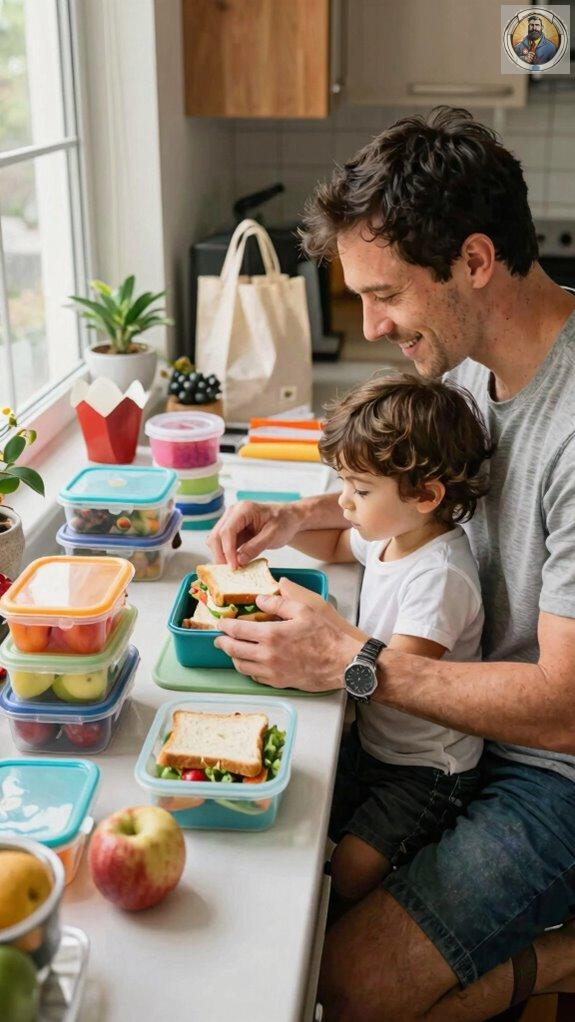
Teaching kids to pack their lunch isn’t always sunshine and rainbows, I’ll tell you that much. They’re learning skills like meal customization and lunch presentation, but it’s not always smooth sailing. The biggest challenge? Getting them interested and consistent.
Sometimes, they go for the same snacks every day — boring! Or they forget to include a fruit or veggie. On hot days, they might also neglect to pack items that keep their lunch cool and refreshing, like cooling neck towels to maintain comfort during outdoor eating.
To conquer these hurdles:
- Set a clear, simple list of lunch items to choose from
- Make lunch prep a fun, visual project with colorful containers or labels
- Teach them how to balance meals for nutrition and taste
- Encourage creativity in lunch presentation to boost pride
- Praise their effort to build confidence
Consider turning lunch packing into a creative bonding activity where you and your child work together to plan weekly menus and prepare ingredients, creating shared memories while building their independence.
Morning Chat During Packing
Chit-chat during packing might seem like just casual banter, but trust me, it’s one of the best ways to keep your kid engaged and even learn a little about what they’re thinking—without sounding like you’re conducting a serious interview.
During this time, I focus on using the moment for meal customization, asking, “Hey, do you want a sandwich or wrap today?” or “Would you prefer fruit or yogurt with your lunch?” It’s also my secret weapon for morning motivation: a quick compliment or a joke can set a positive tone for the day.
I’ve learned that these conversations don’t need to be long — just simple questions and fun exchanges. If your son tends to fidget or struggle with sitting still during meals, consider pairing these packing conversations with sensory desk bands to help him stay focused and engaged. Simple, friendly chats make packing more than a chore; they turn it into a bonding moment. By keeping these conversations device-free, you’re also naturally reducing screen time exposure during a key bonding opportunity in the morning routine.
Bag Routines
Ever wonder how some dads make packing bags look almost effortless? It’s all about establishing strong routines.
Consistent routines turn hectic mornings into smooth, stress-free starts.
For me, bag routines are the secret to smooth mornings. I pre-pack essentials on Sundays and always keep a designated spot for lunch gear—saving time and avoiding chaos.
When it comes to meal customization and portion control, I think of my kids’ appetites and favorite foods. Here’s what I do:
- Use separate compartments or small containers for variety
- Pack adjustable portions based on appetite (think snack-sized portions vs. full meals)
- Keep a checklist for what’s needed daily
- Assign each kid a specific bag pocket for their snacks or drinks
- Regularly rotate food options so they don’t get bored
Choosing an ergonomic school backpack helps support proper posture while kids carry their packed lunches and daily essentials throughout the school day.
A solid routine means less morning stress and happier lunchers—trust me!
School Supplies Checklist Update
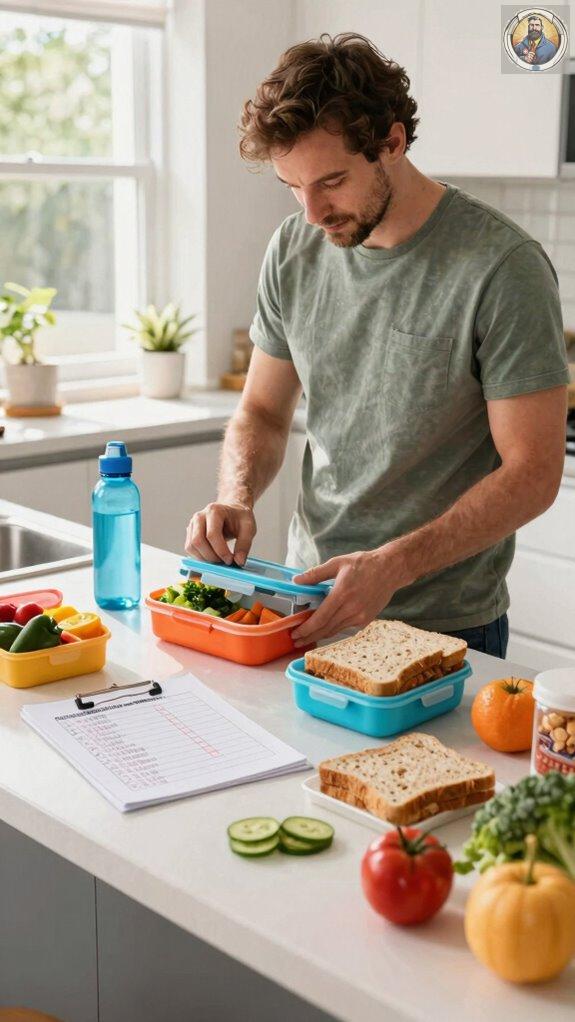
Updating your school supplies checklist mightn’t sound like the most exciting task, but trust me, it’s a game-changer—especially after a couple of chaotic mornings where you realize you forgot something essential (yes, I’ve been there).
This is the perfect time to add tools for lunchbox customization—think small containers, fun stickers, or personalized napkins—that make midday meals special. Consider investing in quality brown paper lunch bags that help your child pack independently while keeping meals fresh and organized. Also, review food safety tips: confirm your kid has the right insulated bag, knows how to keep things cold, and avoids sharing utensils (sorry, Liam).
Double-check that you’re stocked with allergy-friendly snacks and avoid confusing “healthy” with “spoiled,” which is a rookie mistake. For busy mornings when you’re juggling multiple responsibilities, a dashboard phone mount can help you stay organized and connected while managing school schedules and pickup times. Staying organized means fewer surprises—and more confident dads mastering independent lunch packing.
Back to School Essentials
Have you ever felt like you’re rushing to get everything together on the first day back, only to realize you forgot the essentials? It’s frustrating, right?
To master back-to-school prep, I always keep a checklist of must-haves because creative lunch ideas and allergy awareness are key.
Here’s what I never leave out:
- Reusable lunch containers (for variety and eco-friendliness)
- Ice packs (keeps food fresh longer)
- Allergy-friendly snacks (like nut-free granola bars)
- Lunchbox with compartments (easy for independent packing)
- Notes or fun stickers (to add a personal touch)
- Screen protector films help safeguard your student’s laptop from accidental damage during the school year.
- Consider adding a hydration pack for toddlers to keep your child refreshed throughout the day.
FAQ
How Early Should I Start Teaching My Child to Pack Their Lunch?
Start teaching your child to pack their lunch around age five, focusing on lunchbox organization and selecting packable snacks. This early start builds independence, confidence, and helps them develop good habits for a lifetime of nutritious choices.
How Can I Encourage Creativity in Kids When Packing Their Lunch?
Encourage creativity by inspiring your child with fun, creative presentation ideas using colorful containers and bento boxes, while emphasizing nutritious options. I motivate my kids by praising their inventive lunch creations and highlighting delicious, healthy choices.
What Are Safety Tips for Kids Handling Shared Food Items?
I emphasize proper food portioning and hygiene practices, teaching kids to wash hands thoroughly before handling shared items. I also remind them to avoid double-dipping and use utensils to guarantee safety while sharing food.
How Do I Manage Food Allergies While Allowing Independence?
Sure, managing food allergies while fostering independence is a challenge I relish. I focus on allergy prevention and safe snack choices, teaching my kids to confidently select and handle their foods, mastering safety without sacrificing their growing independence.
Are There Age-Appropriate Lunch Packing Responsibilities for Toddlers?
Yes, I believe toddlers can handle simple lunch packing tasks like choosing meal presentation and small portions. I encourage them to participate in basic decisions, fostering independence while I supervise to guarantee appropriate portion sizes and safe food handling.
Summary
So, there you have it—arming your kid with lunch-packing skills is like teaching them to fish (or at least, cook a hot dog). Keep in mind, a little patience, a dash of humor, and the right tools make all the difference. Keep those routines consistent, chat during packing, and enjoy watching your child grow more confident. Trust me, someday they’ll thank you—probably in the style of a wise old Mariner. Now, go conquer that lunchbox!


