

5 Binocular Focus Tips for Modern Adventure Dads
Mastering Binoculars: A Dad’s Adventure Guide
Ever fumbled through binoculars while the kids squawked about spotting an eagle? Yeah, me too. Blurry views and shaky hands have ruined more sunsets than I’d like to admit.
I write for Modern Dads because if I can share my missteps and laughs, maybe someone else will avoid the same blunders.
First, twist those barrels until one circle appears. Yep, my discount Bushnells finally made sense. Hold steady—tuck your elbows and breathe, cowboy. When spotting that elusive deer? Adjust like a pro, not a bull in a china shop.
I clean my lenses with a Zeiss wipe and fix my diopter—thanks to my family’s giggles during my “binocular dance.” Worth it, just for that moment of clarity.
Once, while hiking, I excitedly pointed out a rare bird, only to realize I was actually battling a rogue squirrel. The kids laughed so hard; it felt like a sitcom moment. Being a dad is all about those unexpected adventures!
Quick Takeaways
- Adjust the binocular barrels to match your eye spacing for a single sharp image.
- Focus each eye separately using the center wheel and diopter for crystal-clear vision.
- Hold binoculars steadily with both hands and elbows tucked to reduce shake.
- Fine-tune focus smoothly when tracking moving wildlife to maintain clear sight.
- Test focus at various distances and keep lenses clean for reliable clarity.
Set the Right Pupil Distance
When I first handed my binoculars to Liam, he squinted like he’d seen a UFO—turns out, the pupil distance was way off, and we were both laughing at how “space aliens” looked blurry.
Pupil distance isn’t just for snobby birdwatchers. If your eyes aren’t aligned with the lenses, you’re basically peeping through soda straws. Ouch.
Want to nail Eye alignment?
- Grab your binoculars (Nikon ProStaff, cheap Walmart ones—doesn’t matter).
- Hold them at arm’s length.
- Adjust the barrels until one clear circle appears—no snowman-shaped gap!
Boom. Instant upgrade.
Seriously, why didn’t anyone tell me this before I “spotted” a two-headed eagle? (Spoiler: it was a branch.)
Whether you’re using binoculars on a family hike or scanning terrain from an all-terrain utility wagon, proper pupil distance ensures you won’t miss a thing.
You’ve got this, Dad.
Focus Each Eye Separately
So grab those binocs—whether it’s your fancy Vortex Razors or the $30 Bushnell Specials from Target—and do this:
Close your right eye. Focus the center wheel until the image in your left eye’s sharp.
Close your right eye. Twist that center wheel till your left-eye view snaps into sharp focus—like you’re one step closer to spotting glory.
Now—swap eyes. (Yes, you look ridiculous. Do it anyway.) Adjust the diopter, not the center wheel. Boom. Crisp.
Seriously, this takes 20 seconds and saves you from yelling “I see a bird!” when it’s just a leaf.
Pro tip: Label your diopter setting on the binoculars—part of basic binocular maintenance. If you’re out at night with your kids, make sure they’re wearing emergency glow sticks so you can spot them easily while you’re focused on the wildlife.
And hey, that ergonomic grip? Use it. You’re not wrestling a raccoon.
Ever tried spotting eagles with Liam while Sarah judges your technique? Yeah. Do it right.
Hold Steady for Clear Views
Even if you’ve nailed the focus, shaking like a leaf at a metal concert ruins your binocular game—trust me, I learned that day on the lake with Liam, trying to spot a bald eagle while Sarah filmed my disaster for the family highlight reel.
Want steady views? Try this:
- Adjusting grip: Hold binos with both hands, elbows tucked—like you’re hugging a grumpy bear.
- Respiratory control: Pause mid-breath when sighting. No, don’t pass out. Just breathe smart
A binocular harness can also stabilize your view and reduce arm fatigue during extended wildlife watching sessions. Seriously, I looked like a confused robot until I stopped swinging.
Now? Eagle sightings *and* dad cred. Try it—your kids won’t mock you as much.
Fine-Tune for Moving Objects
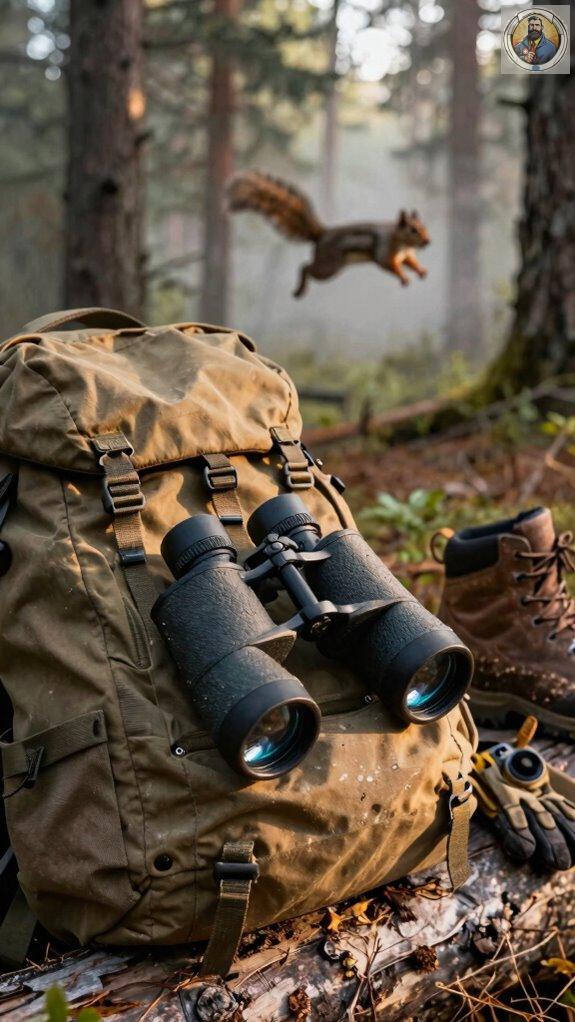
Tracking squirrels? (RIP my last hike with Liam.) Depth perception’s your secret weapon.
If your binoculars feel “off,” check binocular alignment—misaligned scopes make deer look like they’re on a wobbly carousel.
I once chased a “moving rock” (turned out to be a bush).
Pro tip: Adjust focus smoothly—don’t crank it like you’re starting a lawnmower.
Keep both eyes open; trust your brain to sort depth perception chaos.
Before heading out on your adventure, familiarize yourself with topographic maps so you can identify terrain changes and locate wildlife habitats more effectively.
You tracking faster? Or still mistaking Sarah’s yoga ball for a rare woodland fox? (Asking for me.)
Test Clarity at All Distances
You’ve got the tracking thing down—eyes locked, panning smooth like a nature documentary pro—so now let’s make sure what you’re seeing is actually *there*.
Ever stared at a squirrel and thought, “Is that fur… or just lens grease?” Don’t be *that* dad. Test clarity up close (like, inspect-your-kid’s-scab close), mid-range (say, 50 feet—about Dad yelling distance), and far (Mount Eagle-ish).
Check your lens coating—cheap bins turn sunlight into disco night.
Image stabilization? Lifesaver when Liam’s poking you mid-zoom.
I learned after mistaking a bush for a bobcat. (Spoiler: zero bobcats. Just bad optics.) Like practicing leave no trace principles, maintaining your optics ensures you’re observing wildlife responsibly without disturbing their habitat.
Can you read a trail sign at 100 yards? If not, recalibrate—your eyes (and pride) will thank you.
Teaching Son to Spot Eagles
While most dads just point and yell “Look! An eagle!” like it’s a flying unicorn, I taught my son actual spotting skills—no magic required. During bird migration season, we camped near Lake Superior, scanning cliffs at dawn.
Nature photography? Yeah, he now insists on “getting the shot,” like he’s National Geographic’s youngest rebel.
Here’s what works:
- Scan slowly at treetop level—eagles love high perches.
- Watch for sudden wing shadows—big ones mean business.
- Learn migration patterns (March and September = eagle rush hour).
- Bring snacks. No kid spots eagles on an empty stomach.
- Pack biodegradable wet wipes to clean up sticky hands and gear after hours in the field.
Spoiler: He got a blurry photo. We still framed it.
Purchase Eagle-Viewing Binoculars
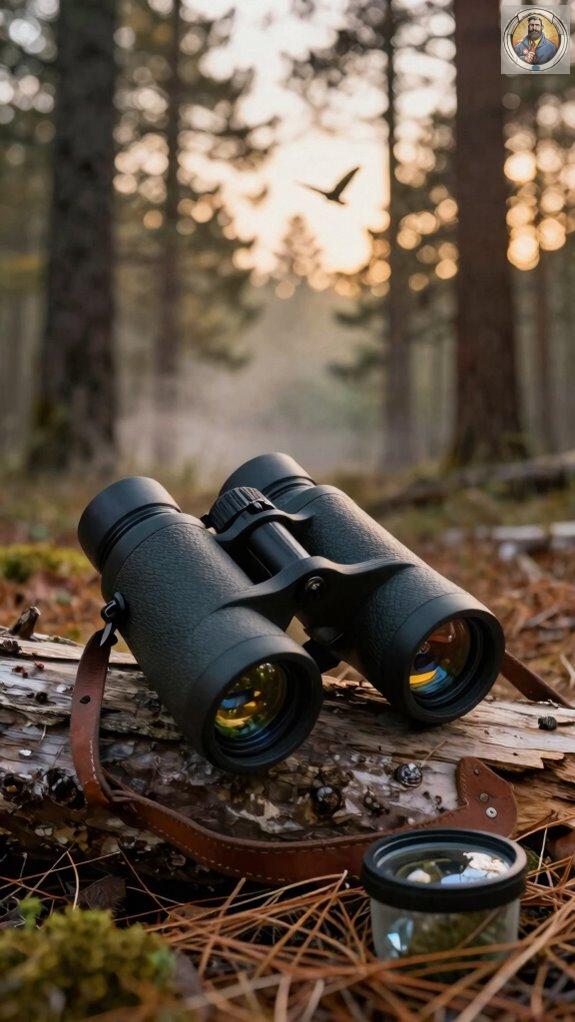
Okay, so my son finally spotted his first bald eagle—blurry photo and all—and now he’s convinced we need “pro gear” to track every raptor in North America.
Sigh. Sound familiar?
I caved—and honestly, best dad move ever. For bird migration season, we grabbed 8×42 Nikon Monarch binoculars—crisp, lightweight, and eagle-approved.
Don’t forget binocular accessories: a harness (no more neck pain), lens wipes (Liam eats snacks *near* the lenses—why?), and a rain guard. If your kids want to get even closer to nature, consider pairing your binoculars with bug viewing containers for exploring smaller creatures during your outdoor adventures.
Pro tip: Test models at outdoor stores—your nose bridge isn’t “one-size-fits-all.”
Worth it when you see a golden eagle at 200 yards.
Wait—was that sarcasm? Nope. Totally obsessed. You’ll be too.
FAQ
Can I Use Binoculars With Glasses Comfortably?
Yes, I use binoculars with glasses just fine—no superhero powers needed.
But *correct eye placement*? Huge. Miss it, and you’re staring into a tunnel like a confused mole.
Slide those eyecups down—*click*—now you’ve got a *comfortable fit*.
I squinted for weeks till Sarah yelled, “Duh, adjust the damn diopter!”
Now? Crisp eagle-vision, even spotting Liam’s lost drone in the pine trees.
Pro tip: Try Nikon Monarch 7s—glasses-friendly, awesome clarity.
You’ve got this, Captain Obvious.
How Do I Clean Binocular Lenses Properly?
I clean my binocular lenses like I defuse dad jokes—carefully. First, I always blow off dust (no wiping dirt, dumbass).
Then, I use a microfiber cloth—Sarah’s makeup ones work, but *don’t tell her*.
Lens cleaning techniques? Zestiq spray helps. Never use shirts—ask me how I scratched Liam’s science project lens.
Proper storage tips: case closed, dry spot, away from Emily’s monster truck zone.
Boom. Crisp views, zero facepalms.
Are Waterproof Binoculars Worth the Extra Cost?
Yes, waterproof binoculars are 100% worth it—especially when Liam drops them in a creek… again. I’ve tested brands like Nikon Prostaff and Bushnell Legacy—durability testing shows they survive rain, sweat, even Sarah’s “accidental” laundry immersion.
Non-waterproof? One drizzle and you’re toast. Trust me, fog-proofing beats panic every time. Always check O-rings and nitrogen purging—your adventures (and ego) will stay dry.
Skip waterproof? That’s just asking for tears—yours or the kids’.
What’s the Best Way to Carry Binoculars Hiking?
Ever tried hiking with binoculars dangling like a neon “I’m lost” sign? I’ve been there—believe me, no thanks. I carry mine in a padded harness—compact storage saves your back and sanity.
Weight considerations? Huge. I ditched my clunky old pair for a lightweight Nikon Monarch—game changer. Toss it over your shoulder, and boom, you’re ready.
Trust me, your neck (and kids) will thank you.
Do Binoculars Work Well at Night?
Do binoculars work well at night? Not really—unless you’ve got night vision. Most binoculars struggle in darkness; I learned that the hard way during Liam’s “midnight scout mission” (aka sneaking cookies).
Regular binoculars? Poor low light performance. For true night use, go digital night vision. Or just stub your toe like the rest of us. Trust me.
Skip cheap “night” models—save for real gear.
Your eyes? They’re better than most binoculars after 8 p.m.
Want to see critters at dusk? Try dusk.
Not midnight.
And maybe… leave the kids home.


