

7 Smart Ways to Design Game Courses Anywhere
Designing Epic Game Courses: A Dad’s Guide
Crafting game courses at home can turn an ordinary day into an extraordinary adventure!
I’m writing this for Modern Dads because I believe any dad can create fun spaces that keep the little ones engaged and giggling.
Let’s be real: tight layouts are key—think 3, 6, or 9 holes. I once turned my backyard into a mini-golf paradise using pool noodles and plastic cups. It was an epic win!
Layered designs and simple aesthetics with clear feedback keep it fun and challenging. Plus, multi-purpose areas? They’re like the Swiss Army knife of play spaces!
Last summer, we made a backyard obstacle course. My kid jumped through hula hoops, crawled under tables, and danced around the sprinkler.
But let me tell you, when I tried to join in, the sprinkles turned into an unplanned soaking!
Moral of the story? Kids love creativity, and sometimes you just need to get wet!
Happy designing, dads!
Quick Takeaways
- Design compact mini golf courses with modular panels and themed props to maximize tight spaces and enhance player experience.
- Implement adaptive difficulty mechanics that dynamically adjust challenges based on player skill and performance.
- Use multi-use elements like interactive tools and feedback mechanisms to keep players engaged and motivated.
- Create flexible gameplay pathways that allow players to navigate choices based on their mood and preferred difficulty.
- Incorporate inviting decor and furniture that foster relaxation and social interaction to enhance the overall gaming atmosphere.
Compact Layouts for Small Spaces
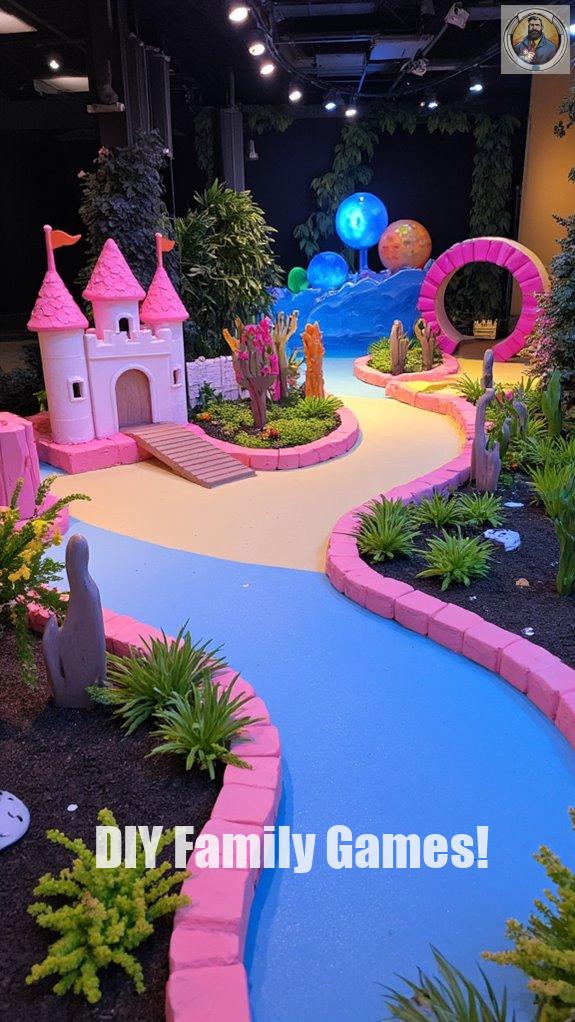
When it comes to designing a mini golf course in a tight space, you might think it’s impossible, but let me assure you—it can be done! Trust me, you don’t need a football field-sized area to create some putting magic. Here’s how:
- Opt for compact layouts—3, 6, or 9 holes rock!
- Think like a Tetris master! Use modular panels and creative obstacles like tunnels or themed props. Modular panel systems allow for endless customization and ease of transport. Incorporating creative obstacles can elevate the gameplay experience and make each hole unique.
- Don’t forget the fun! Choose themes—how about castles or aliens?
Adaptive Scale Mechanics for Versatile Challenges
While designing a game, you want every player to feel the thrill of the challenge, right?
Well, let’s spice it up with adaptive scale mechanics! Here’s how to keep players on their toes:
- Dynamic Difficulty Adjustment: Tailor challenges based on skill levels. Adaptive difficulty helps ensure nobody enjoys a stroll in an enemy-infested park! Implementing this can make every encounter feel fresh and engaging.
- Branching Paths: Create different routes that respond to performance. Decisions matter!
- Real-Time Adaptation: Let AI alter levels based on the player’s style. Because who doesn’t love surprises?
- Player Feedback Integration: Use those “frustration levels”—no one wants to feel like a total noob!
- Easy-to-Implement Metrics: Identify success rates without turning players into math wizards! This approach can be as manageable as organizing simple experiments for kids, allowing for a clearer understanding of progress.
Let’s keep ‘em guessing!
Multi-Use Elements to Maximize Utility
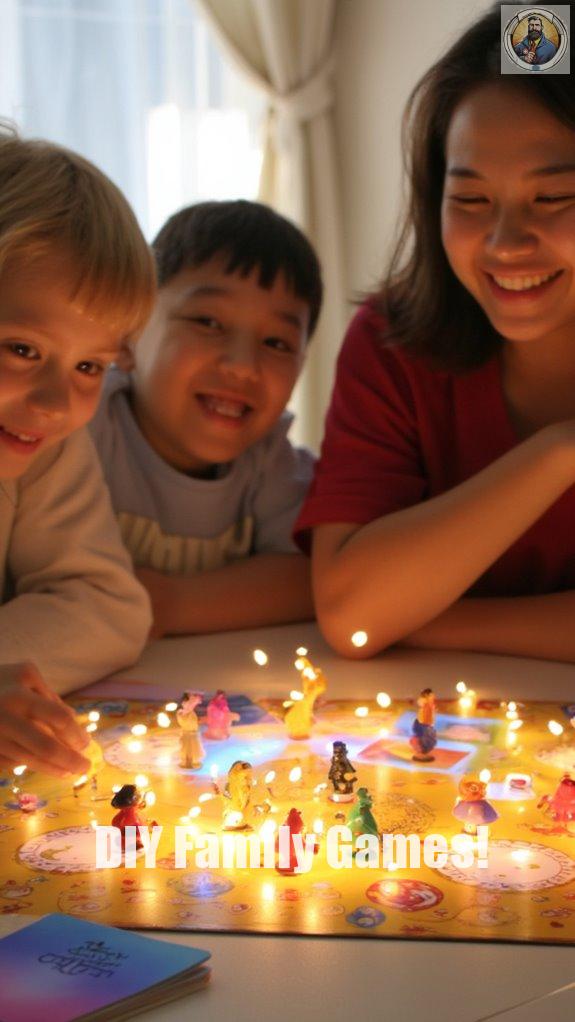
Picture smashing through a tough challenge only to realize you could’ve done it faster or smarter with different tools. Ever thought that some game elements could serve double duty? Well, they can!
Check this out:
| Multi-Use Elements | Benefits |
|---|---|
| Interactive Tools | Keeps learners engaged! |
| Points and Rewards | Makes you feel like a superstar! |
| Feedback Mechanisms | Helps avoid “oopsies!” |
Using multi-functional elements cuts complexity and boosts excitement! Who wouldn’t want to collect badges while scoring points? Incorporating skill-based activities can transform family time into engaging competitions! So, mix it up, and let’s make learning an adventure, not a lecture!
Vertical and Layered Design for Expanded Complexity
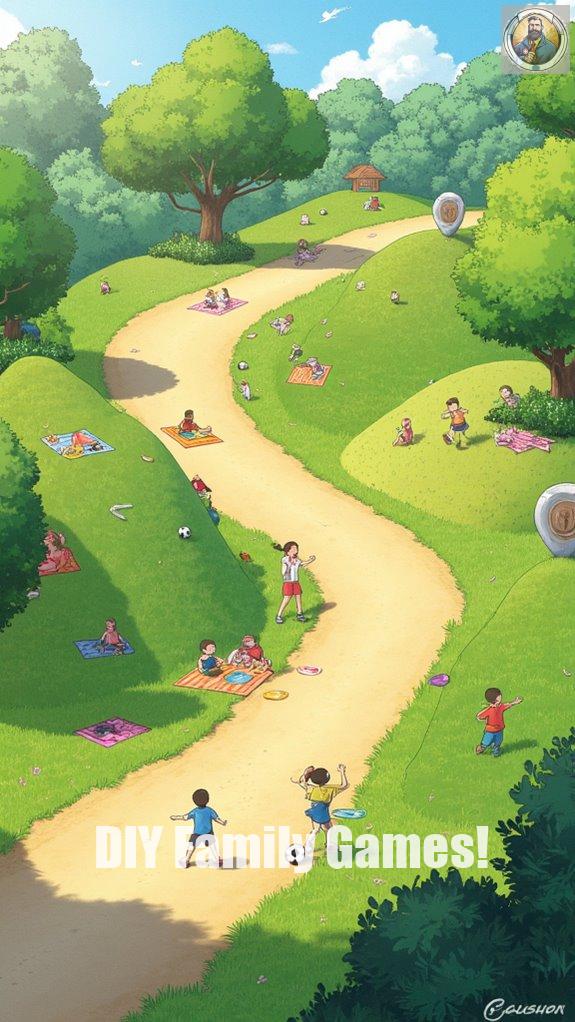
Creating a game with vertical and layered design can feel like crafting a three-dimensional puzzle that keeps players on their toes.
Here are some tips to keep it engaging:
- Stick to three floor planes at most—less is more, right?
- Mix small height variations into one plane for simplicity.
- Use downward flows to rush players along (woosh!).
- Verify each layer offers unique content—no one wants a stale sandwich!
- Prototype with vertical slices to nail down the fun early.
Just keep in mind, if players aren’t discovering new stuff, they might as well be watching paint dry! Additionally, incorporating aspects of portable outdoor sports can enhance the overall experience and draw families outdoors.
Minimalist Aesthetics With Clear Feedback
Minimalism in game design can feel like stepping into a clean, well-organized room—everything you need is right there, and nothing’s cluttering your thoughts!
Imagine a game where the rules are few but the fun is endless. That’s the beauty of minimalist aesthetics:
- Use simple, iconic visuals that say “I’m ready for action!”
- Give players instant feedback—because who likes waiting?
- Integrate controls that feel like an extension of your finger.
Keep it tight—every element should mean something!
Let’s face it; nobody wants a game filled with pointless fluff. Incorporating elements of easy magic tricks can provide engaging moments that captivate players and enhance the overall experience!
Technology Integration for Enhanced Experiences
Games have this incredible power to transport us, engage our minds, and spark our creativity.
So, how do we integrate technology for even better experiences? Let’s break it down:
- Embrace computational thinking to simplify complex game elements.
- Use design thinking to empathize with players and enhance gameplay.
- Gamify your course with scores and badges—who doesn’t love bragging rights?
- Leverage collaboration tools like wikis for effective teamwork.
- Mix asynchronous communication; let ideas flow while you snack on popcorn.
Flexible Player Flow for Customizable Gameplay
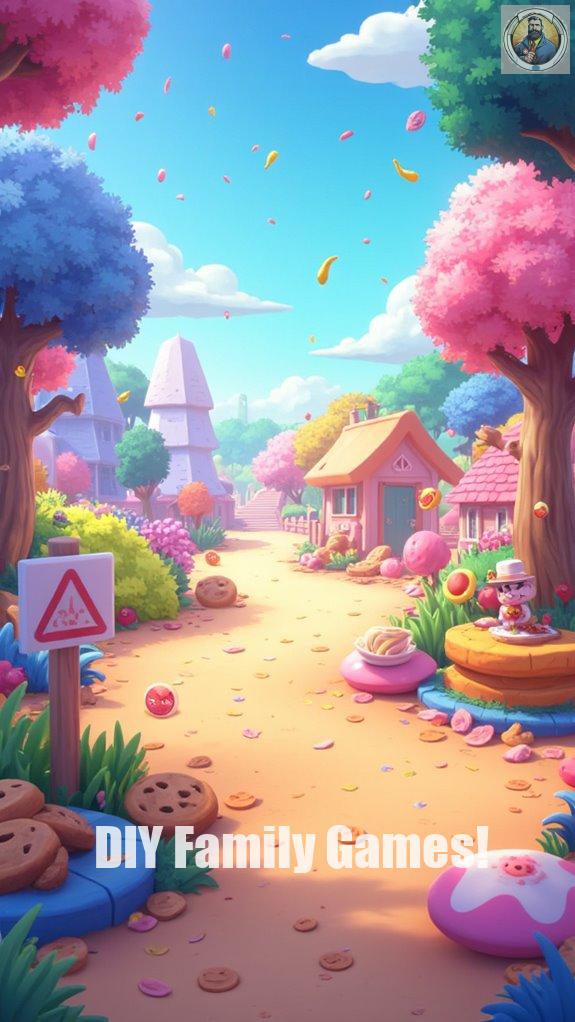
How awesome would it be if you could tailor your gaming experience to match your mood?
Imagine choosing between chilling on an easy path or flying through a tough challenge, like picking between a warm cookie or a daring chili pepper.
That’s the power of a flexible player flow!
Here’s how you can get the most out of it:
- Create a Choice Network: Let players navigate activities and difficulty levels.
- Seamless Decisions: Choices should feel natural—like pizza on a Friday night!
- Skill Customization: Empower players with control, but don’t overwhelm them.
Space-Efficient Game Course Planning
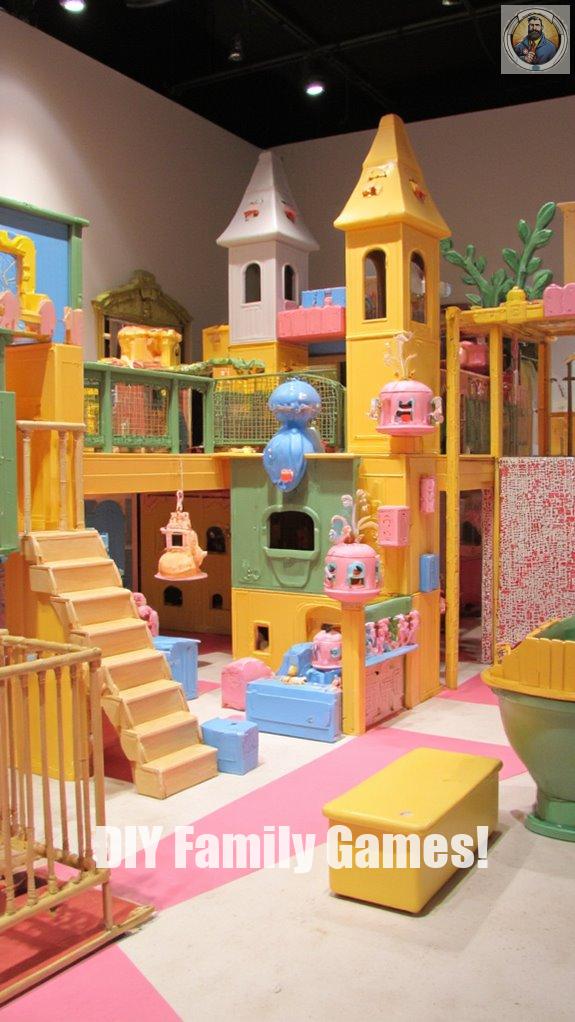
When you’re thrown into the whirlwind of designing a game course, maximizing space can feel like a trade-off between creativity and practicality.
But fear not! Here are some space-saving hacks to keep your course both fun and functional:
- Modular designs let you stack and rearrange elements like a game-night puzzle.
- Vertical layering multiplies your playable space; platforms are your friends!
- Compact obstacles share zones, cutting down on wasted space.
- Multi-use zones adapt to gameplay, keeping things fresh.
- Foldable components allow for quick expansions—kind of like a Swiss Army knife but for courses!
Let’s get crafty and efficient!
Father-Son Team Adventure
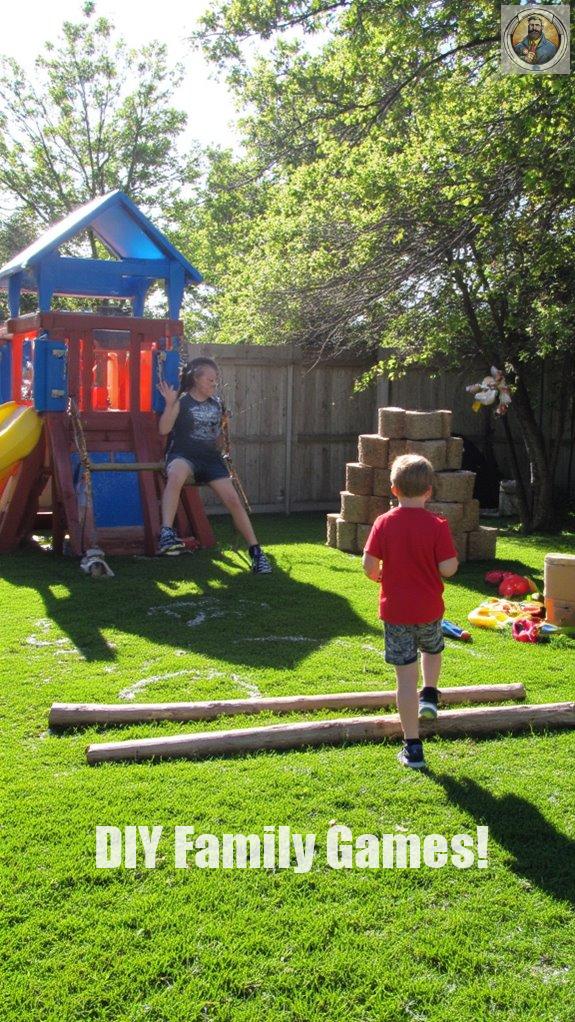
Father-son adventures can create some of the best memories—not to mention a great way to exercise those wandering imaginations!
Imagine this: a homemade obstacle course right in your backyard.
- Swing sets turned into monkey bars? Check!
- Logs for balance beams? Totally!
- Cinder blocks to build climbing challenges? Why not?
Every week, we mix it up, keeping it fresh!
Oh, and let’s not forget the epic battles—strategy games by day, reenacted by night.
Remember, shared sweat leads to laughs, and maybe even some “whoops” when you trip.
Get creative, and build those memories!
Multi-Purpose Game Course Design for Small Spaces
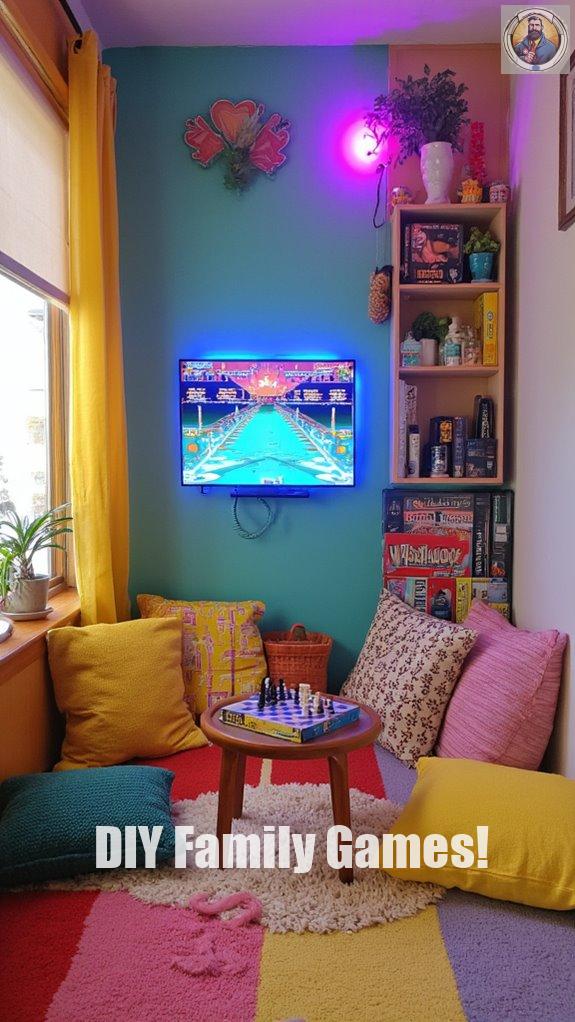
Creating a multi-purpose game course in a small space can transform your everyday environment into an exciting playground.
Who says you need a mansion to have fun? Here’s how to level up your small area:
- Use wall-mounted TVs for gaming and free up floor space.
- Design a chess corner or a cozy board game nook.
- Set up low-footprint, indoor obstacle courses—think pillows and chairs!
- Use vertical storage for your games and accessories.
- Integrate funky colors and cozy decor to create an inviting vibe.
Trust me, with a little creativity, you’ll have everyone asking, “When’s game night?”
Questions and Answers
How Can I Assess Player Skill Levels Accurately?
I assess player skill levels accurately by tracking their game decisions, analyzing those epic fails, and gathering all the juicy data—no stress, just fun! Who knew evaluating could be such a game?
What Tools Help Create Immersive Game Narratives?
Creating immersive game narratives is like baking a cake; you need the right ingredients! I’ve found tools like Articy:draft and Twine help me mix storylines and choices into delicious, engaging experiences that players can’t resist.
How Do I Measure Player Engagement Effectively?
Measuring player engagement’s like trying to catch a greased pig! I track DAU, session length, and retention rates. If players keep coming back, we’re doing something right—just like my mother’s lasagna!
What Methods Support Collaborative Play Among Participants?
Oh, who needs collaboration, right? Yet, I’ve found that using iterative designs, clear tagging, and even AI can elevate teamwork. Embracing diverse inputs makes the chaotic fun of play, well, a bit more manageable!
How Can I Incorporate Player Feedback Into Course Design?
To boost course design, I love blasting my ears with player feedback! I gather complaints, praises, and “I-can’t-believe-they-did-that” moments, then use those gold nuggets to craft experiences that keep everyone coming back for more fun!
Summary
With some creativity and smart planning, you can craft exciting courses in just about any space.
By embracing compact layouts and multi-use elements, you’re not just throwing together a game—you’re creating an adventure!
So, get out there, have fun, and let your imagination soar! Your family (and maybe a few neighbors) will thank you for it!
References
- https://pmc.ncbi.nlm.nih.gov/articles/PMC11923477/
- https://academictech.uchicago.edu/2023/11/08/effective-design-principles-and-accessibility-for-gamifying-your-classes/
- https://online.berklee.edu/courses/game-design-principles
- https://files.eric.ed.gov/fulltext/EJ1297914.pdf
- https://www.shiftelearning.com/blog/golden-rules-elearning-course-design-
- https://www.agsgolfandsports.com/portable-modular-mini-golf/
- https://www.southwestgreens.com/blog/designing-the-perfect-mini-golf-course
- https://www.housebeautiful.com/room-decorating/living-family-rooms/g26090946/game-room-ideas/
- https://www.himalayasgolf.com/golf-in-small-spaces
- https://www.pinterest.com/alicekhurley/backyard-mini-golf/
- https://psi.engr.tamu.edu/wp-content/uploads/2018/01/avigameacii.pdf
- https://www.scitepress.org/Papers/2010/28556/28556.pdf
- https://www.cs.mcgill.ca/~jtremb59/Papers/Adaptive.pdf
- https://www.mycvcreator.com/blog/adaptive-difficulty-in-video-games-tailoring-challenges-to-the-player
- https://digitalcommons.lindenwood.edu/cgi/viewcontent.cgi?article=1693&context=faculty-research-papers
- https://insider.fiu.edu/how-game-elements-can-supercharge-your-course-design/
- https://xperiencify.com/gamification-elements/
- https://uwaterloo.ca/centre-for-teaching-excellence/catalogs/tip-sheets/gamification-and-game-based-learning
- https://www.inventivestudio.co.uk/game-design-elements/
- https://insider.fiu.edu/how-game-elements-can-supercharge-course-design-measurement-and-feedback-in-games-and-learning/


