Create Thrilling Home Obstacle Courses: Easy Pro Techniques
Building Home Obstacle Courses: A Dad’s Guide
Creating home obstacle courses is a blast! Recently, I figured I’d turn our living room into a mini ninja warrior arena. My goal? Exhaust my kid’s energy and keep them entertained — win-win, right?
At Modern Dads, I share my dad hacks. Just last weekend, we set up a sliding mat and pool noodle hurdles in our basement. Safety first, though! I used couch cushions like a pro for soft landings. The result? A roaring success. You’d think I invented sliced bread!
Yes, kids can do flips, but I just watched. It’s remarkable how a simple challenge can spark giggles and creativity. Who knew living rooms could be so fun?
One sunny Saturday, my little one decided to go rogue during our course run. He leaped over a pool noodle, landing right into a pile of cushions. I burst out laughing as he yelled, “I’m a ninja!” The sheer joy radiated from that moment. It reminded me: as dads, it’s these little victories that really count — the laughter, the memories, the craziness. Let’s raise a generation of obstacle course champions!
Quick Takeaways
- Assess your home space effectively, utilizing furniture and outdoor elements to creatively design your obstacle course layout.
- Incorporate fun themes and varying challenges to maintain excitement and engagement for participants of all ages and skill levels.
- Use safe materials like foam, pool noodles, and old tires to create impact-absorbing obstacles that minimize the risk of injury.
- Implement graduated difficulties and cognitive tasks to encourage skill development and friendly competition among participants.
- Ensure regular safety inspections of the course and establish clear safety rules to promote a fun and secure environment for everyone.
Planning Your Course Layout: Tips for Success
Have you ever wondered what it takes to create an epic home obstacle course?
Planning your layout is essential!
Here’s how to nail it:
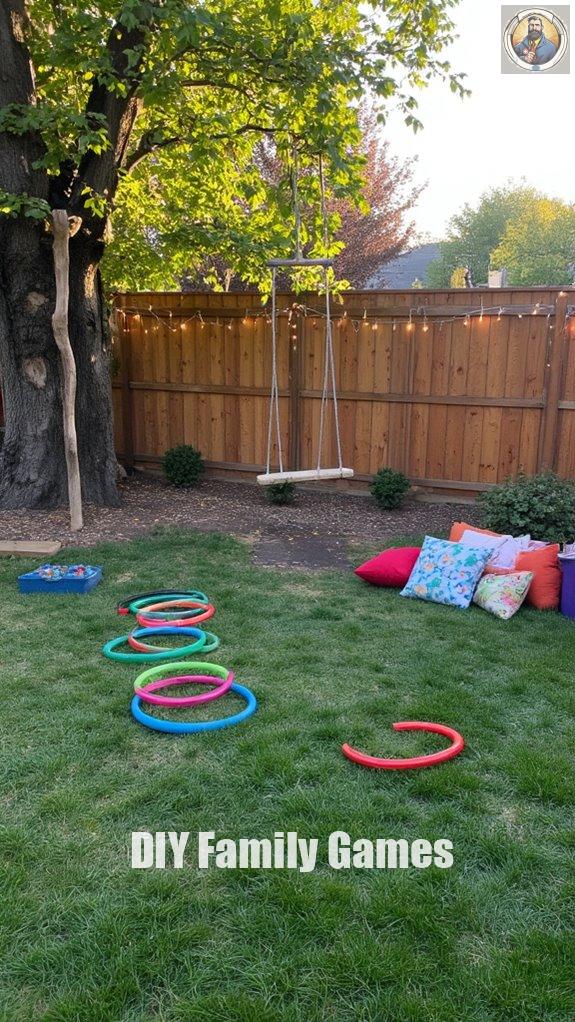
- Assess your space configuration: Know your yard. Trees and slopes? Use them!
- Prioritize participant flow: Keep the path clear. Avoid bottlenecks!
- Create a scaled map: Visual aids help you avoid chaos. Also, remember to consider safety when plotting out your obstacles. A well-structured layout can enhance your course’s flow and make it more enjoyable.
- Think age and skill: Connect ideas to your kids’ abilities!
- Safety rules are a must: Think cushion for falls—because no one wants pieced shoulder from a tumble.
With these tips, you’ll transform your yard into a thrilling obstacle adventure.
Trust me! Your kids will thank you!
Designing Engaging Obstacle Challenges
What makes an obstacle challenge truly engaging? It’s all about the excitement and connection!
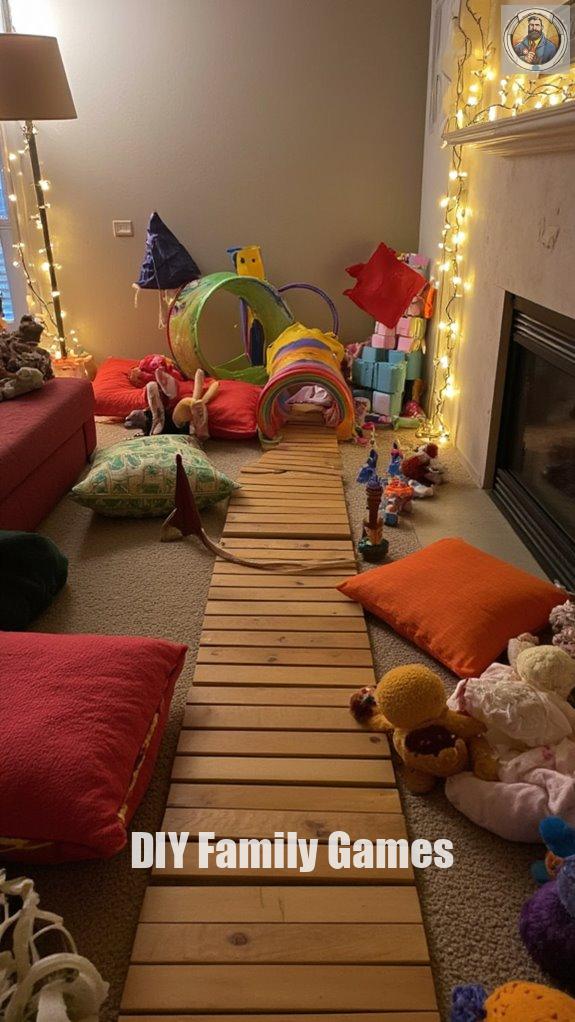
By incorporating themes like pirate adventures or space exploration, I’ve noticed that the engagement factors skyrocket.
Here’s how I do it:
- Choose obstacle types that match the theme, like “walk the plank” for pirates.
- Mix skill levels—start with simple tasks like crawling under nets, then progress to monkey bars for older kids.
- Use visual cues to help navigate.
In addition, setting up a living room obstacle course not only boosts physical activity but also fosters teamwork and cooperation among family members.
A thrilling design keeps kids moving, laughing, and coming back for more!
Incorporating Safe and Fun Materials
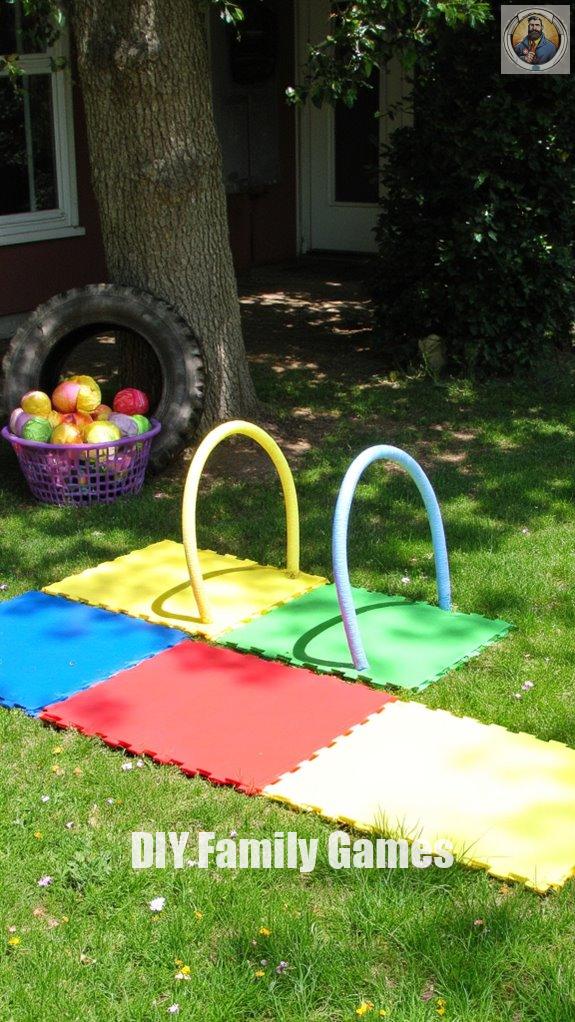
Here are some great safe materials for your course:
- Foam and rubber for impact absorption, minimizing injuries.
- Pool noodles are fantastic for hurdles; they’re soft yet bouncy!
- Old tires and laundry baskets can turn into epic challenges.
Keep safety in mind, folks! Incorporating safe materials helps ensure every child has a blast while staying injury-free.
Avoid sharp edges and unstable items. Let’s make sure your course is as safe as it’s fun; the last thing you want is a trip to urgent care!
Balancing Skill Levels for All Ages
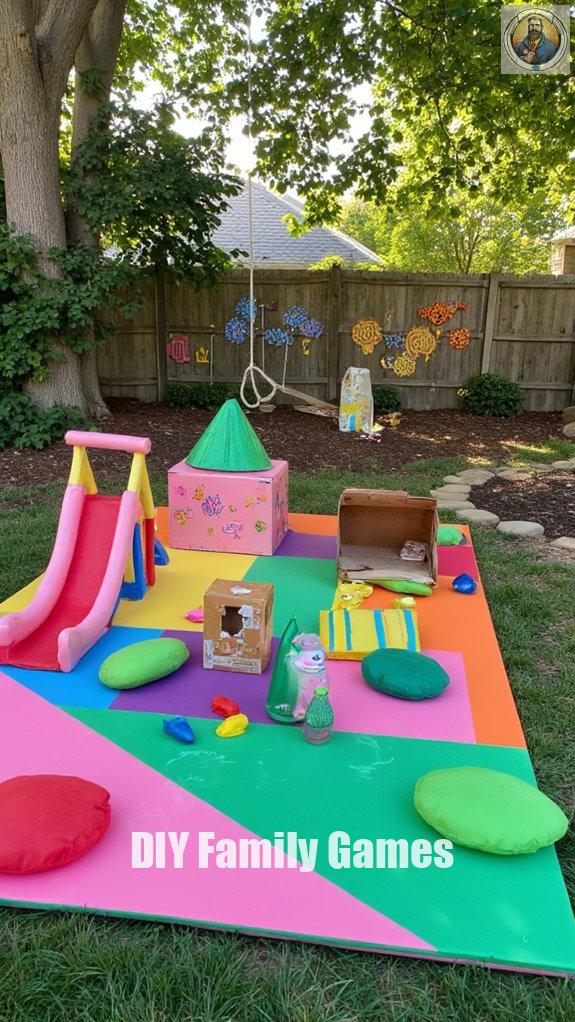
Crafting an obstacle course that everyone can enjoy might seem like a challenge, but it’s actually a blast!
To balance skill levels, keep age considerations in mind. For the little ones, think crawling under nets and jumping over small hurdles. They’ll gain confidence at their own pace.
Older kids thrive on challenging features like monkey bars or climbing walls. Recall, skill adaptation means mixing in easier tasks for all.
- Use graduated difficulties.
- Adjust the number of activities.
- Include plenty of instruction.
Let them shine at their level while keeping it fun—because who doesn’t love a little friendly competition?
Thematic Ideas for Enhanced Engagement
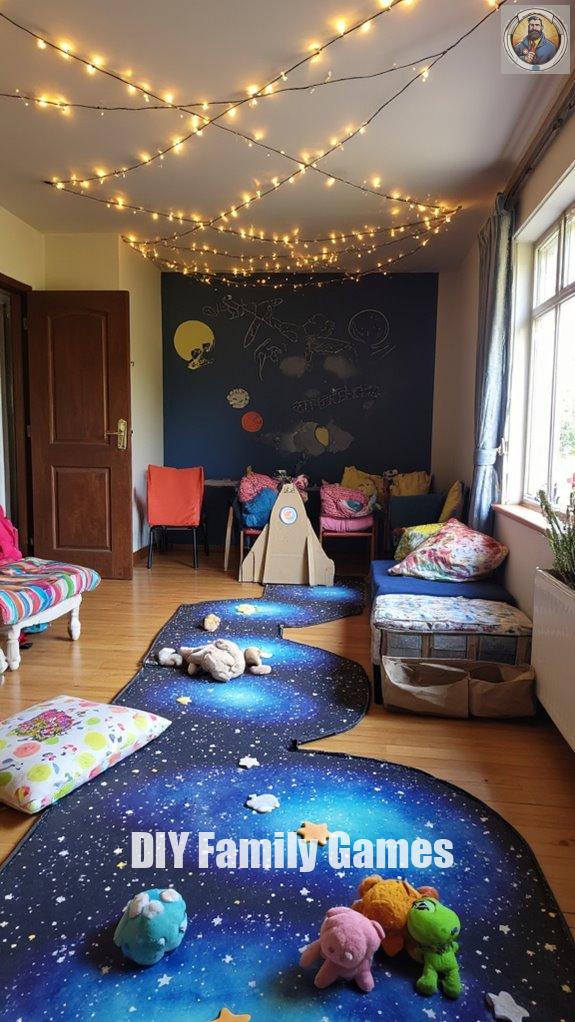
How can we make our obstacle courses not just fun, but an adventure waiting to unfold?
Embracing thematic exploration elevates the experience, sparking creativity and engagement. Here are three ideas to get started:
- Space Adventures: Create “laser mazes” with string and imaginations.
- Animal Motifs: Set up animal movement circuits—jump like frogs or slither like snakes.
- Seasonal Variations: Roll out a Halloween “spooky tunnel” for thrilling jumps.
These creative themes encourage imaginative play, interactive challenges, and unforgettable nature experiences.
Your kids won’t just climb—they’ll discover their own universe of fun in every course!
Modular Setup for Ever-Changing Courses
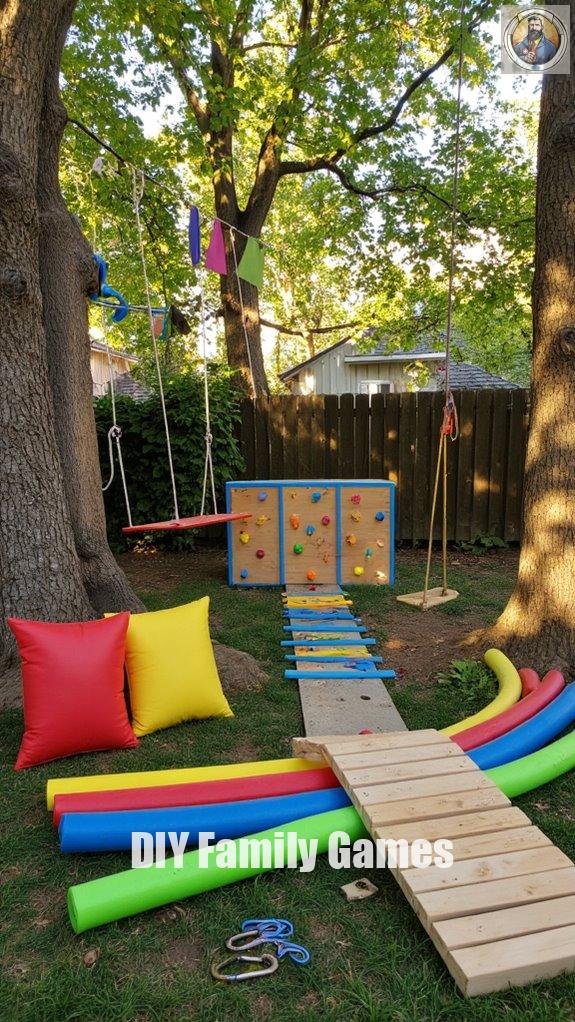
Creating an obstacle course at home can be as thrilling as it’s fun, especially when you embrace a modular setup.
Imagine configuring your course differently every time!
With modular configurations, I can swap out monkey bars one day and replace them with a climbing wall the next.
Using hooks and carabiners lets me change things up in minutes.
Plus, lightweight materials mean I can stack obstacles in a way that suits my backyard size and my kids’ ever-changing moods.
Who wants the same boring course every day?
Embrace that sweet course variability, and keep the adventure alive!
Maximizing Safety in Your Obstacle Course
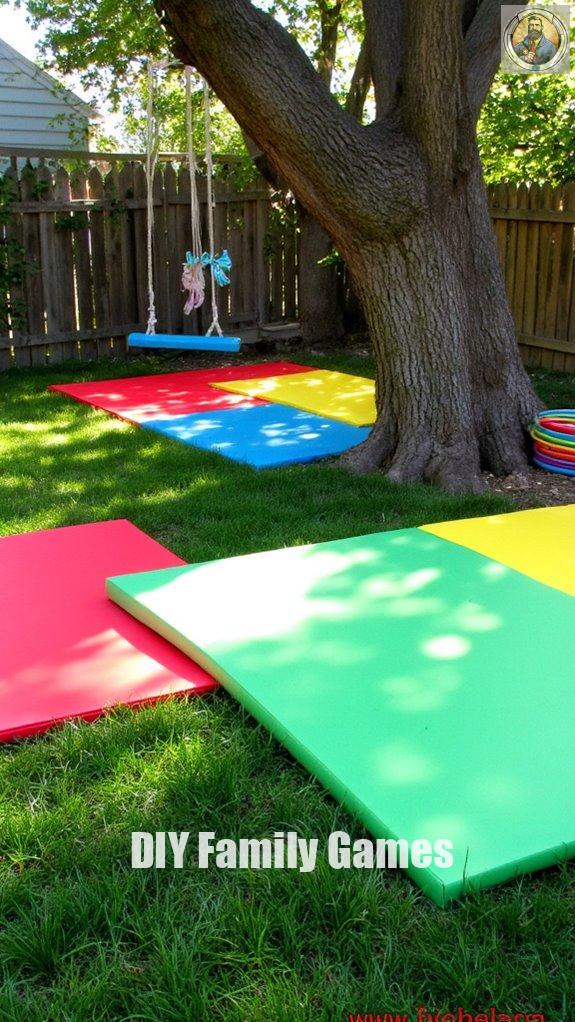
Ensuring safety in your obstacle course is absolutely essential—trust me, you don’t want any surprise trips to the ER!
Here are three key tips to maximize safety:
- Choose the Right Space: Find a spacious area free of sharp objects and debris.
- Use Safe Materials: Opt for soft, impact-absorbing materials like foam mats.
- Establish Safety Checkpoints: Set up emergency protocols and supervision rules to keep everyone safe.
Regularly inspect your course to avoid accidents, and make adjustments based on participant age and skill.
Keep in mind, a little caution goes a long way in making your course adventurous yet safe!
Sensory-Motor Activities to Boost Skills
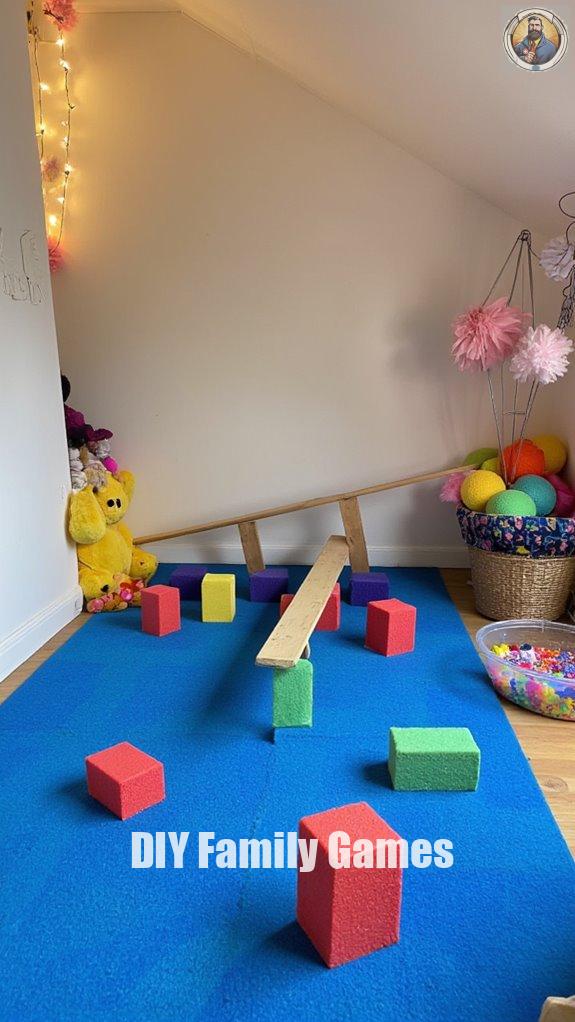
Obstacle courses aren’t just about steering through physical challenges—they’re a fantastic way to enhance sensory-motor skills!
Think about it:
- Sensory play can activate tactile experiences with rough mats or soft balls.
- Proprioceptive input from climbing or jumping boosts body awareness.
- Mix in vestibular activities—spin, sway, or flip!
You’re also honing executive function skills by sequencing movements and following directions.
Plus, maneuvering these courses with friends fosters social skills—sharing, turn-taking, you name it.
And let’s be real:
How often do kids actually get to channel their inner daredevils while mastering behavioral regulation?
Creative Use of Household Items for Obstacles
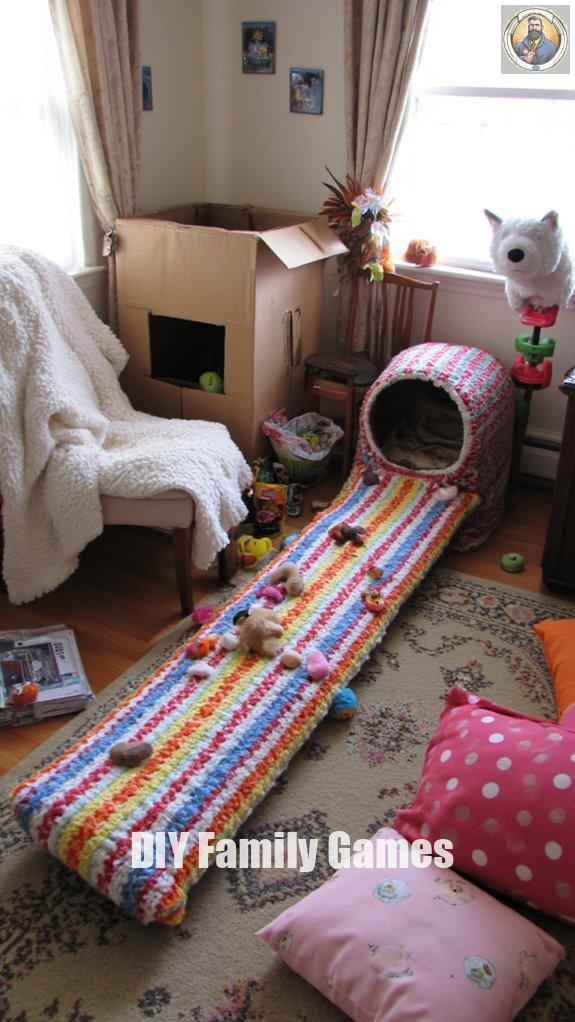
Who knew that transforming our living room into an epic adventure would be this easy?
Using everyday items as obstacles is a blast! Here’s how I do it:
- Cardboard constructors make fantastic tunnels. Just cut holes in some boxes and let the agility games begin!
- Balance beams can be as simple as rolled-up rugs. They really test your focus.
- Drape blankets between chairs for crawl-through tunnels. Who doesn’t love a good sneak?
These creative uses not only entertain but also boost coordination and physical skills.
DIY Obstacle Course Design Techniques
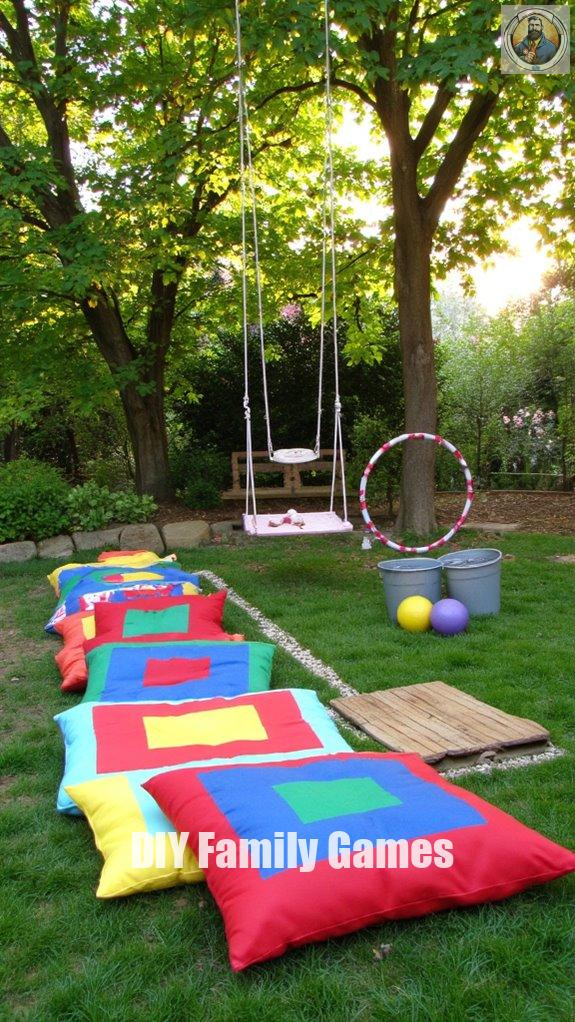
Designing a DIY obstacle course can be a thrilling adventure that sparks creativity and problem-solving skills, especially when you see how easy it is to get started right at home! Here’s how I jumped into course design with plenty of obstacle variety:
| Step | Tips |
|---|---|
| Evaluate Space | Check your available area. |
| Safety First | Clear hazards and mark pathways. |
| Sketch Layout | Visualize each obstacle’s flow. |
| Material Choices | Use household items creatively. |
| Test and Adjust | Run it through, observe, adjust! |
Ready to release your inner obstacle architect? Let’s go!
Indoor Home Obstacle Course Training Techniques
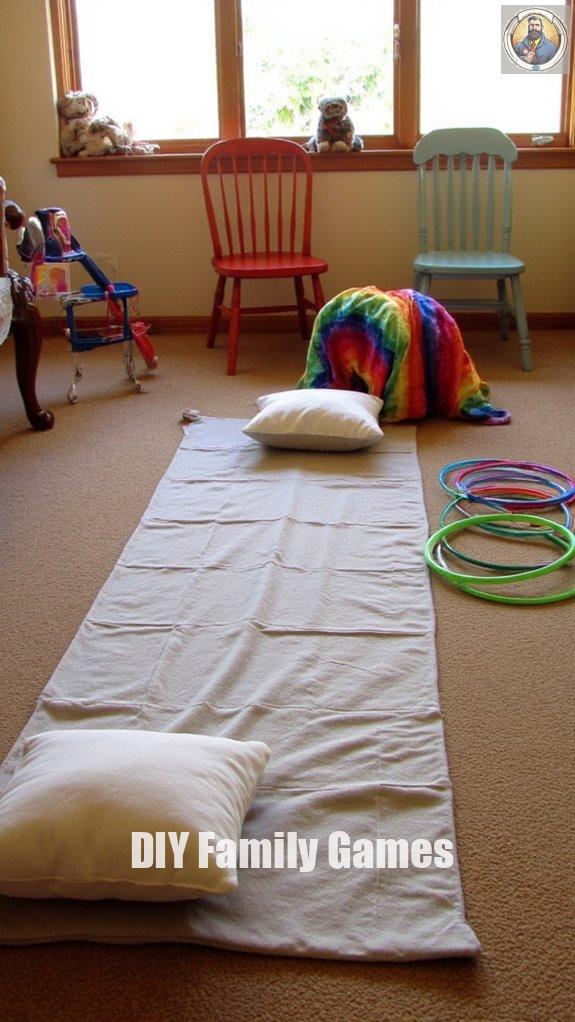
When it comes to creating a fun and engaging indoor obstacle course, there’s really no limit to the creativity you can release!
- Use household items: chairs, pillows, and ropes can become balance beams or tunnels!
- Incorporate motor skill challenges: think skipping, crawling, and animal walks to up that muscle game.
- Emphasize cognitive integration: number your stations and mix up tasks to keep those brains buzzing!
Why not make it themed? “The floor is lava” adds a thrill!
Trust me; your kiddos will forget they’re exercising. I know my kids love it—and so do I!
References
- https://www.jumporange.com/blogs/news/from-drab-to-fab-how-to-create-an-epic-backyard-obstacle-course-on-a-budget
- https://www.worldninjasport.com/post/pro-tips-for-building-a-ninja-warrior-backyard-course
- https://www.kompan.com/en/us/planning/how-to-build-an-obstacle-course-for-adults
- https://funandfunction.com/blog/creating-an-obstacle-course-in-your-home
- https://frugalfun4boys.com/american-ninja-warrior-backyard-obstacle-course/
- https://www.foxinaboxchicago.com/how_you_can_build_your_own_obstacle_course_at_home/l-196
- https://missiongrit.com/post/backyard-diy-kids-obstacle-course-ideas
- https://builtbykids.com/building-a-backyard-obstacle-course-2/
- https://www.swingsesh.com/blogs/familyfitness/at-home-obstacle-courses-exploring-setups
- https://activeforlife.com/diy-obstacle-course/