

A Dads Advice For Helping Lonely Kids Socialize
Back to School Socializing Tips for My Kids
What if the playground feels like a crowded ocean, and your kid is a tiny fish? It’s a tough situation.
I write to Modern Dads because I’ve navigated these waters myself.
Three years ago, I witnessed my son tiptoeing around a group of kids. So, I took a leap—armed with stickers and a colorful lunchbox. Voilà! He was in a game of tag faster than you can say “back to school.”
Turning those awkward moments into something light and fun builds their confidence.
Just last week, I watched my kid negotiate snacks with a friend at lunch. A simple, sweet victory. These little wins remind me—being a dad today is all about these moments that grow their social skills and our bond.
Quick Takeaways
- Observe subtle signs of loneliness and gently encourage your child to share their feelings.
- Facilitate structured social activities like sports or hobby groups to build their peer connections.
- Use role-play and social stories to practice social skills and reduce anxiety in a supportive way.
- Incorporate favorite supplies or shared interests as conversation starters to boost confidence and communication.
- Model empathy, active listening, and resilience to teach emotional awareness and foster long-term social skills.
How Do You Know if Your Child Feels Lonely at School?
So, how can you tell if your kid actually feels lonely at school? It all comes down to emotional awareness—can your child recognize and name their feelings?
If Liam starts acting more withdrawn, avoiding eye contact, or complains about feeling “left out,” he might be experiencing loneliness.
Peer recognition matters too; if your kid isn’t receiving or giving social cues as confidently as others, they might feel unseen. Teaching children to develop emotional literacy through body awareness can help them better understand and communicate their internal emotional states.
Ask yourself: Does she seem sad after school? Does he struggle to find friends for group projects?
Pay attention to subtle signs—like reluctance to join activities or avoiding playgrounds.
Monitoring their social media interactions can also reveal loneliness, as withdrawn children may spend excessive time online rather than engaging with peers in person.
Recall, kids aren’t always obvious about their feelings. Sometimes, it’s the quiet, little changes that reveal loneliness more than big tears or tantrums.
Practical Tips to Help Your Child Socialize More
Helping your child socialize more might seem tricky, but trust me, it’s all about taking small, doable steps that build confidence over time.
One great way is involving them in playground games — classics like tag, hide-and-seek, or kickball. These games naturally foster peer interaction without the awkwardness. Structured sports clubs provide another excellent avenue, as they create regular social opportunities while children work toward common goals with their teammates.
Also, consider peer mentoring—pairing your kid with an older or more confident peer who can serve as a role model. It’s less intimidating than a big group and builds trust.
You might also try martial arts games at home, which combine physical activity with fun social interaction that helps kids feel more comfortable around others.
Keep in mind, I’ve seen my son Liam bond during a game of dodgeball, and my daughter Emily thrive as she finds a mentor on the school playground.
These simple, consistent efforts can turn hesitant social moments into fun opportunities to connect. Who wouldn’t want that?
How to Build Your Child’s Confidence and Ease Social Anxiety
Building your child’s confidence and easing their social anxiety might sound like trying to teach a cat to fetch, but trust me, it’s doable—step by step. Start with simple activities like playground games; these are great for practicing social skills without pressure.
For example, teach your kid to join a game by observing first, then gently encouraging them to ask to play. Social stories also work wonders—these are personalized tales that prepare your child for real-life situations, reducing their fear of the unknown. I recall Liam loved role-playing scenarios at home, which boosted his confidence for school.
To make progress:
- Use visual tools like social stories
- Encourage small wins in familiar settings
- Celebrate efforts, not just successes.
Confidence builds over time, one tiny step at a time.
Ideas for Creating Friendship Opportunities Outside School
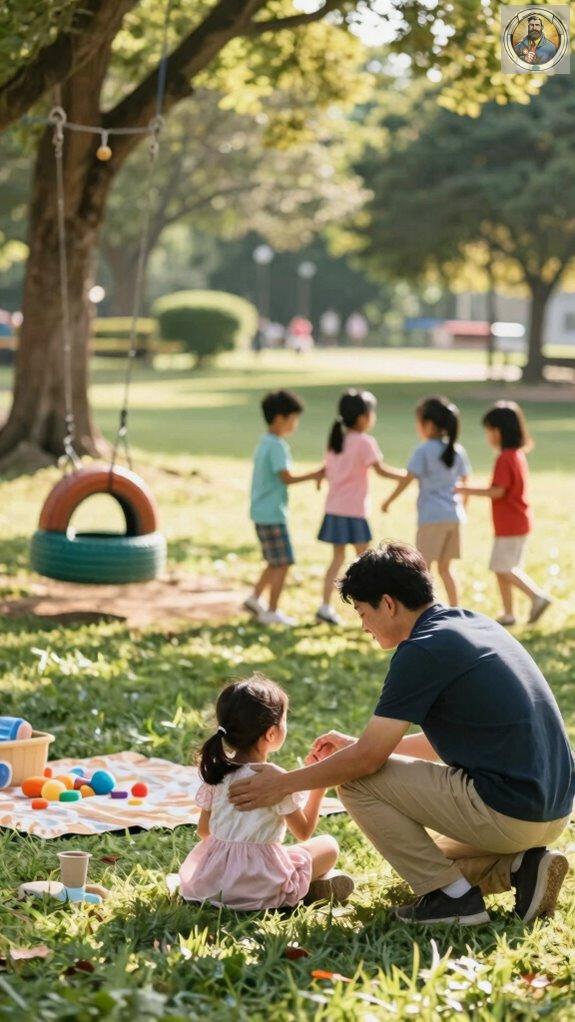
You might think that once your child finishes school, all the socializing should happen there, but that’s just not how it works—especially if your kid is shy or lonely. To create friendship opportunities outside school, think about playground games or hobby clubs. These activities help children develop supportive peer relationships that serve as a foundation for building resilience against social challenges. Investing in durable gear and equipment ensures kids can participate comfortably in outdoor activities without equipment concerns getting in the way of friendship-building. Here’s a quick idea table:
| Activity | Tips | Benefits |
|---|---|---|
| Playground games | Encourage small groups, like tag or kickball | Builds teamwork and confidence |
| Hobby clubs | Find local art, sports, or reading clubs | Sparks shared interests |
| Community events | Attend farmers markets or fairs | Introduces new friends |
| Sports teams | Enroll in local leagues | Teaches cooperation and persistence |
The key is to make it fun and low-pressure. My kids Emily and Liam loved bike clubs — it’s where they bonded without even realizing it!
Supporting Your Child’s Long-Term Social Resilience
When it comes to helping your child face the ups and downs of social life, long-term resilience isn’t just a buzzword—it’s the secret sauce. You want your kid to bounce back from social setbacks, right? Bonus points if they develop emotional intelligence and peer empathy along the way. Here’s how:
- Teach Emotional Awareness: Encourage your child to recognize and name their feelings, so they stay grounded during tough social moments.
- Model Empathy: Show how to genuinely listen and understand others’ viewpoints—you’ll be surprised how much kids pick up.
- Share Personal Stories: Talk about your own social slip-ups and how you recovered; it normalizes failure as part of growth. As a stay-at-home dad, you’re uniquely positioned to explore your own identity rediscovery alongside your child’s social development.
- Build Support Networks: Help them find friends who cheer them on, not tear them down.
Resilience isn’t built overnight. It’s a process—so keep nurturing that inner strength!
Family Campfire Conversations
Have you ever sat around a campfire and realized those honest conversations bring out the best? That’s when peer recognition sparks—kids feel appreciated, boosting their confidence.
When I plan family chat nights, I encourage Liam and Emily to share stories, helping them recognize each other’s strengths. This creates a safe space for them to express feelings, and suddenly they’re more enthusiastic to invite friends over for playdates.
To get started, ask questions like, “What was the coolest thing you did today?” or “Who helped you today?” You’ll notice: kids thrive when they see their efforts appreciated, and planning spontaneous playdates becomes easier. When your kids are heading off to socialize, make sure they’re wearing comfortable, durable clothing like seamless cotton socks that let them focus on friendship instead of fidgeting.
Trust me, these big, simple talks turn into lifelong habits, making socializing less scary and more genuine.
Friendship Building Skills
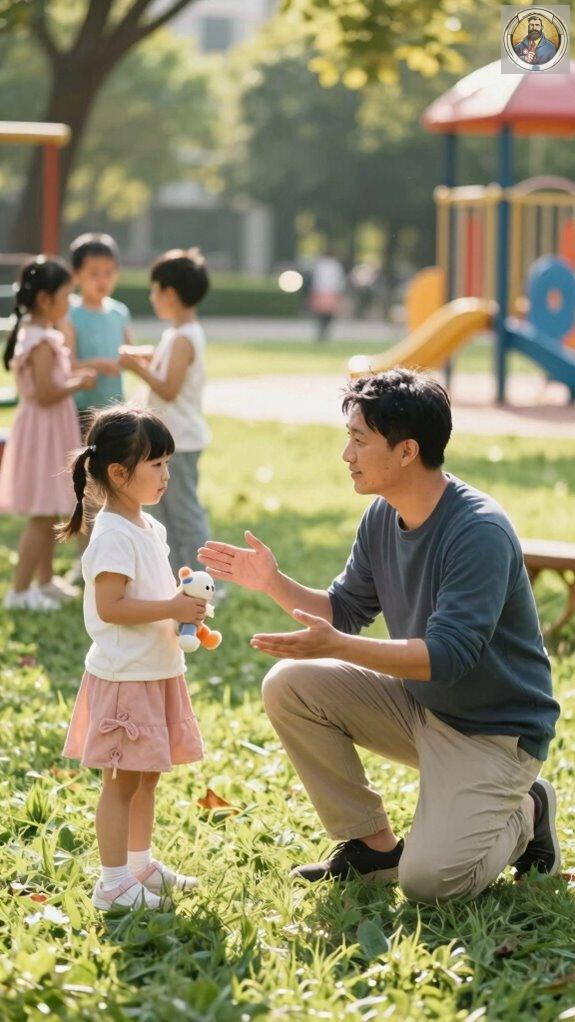
Building friendship skills doesn’t happen overnight—trust me, I’ve learned that the hard way with my own kids. To help your child develop solid social skills, try these strategies:
Building friendship skills takes time—patience and practice help kids develop lasting social connections.
- Peer mentoring: Pair your child with slightly older kids or buddies who model good friendship behaviors. Liam benefited when Emily mentored him at summer camp—he learned how to listen and share.
- Practice active listening: Encourage your kid to ask questions and really hear what friends say. It’s the foundation of trust.
- Share simple compliments: Teach them to notice others’ good qualities. It’s the quickest way to build a friendship.
- Role-play scenarios: Practice inviting friends over, resolving disagreements, or starting conversations—because practice makes perfect! Using creative problem-solving games during these role-play activities can make the learning experience more engaging and help kids develop better social strategies. When parents balance these friendship-building efforts with managing their own work and school pickup responsibilities, children benefit from a more present and engaged caregiver.
Master these, and your kid’s friendship toolbox will fill up fast!
School Supplies as Conversation Starters
School supplies aren’t just for filling your backpack or desk—they can actually be fantastic conversation starters! Recall classroom introductions? Bringing in a cool notebook, a funky pencil case, or even personalized stickers can spark quick chats.
Kids love to show off their unique stuff, making new friends easier. In the lunchroom, supplies like colorful lunchboxes or themed utensils can help break the ice. Ask, “Hey, where’d you get that?” or comment on their choice—an easy way to start a convo.
I’ve seen my son Liam bond over matching superhero erasers, and Emily show off her glittery pens. Simple tricks—like keeping a few interesting supplies handy—can transform awkward silences into friendly chats. When children experience separation anxiety, having familiar comfort items like their favorite supplies nearby can ease the transition into social situations. Who knew school supplies could be secret social tools?
Back to School Essentials
Getting ready for the first day can feel overwhelming, but knowing the essential back-to-school essentials makes all the difference. When I prepare with intentionality, parent involvement and peer mentorship naturally shine through. Teaching kids smart packing techniques early helps them develop organizational skills that support independence and confidence. Activities like indoor martial arts training can also build confidence and social connections outside the classroom.
Here are four essentials to master:
- Comfortable Backpack – A sturdy, well-fitted pack helps kids carry supplies easily and feel confident.
- Personalized Supplies – Colorful notebooks and pens can make your child more excited to participate and connect.
- Communication Tools – Encourage your kid to have a school folder or app for staying in touch about projects and friends.
- Social Encouragement Items – Small tokens or notes can boost confidence, opening doors for peer mentorship and deeper friendships.
Have you ever underestimated the power of thoughtful essentials? They can truly change the social game!
FAQ
How Can I Tell if My Child Is Truly Lonely or Just Shy?
If your child seems consistently withdrawn or anxious around peers, it’s more than shyness, indicating loneliness; try playdates planning and confidence building activities. Observe their interactions and feelings to gauge if they need more support.
What Are Signs My Child Is Experiencing Social Anxiety?
Signs of social anxiety include persistent playground bullying, avoidance of classroom participation, and palpable panic during social situations, reflecting a child’s distress and discomfort that call for attentive understanding and appropriate intervention.
How Do I Handle My Child’s Rejection or Difficulty Making Friends?
When your child faces rejection, stay positive by offering playdate tips that promote resilience and understanding. Focus on her self-esteem boost, praising effort over outcome, and remind her that building friendships takes patience and persistence.
What Role Do Teachers and School Counselors Play in Social Development?
Teachers and counselors facilitate peer mentoring and mold a positive classroom environment, vital for social development. I believe their active involvement nurtures confidence, helps kids build skills, and fosters inclusive, supportive atmospheres essential for overcoming social challenges.
How Can I Encourage My Child to Maintain Friendships Long-Term?
To encourage your child’s long-term friendships, I recommend playdate strategies that foster genuine connections, and nurturing friendship cascades by regularly supporting shared activities, ensuring consistent communication, and teaching empathy—key to sustaining bonds over time.
Summary
Keep in mind, helping your kid find their social groove is a marathon, not a sprint—think of it as guiding your own little Odysseus through the choppy seas of childhood friendships. With patience, some practical tactics, and a sprinkle of family campfire chats, you can turn loneliness into lively conversations and lasting friendships. After all, isn’t the goal just to remind them that, like in fairy tales, every hero needs a trusty sidekick? Keep at it—you’ve got this!


