

How Proactive Fathers Help Kids Handle School Bullies
Proactive Dads: The Secret Weapon Against School Bullies
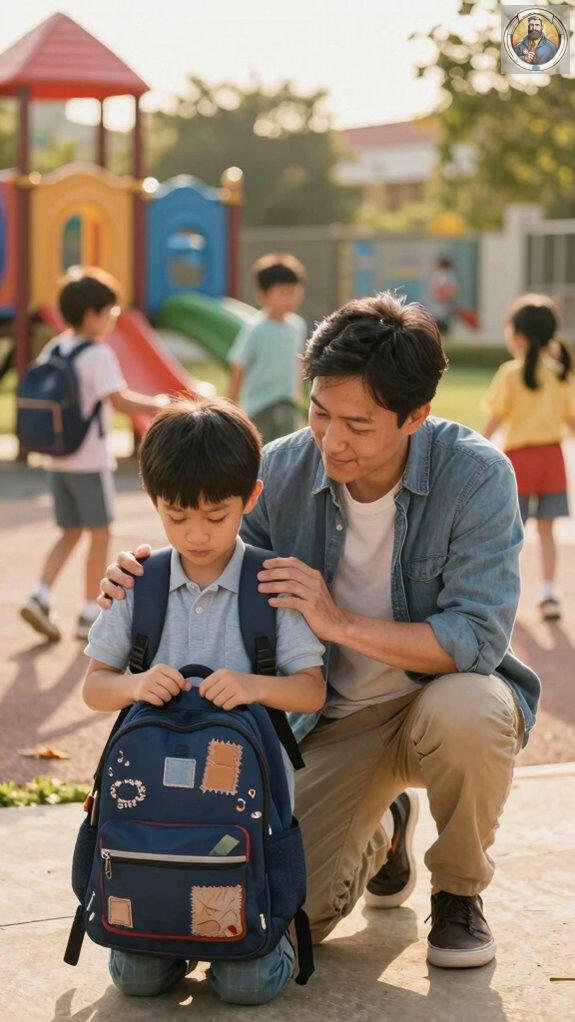
How can a dad help kids tackle school bullies? By being proactive! I’ve learned that early signs—like sudden school reluctance—need my attention. That’s why I share insights on our blog, Modern Dads, to help others navigate these tricky waters with humor and support.
Each morning, I remind my kids about using their “Stop!” voice and the importance of walking away. I even insist on packing a mini whistle for their backpacks. You never know when it could come in handy, right? A little preventive fun goes a long way!
Last week, my youngest bravely confronted a teasing classmate, recalling our “Stop” practice. His proud grin was priceless. Being a dad today means preparing them for more than just math tests.
Quick Takeaways
- Proactive fathers create a safe space for kids to share experiences and concerns about bullying promptly.
- They teach assertive communication and use role-play to prepare children for potential bullying situations.
- Fathers model respectful behavior and resilience, demonstrating calm responses and emotional regulation.
- They establish clear boundaries and safety strategies, such as reporting incidents and using safety tools like whistles.
- By fostering confidence and independence, fathers empower kids to stand up for themselves and others confidently.
How to Recognize Early Signs of Bullying in Kids
You might think that bullying shows up with obvious punches or harsh words, but sometimes it sneaks in quietly, like a secret agent. That’s why, as a proactive dad, knowing the signs to watch for is essential.
Emotional cues, like your kid suddenly becoming withdrawn, avoiding social settings, or showing signs of depression, are red flags. Look for changes in behavior—does Liam seem more anxious before school or avoid his favorite playground? Maybe Emily becomes unusually irritable or secretive about her day. Dads can use creative storytelling activities to help children open up and share what’s troubling them.
Watch for withdrawal, irritability, or secrecy—early signs your child may be experiencing bullying.
Keep an eye out for physical signs like bruises or torn clothing, but don’t forget the emotional side. Trust your gut — if something feels off, dig deeper. Engaging your child in educational activities can also help build their confidence and resilience against bullying.
Recognizing these early signs is your first step in helping your child fight back against silent bullying.
How to Open Honest Talks About Bullying With Your Child
Once you’ve started noticing those subtle signs that something’s off — maybe Liam’s more anxious than usual or Emily’s acting secretive about her day — it’s time for a real heart-to-heart.
Open communication builds trust, so create a safe space where your kid feels comfortable sharing. Start with gentle questions like, “How was school today?” or “Did anything happen you want to talk about?”
Avoid jumping to conclusions or sounding accusatory. Share your own stories or past worries to normalize feelings.
Recall, trust building takes patience, not a one-time chat. Keep your tone calm and friendly, and listen more than you speak.
Who knows? That honest talk might be the thing that helps them open up about bullying—and that’s the first step to helping them.
Helping Your Child Build Confidence and Set Boundaries to Handle Bullying
Building your child’s confidence and helping them set boundaries might sound like a tall order, but trust me, it’s one of the most powerful tools you can give them when facing bullies.
Empowering children with confidence and boundaries helps them stand strong against bullies.
When kids build resilience, they’re better equipped to stand up for themselves. Here’s how you can do it:
- Teach them assertiveness— Practice simple phrases like “Back off” or “Leave me alone,” and role-play scenarios.
- Encourage positive self-talk— Remind them of their strengths, like Liam’s quick wit or Emily’s kindness, to boost their confidence.
- Set clear boundaries— Make it clear what’s acceptable behavior, and reinforce that they’ve control over their personal space and feelings.
Isn’t that empowering?
Mastering these skills turns vulnerabilities into strengths. By implementing effective time management strategies as a parent, you create consistent opportunities to practice these confidence-building techniques with your child.
How to Prepare Your Child to Respond Effectively to Bullies

Thinking back to times I’ve watched my kids face challenges at school, I’ve realized that how they respond to bullies can matter way more than I thought. The role of role models—like teachers, older siblings, or even classmates—can shape their reactions.
Peer influence is powerful; my kids, Emily and Liam, often mimic positive behaviors they see. To prepare your child, teach them simple, clear responses: maintain eye contact, stay calm, and walk away if needed. Share stories of brave kids standing up or walking away without losing their cool.
Practice these responses through role-playing. Ask questions like, “What would you do if someone teased you?” Keep in mind, kids learn best from real-life examples—the kind of influence that guides them to handle bullies confidently, not aggressively. Just as soothing routines help reset children’s focus and emotional regulation during challenging times, practicing calm responses to bullying can strengthen your child’s resilience and composure.
How to Support Your Child by Building a Strong Support Network
- Parental involvement: Stay engaged—regularly check in, listen more than you talk, and show genuine interest. Ask questions like, “How was your day?” and really listen.
- Peer mentoring: Encourage your child to connect with trusted friends or older peers who can support them. Liam’s buddy Jake, for example, once helped him stand up to a bully.
- Community connections: Get involved with school activities, clubs, or neighborhood groups. The more people your child trusts, the more they’ll feel backed up.
When and How to Collaborate With School Staff to Address Bullying
Ever had that moment when your kid comes home, eyes wide, and whispers, “There’s a problem at school”? That’s when you know it’s time to act. Collaborating with school staff isn’t just about tattling; it’s about ensuring your child’s safety and well-being. Use parent-teacher communication to honestly share your concerns. For confidential reporting, emphasize privacy—schools need to hear these details without spreading rumors. Tools like AI homework assistants can also help reduce academic stress, which is often a contributing factor to bullying situations. Reducing excessive device screen time can additionally help minimize stress and improve your child’s overall well-being during challenging situations.
Here’s a quick guide:
| When to Collaborate | How to Do It |
|---|---|
| After observing bullying signs | Request a meeting, stay calm, and focus on solutions |
| When your child fears retaliation | Use formal channels, like school counselor reports |
| When reports aren’t enough | Follow up and keep records of all communication |
| When things escalate | Contact school administrators immediately |
Identifying Common Grounds
Have you ever tried to find common ground with someone who seems completely different from you? It’s like sibling conflicts, where Liam refuses to share his Video Game, or peer group dynamics, with kids boycotting a party because of cliques.
Finding common ground helps bridge differences, just like sharing games or collaborating on fun projects.
To bridge these gaps, try:
- Identifying shared interests—maybe your kid loves basketball, and a classmate enjoys drawing.
- Acknowledging differences without judgment—like respecting unique hobbies.
- Creating opportunities for teamwork—like family game nights or project collaborations.
Stay-at-home parents often model these bridging techniques by cultivating positive social connections within their communities. Engaging children in creative problem-solving games together can strengthen their ability to find common ground and work through differences collaboratively.
Bullying Prevention Tactics
Knowing how to prevent bullying before it even starts can save your kid a lot of heartbreak and stress. To do that, focus on cyber safety—teach your kids to keep their personal info private and think before posting.
Peer empathy is also key—encourage them to see things from others’ viewpoints and stand up against mean behavior. For example, if Liam sees someone being teased online, he can report it or support the victim.
Don’t assume kids will just handle it; empower them with specific tactics. Consider equipping your child with practical safety tools like loud safety whistles that can help them alert trusted adults in emergency situations. Here’s what you can do:
- Role-play scenarios to build confidence
- Set clear rules about online behavior
- Talk openly about feelings and friendship values
Additionally, consider having your child practice safety strategies during various settings, including times when they’re in the car, so they’re prepared to respond appropriately in any environment using steering wheel laptop trays for distraction-free focus on their wellbeing.
Because, let’s face it, knowing how to prevent trouble beats cleaning up the mess later!
School Supplies and Safety
Switching gears from how we teach our kids to stand up for themselves online, let’s talk about something just as important: school supplies and safety. Proper school supplies aren’t just for preventing clutter—they’re a safety tool.
Focusing on school safety with essential supplies that keep kids prepared and protected.
Make sure your child’s backpack includes:
- Emergency contact info — laminated, waterproof, and ready to grab.
- Safety gear — whistle, reflective tape for visible walking, and a small first aid kit.
- Appropriate school supplies — well-made, durable items to avoid frustration or injury.
When kids are walking to and from school, especially during outdoor adventures or in low-light conditions, shoe gaiters for kids can provide extra protection and visibility on uneven terrain. For nature-focused excursions, compact binoculars for youth can enhance outdoor learning experiences while keeping kids engaged with their environment.
Back to School Essentials
Getting your child prepared for another exciting school year means more than just picking out cool notebooks and backpacks. It’s about understanding the right parenting approaches and academic strategies.
Think back to my own days—did I really need that brand-name lunchbox? Probably not, but showing investment helped Emily feel involved.
So, equip your kid with essentials like a sturdy backpack, well-marked supplies, and a health kit for those “need-a-break” moments.
Reinforce routine with clear schedules—morning routines, homework time, and downtime. Consider creating a cozy study space at home, similar to how indoor camping activities can make learning feel like an adventure rather than a chore. Incorporating martial arts games into your family fitness routine can also build the physical confidence and discipline children need to stand up to bullies.
Ask yourself: are you encouraging independence? Are your academic strategies helping build confidence?
Recall, a little sarcasm can motivate—like reminding Liam he can’t fight bullies if he’s late because he overslept.
Mastering these essentials makes a solid foundation for handling school challenges—bullying included!
FAQ
How Can I Teach My Child Empathy to Prevent Bullying?
I focus on empathy building and kindness cultivation daily, encouraging open conversations, sharing stories, and modeling compassionate behavior myself. This helps my child understand others’ feelings, fostering empathy to effectively prevent and address bullying behaviors.
What Are Signs My Child Is Hiding Bullying Experiences?
If you notice child secrecy about school, withdrawal, or changes in behavior, it might indicate they’re hiding bullying experiences, especially if they’re sensitive to bullies’ tactics. Stay observant to support and address these signs effectively.
How Do I Handle My Child’s Emotional Response to Bullying?
Visualize your child’s emotions as a fragile lotus blooming amidst stormy waters; I encourage peer support to nurture resilience, helping them weather feelings with strength and understanding, transforming pain into growth and emotional mastery.
What Community Resources Are Available for Bullying Prevention?
I recommend joining or starting a neighborhood watch to foster community safety and engaging in peer mentorship programs, which empower kids, build resilience, and prevent bullying through strong, proactive peer support networks.
How Can I Model Positive Conflict Resolution at Home?
Keep in mind, “actions speak louder than words.” I model positive conflict resolution by demonstrating assertive communication and boundary setting at home, showing kids respectful ways to express feelings, listen actively, and resolve disagreements peacefully for lifelong mastery.
Summary
Ever notice how, on the day you finally talk openly about bullying, your kid suddenly spots a sneaky comment or gesture? That’s no coincidence. It’s like revealing a secret level in a game—you see the signs, react early, and build confidence in your child. So, stay proactive, keep those honest talks going, and recall—bullying doesn’t stand a chance when you’re tuned in and involved. Because, honestly, who wouldn’t want to do everything to protect their kid?


